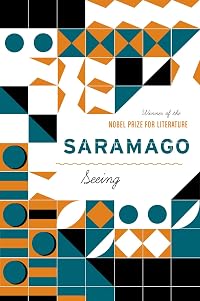
On This Page
Description
On election day in the capital, it is raining so hard that no one has come out to vote. The politicians are growing jittery. Should they reschedule for another day? Around three o'clock, the rain finally stops. At four, voters rush to the polling stations, as if ordered to appear. But when the ballots are counted, more than 70% are blank. The citizens are rebellious. A state of emergency is declared. The president proposes that a wall be built around the city. But are the authorities acting show more too precipitously? Or even blindly? The word evokes terrible memories of the plague of blindness that hit the city four years before, and of the one woman who kept her sight. Could she be behind the blank ballots? Is she the organizer of a conspiracy against the state? What begins as a satire on governments and the sometimes dubious efficacy of the democratic system turns into something far more sinister.--From publisher description. show lessTags
Recommendations







Member Recommendations
icallithunger These two books should be read together. They happen in the same universe and talk about some of the same themes- about fear, chaos and how far the human goes when faced with them.
Member Reviews
In this sequel to Saramago’s dystopian book Blindness, a large majority of the populace has cast a blank ballot in the parliamentary election. The first half follows the bureaucrats as they try to make sense of the anomaly, eventually deciding it is a plot against the government. The second half shifts to the search for a scapegoat and remaining government officials attempting a mass deception.
It is a book about power and what people are willing to do to remain in power. It is about the need to maintain a moral compass. It seemed almost surreal reading this book while watching the bizarre events following the 2020 US Presidential election.
Saramago uses his razor-sharp wit to satirize spin-doctoring, bureaucracy, abuse of authority, show more and corruption. It is written in Saramago’s usual style – extremely long sentences, lengthy paragraphs, and dialogue embedded in the text. I could have used more breaks for the eyes, but I knew what to expect as all Saramago’s works are written in the same manner. He inserts wry wit, and his satire is well crafted.
To obtain the best experience, read Blindness first. These are cautionary tales and worth the time invested. Saramago poses questions about the fragility of social structures, which are, unfortunately, all too relevant to today’s world.
Memorable quotes:
"But truths need to be repeated many times so that they don't, poor things, lapse into oblivion."
“It was arrant nonsense to take away the rights of someone whose only crime had been to exercise one of those rights.”
“Tell the minister that no amount of cunning will do any good, we will all continue to lie when we tell the truth, and to tell the truth when we lie, just like him.”
“As my cat would say, all hours are good for sleeping.” show less
It is a book about power and what people are willing to do to remain in power. It is about the need to maintain a moral compass. It seemed almost surreal reading this book while watching the bizarre events following the 2020 US Presidential election.
Saramago uses his razor-sharp wit to satirize spin-doctoring, bureaucracy, abuse of authority, show more and corruption. It is written in Saramago’s usual style – extremely long sentences, lengthy paragraphs, and dialogue embedded in the text. I could have used more breaks for the eyes, but I knew what to expect as all Saramago’s works are written in the same manner. He inserts wry wit, and his satire is well crafted.
To obtain the best experience, read Blindness first. These are cautionary tales and worth the time invested. Saramago poses questions about the fragility of social structures, which are, unfortunately, all too relevant to today’s world.
Memorable quotes:
"But truths need to be repeated many times so that they don't, poor things, lapse into oblivion."
“It was arrant nonsense to take away the rights of someone whose only crime had been to exercise one of those rights.”
“Tell the minister that no amount of cunning will do any good, we will all continue to lie when we tell the truth, and to tell the truth when we lie, just like him.”
“As my cat would say, all hours are good for sleeping.” show less
This book is a sequel to the more popularly known Blindness. I liked the earlier book of course, but I think Seeing is much more witty and intelligent, and the satire inherent in all Saramago works is brought out fully in this book.
The story begins with the citizens of the capital of the same unnamed country (who have recovered from the mysterious blindness episode) going to the polls. At the end of the day, the results showed that majority of the votes was blank. This puts the national government in a dilemma. They hold another round of voting. The outcome was even worse this time around. To deal with this catastrophe (for the government in question and all parties of the political spectrum) the government sets off a series of show more measures, from the benign to the most absurd and frightening that resembles Big Brother, which ends in the city being held "in siege."
The authorities try to pin down the source of this silent and bewildering (and for them, almost malevolent) defiance. The same characters we follow in Blindness reappear. They are identified by the authorities as "suspects" in this silent revolt, it could only be them, especially THAT woman, they say.
Seeing has less "mythical" power than Blindness but i find it more frightening because it is more realistic. We see how institutions of democracy could be perverted to serve the narrow interests of the political elite. Isn't that something we all recognize?
While the story overall is less visceral than Blindness, the punch happens at the very end, and it is even more shocking and memorable than what happens in Blindness where normality returns.
Blindness was unputdownable, but I liked Seeing even better. show less
The story begins with the citizens of the capital of the same unnamed country (who have recovered from the mysterious blindness episode) going to the polls. At the end of the day, the results showed that majority of the votes was blank. This puts the national government in a dilemma. They hold another round of voting. The outcome was even worse this time around. To deal with this catastrophe (for the government in question and all parties of the political spectrum) the government sets off a series of show more measures, from the benign to the most absurd and frightening that resembles Big Brother, which ends in the city being held "in siege."
The authorities try to pin down the source of this silent and bewildering (and for them, almost malevolent) defiance. The same characters we follow in Blindness reappear. They are identified by the authorities as "suspects" in this silent revolt, it could only be them, especially THAT woman, they say.
Seeing has less "mythical" power than Blindness but i find it more frightening because it is more realistic. We see how institutions of democracy could be perverted to serve the narrow interests of the political elite. Isn't that something we all recognize?
While the story overall is less visceral than Blindness, the punch happens at the very end, and it is even more shocking and memorable than what happens in Blindness where normality returns.
Blindness was unputdownable, but I liked Seeing even better. show less
In this sequel to Saramago’s dystopian book Blindness, a large majority of the populace has cast a blank ballot in the parliamentary election. The first half follows the bureaucrats as they try to make sense of the anomaly, eventually deciding it is a plot against the government. The second half shifts to the search for a scapegoat and remaining government officials attempting a mass deception.
It is a book about power and what people are willing to do to remain in power. It is about the need to maintain a moral compass. It seemed almost surreal reading this book while watching the bizarre events following the 2020 US Presidential election.
Saramago uses his razor-sharp wit to satirize spin-doctoring, bureaucracy, abuse of authority, show more and corruption. It is written in Saramago’s usual style – extremely long sentences, lengthy paragraphs, and dialogue embedded in the text. I could have used more breaks for the eyes, but I knew what to expect as all Saramago’s works are written in the same manner. He inserts wry wit, and his satire is well crafted.
To obtain the best experience, read Blindness first. These are cautionary tales and worth the time invested. Saramago poses questions about the fragility of social structures, which are, unfortunately, all too relevant to today’s world.
Memorable quotes:
"But truths need to be repeated many times so that they don't, poor things, lapse into oblivion."
“It was arrant nonsense to take away the rights of someone whose only crime had been to exercise one of those rights.”
“Tell the minister that no amount of cunning will do any good, we will all continue to lie when we tell the truth, and to tell the truth when we lie, just like him.”
“As my cat would say, all hours are good for sleeping.” show less
It is a book about power and what people are willing to do to remain in power. It is about the need to maintain a moral compass. It seemed almost surreal reading this book while watching the bizarre events following the 2020 US Presidential election.
Saramago uses his razor-sharp wit to satirize spin-doctoring, bureaucracy, abuse of authority, show more and corruption. It is written in Saramago’s usual style – extremely long sentences, lengthy paragraphs, and dialogue embedded in the text. I could have used more breaks for the eyes, but I knew what to expect as all Saramago’s works are written in the same manner. He inserts wry wit, and his satire is well crafted.
To obtain the best experience, read Blindness first. These are cautionary tales and worth the time invested. Saramago poses questions about the fragility of social structures, which are, unfortunately, all too relevant to today’s world.
Memorable quotes:
"But truths need to be repeated many times so that they don't, poor things, lapse into oblivion."
“It was arrant nonsense to take away the rights of someone whose only crime had been to exercise one of those rights.”
“Tell the minister that no amount of cunning will do any good, we will all continue to lie when we tell the truth, and to tell the truth when we lie, just like him.”
“As my cat would say, all hours are good for sleeping.” show less
This novel appeals to me on a number of levels. I tend to enjoy stories that take a swipe -be it comic or menacing – at political institutions and the governments that believe they are in control. In Seeing, the sequel to Saramago’s earlier novel Blindness, Saramago present readers with an allegory of a ruling government facing a quiet rebellion by its citizens and their blank ballots (their gesture of non-confidence). While steeped in satire, this is very much a cautionary tale of just how easily a governing power uses its own panic to justify sweeping suspensions of civil liberties and spirals from the facade of a duly elected democracy into a more sinister oligarchy of power and control. While the story takes place 4 years after show more the events in Blindness, I believe one could read this story as a stand alone. Saramago provides enough information (minus the more harrowing scenes) from the earlier story to ground new readers. Now, I know that Saramago’s “run on stream of consciousness” writing style – with dense, long paragraphs, lack of punctuation and detached narrator experience – can be a little off putting for some readers. The trick to reading Saramago’s writing is to just let your mind read. Stop paying attention to the lack of punctuation and the way sentences seem to run into one another. You will actually be surprised at how well written and readable it actually is, but if not, I would highly recommend that you seek out an audiobook version so that you “hear” the story (Saramago’s stories work very well if read out loud!)
A grim, cautionary tale about entrenched politics. show less
A grim, cautionary tale about entrenched politics. show less
"...since the citizens of this country were not in the healthy habit of demanding the proper enforcement of the rights bestowed on them by the constitution, it was only logical, even natural, that those rights had been suspended."
Terrifying thought, isn't it? And an eternally fresh and topical one. And this is not some talking head pundit on one of the opinewz channels that infest American TV, but a Portuguese Nobel laureate describing the immediate aftermath of one of the most farcically awful political crises he could imagine for a proud Western democracy. And there's more, so much more, of this where that came from.
Last year, I twisted my mind into a pretzel taking in the odd but absorbing prose style of Jose Saramago's Blindness, show more and felt that I would never be the same again. And as I finish out this year, achieving my stated goal and then some in terms of number of books read in a year, I here prove that indeed, I am forever changed. Which is nice if you're going to read more Saramago.
Sing hosanna, my mind snapped right back into that pretzel shape. And good thing, too, because if I'd let myself get distracted by the difficulties posed by the prose style, I would have missed one of the most horrifyingly entertaining and terrifyingly funny reads of my life.
As the title might suggest, Seeing* is a sort of antithetical sequel to Blindness, though not strictly in the sense of the continuing adventures of a hero or heroine from the earlier novel. Indeed, the events and truths of Blindness are not even alluded to until rather far into Seeing; there is simply a strong sense that the early crisis here -- a general election held on a bizarrely stormy day not only has a disappointing voter turnout but also results in more than 80% of the cast ballots turning up completely blank -- is the aftermath of an earlier catastrophe, but the contemporary reader could substitute any recent disaster (Hurricanes Katrina or Sandy, say) for the plague of "white blindness."
Unlike the unremitting tragedy and squalor of Blindness, though, Seeing has a pretty wicked satirical bent, especially in the early chapters when the parties on the left, middle and right are squabbling over for which party/candidate all those blank votes are "really" for, and government ministers are trying to come up with a solution to this crisis. One feels in their deliberations, in which the suspension of every civil liberty that First World citizens cherish is at least considered, one by one, echoes of the kind of panicky calculation and hapless cruelty that led to all of the white blindness victims' being herded into a disused mental hospital and left to fend for their helpless selves in Blindness, but here it's all taken much further. And the reader learns an important thing: Saramago is funny.
And yes, it's all but impossible, as matters escalate, to read Seeing without thinking of the Arab Spring, as what started as simply a casting of blank ballots develops into full-scale Gandhiesque passive civil disobedience and the government, for its part, makes an un-Arab-Spring decision to simply withdraw its services. No confidence in us, the officials seem to say? Fine. We have no confidence in you, either. Enjoy your lack of services. As an alternative to mass slaughter, it makes me wistful, that decision. But then things get silly, in a scary way (or possibly scary, in a silly way) when the government-in-exile basically just comes around to treating the "rebel" populace of the capital city pretty much exactly the same way it treated the disease victims in Blindness; this subversion is an infection that must be quarantined, but it would be heartless not to poke food in at them once in a while, wouldn't it?
And again, all of these vicious and brilliant insights into the nature of government and the responsibilities of citizenship, into the way people generally treat each other and into the way they could if only they would keep to their principles (ah, me), are delivered in Saramago's crazy and yet perfectly lucid** prose style. I don't know how he does it, you guys. Again, no dialogue tags or quotation marks, hell, not even any proper names, but the reader still winds up with a perfect insight into who all the characters are as individuals (even though they are known by only the most generic of referents) to the point where she can tell who is speaking even from just a fragment of dialogue. The only other writer I've seen come close to pulling this off is Theodore "Godbody" Sturgeon. But he broke everybody off into point-of-view chapters.
So in the end, Seeing feels rather a lot like a lost J.G. Ballard apocalypse, one in which the world is poised to end, not with a rush of wind or water or a crystallization or a drought, but with a refusal to participate, with apathy. Which, given Ballard's style of apocalyptic heroes, is very Ballardian indeed!
And on a purely personal note, oh, could I sympathize with those elected officials who had this crisis dumped into their laps. "The biggest mistake I made in my political life was letting them sit me down in this chair," the president says at one point. When I was a member of my home town's town council in 2001-2004, I said the same thing. All the damned time. Less so his next remark "I didn't realize at the time that the arms of this chair had handcuffs on them." But sometimes I did. Sometimes, I did.
*Ensayo Sobre la Lucidez in the original Portuguese. Portuguese isn't my best language, but I muddle through okay (not for a whole novel yet!) and so I get "Essay Concerning Sight" as a more literal translation. I guess I can see how that "essay" might throw an English-speaking reader, mislead him or her into expecting non-fiction, but remember that the word "essay" originally meant something more tentative, an attempt, the thought conveyed being that someone is playing with an idea rather than making declarations about it. And since this book is, in part, exploring the consequences of the prior novel's "white blindness", I like the "what if" quality the original Portuguese title suggests to me. But, you know, marketing.
**This despite some of the most convoluted sets of mixed metaphors I've ever encountered. But people do talk that way, especially when they're excited. How mimetic. Or something. Also, I read this book via my Kindle, as part of a single file that contains the Collected Works of Jose Saramago. I thus never had any idea how close I was to the end of the book, as the "percent completed" indicator stayed at the same number for chapters and chapters. With a dead tree book (which is how I read Blindness) there was a physical cue that the end was approaching. With an ebook as one of a single file of collected works, the ending sneaks right up on one and there is trauma. Aaah! This is, though, my only quibble with ebook reading so far. show less
Terrifying thought, isn't it? And an eternally fresh and topical one. And this is not some talking head pundit on one of the opinewz channels that infest American TV, but a Portuguese Nobel laureate describing the immediate aftermath of one of the most farcically awful political crises he could imagine for a proud Western democracy. And there's more, so much more, of this where that came from.
Last year, I twisted my mind into a pretzel taking in the odd but absorbing prose style of Jose Saramago's Blindness, show more and felt that I would never be the same again. And as I finish out this year, achieving my stated goal and then some in terms of number of books read in a year, I here prove that indeed, I am forever changed. Which is nice if you're going to read more Saramago.
Sing hosanna, my mind snapped right back into that pretzel shape. And good thing, too, because if I'd let myself get distracted by the difficulties posed by the prose style, I would have missed one of the most horrifyingly entertaining and terrifyingly funny reads of my life.
As the title might suggest, Seeing* is a sort of antithetical sequel to Blindness, though not strictly in the sense of the continuing adventures of a hero or heroine from the earlier novel. Indeed, the events and truths of Blindness are not even alluded to until rather far into Seeing; there is simply a strong sense that the early crisis here -- a general election held on a bizarrely stormy day not only has a disappointing voter turnout but also results in more than 80% of the cast ballots turning up completely blank -- is the aftermath of an earlier catastrophe, but the contemporary reader could substitute any recent disaster (Hurricanes Katrina or Sandy, say) for the plague of "white blindness."
Unlike the unremitting tragedy and squalor of Blindness, though, Seeing has a pretty wicked satirical bent, especially in the early chapters when the parties on the left, middle and right are squabbling over for which party/candidate all those blank votes are "really" for, and government ministers are trying to come up with a solution to this crisis. One feels in their deliberations, in which the suspension of every civil liberty that First World citizens cherish is at least considered, one by one, echoes of the kind of panicky calculation and hapless cruelty that led to all of the white blindness victims' being herded into a disused mental hospital and left to fend for their helpless selves in Blindness, but here it's all taken much further. And the reader learns an important thing: Saramago is funny.
And yes, it's all but impossible, as matters escalate, to read Seeing without thinking of the Arab Spring, as what started as simply a casting of blank ballots develops into full-scale Gandhiesque passive civil disobedience and the government, for its part, makes an un-Arab-Spring decision to simply withdraw its services. No confidence in us, the officials seem to say? Fine. We have no confidence in you, either. Enjoy your lack of services. As an alternative to mass slaughter, it makes me wistful, that decision. But then things get silly, in a scary way (or possibly scary, in a silly way) when the government-in-exile basically just comes around to treating the "rebel" populace of the capital city pretty much exactly the same way it treated the disease victims in Blindness; this subversion is an infection that must be quarantined, but it would be heartless not to poke food in at them once in a while, wouldn't it?
And again, all of these vicious and brilliant insights into the nature of government and the responsibilities of citizenship, into the way people generally treat each other and into the way they could if only they would keep to their principles (ah, me), are delivered in Saramago's crazy and yet perfectly lucid** prose style. I don't know how he does it, you guys. Again, no dialogue tags or quotation marks, hell, not even any proper names, but the reader still winds up with a perfect insight into who all the characters are as individuals (even though they are known by only the most generic of referents) to the point where she can tell who is speaking even from just a fragment of dialogue. The only other writer I've seen come close to pulling this off is Theodore "Godbody" Sturgeon. But he broke everybody off into point-of-view chapters.
So in the end, Seeing feels rather a lot like a lost J.G. Ballard apocalypse, one in which the world is poised to end, not with a rush of wind or water or a crystallization or a drought, but with a refusal to participate, with apathy. Which, given Ballard's style of apocalyptic heroes, is very Ballardian indeed!
And on a purely personal note, oh, could I sympathize with those elected officials who had this crisis dumped into their laps. "The biggest mistake I made in my political life was letting them sit me down in this chair," the president says at one point. When I was a member of my home town's town council in 2001-2004, I said the same thing. All the damned time. Less so his next remark "I didn't realize at the time that the arms of this chair had handcuffs on them." But sometimes I did. Sometimes, I did.
*Ensayo Sobre la Lucidez in the original Portuguese. Portuguese isn't my best language, but I muddle through okay (not for a whole novel yet!) and so I get "Essay Concerning Sight" as a more literal translation. I guess I can see how that "essay" might throw an English-speaking reader, mislead him or her into expecting non-fiction, but remember that the word "essay" originally meant something more tentative, an attempt, the thought conveyed being that someone is playing with an idea rather than making declarations about it. And since this book is, in part, exploring the consequences of the prior novel's "white blindness", I like the "what if" quality the original Portuguese title suggests to me. But, you know, marketing.
**This despite some of the most convoluted sets of mixed metaphors I've ever encountered. But people do talk that way, especially when they're excited. How mimetic. Or something. Also, I read this book via my Kindle, as part of a single file that contains the Collected Works of Jose Saramago. I thus never had any idea how close I was to the end of the book, as the "percent completed" indicator stayed at the same number for chapters and chapters. With a dead tree book (which is how I read Blindness) there was a physical cue that the end was approaching. With an ebook as one of a single file of collected works, the ending sneaks right up on one and there is trauma. Aaah! This is, though, my only quibble with ebook reading so far. show less
The more I've read from Saramago the more impressed I've gotten, and this is another excellent novel that works well on both the narrative level and the political level. It's a sequel to Blindness set 4 years later, and it complements the other book really well, both thematically and plot-wise.
It starts off with a somewhat similar premise, only instead of a sudden epidemic of blindness, there's an epidemic of ballot-spoiling: a majority of voters in a routine yet rainy election in the same unnamed Portugal-ish country all decide to mark their ballots as blank. Taken aback by this unprecedented yet completely legal form of non-participation, the puzzled government decides to hold another election, except that the second time, even more show more ballots are marked as blank, and no one will tell the authorities why. Faced with this crisis of legitimacy, the government takes increasingly desperate measures like declaring martial law, escaping to another provisional capital, cordoning off the recalcitrant capital city, launching false flag operations to discredit "blankers", and eventually sending in a three-man team of police detectives to investigate possible ties between this crisis and the last one.
"What if they threw an election and nobody came?" doesn't sound like the most promising theme for a novel, but Saramago makes it work, firstly by building well on Blindness, secondly by exploring a lot of interesting political themes, and thirdly by having lots of good dialogue and pithy observations about the various characters.
Both Blindness and Seeing take place in this almost hermetically sealed country, seemingly unaffected by or unable to affect anything in the world outside. Both novels involve the government trying to quarantine dangerous things it can't control and doesn't understand, with grave consequences for the main characters. Whereas in Blindness the loss of sight was literal and personal, here it's metaphorical and political: the citizens of a country simply decline to participate in the act of casting their ballots for a political party, and won't disclose their motives. In Blindness, the separation from the government caused by the disease results in anarchy for the main characters; in Seeing, the residents of the capital city seem to be able to go on with their lives without issue. The characters in Blindness were brought together by their infirmity; the various ministers in Seeing are slowly isolated and then fired by the increasingly dictatorial government, while the police superintendent who becomes the main character in the second half eventually loses contact with everyone in his former life and has a human relationship only with the doctor's wife from the first novel.
It's not an accident that all the "main characters" in Seeing are in the government, as opposed to the private citizens in Blindness, as this lets Saramago write about what politics is like in a country disconnected from its leaders. The election monitors in precinct 14 don't know what to make of the unusual circumstances in the first election, the government ministers can't cope with the steadfast refusal of the populace to behave in a way that validates them after the second election, and the team of policemen sent to pin the ballot-blanking epidemic on the doctor's wife won't violate their own internal moral codes, so their bosses have to take matters into their own hands. There are lots of obvious parallels between the behavior of the authorities here and the real-life Portuguese dictatorship, such as the censorship, the use of violence against civilians, and the increasingly self-parodic nature of all of the various officials' lectures and speeches about the duty of the people towards the nation as the novel goes on.
The book is filled with the neat little lines characteristic of Saramago: "Censorship proper is like the sun, which, when it rises, rises for everyone"; "Caution and chicken soup never hurt anyone, in good health or bad"; "How often fears come to sour our life and prove, in the end, to have no foundation, no reason to exist". His trademark style is here too: the long exchanges of dialogue without quotation marks, the aversion to capitalization, the absence of proper names, funny authorial asides, and the police superintendent even had the same love of buttered toast as the proofreader in The History of the Siege of Lisbon. My favorite conversations might have been the ones between the police superintendent and the minister of the interior during the mission ("Ye gods of the police and of espionage, what a farce, I'm puffin and he's albatross, the next thing you know we'll be communicating by squawks and screeches, there'd be a storm then, no fear."), but Saramago places enough moments of humanity in here that it's a great book on that level too. The depressing ending is a great way to drive home the political points of the novel. show less
It starts off with a somewhat similar premise, only instead of a sudden epidemic of blindness, there's an epidemic of ballot-spoiling: a majority of voters in a routine yet rainy election in the same unnamed Portugal-ish country all decide to mark their ballots as blank. Taken aback by this unprecedented yet completely legal form of non-participation, the puzzled government decides to hold another election, except that the second time, even more show more ballots are marked as blank, and no one will tell the authorities why. Faced with this crisis of legitimacy, the government takes increasingly desperate measures like declaring martial law, escaping to another provisional capital, cordoning off the recalcitrant capital city, launching false flag operations to discredit "blankers", and eventually sending in a three-man team of police detectives to investigate possible ties between this crisis and the last one.
"What if they threw an election and nobody came?" doesn't sound like the most promising theme for a novel, but Saramago makes it work, firstly by building well on Blindness, secondly by exploring a lot of interesting political themes, and thirdly by having lots of good dialogue and pithy observations about the various characters.
Both Blindness and Seeing take place in this almost hermetically sealed country, seemingly unaffected by or unable to affect anything in the world outside. Both novels involve the government trying to quarantine dangerous things it can't control and doesn't understand, with grave consequences for the main characters. Whereas in Blindness the loss of sight was literal and personal, here it's metaphorical and political: the citizens of a country simply decline to participate in the act of casting their ballots for a political party, and won't disclose their motives. In Blindness, the separation from the government caused by the disease results in anarchy for the main characters; in Seeing, the residents of the capital city seem to be able to go on with their lives without issue. The characters in Blindness were brought together by their infirmity; the various ministers in Seeing are slowly isolated and then fired by the increasingly dictatorial government, while the police superintendent who becomes the main character in the second half eventually loses contact with everyone in his former life and has a human relationship only with the doctor's wife from the first novel.
It's not an accident that all the "main characters" in Seeing are in the government, as opposed to the private citizens in Blindness, as this lets Saramago write about what politics is like in a country disconnected from its leaders. The election monitors in precinct 14 don't know what to make of the unusual circumstances in the first election, the government ministers can't cope with the steadfast refusal of the populace to behave in a way that validates them after the second election, and the team of policemen sent to pin the ballot-blanking epidemic on the doctor's wife won't violate their own internal moral codes, so their bosses have to take matters into their own hands. There are lots of obvious parallels between the behavior of the authorities here and the real-life Portuguese dictatorship, such as the censorship, the use of violence against civilians, and the increasingly self-parodic nature of all of the various officials' lectures and speeches about the duty of the people towards the nation as the novel goes on.
The book is filled with the neat little lines characteristic of Saramago: "Censorship proper is like the sun, which, when it rises, rises for everyone"; "Caution and chicken soup never hurt anyone, in good health or bad"; "How often fears come to sour our life and prove, in the end, to have no foundation, no reason to exist". His trademark style is here too: the long exchanges of dialogue without quotation marks, the aversion to capitalization, the absence of proper names, funny authorial asides, and the police superintendent even had the same love of buttered toast as the proofreader in The History of the Siege of Lisbon. My favorite conversations might have been the ones between the police superintendent and the minister of the interior during the mission ("Ye gods of the police and of espionage, what a farce, I'm puffin and he's albatross, the next thing you know we'll be communicating by squawks and screeches, there'd be a storm then, no fear."), but Saramago places enough moments of humanity in here that it's a great book on that level too. The depressing ending is a great way to drive home the political points of the novel. show less
I found it useful to think about José Saramago's Seeing as, not so much a sequel to his earlier novel Blindness (though it takes place in the same unnamed European city, four years later), but as, fittingly enough, its photographic negative. Whereas Blindness is a brutally dark story with a glimmer of hope toward the end, Seeing is a wickedly funny satire—a much lighter tone overall—but with a crushing bit of darkness at its close. Whereas Blindness does not hesitate to explore the vilest brutalities that humans perpetrate on each other, Seeing is oddly civilized—but while Blindness shows the reader the deep compassion and humaneness that can come out of hardship, Seeing implies that our more noble instincts might be beside the show more fact, an irrelevance in the face of the huge, facilely idiotic machine of national government. Having just finished Seeing, I'm left pondering which is the more pessimistic book: certainly Blindness spends more of its pages being viscerally difficult to read, but I can't help privileging their respective endings: in the one case, hope for a small band of individuals; in the other, the casual destruction of those individuals to suit the petty whims of clueless officials.
Seeing is a kind of political fable: the night after the election, an unnamed European government finds that 77 percent of the population of the capital city has cast blank votes. Alarmed, they declare a mistake and organize a second election (complete with reconnaissance agents stationed casually in line at voting booths to intercept any information about the supposed blank-vote conspiracy), and everything seems perfectly normal except for the now 83 percent of capital-city voters who cast blank ballots into the box. The government interprets this action as an "attack on democracy" and reacts with a steady stream of increasingly restrictive measures, none of which seem to do a bit of good or extract a modicum of information. Beginning by declaring a state of emergency and suspending all constitutional rights in the city (a change none of the citizens seem to notice), they progress to sending intelligence agents into the populace (no one is interested in talking about the blank votes), and detaining a random sampling of citizens whom they hold indefinitely for interrogation (everyone refuses to say who they voted for). As the citizens' dignified non-participation holds steady, the government gets more and more ruffled, eventually choosing to abscond absurdly in the dead of night with all its officials, police, paperwork, assistants, computers and assorted detritus and declaring a state of seige on the capital city, forbidding anyone to enter or leave before the government has received a tearful apology from the city at large.
Saramago's satirical ear is delightful fun to read, particularly the scenes in which the ministers of the various national departments squabble pointlessly while trying to decide on a course of action:
The above is a good example of Saramago's style in both of these books: phrases strung together with commas into long uber-sentences, characters designated by function rather than name, and dialogue marked by simple capitalization. Personally, I like reading him regardless of the content, but I think his narrative oddities work especially well to tell this particular story: Seeing, after all, is all about the mechanized aspect of human society, about how the slot we fill defines our relationships to other slots and therefore, but only tangentially, to other people. Only if we are very conscientious or very lucky can we manage to connect with another human AS another human, rather than as a function of her and our respective slots. Saramago's decision to mingle the dialogue into a single flowing stream of words seems to me to fit with this idea: the conversation above, for example, could be taking place among any ministers of culture, defense, and justice—petty squabbling and a greater or lesser respect for such concepts as hawkishness, the rule of law, wit, and individual prerogative, is likely to exist in any cabinet meeting. The event (the conversation) transcends, in some way, the individuals taking part in it, just as the reader's eye sees first the undifferentiated block of text, just as the epidemic of blank votes seems to transcend any individual voter or, indeed, any individual conspirator.
Saramago plays with these ideas incessantly: it is interesting to watch the characters who change throughout the book, and to note whether their designators change as well. In one case, the city council leader becomes disillusioned with the absent government and quits his post, becoming "the former council leader." His crisis of conscience results in a change of designator, although only in a negative sense: he doesn't become "the head of the resistance" or "the activist," but continues to be defined by the job he has chosen not to do. Later on, the police superintendent and his two assistants argue over whether to call a given suspect "the prostitute," "the wife of the man with the eye patch," or "the girl with the dark glasses." Readers of Blindness, who are familiar with this character as "the girl with the dark glasses," may feel like they "recognize" this appellation as her true identity: it is, in any case, more judgment-neutral than referring to her as a prostitute, and more respectful of her self-hood than designating her only by who her husband might be. I was rooting for "the girl with the dark glasses" to win out as title—which is funny, since in the novel Seeing she never appears with dark glasses at all. All this brings up interesting questions about identity: does someone who has known a person longer, necessarily know them better? When does a name, title, or designation no longer apply? What makes one mode of reference preferable to another? Are some experiences, such as the events of Blindness, so formative that, even though this woman no longer wears dark glasses, there is still some innate "rightness" to referring to her by that title?
As much as Seeing is preoccupied with the mechanistic, it does also acknowledge the soulful aspects of human existence, and I felt that Saramago interwove just enough moments of desperate honesty between individuals, so that his book gained depth and weight. I particularly loved his passage toward the beginning, in which a female interrogation subject has just proved to her interrogator the worthlessness of the government's lie detectors. "It's all your fault," he says, "you made me nervous,"
Seeing is a kind of political fable: the night after the election, an unnamed European government finds that 77 percent of the population of the capital city has cast blank votes. Alarmed, they declare a mistake and organize a second election (complete with reconnaissance agents stationed casually in line at voting booths to intercept any information about the supposed blank-vote conspiracy), and everything seems perfectly normal except for the now 83 percent of capital-city voters who cast blank ballots into the box. The government interprets this action as an "attack on democracy" and reacts with a steady stream of increasingly restrictive measures, none of which seem to do a bit of good or extract a modicum of information. Beginning by declaring a state of emergency and suspending all constitutional rights in the city (a change none of the citizens seem to notice), they progress to sending intelligence agents into the populace (no one is interested in talking about the blank votes), and detaining a random sampling of citizens whom they hold indefinitely for interrogation (everyone refuses to say who they voted for). As the citizens' dignified non-participation holds steady, the government gets more and more ruffled, eventually choosing to abscond absurdly in the dead of night with all its officials, police, paperwork, assistants, computers and assorted detritus and declaring a state of seige on the capital city, forbidding anyone to enter or leave before the government has received a tearful apology from the city at large.
Saramago's satirical ear is delightful fun to read, particularly the scenes in which the ministers of the various national departments squabble pointlessly while trying to decide on a course of action:
Sounds a bit odd to me, said the minister of culture, to my knowledge, anarchists have never, even in the realm of theory, proposed committing acts of this nature and of this magnitude, That, said the minister of defense sarcastically, may be because my dear colleague's knowledge dates back to the idyllic world of his grandparents, and, strange though it may seem things have changed quite a lot since then, there was a time when nihilism took a rather lyrical and not too bloody form, but what we are facing today is terrorism, pure and unadulterated, it may wear different faces and expressions, but it is, essentially, the same thing, You should be careful about making such wild claims and such facile extrapolations, commented the justice minister, it seems risky to me, not to say, outrageous, to label as terrorism, especially pure and unadulterated terrorism, the appearance in the ballot boxes of a few blank votes, A few votes, a few votes, spluttered the minister of defense, rendered almost speechless, how, I'd like to know, can you possibly call eighty-three out of every hundred votes a few votes, what we have to grasp, what we have to take on board, is that each one of those votes was like a torpedo striking below the water line, My knowledge of anarchism may be out of date, I don't deny it, said the minister of culture, but as far as I'm aware, although I certainly don't consider myself an expert on naval battles either, torpedoes always strike below the water line, they don't have much option, that is what they were made to do.
The above is a good example of Saramago's style in both of these books: phrases strung together with commas into long uber-sentences, characters designated by function rather than name, and dialogue marked by simple capitalization. Personally, I like reading him regardless of the content, but I think his narrative oddities work especially well to tell this particular story: Seeing, after all, is all about the mechanized aspect of human society, about how the slot we fill defines our relationships to other slots and therefore, but only tangentially, to other people. Only if we are very conscientious or very lucky can we manage to connect with another human AS another human, rather than as a function of her and our respective slots. Saramago's decision to mingle the dialogue into a single flowing stream of words seems to me to fit with this idea: the conversation above, for example, could be taking place among any ministers of culture, defense, and justice—petty squabbling and a greater or lesser respect for such concepts as hawkishness, the rule of law, wit, and individual prerogative, is likely to exist in any cabinet meeting. The event (the conversation) transcends, in some way, the individuals taking part in it, just as the reader's eye sees first the undifferentiated block of text, just as the epidemic of blank votes seems to transcend any individual voter or, indeed, any individual conspirator.
Saramago plays with these ideas incessantly: it is interesting to watch the characters who change throughout the book, and to note whether their designators change as well. In one case, the city council leader becomes disillusioned with the absent government and quits his post, becoming "the former council leader." His crisis of conscience results in a change of designator, although only in a negative sense: he doesn't become "the head of the resistance" or "the activist," but continues to be defined by the job he has chosen not to do. Later on, the police superintendent and his two assistants argue over whether to call a given suspect "the prostitute," "the wife of the man with the eye patch," or "the girl with the dark glasses." Readers of Blindness, who are familiar with this character as "the girl with the dark glasses," may feel like they "recognize" this appellation as her true identity: it is, in any case, more judgment-neutral than referring to her as a prostitute, and more respectful of her self-hood than designating her only by who her husband might be. I was rooting for "the girl with the dark glasses" to win out as title—which is funny, since in the novel Seeing she never appears with dark glasses at all. All this brings up interesting questions about identity: does someone who has known a person longer, necessarily know them better? When does a name, title, or designation no longer apply? What makes one mode of reference preferable to another? Are some experiences, such as the events of Blindness, so formative that, even though this woman no longer wears dark glasses, there is still some innate "rightness" to referring to her by that title?
As much as Seeing is preoccupied with the mechanistic, it does also acknowledge the soulful aspects of human existence, and I felt that Saramago interwove just enough moments of desperate honesty between individuals, so that his book gained depth and weight. I particularly loved his passage toward the beginning, in which a female interrogation subject has just proved to her interrogator the worthlessness of the government's lie detectors. "It's all your fault," he says, "you made me nervous,"
show less
Of course it was my fault, it was the temptress eve's fault, but no one came to ask us if we were feeling nervous when they hooked us up to that contraption, It's guilt that makes you feel nervous, Possibly, but go and ask your boss why it is that you, who are innocent of all our evils, behaved like a guilty man, There's nothing more to be said, replied the agent, it's as if what happened just now never happened at all. Then, addressing the technician, Give me that strip of paper, and remember, say nothing, if you do, you'll regret you were ever born, Yes, sir, don't worry, I'll keep my mouth shut, So will I, said the woman, but at least tell the minister that no amount of cunning will do any good, we will all continue to lie when we tell the truth, and to tell the truth when we lie, just like him, just like you, now imagine if I had asked if you wanted to go to bed with me, what would you have said then, what would the machine have said.
Members
- Recently Added By
Published Reviews
ThingScore 58
He has written a novel that says more about the days we are living in than any book I have read. He writes with wit, with heartbreaking dignity, and with the simplicity of a great artist in full control of his art. Let us listen to a true elder of our people, a man of tears, a man of wisdom.
added by aprille
About midway through, he throws up his hands and starts to write a novel. By this I mean a more or less traditional novel, with the bourgeois virtues of suspense and character development, and even a hero of sorts. . . .A neat trick: only a canny professional like Saramago could pull itoff. And maybe only an octogenarian Nobel Prize winner, racing to the finish line of his distinguished show more career, would be shameless enough even to try. He ends up with a much better book than he seems to have started out to write, but in the end "Seeing" is merely a sequel to a popular work -- the sort of product that gives movie producers a bad name and does not generally win points for wisdom. show less
added by aprille
[T]he total victory of the public over the personal in this novel is so assured from the very beginning that it leaves its elaboration intellectually unsatisfying and imaginatively cold. The novel does not read so much like a satiric parable on the wickedness of the State and its handlers as Saramago apparently intends; rather, it's a reminder of the folly of letting ideological commitments show more trample over the free territory of fiction. Single-minded pursuits are always reckless, whether aesthetic or political, because they blind us to the complex realities of our lives; and it is these realities, as Saramago's better books suggest, that are surely worth seeing. show less
added by aprille
Lists

Best 21st Century Books (So Far)
679 works; 86 members

Magic Realism
371 works; 52 members

magic realism novels
44 works; 11 members

Best Science Fiction Originally Published in a Language Other Than English
449 works; 34 members

Best Satire
188 works; 27 members

EU Fiction: 1950-2022
223 works; 68 members

Favourite Science Fiction Books of the 21st Century
47 works; 8 members
SF & Fantasy in Translation
95 works; 18 members

Most Depressing Books
69 works; 16 members

Books Read in 2007
326 works; 8 members


Books Read in 2017
4,249 works; 130 members

Books Read in 2026
2,158 works; 70 members

Bookshelf from Interstellar
62 works; 1 member

Alphabetical Books
211 works; 3 members

KayStJ's to-read list
1,616 works; 11 members

Five star books
1,767 works; 110 members

Unread books
1,063 works; 83 members
Author Information

244+ Works 53,413 Members
José Saramago was born on November 16, 1922. He spent most of his childhood on his parent's farm, except while attending school in Lisbon. Before devoting himself exclusively to writing novels in 1976, he worked as a draftsman, a publisher's reader, an editor, translator, and political commentator for Diario de Lisboa. He is indisputably show more Portugal's best-known literary figure and his books have been translated into more than 25 languages. Although he wrote his first novel in 1947, he waited some 35 years before winning critical acclaim for work such as the Memorial do Convento. His works include The Year of the Death of Ricardo Reis, The Stone Raft, Baltasar and Blimunda, The History of the Siege of Lisbon, The Gospel According to Jesus Christ, and Blindness. At age 75, he was awarded the Nobel Prize for Literature in 1998 for his work in which "parables sustained by imagination, compassion and irony, continually enables us to apprehend an elusory reality." He died from a prolonged illness that caused multiple organ failure on June 18, 2010 at the age of 87. (Bowker Author Biography) show less
Some Editions
Series

Belongs to Publisher Series
Work Relationships
Is contained in
Common Knowledge
- Canonical title
- Seeing
- Original title
- Ensaio sobre a Lucidez
- Original publication date
- 2004 (original Portuguese) (original Portuguese); 2006 (English translation) (English translation)
- Epigraph
- Let's howl, said the dog--The Book of Voices
- Dedication
- For Pilar, every single day. For Manuel Vazquez Montalban, who lives on.
- First words
- Terrible voting weather, remarked the presiding officer of polling station fourteen as he snapped shut his soaked umbrella and took off the raincoat that had proved of little use to him during the breathless forty-meter dash ... (show all)from the place where he had parked his car to the door through which, heart pounding, he had just appeared.
- Last words
- (Click to show. Warning: May contain spoilers.)Then a blind man asked, Did you hear something, Three shots, replied another blind man, But there was a dog howling too, It's stopped now, that must have been the third shot, Good, I hate to hear dogs howl.
- Original language
- Portuguese
- Disambiguation notice
- Translation of Ensaio sobre a Lucidez
Classifications
- Genres
- Fiction and Literature, General Fiction, Science Fiction
- DDC/MDS
- 813 — Literature & rhetoric American literature in English American fiction in English
- LCC
- PQ9281 .A66 .E7713 — Language and Literature French, Italian, Spanish and Portuguese literatures Portuguese literature Individual authors, 1961-2000
- BISAC
Statistics
- Members
- 3,181
- Popularity
- 5,485
- Reviews
- 67
- Rating
- (3.74)
- Languages
- 22 — Catalan, Danish, Dutch, English, Finnish, French, German, Greek, Hebrew, Hungarian, Italian, Norwegian (Bokmål), Farsi/Persian, Polish, Romanian, Russian, Serbian, Spanish, Swedish, Turkish, Portuguese (Portugal), Portuguese (Brazil)
- Media
- Paper, Audiobook, Ebook
- ISBNs
- 74
- ASINs
- 15