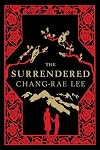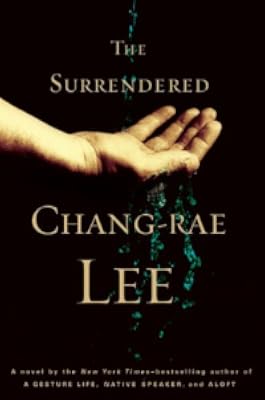
The Surrendered
by Chang-Rae Lee
On This Page
Description
Thirty years after vying for the attentions of a beautiful but damaged missionary wife at an orphanage, Korean orphan June Han and former GI Hector Brennan are reunited by a plot that forces them to come to terms with mysterious secrets from their past.Tags
Recommendations








Member Reviews
The Surrendered presents two people whose lives are unavoidably entangled after the Korean War. June Han, orphaned during the war, and Hector Brennan, an army man, come together after years of separation in a quest for some sense of closure or relief after the War’s attendant tragedy. Intertwined with the story of their present are the stories of their past and their haunting encounter with a woman named Sylvie Tanner, the minister’s wife from the Korean orphanage where they met.
The Surrendered is an intense read: it is mentally, emotionally, and sometimes even physically challenging. Lee does not shy away from the details that others cringe from. He tells stories of war and post-war life in a stark and carnal way that forces show more readers to see and feel what the characters see and feel.
Lee’s book is definitely for a more mature audience. Its words are sharp, biting, and to the point. He tells stories of love and war in equally tender detail. Though The Surrendered can sometimes be harsh, slow, and challenging, it opens a window into a period of time that most do not know enough about. show less
The Surrendered is an intense read: it is mentally, emotionally, and sometimes even physically challenging. Lee does not shy away from the details that others cringe from. He tells stories of war and post-war life in a stark and carnal way that forces show more readers to see and feel what the characters see and feel.
Lee’s book is definitely for a more mature audience. Its words are sharp, biting, and to the point. He tells stories of love and war in equally tender detail. Though The Surrendered can sometimes be harsh, slow, and challenging, it opens a window into a period of time that most do not know enough about. show less
This review was written for LibraryThing Member Giveaways.
The Surrendered is a difficult book to read. The writing itself is absolutely beautiful, so if you're a fan of fantastic prose, pick it up. Be warned, however, it's not a feel good book. I found it to be appointment reading for me. It was not a book I took on the bus, read over dinner or picked up when I had a spare moment. It's a book I would schedule to read a few hours at a time. It's tragic and lovely. As someone who enjoys tragic in the sense that if it's real or believable, it's important to know about, I enjoyed it. I think it's an important novel.
 This review was written for LibraryThing Early Reviewers.
This powerful novel of the horrors of war and the sorrows of love takes place in Manchuria during the Japanese occupation, war torn Korea, and NYC and Italy in the mid 1980s. June (Han) Singer is nearing the end of her unsuccessful battle with stomach cancer. She has survived the horrors of the Korean War, including the loss of her entire family and those whom she loved the most, and her unyielding determination, combined with a necessary streak of meanness, allowed her to become a successful antiques dealer in New York City. She refuses to die until she finds her only son, who is traveling throughout Europe but has not contacted her in several months. She learns that he is in trouble, and seeks the help of Hector Brennan, a handsome show more womanizer and alcoholic who rescued the teenaged June while he was stationed in Korea. Their lives remained connected during the years that Hector worked at the orphanage that housed June, which was run by the Reverend Tanner and his wife Sylvie. The impossible and tragic love that the flawed Sylvie, the handsome Hector and the fiery June share consumes all of them, and continues to affect their lives years later when June and Hector meet, for the last time.
I found The Surrendered to be a captivating novel, although one key incident in the story was a bit incredulous, and Hector's character and actions were difficult for me to understand and appreciate. This is a very good novel about isolation, identity and memory in the midst of war and unfulfilled love, and is definitely a recommended read. show less
I found The Surrendered to be a captivating novel, although one key incident in the story was a bit incredulous, and Hector's character and actions were difficult for me to understand and appreciate. This is a very good novel about isolation, identity and memory in the midst of war and unfulfilled love, and is definitely a recommended read. show less
This review was written for LibraryThing Early Reviewers.My laptop battery is going to die any second! I thought this was smart and sensitive and not sensationalistic and made you care about the characters, although there was this one incident in the middle that was just a fridge too far belief wise and almost, but not quite, sunk the whole thing. Recommended!
This review was written for LibraryThing Member Giveaways.
"The Surrendered" is an exploration of war, survival and the human spirit. It starts out with June, a child orphaned by the Korean war, struggling to get her two remaining siblings to safety in the midst of the war. It's a vast novel that intertwines June's story with that of a missionary and his troubled wife Sylvie, and an American GI, Hector, who tries in his own way to save June.
The historical aspect alone is quite interesting, and the author has done his research. This is a vast novel, coming in at over 500 pages, but it's worth the commitment. Each of the characters' lives echo the impact of war in different and fascinating ways, and their interplay with each other is at times tragic and at others healing. The author pulls no show more punches, and many scenes are fairly graphic but there is a purpose for this--he wants the reader to see the harsh reality of war and the way in which it irrevocably changes its survivors. As a therapist I appreciated how accurately the author captured what PTSD can look like. Hector's character with his survivor guilt was particularly touching. This is a novel that's frequently depressing but also uplifting in places, and well worth the read. show less
The historical aspect alone is quite interesting, and the author has done his research. This is a vast novel, coming in at over 500 pages, but it's worth the commitment. Each of the characters' lives echo the impact of war in different and fascinating ways, and their interplay with each other is at times tragic and at others healing. The author pulls no show more punches, and many scenes are fairly graphic but there is a purpose for this--he wants the reader to see the harsh reality of war and the way in which it irrevocably changes its survivors. As a therapist I appreciated how accurately the author captured what PTSD can look like. Hector's character with his survivor guilt was particularly touching. This is a novel that's frequently depressing but also uplifting in places, and well worth the read. show less
A large and ambitious novel, The Surrendered is a portrait of three lives irrevocably changed by war. It spans three decades and as many continents, but its greatest feats of imagination exist in the minds and hearts of its downtrodden characters. June, perhaps the central figure, was a young girl at the onset of the Korean war – in the first few pages of The Surrendered we see the terrible loss of her entire family. She is rescued from starvation by Hector, an American soldier who has also suffered from the violence and brutality of war. He takes them both to an orphanage where June finds shelter and he finds work. And there they both find Sylvie, the wife of a missionary running the orphanage. She is haunted by horrifying memories show more of her childhood, when she watched her missionary parents die at the hands of the Japanese in Manchuria. These three develop relationships that grow more complex and entangled as the years pass.
Thirty years later, Sylvie is dead. June is dying of stomach cancer in New York, and her final wish is to find her estranged son, Nicholas, who disappeared in Europe years earlier. She enlists Hector, now an alcoholic janitor living in New Jersey (and also, unbeknownst to him, Nicholas’s father), to help in her search. The narrative moves back and forth in time, each chapter leading us closer to an understanding of what war and the passage of time have done to this trio of individuals. While Sylvie and Hector have struggled through their lives, alternately trying to forget the past and atone for it, it is June who develops into the most mesmerizing and realistic character, stubborn and calculating and determined to survive at any cost. show less
Thirty years later, Sylvie is dead. June is dying of stomach cancer in New York, and her final wish is to find her estranged son, Nicholas, who disappeared in Europe years earlier. She enlists Hector, now an alcoholic janitor living in New Jersey (and also, unbeknownst to him, Nicholas’s father), to help in her search. The narrative moves back and forth in time, each chapter leading us closer to an understanding of what war and the passage of time have done to this trio of individuals. While Sylvie and Hector have struggled through their lives, alternately trying to forget the past and atone for it, it is June who develops into the most mesmerizing and realistic character, stubborn and calculating and determined to survive at any cost. show less
If you need Zoloft to get through the day and don't want to increase your dosage, run, don't walk, away from this book. It is about as far from a light, fun read as a book can be; the “serious literature” category is more apt.
The story grabbed me at chapter one. That chapter is about a little girl, June, who is trying to escape the horrors of the Korean war in 1950 and save her siblings as well as herself. Chapter two is the same person, sharp-edged and not very likeable, in 1986 New York, preparing for a journey to find her son. Intermingled are the stories of June, an American soldier (Hector), missionaries turned social workers, orphanages, lovers, loss, and betrayal.
While there are very dramatic events that take place, this is show more not an action story. It is a story about damaged souls going on to damage other souls. As is said of Hector, “Someone could easily argue that all of him had spoiled, even as his physique remained remarkably sound, that a special scan of his abstract being would show an unsettling result, revealing a soul neither bountiful nor spare but used up, right down to nothing.” A minor character who especially touched me was Dora, a hard-shelled, vulnerable barfly who might finally find some happiness.
The book bogged down a bit for me in the middle part, just a little too much description of that period in the story, but in the end, I was very glad I read it. The story is very dark but thoughtful and beautifully written. show less
The story grabbed me at chapter one. That chapter is about a little girl, June, who is trying to escape the horrors of the Korean war in 1950 and save her siblings as well as herself. Chapter two is the same person, sharp-edged and not very likeable, in 1986 New York, preparing for a journey to find her son. Intermingled are the stories of June, an American soldier (Hector), missionaries turned social workers, orphanages, lovers, loss, and betrayal.
While there are very dramatic events that take place, this is show more not an action story. It is a story about damaged souls going on to damage other souls. As is said of Hector, “Someone could easily argue that all of him had spoiled, even as his physique remained remarkably sound, that a special scan of his abstract being would show an unsettling result, revealing a soul neither bountiful nor spare but used up, right down to nothing.” A minor character who especially touched me was Dora, a hard-shelled, vulnerable barfly who might finally find some happiness.
The book bogged down a bit for me in the middle part, just a little too much description of that period in the story, but in the end, I was very glad I read it. The story is very dark but thoughtful and beautifully written. show less
Members
- Recently Added By
Published Reviews
ThingScore 75
Mr. Lee chronicles these cruel, heartbreaking events of war with harrowing, cinematic immediacy, making palpable the excruciating violence and the huge footprint it leaves on people’s lives. He not only shows us the sights and sounds of a country being torn apart by civil war, but also does an equally powerful job of conveying the emotional consequences of war — the psychological damage show more sustained by people, who will spend the rest of their lives trying to forget or exorcise terrible memories. show less
added by Shortride
Lists

Pulitzer Prize for Fiction - Finalists
88 works; 9 members

2008-2012 Notable Books for Adults
127 works; 10 members
Author Information

10+ Works 6,167 Members
Some Editions
Awards and Honors
Awards
Distinctions
Common Knowledge
- Original publication date
- 2010
- Important places
- Korea
- Important events
- Korean War
- First words
- The journey was nearly over.
- Last words
- (Click to show. Warning: May contain spoilers.)She was off her feet, alive.
Classifications
Statistics
- Members
- 808
- Popularity
- 34,335
- Reviews
- 56
- Rating
- (3.82)
- Languages
- 6 — Dutch, English, French, Italian, Polish, Spanish
- Media
- Paper, Audiobook, Ebook
- ISBNs
- 20
- ASINs
- 8