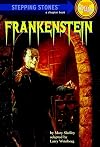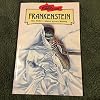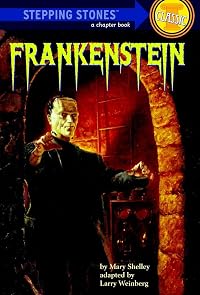
Frankenstein (A Stepping Stone Book)
by Larry Weinberg
On This Page
Description
A monster assembled by a scientist from parts of dead bodies develops a mind of his own as he learns to loathe himself and hate his creator.Tags
Recommendations






Member Reviews
This is the 1831 revised Edition of Mary Shelley's seminal horror novel rather than the original 1818 version. Oxford Classics now prefers to talk up the latter in an excess of literary purity but this is the version that a more mature Mary preferred and endorsed.
She wrote this originally in a burst of creativity when she was scarcely 19 and there is certainly merit in reading what her raw youth produced out of a fertile relationship with men of ideas in the wake of the failure of the radical impulse that her famous parents represented.
Nevertheless, what we have here is still the text preferred in her mid-30s. It should not be neglected. Whichever version is preferred, many who have been brought up on Frankenstein in later popular show more culture will have found the book hard-going.
This is probably because of expectations that the book should be science fiction when it is something else entirely, owing more to the concerns of the turn of the nineteenth century than to the world of the actual industrial-scientific revolution.
The two first Universal films stuck broadly to the spirit of the book but the science in the fiction is pretty small beer and the later tradition concerning it relies on her 1831 Introduction rather than anything in the novel.
She gives us some sense (in 1831) of the speculative interest in science amongst the poets and scribblers who met at Villa Diodati near Geneva in 1816 yet in the text she is extremely careful to say very little about Vicktor Frankenstein's methods.
The scientific aspects of the case may excite us now but a contemporary reader would have been much more aware of the Gothick horror aspect of the book and its political, moral and social sub-texts.
The 1818 Preface (which she admits happily enough was drafted by her husband) dwells on literary rather than scientific concerns. There is even a large nod in the story to the Arabian tale of the previous literary era.
Of course, critics are right to point out the many implausibilities, even ridiculousness, in the plotting, including the refined demonic sensibility of our monster, but this is expecting the literary mind of the period to be other than it could be.
The style may be (to us) almost comically declamatory and worthy yet this was the milieu of people whose leisure reading was still influenced by the likes of Fanny Burney and who were expected to consider literature to be a matter of high seriousness.
It is the moral and political aspects of the book that should perhaps interest us more than the rather self-serving claim of genre specialists for this book to have instigated the science fiction genre.
Mary was the daughter of the first great English anarcho-libertarian, William Godwin, and of the first great recognised feminist (even if that word has been debased by post-Marxists since), Mary Wollstonecraft. She was born into seriousness of purpose.
Her early teenage best friend and husband was the radical poet Percy Bysshe Shelley. The story is largely written and set near Geneva in Switzerland, where Voltaire settled and promoted radical ideas in the nearest thing in that era to a free country.
Much of the relationship between the monster and his creator and of both with society has to be seen in this context of moral seriousness and contemporary debates about human nature and the good society. The complexities explored and implied are remarkable from a late teenager.
This is not the place to try to produce a full critical essay on the novel but a few things stand out, elements that suggest a degree of constructive contestation with her parents' and Shelley's idealistic radicalism.
In 'class terms' this is a critical novel in understanding the problem of the bourgeoisie faced by the mob, a problem which emerged when the French Revolution resulted in the baying of blood and imperial tyranny instead of the rule of reason.
A similar crisis would take place in 1917 but the terms of that later problematic (what happens when the 'other' you want to liberate liberates themselves and then discovers an inconvenient agency of their own) were being set by Mary's post-revolutionary generation.
Percy Shelley remained a radical through and through until his death. Others, like Wordsworth, became deeply conservative. But Mary explores in this novel, if indirectly, the class tensions created by events over her life time and she becomes increasingly quietist in her responses.
The monster is the scientific creation of a driven romantic intellectual. It is hideous but it is not by any means necessarily bad. It is a blank slate, a form of rough hewn noble savage. What it (he) gets is rejection, as a child might be rejected by its mother.
The creator's rejection is then succeeded by a social rejection because of his uncouthness despite him making remarkable efforts at self-improvement (we should note that such self improvement was also the preferred stance of the radical working class of the day).
He sees, through his learning, a better world and then that world rejects him despite his learning its mores and its values. Rejected by his creator and by society, he goes bad, makes demands, threatens and murders to get his way and then slips into downright evil.
The sections devoted to his demonic evil are more (and are intended to be more) horrific than his actual creation. Peter Cushing's Hammer version reverses this: the later tradition prefers to see the monster through pathetic eyes ... but Mary's monster actively chooses evil.
The creation rejects his creator just as revolutionism and the Enlightenment came to reject the Creator but, however intended, the book refuses to offer us a simply homily. The creation is not evil because he was made that way from the start, he becomes so because of his treatment.
And what is the nature of that evil - it is a determination on revenge and a stalking of his creator in order to get what he wants and, when he does not, a cruel game of cat-and-mouse with Frankenstein to cause him maximum suffering at every turn.
The 'monster' hates his Creator because his creator is, in fact, insensitive and emotionally cold, someone who clearly wishes he had aborted his own 'child'. The reading back to the relationship between God and Man in everyday life is not hard to make.
Yes, there is the Promethean or Faustian aspect to the novel - the search for knowledge beyond what should be known (the central theme of the image of Frankenstein ever since) but the book itself makes this second order to the Luciferian evil of the created one, this new Adam.
And note the fascinating fear (one of the truly science fiction aspects of the novel) that the new Adam will procreate with a new Eve and create a new species that will displace humanity - in effect, a version of Nietzsche's 'ubermensch' or transhumanism 'avant la lettre'.
Here the seeds of the later pathos are to be found - though bad, then evil, after a sincere attempt at good, the monster was cruelly rejected, self improved, tried to connect with humanity, was traumatically rejected and simply wanted autonomy as a new proto-species.
But now let us return to the politics of the mob and the bourgeoisie. It is not hard to see the mob as the 'other' as a monster 'created in our image' but rough-hewn and clumsy.
What happens when this 'other' is rejected by us despite its attempts to be like us? Why, it becomes criminal, devious and demanding and eventually, if rejected enough, and virtually told that it must not reproduce, it seeks bloody revenge and torments 'us' with fear.
The 'us' is not you or me but it is the middle class readership of novels in the most advanced economy of its day, dedicating itself to moral improvement and the arts despite adversities (as in the family in the monster's story). It goes to Church.
This insight of Mary's into the problem of the middle classes when faced by the 'masses' is the story of much of Western political culture ever since. The middle classes actively try to create their working class through 'improvement' but are insensitive to its own sense of autonomy.
As aristocratic deference collapsed, the middle classes either had to recognise the desire of the mass to share in what they had or, eventually, to try and rule it by fear and so extirpate the 'criminal' (meaning inconvenient) self assertions, the Miltonic aspects, of the Satanic mob.
There have been many attempted solutions to this problem since then but the core issue remains much as it did when Mary created a dialectical struggle between Frankenstein and his monster - the progressive intellectual cannot recognise the monster as his moral equal. show less
She wrote this originally in a burst of creativity when she was scarcely 19 and there is certainly merit in reading what her raw youth produced out of a fertile relationship with men of ideas in the wake of the failure of the radical impulse that her famous parents represented.
Nevertheless, what we have here is still the text preferred in her mid-30s. It should not be neglected. Whichever version is preferred, many who have been brought up on Frankenstein in later popular show more culture will have found the book hard-going.
This is probably because of expectations that the book should be science fiction when it is something else entirely, owing more to the concerns of the turn of the nineteenth century than to the world of the actual industrial-scientific revolution.
The two first Universal films stuck broadly to the spirit of the book but the science in the fiction is pretty small beer and the later tradition concerning it relies on her 1831 Introduction rather than anything in the novel.
She gives us some sense (in 1831) of the speculative interest in science amongst the poets and scribblers who met at Villa Diodati near Geneva in 1816 yet in the text she is extremely careful to say very little about Vicktor Frankenstein's methods.
The scientific aspects of the case may excite us now but a contemporary reader would have been much more aware of the Gothick horror aspect of the book and its political, moral and social sub-texts.
The 1818 Preface (which she admits happily enough was drafted by her husband) dwells on literary rather than scientific concerns. There is even a large nod in the story to the Arabian tale of the previous literary era.
Of course, critics are right to point out the many implausibilities, even ridiculousness, in the plotting, including the refined demonic sensibility of our monster, but this is expecting the literary mind of the period to be other than it could be.
The style may be (to us) almost comically declamatory and worthy yet this was the milieu of people whose leisure reading was still influenced by the likes of Fanny Burney and who were expected to consider literature to be a matter of high seriousness.
It is the moral and political aspects of the book that should perhaps interest us more than the rather self-serving claim of genre specialists for this book to have instigated the science fiction genre.
Mary was the daughter of the first great English anarcho-libertarian, William Godwin, and of the first great recognised feminist (even if that word has been debased by post-Marxists since), Mary Wollstonecraft. She was born into seriousness of purpose.
Her early teenage best friend and husband was the radical poet Percy Bysshe Shelley. The story is largely written and set near Geneva in Switzerland, where Voltaire settled and promoted radical ideas in the nearest thing in that era to a free country.
Much of the relationship between the monster and his creator and of both with society has to be seen in this context of moral seriousness and contemporary debates about human nature and the good society. The complexities explored and implied are remarkable from a late teenager.
This is not the place to try to produce a full critical essay on the novel but a few things stand out, elements that suggest a degree of constructive contestation with her parents' and Shelley's idealistic radicalism.
In 'class terms' this is a critical novel in understanding the problem of the bourgeoisie faced by the mob, a problem which emerged when the French Revolution resulted in the baying of blood and imperial tyranny instead of the rule of reason.
A similar crisis would take place in 1917 but the terms of that later problematic (what happens when the 'other' you want to liberate liberates themselves and then discovers an inconvenient agency of their own) were being set by Mary's post-revolutionary generation.
Percy Shelley remained a radical through and through until his death. Others, like Wordsworth, became deeply conservative. But Mary explores in this novel, if indirectly, the class tensions created by events over her life time and she becomes increasingly quietist in her responses.
The monster is the scientific creation of a driven romantic intellectual. It is hideous but it is not by any means necessarily bad. It is a blank slate, a form of rough hewn noble savage. What it (he) gets is rejection, as a child might be rejected by its mother.
The creator's rejection is then succeeded by a social rejection because of his uncouthness despite him making remarkable efforts at self-improvement (we should note that such self improvement was also the preferred stance of the radical working class of the day).
He sees, through his learning, a better world and then that world rejects him despite his learning its mores and its values. Rejected by his creator and by society, he goes bad, makes demands, threatens and murders to get his way and then slips into downright evil.
The sections devoted to his demonic evil are more (and are intended to be more) horrific than his actual creation. Peter Cushing's Hammer version reverses this: the later tradition prefers to see the monster through pathetic eyes ... but Mary's monster actively chooses evil.
The creation rejects his creator just as revolutionism and the Enlightenment came to reject the Creator but, however intended, the book refuses to offer us a simply homily. The creation is not evil because he was made that way from the start, he becomes so because of his treatment.
And what is the nature of that evil - it is a determination on revenge and a stalking of his creator in order to get what he wants and, when he does not, a cruel game of cat-and-mouse with Frankenstein to cause him maximum suffering at every turn.
The 'monster' hates his Creator because his creator is, in fact, insensitive and emotionally cold, someone who clearly wishes he had aborted his own 'child'. The reading back to the relationship between God and Man in everyday life is not hard to make.
Yes, there is the Promethean or Faustian aspect to the novel - the search for knowledge beyond what should be known (the central theme of the image of Frankenstein ever since) but the book itself makes this second order to the Luciferian evil of the created one, this new Adam.
And note the fascinating fear (one of the truly science fiction aspects of the novel) that the new Adam will procreate with a new Eve and create a new species that will displace humanity - in effect, a version of Nietzsche's 'ubermensch' or transhumanism 'avant la lettre'.
Here the seeds of the later pathos are to be found - though bad, then evil, after a sincere attempt at good, the monster was cruelly rejected, self improved, tried to connect with humanity, was traumatically rejected and simply wanted autonomy as a new proto-species.
But now let us return to the politics of the mob and the bourgeoisie. It is not hard to see the mob as the 'other' as a monster 'created in our image' but rough-hewn and clumsy.
What happens when this 'other' is rejected by us despite its attempts to be like us? Why, it becomes criminal, devious and demanding and eventually, if rejected enough, and virtually told that it must not reproduce, it seeks bloody revenge and torments 'us' with fear.
The 'us' is not you or me but it is the middle class readership of novels in the most advanced economy of its day, dedicating itself to moral improvement and the arts despite adversities (as in the family in the monster's story). It goes to Church.
This insight of Mary's into the problem of the middle classes when faced by the 'masses' is the story of much of Western political culture ever since. The middle classes actively try to create their working class through 'improvement' but are insensitive to its own sense of autonomy.
As aristocratic deference collapsed, the middle classes either had to recognise the desire of the mass to share in what they had or, eventually, to try and rule it by fear and so extirpate the 'criminal' (meaning inconvenient) self assertions, the Miltonic aspects, of the Satanic mob.
There have been many attempted solutions to this problem since then but the core issue remains much as it did when Mary created a dialectical struggle between Frankenstein and his monster - the progressive intellectual cannot recognise the monster as his moral equal. show less
Good abridgement of the book that can interest young people to classic fiction. My son enjoyed it with me.
Ratings
Members
- Recently Added By
Author Information

All Editions
Some Editions
Series
Belongs to Publisher Series
Stepping Stone (Classic)
Work Relationships
Is an adaptation of
Common Knowledge
- Canonical title
- Frankenstein (A Stepping Stone Book) (A Stepping Stone Book)
- People/Characters
- Mary Wollstonecraft Shelley
- Disambiguation notice
- This is the Stepping Stone adaptation of Frankenstein, not the original book.
Adaption by Larry Weinberg. Please do not combine with main work.
This is an abridged version of the story Frankenstein. Please do not combine it with the unabridged work.
Classifications
Statistics
- Members
- 228
- Popularity
- 142,315
- Reviews
- 3
- Rating
- (4.00)
- Languages
- English, French
- Media
- Paper, Ebook
- ISBNs
- 9
- ASINs
- 2