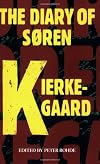
The Diary of Søren Kierkegaard
by Søren Kierkegaard
On This Page
Description
Selections from the writings of the Danish philosopher covering the important events in his life, his relations with his father, the influence of other writers upon him, his engagement, and his quarrel with the Church.Tags
Recommendations

















Member Reviews
This is not a book to start with Kierkegaard. I'd recommend having several, if not many of his works read before picking up the journals. And maybe not even then. If you want a psychological biography or local history for context, then The Journals are worthwhile. Otherwise The Journals knocks Kierkegaard down many pegs, and weakens his arguments by providing a picture of a lesser man than his work. A "humble" man complaining about slights of disrespect. His jilted fiancee doesn't celebrate the anniversary of their engagement twelve years later. Many friend were disloyal for not publicly defending him when "attacked," (i.e. less than glowingly reviewed). The bishop that goes to his grave without acknowledging that Kierkegaard efforts to show more condemn the Danish Church was really to support the bishop, but the bishop was too stupid to understand. Mingled in are many thoughts, particularly about religion, Christianity and faith, that are pithy and oft quoted. Find the quotes on the web. They will be stronger without the whiny diary of a genius. show less
Soren Kierkegaard, who was born in Denmark and died there at the age of forty-two, is regarded by many as the father of existentialist thinking. During his lifetime the Hegelian theologian he reacted against the Hegelian theologists in Denmark, denounced organized religion and held that the act of choice by an individual was all-important.
The Diary covers the important elements in Kierkegaard's life, including his childhood, his relations with his father, the influence of other writers on him, his broken engagement (which had a far-reaching effect on the rest of his life), and his celebrated quarrel with the Church.
Kierkegaard's writings are important because he is almost the first European writer to take a modern, analytical, show more psychological approach to religion. Proust, Joyce, and Aldous Huxley were only a few of the modern writers influenced by the Dane; and Jean-Paul Sartre's philosophy of existentialism is based on his thinking. show less
The Diary covers the important elements in Kierkegaard's life, including his childhood, his relations with his father, the influence of other writers on him, his broken engagement (which had a far-reaching effect on the rest of his life), and his celebrated quarrel with the Church.
Kierkegaard's writings are important because he is almost the first European writer to take a modern, analytical, show more psychological approach to religion. Proust, Joyce, and Aldous Huxley were only a few of the modern writers influenced by the Dane; and Jean-Paul Sartre's philosophy of existentialism is based on his thinking. show less
100 KIE 3
Ratings
Members
- Recently Added By
Author Information

634+ Works 33,201 Members
Born in Copenhagen, Denmark, Søren Kierkegaard was the son of a wealthy middle-class merchant. He lived all his life on his inheritance, using it to finance his literary career. He studied theology at the University of Copenhagen, completing a master's thesis in 1841 on the topic of irony in Socrates. At about this time, he became engaged to a show more woman he loved, but he broke the engagement when he decided that God had destined him not to marry. The years 1841 to 1846 were a period of intense literary activity for Kierkegaard, in which he produced his "authorship," a series of writings of varying forms published under a series of fantastic pseudonyms. Parallel to these, he wrote a series of shorter Edifying Discourses, quasi-sermons published under his own name. As he later interpreted it in the posthumously published Point of View for My Work as an Author, the authorship was a systematic attempt to raise the question of what it means to be a Christian. Kierkegaard was persuaded that in his time people took the meaning of the Christian life for granted, allowing all kinds of worldly and pagan ways of thinking and living to pass for Christian. He applied this analysis especially to the speculative philosophy of German idealism. After 1846, Kierkegaard continued to write, publishing most works under his own name. Within Denmark he was isolated and often despised, a man whose writings had little impact in his own day or for a long time afterward. They were translated into German early in the twentieth century and have had an enormous influence since then, on both Christian theology and the existentialist tradition in philosophy. (Bowker Author Biography) show less
Some Editions
Series
Belongs to Publisher Series
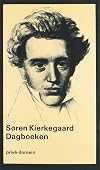
Privé-domein (174)
Work Relationships
Is contained in
Common Knowledge
- Canonical title
- The Diary of Søren Kierkegaard
- Original publication date
- 1938
- People/Characters
- Søren Kierkegaard
- Important places
- Denmark
- First words
- 1836. 1. I have just returned from a party of which I was the life and soul; witty banter flowed from my lips, everyone laughed and admired me - but I came away, indeed that dash should be as long as the radii of the earth's ... (show all)orbit -------------- wanting to shoot myself.
Classifications
- Genres
- Philosophy, Nonfiction, Religion & Spirituality, Biography & Memoir, General Nonfiction
- DDC/MDS
- 198.9 — Philosophy & psychology Modern western philosophy Philosophy of Scandinavia and Finland Denmark
- LCC
- BX4827 .K5 .A4 — Philosophy, Psychology and Religion Christian Denominations Christian Denominations Protestantism General
- BISAC
Statistics
- Members
- 505
- Popularity
- 59,732
- Reviews
- 3
- Rating
- (3.83)
- Languages
- 5 — Dutch, English, German, Italian, Swedish
- Media
- Paper, Ebook
- ISBNs
- 5
- ASINs
- 22