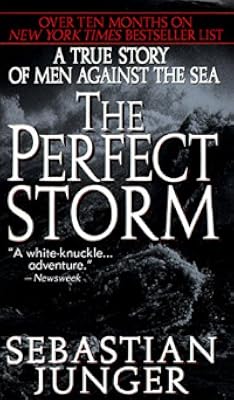
The Perfect Storm: A True Story of Men against the Sea
by Sebastian Junger
On This Page
Description
The incredible true account of the most extraordinary storm of the 20th century, this is the story of a tempest born from so rare a combination of factors it was deemed "perfect" and of the doomed fishing boat with her crew of six that was helpless in the midst of a force beyond comprehension.Tags
Recommendations
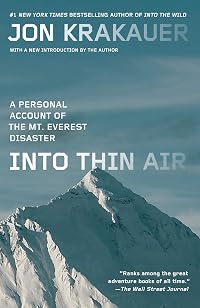

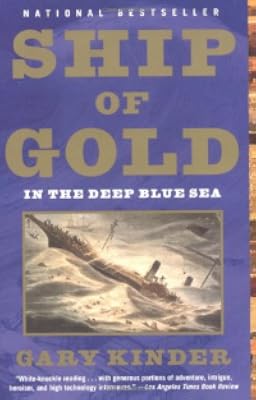
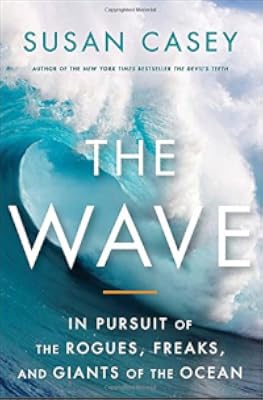
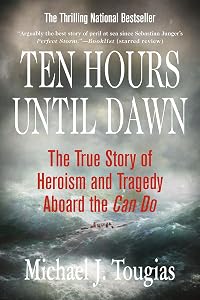
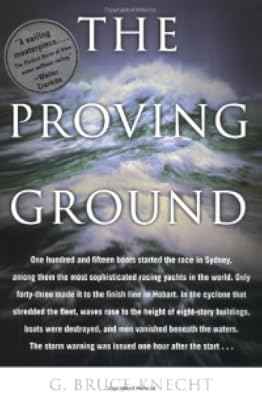
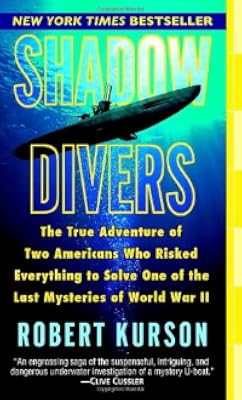




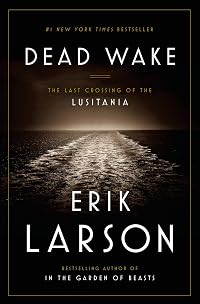
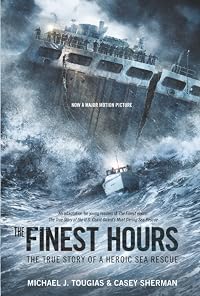
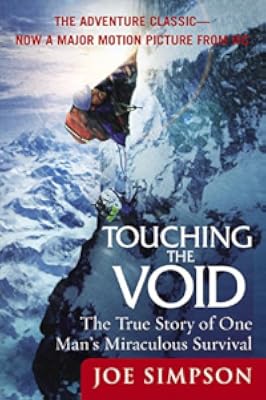
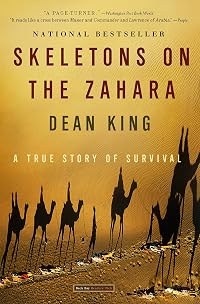


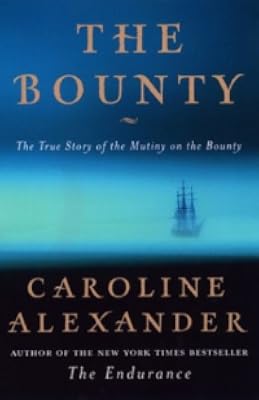
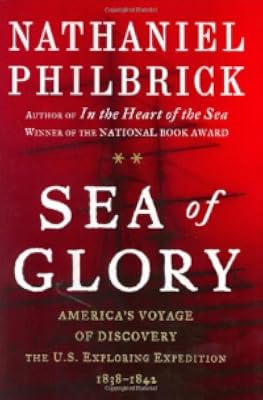
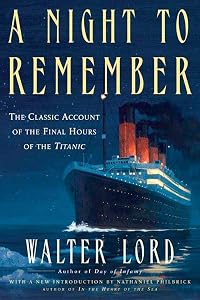
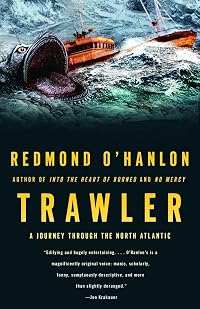
Member Recommendations
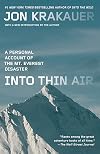
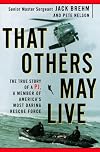
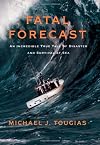
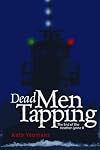
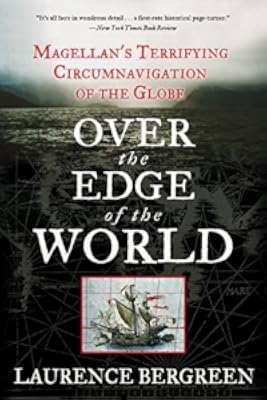
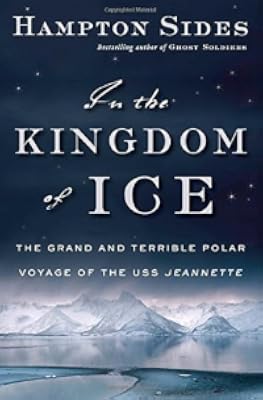
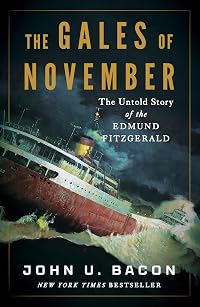
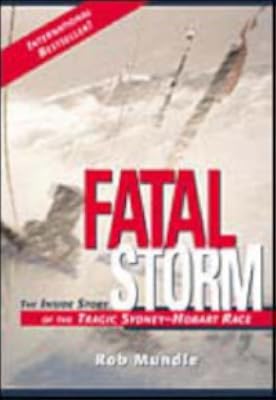
nandadevi Some of the same people figure in both these books.
caimanjosh Both are harrowing tales of terrible storms, seas, and ships foundering. The Last Run might be even more riveting in its description of what the men in the sea had to go through. Both are terrific.

Member Reviews
It doesn't take Sebastian Junger's quotations from Moby-Dick and the Bible, used to open some of his chapters in The Perfect Storm, to make you realise that the sea and the men who navigate it has long been fertile ground for literary endeavours. The true story recorded in Junger's breakout piece of narrative journalism would be innately fascinating told by any hand: a crew of six hardened fishermen aboard a small commercial fishing vessel find themselves at the mercy of a once-in-a-century "meteorological hell" (pg. 104) in the open Atlantic. A storm – the "perfect storm", in fact (pg. 150) – a confluence of various extreme weather fronts over our doomed everymen, including a hurricane, that ultimately sinks the Andrea Gail and its show more occupants without trace.
That the ship and its men are lost is not a spoiler, for want of a better term, for how could it be otherwise? Junger goes into great detail about the circumstances surrounding the loss of the Andrea Gail and its souls: how such a 'perfect' storm brewed; about so-called 'rogue' waves and how even top-of-the-line ships can have their backs broken by them; about how oil tankers and even aircraft carriers would be at risk faced with a single big wave, let alone a small fishing boat facing countless numbers of them, from all directions, relentlessly over the course of many hours.
A mere recitation of some of the facts Junger unpacks is mind-boggling: "the combined nuclear arsenals of the United States and the former Soviet Union don't contain enough energy to keep a hurricane going for one day" (pg. 102); on one large ship, the storm peeled shipping containers "open like sardine cans, forty feet above the surface" (pg. 114); during a rescue elsewhere in the storm, the waves took the man in the water thirty feet higher than the rescuers in a hovering helicopter (pg. 197). The waves in the Perfect Storm topped 100 feet, among the highest waves ever recorded (pg. 119). There may well have been higher ones throughout history, but they are so unpredictable and so devastating that those who likely encountered them did not live to tell it. I read part of Junger's book at work, in the break-room of my office building, and was stunned to realise, looking down, that the waves which struck the men of the Andrea Gail would be almost twice as high as from where I stood. I'm not of a mind to quit my desk job and join the fishing fleet, let me tell you.
I took my time reading the book, because even the contemplation of any single part of this scenario is frightening. To know that these people – real people, to those lives Junger devotes many pages – actually faced that, at their end, in the dark, is unimaginable. Junger, nevertheless, undertakes a number of strategies to bridge the imagination gap. His account of the final moments of the Andrea Gail, he freely admits, can only be conjecture, but he bases his conjecture on research and on the experiences of those who survived similar events, including fishermen who counted the men of the Andrea Gail among their friends. He supplements this with in-depth yet readable information on sword-fishing, search-and-rescue, and meteorology. By the time the reader finishes the book, Junger has given them so much relevant information that even the most complacent reader no longer wonders how mere water and wind could sink a modern sea-going vessel. In fact, the reader likely goes to the opposite extreme, and wonders how or why any man would ever choose to lose sight of shore. When we first read, on page 70, of how "more people are killed on fishing boats, per capita, than in any other job in the United States", we think of possible negligence and safety measures and technological advances. By the end, we look back on that quote and reach, like the fishermen often do, for superstition, fate, and a primal respect for the naked forces which brawl across the world.
Junger supplements his account of the men of the Andrea Gail with other "nightmarish, white-knuckle business" which took place during the Perfect Storm (pg. 182), not least the afore-mentioned helicopter rescue. Knowing that other men died during the storm helps provide some perspective: this is not a romance of the sea, a tragic tale that affected the Andrea Gail especially, the ship a unique icon marked out for some moral lesson about the hubris of man. Junger strips away pretensions, sentimentality and literary artifice; he soberly constructs an environment where the smallness of man and the arbitrariness of the ocean – a place where 70-foot waves roam "like surly giants" (pg. 138) – are the only possible conclusions. When the Andrea Gail goes down, there is no music playing, no nobility on display; only desperation and futile human struggle. This is one great advantage the book has over its movie adaptation of the same name. Not only does the movie have the music playing, but it feels obliged to add some counterfeit drama to the story: George Clooney's character is portrayed as having deliberately headed into the storm when he could have escaped it. Hollywood abhors a narrative vacuum; if those men had to die on screen there had to be a token moral lesson behind it, and the token they reached for was hubris, and perhaps greed.
Junger, in contrast – and to his great credit – has no qualms about facing the reality of the true story. The circumstances he has laid out show us clearly that the Andrea Gail had no time or ability to escape; not only were storms an occupational hazard for seasoned fishermen, but the boat steps into the Perfect Storm "the way one might step into a room" (pg. 105). Such turns of phrase are not infrequent in the book, and Junger's deployment of them does much to keep the reader anchored during the wild unfathomability of the events described. Nowhere is the depth and reality of the tragedy more apparent than in the sequence of pages where, with the Andrea Gail going down with all hands, Junger dissects, at torturous length, the sensations and the medical immediacy of drowning (pp140-6). Strange as it might sound, I mean the word 'torturous' positively; Junger's unavoidable forensic reality mimics the helplessness and the banal tragedy of these men in that moment. It's so potent it's unbearable.
And yet, strangely, it's not voyeuristic; Junger recognises a wound is healed by being touched with care, not by being ignored. The deaths are appalling – and they were real men – but it would be disrespectful if the story was told using euphemisms and polite evasions. This is great, mature writing, and throughout The Perfect Storm Junger achieves a balancing act of respect towards the dead, respect towards the sea, and respect towards what the reader can take in (emotionally and meteorologically). I mentioned at the start of my review that stories of the sea have long been fertile ground for our imagination, and the story of The Perfect Storm would have been arresting even if told by a second-rate writer. That Junger is able to add writing of real calibre to the piece makes it truly special. show less
That the ship and its men are lost is not a spoiler, for want of a better term, for how could it be otherwise? Junger goes into great detail about the circumstances surrounding the loss of the Andrea Gail and its souls: how such a 'perfect' storm brewed; about so-called 'rogue' waves and how even top-of-the-line ships can have their backs broken by them; about how oil tankers and even aircraft carriers would be at risk faced with a single big wave, let alone a small fishing boat facing countless numbers of them, from all directions, relentlessly over the course of many hours.
A mere recitation of some of the facts Junger unpacks is mind-boggling: "the combined nuclear arsenals of the United States and the former Soviet Union don't contain enough energy to keep a hurricane going for one day" (pg. 102); on one large ship, the storm peeled shipping containers "open like sardine cans, forty feet above the surface" (pg. 114); during a rescue elsewhere in the storm, the waves took the man in the water thirty feet higher than the rescuers in a hovering helicopter (pg. 197). The waves in the Perfect Storm topped 100 feet, among the highest waves ever recorded (pg. 119). There may well have been higher ones throughout history, but they are so unpredictable and so devastating that those who likely encountered them did not live to tell it. I read part of Junger's book at work, in the break-room of my office building, and was stunned to realise, looking down, that the waves which struck the men of the Andrea Gail would be almost twice as high as from where I stood. I'm not of a mind to quit my desk job and join the fishing fleet, let me tell you.
I took my time reading the book, because even the contemplation of any single part of this scenario is frightening. To know that these people – real people, to those lives Junger devotes many pages – actually faced that, at their end, in the dark, is unimaginable. Junger, nevertheless, undertakes a number of strategies to bridge the imagination gap. His account of the final moments of the Andrea Gail, he freely admits, can only be conjecture, but he bases his conjecture on research and on the experiences of those who survived similar events, including fishermen who counted the men of the Andrea Gail among their friends. He supplements this with in-depth yet readable information on sword-fishing, search-and-rescue, and meteorology. By the time the reader finishes the book, Junger has given them so much relevant information that even the most complacent reader no longer wonders how mere water and wind could sink a modern sea-going vessel. In fact, the reader likely goes to the opposite extreme, and wonders how or why any man would ever choose to lose sight of shore. When we first read, on page 70, of how "more people are killed on fishing boats, per capita, than in any other job in the United States", we think of possible negligence and safety measures and technological advances. By the end, we look back on that quote and reach, like the fishermen often do, for superstition, fate, and a primal respect for the naked forces which brawl across the world.
Junger supplements his account of the men of the Andrea Gail with other "nightmarish, white-knuckle business" which took place during the Perfect Storm (pg. 182), not least the afore-mentioned helicopter rescue. Knowing that other men died during the storm helps provide some perspective: this is not a romance of the sea, a tragic tale that affected the Andrea Gail especially, the ship a unique icon marked out for some moral lesson about the hubris of man. Junger strips away pretensions, sentimentality and literary artifice; he soberly constructs an environment where the smallness of man and the arbitrariness of the ocean – a place where 70-foot waves roam "like surly giants" (pg. 138) – are the only possible conclusions. When the Andrea Gail goes down, there is no music playing, no nobility on display; only desperation and futile human struggle. This is one great advantage the book has over its movie adaptation of the same name. Not only does the movie have the music playing, but it feels obliged to add some counterfeit drama to the story: George Clooney's character is portrayed as having deliberately headed into the storm when he could have escaped it. Hollywood abhors a narrative vacuum; if those men had to die on screen there had to be a token moral lesson behind it, and the token they reached for was hubris, and perhaps greed.
Junger, in contrast – and to his great credit – has no qualms about facing the reality of the true story. The circumstances he has laid out show us clearly that the Andrea Gail had no time or ability to escape; not only were storms an occupational hazard for seasoned fishermen, but the boat steps into the Perfect Storm "the way one might step into a room" (pg. 105). Such turns of phrase are not infrequent in the book, and Junger's deployment of them does much to keep the reader anchored during the wild unfathomability of the events described. Nowhere is the depth and reality of the tragedy more apparent than in the sequence of pages where, with the Andrea Gail going down with all hands, Junger dissects, at torturous length, the sensations and the medical immediacy of drowning (pp140-6). Strange as it might sound, I mean the word 'torturous' positively; Junger's unavoidable forensic reality mimics the helplessness and the banal tragedy of these men in that moment. It's so potent it's unbearable.
And yet, strangely, it's not voyeuristic; Junger recognises a wound is healed by being touched with care, not by being ignored. The deaths are appalling – and they were real men – but it would be disrespectful if the story was told using euphemisms and polite evasions. This is great, mature writing, and throughout The Perfect Storm Junger achieves a balancing act of respect towards the dead, respect towards the sea, and respect towards what the reader can take in (emotionally and meteorologically). I mentioned at the start of my review that stories of the sea have long been fertile ground for our imagination, and the story of The Perfect Storm would have been arresting even if told by a second-rate writer. That Junger is able to add writing of real calibre to the piece makes it truly special. show less
It's the last days of October 1991. Most of the Gloucester swordfishing fleet is on the fishing grounds and will be there for another week or so. The Andrea Gail, however is headed home. She's off her usual cycle and with a broken ice-machine and a hold full of fish, her men are ready to go home. With the rest of the fleet out, their boat and their fish will be alone in the harbor, promising a good payday for the 6 men aboard. At 6:00 PM on October 28th, she is hailed by the Mary T, to the southeast. This is the last anyone will hear from the six mean aboard; Captain Billy Tyne, David "Sully" Sullivan, Bobby Shatford, Michael "Bugsy" Moran, Dale "Murph" Murphy, and Alfred Pierre.
If you think you know what this book is about, you're show more probably wrong. Junger of course reconstructs to the best of his, or anyone else's ability, what happened to the Andrea Gail as she tried to ride out the "Storm of the Century," which at one point was so large it's eye stretched from Newfoundland in the north to Jamaica in the south. What I learned about history, meteorology, and the fishing industry, amongst more, could have filled more than this one slim volume. That Junger does all of this in such an accessible way is a testament to his skill with the written word. In addition to the disappearance of the Andrea Gail, he also includes the stories of several other daring rescues, sometimes of the rescuers themselves, that became necessary as this storm terrorized the seaboard and oceans off the northeast coast of North America. Not only did he provide a surprising amount of information in this 236 page book, but he did it in such an accessible manner that I didn't want to put the book down. I needed to know what happened to the Andrea Gail, the Japanese Eishin Maru #78, the Satori, and the Air National Guard para-rescue jumpers who had to ditch their plane when the were unable to refuel mid-air. Junger kept me hooked to the very last page in a way that even a great thriller usually fails to do.
I picked this book up when my curiosity was piqued by the 2000 film of the same name. I was told not to expect the book to be anything like the movie, and it wasn't. It couldn't be though. The novel must stick the facts while the movie had more license to create a fictional account of what happened on board the vessel before it vanished. Both the truth and the fiction, however, have their place and I highly recommend reading and watching them together. show less
If you think you know what this book is about, you're show more probably wrong. Junger of course reconstructs to the best of his, or anyone else's ability, what happened to the Andrea Gail as she tried to ride out the "Storm of the Century," which at one point was so large it's eye stretched from Newfoundland in the north to Jamaica in the south. What I learned about history, meteorology, and the fishing industry, amongst more, could have filled more than this one slim volume. That Junger does all of this in such an accessible way is a testament to his skill with the written word. In addition to the disappearance of the Andrea Gail, he also includes the stories of several other daring rescues, sometimes of the rescuers themselves, that became necessary as this storm terrorized the seaboard and oceans off the northeast coast of North America. Not only did he provide a surprising amount of information in this 236 page book, but he did it in such an accessible manner that I didn't want to put the book down. I needed to know what happened to the Andrea Gail, the Japanese Eishin Maru #78, the Satori, and the Air National Guard para-rescue jumpers who had to ditch their plane when the were unable to refuel mid-air. Junger kept me hooked to the very last page in a way that even a great thriller usually fails to do.
I picked this book up when my curiosity was piqued by the 2000 film of the same name. I was told not to expect the book to be anything like the movie, and it wasn't. It couldn't be though. The novel must stick the facts while the movie had more license to create a fictional account of what happened on board the vessel before it vanished. Both the truth and the fiction, however, have their place and I highly recommend reading and watching them together. show less
Why have I not already read this? I'm a weather geek, and this is a well-written, well-researched book about a monstrous weather event.
Junger includes LOTS of details, so much that I skimmed over some, but fishermen and people who just love technical details will appreciate that. He also includes the personal emotional side from the families of people lost in the storm, for those of us who like to know the human side of events.
I hadn't known what the life of a commercial fisherman was like, and that was ultimately the biggest thing I took away from the book. Fishing towns, fishing crews, loved ones of maritime workers are all illuminated by this book.
Junger includes LOTS of details, so much that I skimmed over some, but fishermen and people who just love technical details will appreciate that. He also includes the personal emotional side from the families of people lost in the storm, for those of us who like to know the human side of events.
I hadn't known what the life of a commercial fisherman was like, and that was ultimately the biggest thing I took away from the book. Fishing towns, fishing crews, loved ones of maritime workers are all illuminated by this book.
In my opinion, The Perfect Storm is a benchmark for outstanding non-fiction writing. The way Junger has pieced together this horror story from scientific evidence, local history, and third party accounts of the storm is amazing. I read this while on holiday, looking out from a holiday apartment watching charter boats leave a harbour. Every paragraph I read was one too close to finishing. I'll read this book many times again.
Of course I've seen the film, many years ago, and loved it for years. I was aware that it was based on a book (a friend who came to visit read it when she came across on the ferry many years ago, much to the amusement of the other passengers), and I've always wanted to read it, but I've never gotten around to it.
Then I bought a set of books called 'Stranger Than Fiction...' from The Book People, which are all stories about real people and events, but which are, funnily enough, stranger than fiction. They are all beautiful books. The covers are really pretty (which always makes a book nice to look at).
This book was more the sort of thing I had been expecting Longitude to be. It was all based on fact, there was a lot of factual show more information packed into the story, but there was speculation there which posed events as they might have been. It was very well done, especially considering that when it was written in 1997, it wasn't that long since the actual storm itself and by writing the book Junger was going to be opening wounds that were barely healed for the family and friends of the lost men.
I really enjoyed it. If I hadn't been quite so busy working on my OU, I probably would have finished it much quicker. Although it had a lot of information about weather and boating terms (which when compared to the similar aspects of Longitude which detailed sailing and how clocks were made/used which I found quite boring), but it was all explained in a really interesting way. It was written in a slightly more 'literary' style (totally borrowing from my course here) which meant that even though there were technical terms which might have bogged it down, they were almost poetic in places and described using quotes from people who had experienced the events themselves.
One thing which might ordinarily have annoyed me, but which really didn't, was the switches in tenses through the book. As it was dealing with events that had happened, specutlation on what might have happened, as well as memories, there as some shifting between present and past tense. I did become aware of it somewhere around the first couple of chapters of the book, and sort of noted that it wasn't bugging me, probably because it felt like a very natural way to move between the past and present.
Obviously, having seen the film, I knew how the book would end, but there were differences. I was surprised at how little focus there was on the crew of the Andrea Gail. The main focus of the film is obviously on the men and the events on the boat before and during the storm. In the book Junger spends a lot of time explaining that it's not possible to know what happened, but that other people who have been in similar situations and survived have experiences this. It's a very respectful way of handling what happened.
I found it really sad in places, which was kind of expected, given the subject matter. It was also kind of creepy; there's a lot of superstitions surrounding fishing (and sailing in general). The dreams that family members had following the loss of the boat were heartbreaking.
I really did enjoy this book and I'm so glad that I've read it. I'd definitely recommend it, though maybe not to someone who's got to travel by boat regularly. I don't think I could have done it when I was having to commute off the island everyday. show less
Then I bought a set of books called 'Stranger Than Fiction...' from The Book People, which are all stories about real people and events, but which are, funnily enough, stranger than fiction. They are all beautiful books. The covers are really pretty (which always makes a book nice to look at).
This book was more the sort of thing I had been expecting Longitude to be. It was all based on fact, there was a lot of factual show more information packed into the story, but there was speculation there which posed events as they might have been. It was very well done, especially considering that when it was written in 1997, it wasn't that long since the actual storm itself and by writing the book Junger was going to be opening wounds that were barely healed for the family and friends of the lost men.
I really enjoyed it. If I hadn't been quite so busy working on my OU, I probably would have finished it much quicker. Although it had a lot of information about weather and boating terms (which when compared to the similar aspects of Longitude which detailed sailing and how clocks were made/used which I found quite boring), but it was all explained in a really interesting way. It was written in a slightly more 'literary' style (totally borrowing from my course here) which meant that even though there were technical terms which might have bogged it down, they were almost poetic in places and described using quotes from people who had experienced the events themselves.
One thing which might ordinarily have annoyed me, but which really didn't, was the switches in tenses through the book. As it was dealing with events that had happened, specutlation on what might have happened, as well as memories, there as some shifting between present and past tense. I did become aware of it somewhere around the first couple of chapters of the book, and sort of noted that it wasn't bugging me, probably because it felt like a very natural way to move between the past and present.
Obviously, having seen the film, I knew how the book would end, but there were differences. I was surprised at how little focus there was on the crew of the Andrea Gail. The main focus of the film is obviously on the men and the events on the boat before and during the storm. In the book Junger spends a lot of time explaining that it's not possible to know what happened, but that other people who have been in similar situations and survived have experiences this. It's a very respectful way of handling what happened.
I found it really sad in places, which was kind of expected, given the subject matter. It was also kind of creepy; there's a lot of superstitions surrounding fishing (and sailing in general). The dreams that family members had following the loss of the boat were heartbreaking.
I really did enjoy this book and I'm so glad that I've read it. I'd definitely recommend it, though maybe not to someone who's got to travel by boat regularly. I don't think I could have done it when I was having to commute off the island everyday. show less
The Perfect Storm is a nonfiction, factual account, written by Sebastin Junger, recreating the last days of the swordfishing boat, Andera Gail caught in the heart of the ocean during "the storm of the century" that hit North American eastern seaboard, in October 1991.
This movie was my first PG-13 movie I ever saw in theaters… don't ask me why I know this, but it's a weird, rare memory I've always remembered. I've seen the movie a few times since then and it's always kind of stuck with me. I kind of knew there was a book about it, but I'm super weird with nonfiction stuff so I stayed away from it. Until, that is, my boss told me he really thought I would enjoy it. So, because this year I wanted to be more open with my reading, I gave show more it a shot. And oh boy, did I get sucked in!
Did I ever want to know as much about fishing as I learned while reading this book? Never in a million years. Junger does it in a way though that, yes you're learning a ton about fishing and boats and weather patterns and rescue swimmers, but it's so you can fully understand what was happening and what could have happened on the Andrea Gail. It's been a few days since I finished this and I still have extremely vivid imagery of specific scenes, especially Junger going into detail of what happens when a person drowns... it stays with you.
This book won't be for everyone, but if you've heard about The Perfect Storm and seen the movie, I highly suggest reading the book. It gives you such a deeper insight as to what may have happened with the men on the Andrea Gail. show less
This movie was my first PG-13 movie I ever saw in theaters… don't ask me why I know this, but it's a weird, rare memory I've always remembered. I've seen the movie a few times since then and it's always kind of stuck with me. I kind of knew there was a book about it, but I'm super weird with nonfiction stuff so I stayed away from it. Until, that is, my boss told me he really thought I would enjoy it. So, because this year I wanted to be more open with my reading, I gave show more it a shot. And oh boy, did I get sucked in!
Did I ever want to know as much about fishing as I learned while reading this book? Never in a million years. Junger does it in a way though that, yes you're learning a ton about fishing and boats and weather patterns and rescue swimmers, but it's so you can fully understand what was happening and what could have happened on the Andrea Gail. It's been a few days since I finished this and I still have extremely vivid imagery of specific scenes, especially Junger going into detail of what happens when a person drowns... it stays with you.
This book won't be for everyone, but if you've heard about The Perfect Storm and seen the movie, I highly suggest reading the book. It gives you such a deeper insight as to what may have happened with the men on the Andrea Gail. show less
The perfect book. If your idea of it was formed by the (imo) not very good film adapted from it, well, don't judge it from that. I found this book riveting, and absolutely nothing created by special effects technicians can match the awe-inspiring description of rogue waves. And just about nothing, no scene even from a Stephen King book, can match the frightening, evocative description of what it's like to drown. When I passed on this book to my mother, that passage would give her nightmares.
Two things in particular amazed me about this book. Like "Into Thin Air" about Everest, it transported me into an alien environment like few other books. And this is based on a true story and reads like a novel, yet as far as I can recall--Junger show more didn't cheat. I mean this is primarily focused on a ship lost at sea with all hands--the Andrea Gail. But Junger doesn't say dramatize their drowning or describe a freak rogue wave using his imagination--instead he relates the experiences of survivors of rogue waves or people who almost drowned--and does so in such a seamless way you feel he's told a story truly--one for which there were no living witnesses. show less
Two things in particular amazed me about this book. Like "Into Thin Air" about Everest, it transported me into an alien environment like few other books. And this is based on a true story and reads like a novel, yet as far as I can recall--Junger show more didn't cheat. I mean this is primarily focused on a ship lost at sea with all hands--the Andrea Gail. But Junger doesn't say dramatize their drowning or describe a freak rogue wave using his imagination--instead he relates the experiences of survivors of rogue waves or people who almost drowned--and does so in such a seamless way you feel he's told a story truly--one for which there were no living witnesses. show less
Members
- Recently Added By
Lists

Disaster Books
74 works; 19 members

Really Good Narrative Non-Fiction
65 works; 24 members

Non-Fiction Worth Reading
1,016 works; 258 members

BingoDOG - Books With Natural Disasters: Nonfiction
18 works; 5 members

Accidents, Disasters, and Tragedies
175 works; 7 members

Unread books
1,063 works; 87 members

Best Books on Fisheries, Fishing Fleets and Fish
42 works; 3 members

Page Turners
185 works; 11 members

Books Read in 2025
4,128 works; 98 members

Top 100 to Read before you Die
109 works; 7 members

Adult Books for YA Readers
194 works; 6 members

Allie's Wishlist
217 works; 2 members

Books Read in 2015
3,299 works; 129 members

Books Featured on Readers' Review of the Diane Rehm Show
161 works; 8 members

Best Survival Stories
97 works; 15 members

Best Maritime Non Fiction
11 works; 4 members

Watched the Movie, Probably Won't Read the Book
185 works; 34 members

A Good Read (Radio 4)
287 works; 1 member
Author Information

17+ Works 13,370 Members
Sebastian Junger was born in 1962 in Belmont, Massachusetts. He received his BA degree from Wesleyan University in Cultural Anthropology in 1984. He is a freelance journalist who writes for numerous magazines, including Outside, American Heritage, Men's Journal, and the New York Times Magazine. As an underemployed journalist who assigned himself show more stories and worked as a stringer for the Associated Press in Bosnia, Junger was fascinated by the dangers that people face regularly while doing ordinary jobs. Junger was working as a climber for a tree removal service when the storm occurred that provided the inspiration for his first book. The Perfect Storm (1997) is a carefully researched account of the wreck of the swordfishing boat Andrea Gail, The wreck took place during what one meteorologist called a "perfect storm"--a storm with the worst possible conditions. In order to relate the story of a disaster that left no survivors and had no eyewitnesses, Junger used a combination of sound research, technical detail, and personal insight to reconstruct the final hours. After the publication of this book he was nicknamed the new Hemingway. In 2000, this book was made into a film starring George Clooney and Mark Wahlberg. He wrote several books such as War which is about his time spent with a U.S. Army platoon in Afghanistan. At the Sundance Film Festival in 2010 his documentary Restrepo won Grand Jury Prize for a domestic documentary. Junger's book, Tribe, made the New York Times Bestseller list in 2016. (Bowker Author Biography) show less
Some Editions
Awards and Honors
Distinctions
Notable Lists
Series
Belongs to Publisher Series
Le livre de poche (14948)
Work Relationships
Is contained in
Has the adaptation
Common Knowledge
- Canonical title
- The Perfect Storm: A True Story of Men against the Sea
- Original title
- The perfect storm. A true story of man against the sea
- Alternate titles*
- En pleine tempête
- Original publication date
- 1997
- People/Characters
- Billy Tyne (Captain); Robert "Bobby" Shatford; Dale "Murph" Murphy; David "Sully" Sullivan; Michael "Bugsy" Moran; Alfred Pierre (show all 11); TSgt. Alden "Rick" Smith; Major David Ruvola; Capt. Graham Buschor; SSgt. Jimmy Mioli; TSgt. John Spillane
- Important places
- Gloucester, Massachusetts, USA; Massachusetts, USA; Atlantic Ocean; North Atlantic Ocean
- Important events
- Disaster: Storm at Sea
- Related movies
- The Perfect Storm (2000 | IMDb)
- Epigraph
- It's no fish ye're buying, it's men's lives.
- Sir Walter Scott, The Antiquary, Chapter 11 - Dedication
- This book is dedicated to my father, who first introduced me to the sea.
- First words
- One midwinter day off the coast of Massachusetts, the crew of a mackerel schooner spotted a bottle with a note in it.
- Quotations
- The two vessels pass by each other without a word or a sign, unable to communicate, unable to help each other, navigating their own courses through hell.
Meteorologists see perfection in strange things, and the meshing of three completely independent weather systems to form a hundred-year event is one of them. My God, thought Case, this is the perfect storm. As a result of t... (show all)his horrible alignment, the bulk of the sword fleet – way out by the Flemish Cap – is spared the brunt of the storm, while everyone closer to shore gets pummeled.
People who work on boats have a hard time resisting the idea that certain ones among them are marked, and that they will be reclaimed by the sea. The spitting image of a man who drowned is a good candidate for that; so are a... (show all)ll his shipmates. Jonah, of course, was marked, and his shipmates knew it. Murph was marked and told his mother so. Adam Randall was marked but had no idea; as far as he was concerned, he just had a couple of close-calls. After the Andrea Gail went down e told his girlfriend, Chris Hansen, that while he was walking around on board he felt a cold wind on his skin and realized that no one on the crew was coming back. He didn't say anything to them, though, because on the waterfront that isn't done – you don't just tell six men you think they're going to drown. Everyone takes their chance,s and either you drown or you don't.
Anyone who has been through a severe storm at sea has, to one degree or another, almost died, and that fact will continue to alter them long after the winds have stopped blowing and the waves have died down. Like a war or a ... (show all)great fire, the effects of a storm go rippling outward through webs of people for years, even generations. It breaches lives like coastlines and nothing is ever again the same. - Last words
- (Click to show. Warning: May contain spoilers.)No one got off the Terri Lei alive.
- Publisher's editor
- Lawrence, Starling
- Original language*
- Anglais (Etats-Unis) (Etats-Unis)
- Canonical DDC/MDS
- 974.45; 428.6; 910.45
- Canonical LCC
- QC945
*Some information comes from Common Knowledge in other languages. Click "Edit" for more information.
Classifications
Statistics
- Members
- 6,763
- Popularity
- 1,782
- Reviews
- 103
- Rating
- (3.89)
- Languages
- 11 — Dutch, English, Estonian, Finnish, French, German, Italian, Latvian, Norwegian (Bokmål), Spanish, Swedish
- Media
- Paper, Audiobook, Ebook
- ISBNs
- 71
- UPCs
- 1
- ASINs
- 36