On This Page
Description
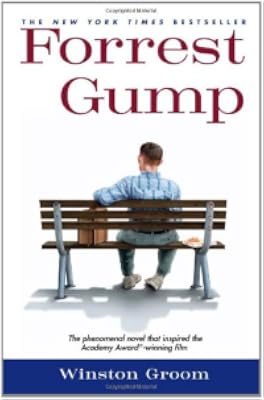
Meet Forrest Gump, the lovable, herculean, and surprisingly savvy hero of this remarkable comic odyssey. After accidentally becoming the star of University of Alabama's football team, Forrest goes on to become a Vietnam War hero, a world-class Ping-Pong player, a villainous wrestler, and a business tycoon -- as he wonders with childlike wisdom at the insanity all around him. In between misadventures, he manages to compare battle scars with Lyndon Johnson, discover the truth about Richard show more Nixon, and survive the ups and downs of remaining true to his only love, Jenny, on an extraordinary journey through three decades of the American cultural landscape. Forrest Gump has one heck of a story to tell -- and you've got to read it to believe it ... show lessTags
Recommendations





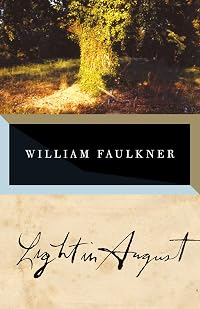

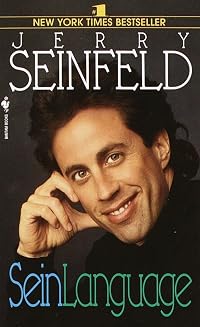

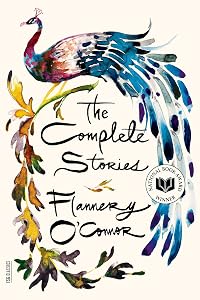
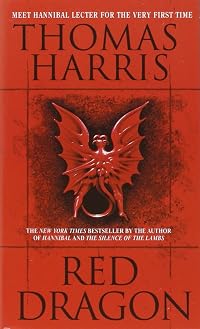
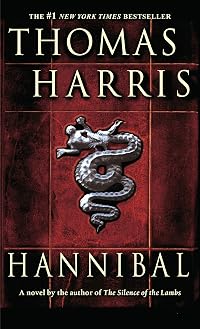
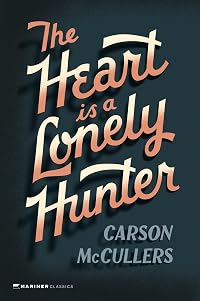
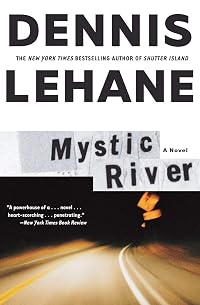
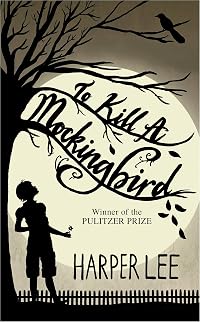



Member Recommendations

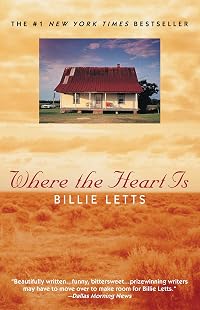
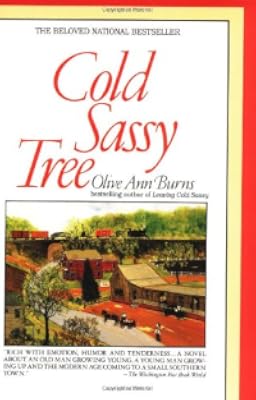
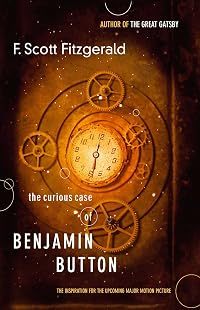
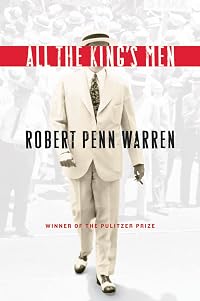
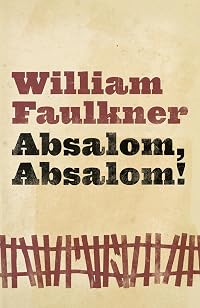
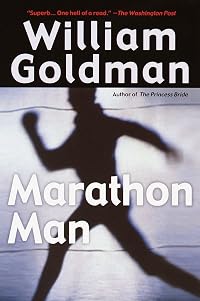
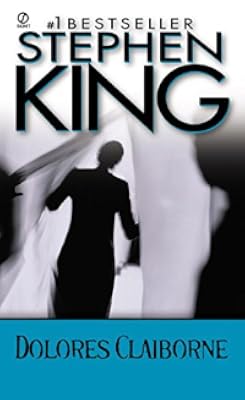
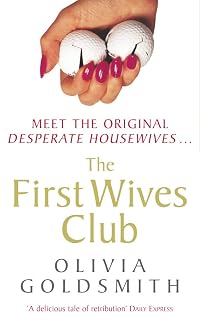
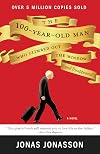
limerts Name dropping abounds in both books.

Sarasamsara Another novel where the main character is inadvertently exceptional at the wildest things and becomes the important key behind many of the country's events. Except in this case, the country is Norway.
Member Reviews
I've loved the film Forrest Gump ever since I was a kid growing up in the Nineties. Some of its scenes are among my most vivid early memories. It was my crash course in 20th century history; it was where I first learned about Elvis, JFK, John Lennon, Vietnam, Watergate… the list goes on. It's where I first understood heartbreak (Jenny), wanderlust ("I just felt like runnin'") and melancholy (Lieutenant Dan in the bar as everyone sings 'Auld Lang Syne').
It's a film that uncovers its layers over time (as a kid, I somehow overlooked Forrest's mama's grunting episode with the teacher, or the reason Jenny threw rocks at her childhood home) and I can rewatch it again and again as comfort, as nostalgia, as storytelling. It's also a damn good show more film besides, and I can watch it as a fine piece of filmmaking. All in all, it's fair to say I enjoy Forrest Gump. But I've never been more convinced that it deserved its Oscar for best adapted screenplay than I am now, having read its source book by Winston Groom.
It's so different, it's startling. I won't list all the differences between book and film – we'd be here for hours – but I have to say, without hyperbole, that Eric Roth, the screenwriter, must be responsible for about 90% of the film's content. All of those famous lines and scenes – none of which are in the book. It's an odd feeling. It's not the usual feeling where you feel a film dominate your impressions of its source book, or vice versa. Rather, it's like peering into an alternate universe, one in which the film Forrest Gump never existed – like trying to imagine a world in which the Beatles never formed. Groom's Gump is so far removed from Tom Hanks' character that you see the familiar names on the page but they don't seem right – like you've been told 'up' is 'down' now, or like driving on the other side of the road in a foreign country.
Once I overcame this disappointment – and, to be honest, I had fair warning from all the other reviews of this book – I still found myself in the position of not rating Groom's novel. His Gump is different from the one we're used to, yes, but it also becomes rapidly clear that his Gump is also lesser. His narrative voice is less well-rounded and more dislikeable. His motivations are less endearing, or consistent. His character arc is bumpy, and the story's message is limp. Gump's experiences are less resonant (both for himself and his audience), including – in the book's two plummeting nadirs – a stint as a wrestler known as 'the Dunce', fighting another wrestler known as 'the Turd', and a spell as an astronaut who crash-lands in the jungle, where he plays chess with 'bongo-bongo'-style cannibal tribes.
The book as a whole is throwaway, short-changing on character and structure. I know some people don't like the film, seeing it as a saccharine Boomer fever-dream, but I don't think anyone can deny it's a tight piece of filmmaking, rewatchable, accessible to all ages, with great acting and direction and some truly thoughtful moments. The book, on the other hand, is petty, cynical, juvenile – and glib. It's not a coincidence that I find myself referring to the film's character as 'Forrest', but to the book's as the more impersonal 'Gump'. There's none of the film's heart in evidence here.
Rather than bringing it all home with Forrest, Jenny, Lieutenant Dan and Forrest Junior, as Zemeckis and co. do in the second half of their film, Groom writes the second half of his novel into the ground. The main companion for Gump in this turgid, leaden limp to the finish line is not Jenny or Dan or his own inner monologue, but a male ape called Sue. Winston Groom might have provided him with a few basic cues, but Eric Roth earned that golden statue (and let's not forget he was up against Frank Darabont for The Shawshank Redemption that year). Under our noses, he seemed to have performed a feat of pure alchemy. show less
It's a film that uncovers its layers over time (as a kid, I somehow overlooked Forrest's mama's grunting episode with the teacher, or the reason Jenny threw rocks at her childhood home) and I can rewatch it again and again as comfort, as nostalgia, as storytelling. It's also a damn good show more film besides, and I can watch it as a fine piece of filmmaking. All in all, it's fair to say I enjoy Forrest Gump. But I've never been more convinced that it deserved its Oscar for best adapted screenplay than I am now, having read its source book by Winston Groom.
It's so different, it's startling. I won't list all the differences between book and film – we'd be here for hours – but I have to say, without hyperbole, that Eric Roth, the screenwriter, must be responsible for about 90% of the film's content. All of those famous lines and scenes – none of which are in the book. It's an odd feeling. It's not the usual feeling where you feel a film dominate your impressions of its source book, or vice versa. Rather, it's like peering into an alternate universe, one in which the film Forrest Gump never existed – like trying to imagine a world in which the Beatles never formed. Groom's Gump is so far removed from Tom Hanks' character that you see the familiar names on the page but they don't seem right – like you've been told 'up' is 'down' now, or like driving on the other side of the road in a foreign country.
Once I overcame this disappointment – and, to be honest, I had fair warning from all the other reviews of this book – I still found myself in the position of not rating Groom's novel. His Gump is different from the one we're used to, yes, but it also becomes rapidly clear that his Gump is also lesser. His narrative voice is less well-rounded and more dislikeable. His motivations are less endearing, or consistent. His character arc is bumpy, and the story's message is limp. Gump's experiences are less resonant (both for himself and his audience), including – in the book's two plummeting nadirs – a stint as a wrestler known as 'the Dunce', fighting another wrestler known as 'the Turd', and a spell as an astronaut who crash-lands in the jungle, where he plays chess with 'bongo-bongo'-style cannibal tribes.
The book as a whole is throwaway, short-changing on character and structure. I know some people don't like the film, seeing it as a saccharine Boomer fever-dream, but I don't think anyone can deny it's a tight piece of filmmaking, rewatchable, accessible to all ages, with great acting and direction and some truly thoughtful moments. The book, on the other hand, is petty, cynical, juvenile – and glib. It's not a coincidence that I find myself referring to the film's character as 'Forrest', but to the book's as the more impersonal 'Gump'. There's none of the film's heart in evidence here.
Rather than bringing it all home with Forrest, Jenny, Lieutenant Dan and Forrest Junior, as Zemeckis and co. do in the second half of their film, Groom writes the second half of his novel into the ground. The main companion for Gump in this turgid, leaden limp to the finish line is not Jenny or Dan or his own inner monologue, but a male ape called Sue. Winston Groom might have provided him with a few basic cues, but Eric Roth earned that golden statue (and let's not forget he was up against Frank Darabont for The Shawshank Redemption that year). Under our noses, he seemed to have performed a feat of pure alchemy. show less
I am probably the only person in the Western Hemisphere who thought that this was perhaps the dumbest book ever written - I disliked the movie because I had read the book first, so the movie came off as almost as stupid as the book. In the book, Forrest and the ape, who had been shot into space and crashed into the Amazon(?) among cannibals/head hunters, saved their own lives by teaching the cannibals to play chess - when they were put back into the pot to be cooked, they jumped out and ran directly into the arms of the CIA, who had been looking for them. WHAT? Please! Thankfully, this part was left out of the movie, which I suppose is what made it just a little less awful. SO - If I give it no stars, it won't look like I reviewed it. show more 1/2 star would be better, but I gave it one, since some people liked it, there must be some redeeming quality I just didn't see. show less
Be advised, this book is nothing like the movie. That's not the book's fault. But you will likely dislike the book if, like me, you've loved the movie ever since you saw it in theaters and have loved it even more upon every subsequent viewing. But you won't hate the book, because hate would require more emotion than you're prepared to give a book that barely even moves you, emotionally.
So, don't read this book if, like me, you enjoy leaking a few tears when, at the end, Big Forrest gets all verklemmpt upon learning that Little Forrest ain't stupid. If, like me, you prefer your Jenny to die only after she repents of her sins and gets a sensible haircut and a full-time job. If, like me, you wait breathlessly, as if for Christmas morning, show more for the scene where Forrest goes to war in a chopper screaming over a foreign field of long, green grass set to CCR's "Fortunate Son"; because you've never heard the song the same since. Who knew that the "Fortunate Son's" intro bass and drum would sync so perfectly with a chopper's rotors' thumping beat. And who knew that experiencing this effect for the first time in a crowded movie theater would stir your soul the way it did. And who knew that you would spend the rest of your life chasing that thrill, found here or there, but never experienced quite exactly as you did that first time, but you still have to keep chasing. Don't read the book if any of that (highly personal) stuff is important to you because none of it's in the book.
I realize that this review isn't fair to the book. But life ain't fair, and books aren't sentient, but, actually, their authors are. So let me just say that the book is competently written and likely also a bit of a gem. In fact, I probably would have liked the book a lot more if the reading of it hadn't done such violence to the movie's imago in my heart and mind.
Put differently, if the world of movies and the books some of them are made from were a big box of chocolates, this book would be a plain good-old American Hershey chocolate piece that would satisfy you entirely if, and only if, you hadn't already been feasting on gourmet Swiss chocolates hand-fed to you by luscious Swiss-chocolate chocolate models whose own limbs and bodies are made of delectable pure-Swiss-milk-chocolate chocolate, and, and, and. You get the picture. In this latter case, you'd spit out the Hersey chocolate piece and claim that it tastes like wax. But it wouldn't taste like wax if you stopped your Swiss-chocolate chocolate orgies, is the point. Hershey chocolates taste perfectly fine once you deprive your palate and -self of more refined chocolates. Likewise, this book will likely, probably, possibly satisfy your readerly gullet if you've never seen the movie it so wonderfully inspired. show less
So, don't read this book if, like me, you enjoy leaking a few tears when, at the end, Big Forrest gets all verklemmpt upon learning that Little Forrest ain't stupid. If, like me, you prefer your Jenny to die only after she repents of her sins and gets a sensible haircut and a full-time job. If, like me, you wait breathlessly, as if for Christmas morning, show more for the scene where Forrest goes to war in a chopper screaming over a foreign field of long, green grass set to CCR's "Fortunate Son"; because you've never heard the song the same since. Who knew that the "Fortunate Son's" intro bass and drum would sync so perfectly with a chopper's rotors' thumping beat. And who knew that experiencing this effect for the first time in a crowded movie theater would stir your soul the way it did. And who knew that you would spend the rest of your life chasing that thrill, found here or there, but never experienced quite exactly as you did that first time, but you still have to keep chasing. Don't read the book if any of that (highly personal) stuff is important to you because none of it's in the book.
I realize that this review isn't fair to the book. But life ain't fair, and books aren't sentient, but, actually, their authors are. So let me just say that the book is competently written and likely also a bit of a gem. In fact, I probably would have liked the book a lot more if the reading of it hadn't done such violence to the movie's imago in my heart and mind.
Put differently, if the world of movies and the books some of them are made from were a big box of chocolates, this book would be a plain good-old American Hershey chocolate piece that would satisfy you entirely if, and only if, you hadn't already been feasting on gourmet Swiss chocolates hand-fed to you by luscious Swiss-chocolate chocolate models whose own limbs and bodies are made of delectable pure-Swiss-milk-chocolate chocolate, and, and, and. You get the picture. In this latter case, you'd spit out the Hersey chocolate piece and claim that it tastes like wax. But it wouldn't taste like wax if you stopped your Swiss-chocolate chocolate orgies, is the point. Hershey chocolates taste perfectly fine once you deprive your palate and -self of more refined chocolates. Likewise, this book will likely, probably, possibly satisfy your readerly gullet if you've never seen the movie it so wonderfully inspired. show less
This book swings from profound to utterly ridiculous so fast and back again, that I have mental whiplash. I can't tell if this book has aged terribly or exceptionally when it comes to how offensive some statements are, since it's meant to offend, and society has become a lot more sensitive towards some of these things since the 80s.
Either way the first 5 or 6 chapters and the last 3 or 4 chapters are worth thinking about when it comes to how society sees and treats people with deficiencies, and also how a person can have everything they could ever want, without actually having what they want - and only someone who thinks simply, would choose to leave it behind to pursue a life that he enjoys. Everything in between though, is a comedy of show more errors that, in my opinion, go way too far for the sake of a cheap laugh. show less
Either way the first 5 or 6 chapters and the last 3 or 4 chapters are worth thinking about when it comes to how society sees and treats people with deficiencies, and also how a person can have everything they could ever want, without actually having what they want - and only someone who thinks simply, would choose to leave it behind to pursue a life that he enjoys. Everything in between though, is a comedy of show more errors that, in my opinion, go way too far for the sake of a cheap laugh. show less
Winston Bloom's Forrest Gump is a bittersweet tale that will have readers laughing one moment and reaching for tissues the next. Forrest's innocent and straightforward perspective on life leads to humorous mishaps, but also puts him in heartbreaking situations. Despite the tears, the book's underlying message of resilience and hope shines through, making it a truly uplifting read.
Forrest is indeed an idiot, but not the kind of an idiot none of us can relate to, but the kind of an idiot each and every single one of us can relate to in various different ways, for even though his IQ is very small, he's also a very brilliant man, who understands the true meaning of life and who understands the true meaning of love, which is more than enough if you ask me, for he has achieved many things in life by just being himself, and not by being the person the society expected and wanted him to be. So to me, he's a true hero, the kind of a true hero each and every single one of us should aspire to, and if this strangely written but immensely brilliant novel proves anything, it proves that each and every single one of us can show more make a truly big difference in the world by just being ourselves. show less
It seems ridiculous to write a book review for a story everyone knows so well....or I should say they think they know. I must refrain from making the typical comparisons of what scenes were different in the book from the movie, what details were kept the same...You get the picture. I'm sure someone else has written that blog. Anyway, on to the plot:
Forrest Gump goes through life as an accidentally brilliant idiot who can say he attended Harvard, saved Chairman Mao from drowning, visited the White House twice, thwarted plans to be eaten by cannibals, and even took a trip to space with an orangutan courtesy of NASA. These are just some of the crazy adventures Gump experiences. He manages to be a part of history's most significant moments, show more both good and bad. I particularly liked the scene with the president who said, "I am not a crook!"
It is not a spoiler to say I was annoyed with Jenny just as much in the book as I was the movie.
And speaking of comparisons, I will say this about comparing the book to the movie, though. Gump in the book is a far coarser character. Forrest in the movie is so sweet compared to the foul-mouthed man-child in the novel. That took a little getting used to. Meh. show less
Forrest Gump goes through life as an accidentally brilliant idiot who can say he attended Harvard, saved Chairman Mao from drowning, visited the White House twice, thwarted plans to be eaten by cannibals, and even took a trip to space with an orangutan courtesy of NASA. These are just some of the crazy adventures Gump experiences. He manages to be a part of history's most significant moments, show more both good and bad. I particularly liked the scene with the president who said, "I am not a crook!"
It is not a spoiler to say I was annoyed with Jenny just as much in the book as I was the movie.
And speaking of comparisons, I will say this about comparing the book to the movie, though. Gump in the book is a far coarser character. Forrest in the movie is so sweet compared to the foul-mouthed man-child in the novel. That took a little getting used to. Meh. show less
Members
- Recently Added By
Lists

Read the book and saw the movie
1,170 works; 195 members

Watched the Movie, Probably Won't Read the Book
185 works; 34 members

1980s
356 works; 23 members

Overdue Podcast
808 works; 9 members

Books Read in 2022
5,226 works; 112 members

Reading Glasses Podcast
410 works; 3 members
Author Information

Winston Groom is the author of 20 books, including Forrest Gump; The Aviators; Shiloh, 1862; and Conversations With the Enemy, a Pulitzer Prize finalist. He served in Vietnam in 1966-67 and now lives in Point Clear, Alabama.
Some Editions
Awards and Honors
Series

Belongs to Publisher Series
Work Relationships
Has the adaptation
Has as a student's study guide
Common Knowledge
- Canonical title*
- Forrest Gump
- Original title
- Forrest Gump
- Original publication date
- 1986
- People/Characters
- Forrest Gump; Jenny Curran; Coach Fellers; Coach Bryant; Bubba; Sergeant Krantz (show all 20); Lieutenant Dan; Colonel Gooch; Mister Wilkins; Dr. Duke; Major Janet Fritch; Sue (an oragutan); Sam; Mike; Mr. Tribble; Mama; Mister Felder; Professor Quackenbush; Curtis; Snake
- Important places
- Vietnam; NASA; New Guinea; Mobile, Alabama, USA; Bayou La Batre, Alabama, USA
- Related movies
- Forrest Gump (1994 | IMDb)
- Epigraph
- There is a pleasure sure in being mad which none but madmen know.
--Dryden - Dedication
- For Jimbo Meador and George Radcliff -
who have always made a point of being
kind to Forrest and his friends. - First words
- Let me say this: bein a idiot is no box of chocolates.
- Quotations
- Bein a idiot is no box of chocolates.
I may be a idiot, but at least I ain't led no hum-drum life. - Last words
- (Click to show. Warning: May contain spoilers.)You know what I mean?
- Blurbers
- Plimpton, George
- Original language*
- Anglais
*Some information comes from Common Knowledge in other languages. Click "Edit" for more information.
Classifications
Statistics
- Members
- 2,922
- Popularity
- 6,175
- Reviews
- 67
- Rating
- (3.43)
- Languages
- 19 — Czech, Danish, English, Estonian, Finnish, French, German, Hungarian, Indonesian, Italian, Japanese, Polish, Portuguese, Russian, Spanish, Swedish, Thai, Turkish, Chinese, traditional
- Media
- Paper, Audiobook, Ebook
- ISBNs
- 88
- UPCs
- 2
- ASINs
- 24