
Dreamers of the Day
by Mary Doria Russell
On This Page
Description
A forty-year-old schoolteacher from Ohio still reeling from the tragedies of the Great War and the influenza epidemic comes into a modest inheritance that allows her to take the trip of a lifetime to Egypt and the Holy Land. Arriving at the Semiramis Hotel, site of the 1921 Cairo Peace Conference, she meets Winston Churchill, T. E. Lawrence, and Lady Gertrude Bell. With her plainspoken American opinions, she becomes a sounding board for these historic luminaries who will, in the space of a show more few days, invent the nations of Iraq, Syria, Lebanon, Israel, and Jordan. While neither a pawn or a participant at the conference, she is drawn into the geopolitical intrigue surrounding the conference. show lessTags
Recommendations














Member Recommendations
Member Reviews
Excellent historical fiction is surprisingly hard to find. Even when authors get the history right, the writing is often pedestrian, the characters one-dimensional or anachronistic. But Dreamers of the Day is the real deal: deceptively artful storytelling, nuanced characters, all wrapped around the events that led up to the tragically misguided partitioning of the Middle East after WW1.
The main character, Agnes, arrives at 40 years old after a life robbed of joy and confidence by a cold, selfish mother and a small life in Cleveland, Ohio. Coming into some money, she makes the first bold decision of her life: to vacation in Egypt. There she becomes entangled with a likeable German businessman who may or may not be a spy and the T.E. show more Lawrence/Gertrude Bell/Winston Churchill/Lord Cox retinue that are in Cairo to partition up the Middle East in the wake of WW1.
I'm usually a non-fiction/literary fiction person, so was a bit trepadacious about the "woman discovering her moxie" bits of this. But Russell's Agnes is a lot more intellectually and psychologically intricate than was expecting, as are the other characters in this novel, motivated by a complex combination of honor, self-interest, greed, grief, paternalism, patriotism, and (above all) hubris. Yes, this is about Agnes's journey, but it's also about humanity's journey through history, an exploration of how, time and time again, good intentions end up undermined by self-interest, culminating in tragic outcomes. And also a summary of some of the main political calculations at play in post-WW1 Africa. And also a diverting time capsule of what it was like to tour Egypt, Lebanon and Jerusalem in the 1920s. And also a fascinating review of the religious and ethnic divisions that continue to roil the Middle East to this day. See what I mean about this being a lot more than you think it's going to be?
Not sure I agree with all of Russell's narrative choices (especially the odd final chapter - you'll see what I mean), but wouldn't hesitate to recommend this to anyone who likes their historical fiction with a side of deft and intelligent storytelling. show less
The main character, Agnes, arrives at 40 years old after a life robbed of joy and confidence by a cold, selfish mother and a small life in Cleveland, Ohio. Coming into some money, she makes the first bold decision of her life: to vacation in Egypt. There she becomes entangled with a likeable German businessman who may or may not be a spy and the T.E. show more Lawrence/Gertrude Bell/Winston Churchill/Lord Cox retinue that are in Cairo to partition up the Middle East in the wake of WW1.
I'm usually a non-fiction/literary fiction person, so was a bit trepadacious about the "woman discovering her moxie" bits of this. But Russell's Agnes is a lot more intellectually and psychologically intricate than was expecting, as are the other characters in this novel, motivated by a complex combination of honor, self-interest, greed, grief, paternalism, patriotism, and (above all) hubris. Yes, this is about Agnes's journey, but it's also about humanity's journey through history, an exploration of how, time and time again, good intentions end up undermined by self-interest, culminating in tragic outcomes. And also a summary of some of the main political calculations at play in post-WW1 Africa. And also a diverting time capsule of what it was like to tour Egypt, Lebanon and Jerusalem in the 1920s. And also a fascinating review of the religious and ethnic divisions that continue to roil the Middle East to this day. See what I mean about this being a lot more than you think it's going to be?
Not sure I agree with all of Russell's narrative choices (especially the odd final chapter - you'll see what I mean), but wouldn't hesitate to recommend this to anyone who likes their historical fiction with a side of deft and intelligent storytelling. show less
Well, I love Ms. Russell's writing, and this novel is no exception. It reads true to life, backing her claim of extensive research. At 40 her protagonist, Agnes Shanklin, an unmarried schoolteacher, looses her mother and siblings to the flu pandemic rife in the world at the end of the Great War. With her lose comes an inheritance that allows her a real vacation to Egypt. The vacation turns her life around. While most Americans then didn't see much beyond their immediate surroundings, Agnes sees a world she hadn't dreamed of. Not to tell too much, but her adventure includes hobnobbing with important politicians of the day, witnessing the creation of the modern Middle East and the modern day problems to come. Unusual and captivating, the show more story is not to be missed. show less
"Dreamers of the Day" is a history lesson and geopolitical/historical commentary, thinly disguised as a novel. But I don't mean that in a bad way. Mary Doria Russell's engaging, richly detailed prose brings the story to life in a way no textbook could.
The novel presents the life story of one Agnes Shanklin, a schoolteacher from Ohio who, after losing her entire family in the influenza epidemic of 1919, decides to travel to the Holy Land in the footsteps of her late sister. She arrives in Cairo just as the 1921 peace conference gets underway, and quickly finds herself thrown into the midst of such luminaries as T. E. Lawrence and Winston Churchill. As the peace talks -- which, in reality and in the novel, resulted in the formation of show more what we now know as the Middle East -- progress, Agnes becomes involved with the main players, learns about the politics, and contributes her own point of view. Meanwhile, as she narrates the story in retrospect, Agnes gives us a sense of the context, of how the Cairo conference fits in to the larger picture.
Russell has clearly done her homework on points large and small, resulting in a vivid portrayal of what the time period was like -- including the experience of an American woman abroad in a volatile area. It's true that the underlying "ordinary person thrown into the midst of historical events" plot necessitates a large helping of suspension-of-disbelief (yeah, these people in positions of power, engaged in tense political negotiations, would really let a naive American commoner join in...suuure) and that large portions of the book flagrantly violate the "show, don't tell" rule as various other characters explain the history and politics of the Middle East to Agnes. There are undoubtedly readers who will find these flaws insufferable. I personally did not mind them, as Russell's breezy, wryly self-conscious style makes it clear that she knows what she's doing.
Interwoven with the political story is the personal narrative of Agnes's process of self-discovery. Having spent her entire life being beaten down by a domineering mother who did nothing but criticize, Agnes is finally free to be herself in a foreign land, constantly amazed that other people actually find her interesting and worthy of attention. Over time, she gradually comes to realize how her mother's treatment of her was shaped by personality and society more than by any real flaws in Agnes herself. The blossoming of Agnes's self-confidence is handled deftly and with wit and compassion.
The political story itself is fascinating. Many modern-day Americans are probably, like myself, only vaguely aware of how modern-day Iraq, Israel, Palestine, et al. came to be, and Russell does an excellent job of sketching the depths of complexity of the region, while at the same time evoking the arrogance (or optimism) inherent in a bunch of Westerners sitting around a table planning to "solve" several millennias' worth of religious and ethnic conflict. The parallels to modern-day politics are impossible to miss and Russell thankfully doesn't waste much time hitting us over the head with them. Her portrayal of Lawrence is particularly poignant in this aspect, as we truly feel that he wants to help create peace but is realistic about the chances of that actually happening.
At the end of the book, Russell introduces an aspect of the supernatural (strongly hinted at earlier, but still fairly unexpected) that feels out of place in this type of story. Although it advances the plot appropriately and provides a convenient explanation for the nagging question of how a modest Ohio schoolteacher comes to be such an expert on international politics, it still feels jarring and left me scratching my head a bit.
Overall, an extremely enjoyable and thought-provoking story, well worth a read. show less
The novel presents the life story of one Agnes Shanklin, a schoolteacher from Ohio who, after losing her entire family in the influenza epidemic of 1919, decides to travel to the Holy Land in the footsteps of her late sister. She arrives in Cairo just as the 1921 peace conference gets underway, and quickly finds herself thrown into the midst of such luminaries as T. E. Lawrence and Winston Churchill. As the peace talks -- which, in reality and in the novel, resulted in the formation of show more what we now know as the Middle East -- progress, Agnes becomes involved with the main players, learns about the politics, and contributes her own point of view. Meanwhile, as she narrates the story in retrospect, Agnes gives us a sense of the context, of how the Cairo conference fits in to the larger picture.
Russell has clearly done her homework on points large and small, resulting in a vivid portrayal of what the time period was like -- including the experience of an American woman abroad in a volatile area. It's true that the underlying "ordinary person thrown into the midst of historical events" plot necessitates a large helping of suspension-of-disbelief (yeah, these people in positions of power, engaged in tense political negotiations, would really let a naive American commoner join in...suuure) and that large portions of the book flagrantly violate the "show, don't tell" rule as various other characters explain the history and politics of the Middle East to Agnes. There are undoubtedly readers who will find these flaws insufferable. I personally did not mind them, as Russell's breezy, wryly self-conscious style makes it clear that she knows what she's doing.
Interwoven with the political story is the personal narrative of Agnes's process of self-discovery. Having spent her entire life being beaten down by a domineering mother who did nothing but criticize, Agnes is finally free to be herself in a foreign land, constantly amazed that other people actually find her interesting and worthy of attention. Over time, she gradually comes to realize how her mother's treatment of her was shaped by personality and society more than by any real flaws in Agnes herself. The blossoming of Agnes's self-confidence is handled deftly and with wit and compassion.
The political story itself is fascinating. Many modern-day Americans are probably, like myself, only vaguely aware of how modern-day Iraq, Israel, Palestine, et al. came to be, and Russell does an excellent job of sketching the depths of complexity of the region, while at the same time evoking the arrogance (or optimism) inherent in a bunch of Westerners sitting around a table planning to "solve" several millennias' worth of religious and ethnic conflict. The parallels to modern-day politics are impossible to miss and Russell thankfully doesn't waste much time hitting us over the head with them. Her portrayal of Lawrence is particularly poignant in this aspect, as we truly feel that he wants to help create peace but is realistic about the chances of that actually happening.
At the end of the book, Russell introduces an aspect of the supernatural (strongly hinted at earlier, but still fairly unexpected) that feels out of place in this type of story. Although it advances the plot appropriately and provides a convenient explanation for the nagging question of how a modest Ohio schoolteacher comes to be such an expert on international politics, it still feels jarring and left me scratching my head a bit.
Overall, an extremely enjoyable and thought-provoking story, well worth a read. show less
 This review was written for LibraryThing Early Reviewers.
DREAMERS OF THE DAY is the second Mary Doria Russell book I've read and it was a most enjoyable read. (The first was DOC - an emphatic 5 stars.) Russell has a way of inventing characters you can easily identify with, or at least I can. And Agnes Shanklin is no exception. A forty-ish spinster schoolteacher from Cleveland whose whole family was wiped out by the Influenza epidemic of 1918, Agnes had lived under her mother's thumb for her whole life. Finally free of all family constraints and left with a sizeable inheritance, she slips her shackles of conventionality and books a vacation cruise to Cairo, an experience which changes her whole life. Her stay there is set against the 1921 Cairo Peace Conference, where Winston Churchill and his show more international contemporaries were reapportioning the Mideast following the cataclysm of WWI. In fact, Agnes's story gives you a bird's eye view of how Iraq became a country.
Because Churchill, Gertrude Bell and T.E. Lawrence (i.e. "Lawrence of Arabia") were just a few of those titular 'dreamers' of their day. And all three, as well as a few other historical figures, become characters in Russell's tale. Lawrence in particular is a prominent figure, as a friend of Agnes's younger sister (now deceased) from before the war. Russell's descriptions of Lawrence brought back Peter O'Toole's magnificent film portrayal of the man. But the most interesting figure here is one wholly fictional, in the person of Karl Weilbacher, who, we learn almost immediately, is an intelligence agent for the German government. Agnes is immediately smitten by Karl, but also finds Lawrence fascinating. Since Karl and Lawrence have an adversarial relationship going back to before the war, a certain dramatic tension prevails throughout Agnes's Egypt adventure.
There are layers of story here: Agnes's emergence from her old self to a new life (and she has an endearing little dachshund who's always there, for dog lover readers); the politics and intrigue of the Peace Conference with a multitude of historical figures; and an anti-war theme emerges, as Russell examines the history of intertribal and religious wars in the Mideast which continue right up to the current troubles in Iraq, a country which was created as a political compromise by Churchill, Lawrence, Bell and others. An implicit message here is that, despite the best efforts of many, there will always be war. Or, as Agnes remarks to Lawrence -
"And who knows what comes next? ... One thing about the Middle East seems certain: another army is always waiting, just around the bend."
Russell also informs us that foreigners and unbelievers will never succeed in these Muslim countries because the natives are masters of 'ketman' - the art of fakery - and then there is the Shi'a concept of 'takkiya' - religious permission to lie when dealing with infidels.
DREAMERS OF THE DAY is a curiously topical book for today, given recent U.S. and British involvement in Iraq and the Mideast. I found it to be not only an absorbing story, but also an informative and even educational reading experience. Learning new things can often be tedious and boring. Not so here. Great story, wonderful, colorful characters and terrific writing. Highly recommended. show less
Because Churchill, Gertrude Bell and T.E. Lawrence (i.e. "Lawrence of Arabia") were just a few of those titular 'dreamers' of their day. And all three, as well as a few other historical figures, become characters in Russell's tale. Lawrence in particular is a prominent figure, as a friend of Agnes's younger sister (now deceased) from before the war. Russell's descriptions of Lawrence brought back Peter O'Toole's magnificent film portrayal of the man. But the most interesting figure here is one wholly fictional, in the person of Karl Weilbacher, who, we learn almost immediately, is an intelligence agent for the German government. Agnes is immediately smitten by Karl, but also finds Lawrence fascinating. Since Karl and Lawrence have an adversarial relationship going back to before the war, a certain dramatic tension prevails throughout Agnes's Egypt adventure.
There are layers of story here: Agnes's emergence from her old self to a new life (and she has an endearing little dachshund who's always there, for dog lover readers); the politics and intrigue of the Peace Conference with a multitude of historical figures; and an anti-war theme emerges, as Russell examines the history of intertribal and religious wars in the Mideast which continue right up to the current troubles in Iraq, a country which was created as a political compromise by Churchill, Lawrence, Bell and others. An implicit message here is that, despite the best efforts of many, there will always be war. Or, as Agnes remarks to Lawrence -
"And who knows what comes next? ... One thing about the Middle East seems certain: another army is always waiting, just around the bend."
Russell also informs us that foreigners and unbelievers will never succeed in these Muslim countries because the natives are masters of 'ketman' - the art of fakery - and then there is the Shi'a concept of 'takkiya' - religious permission to lie when dealing with infidels.
DREAMERS OF THE DAY is a curiously topical book for today, given recent U.S. and British involvement in Iraq and the Mideast. I found it to be not only an absorbing story, but also an informative and even educational reading experience. Learning new things can often be tedious and boring. Not so here. Great story, wonderful, colorful characters and terrific writing. Highly recommended. show less
Narrated by schoolteacher Agnes Shanklin, we follow her through life with a suffocating mother, through the losses of World War I and the Great Influenza, and right into the creation of the modern Middle East.
Russell, once again, has a marvelous sense of time and place. I found myself wanting to swat flies as Agnes walked the streets of Cairo, and the friendships she made with people like Winston Churchill, T.E. Lawrence, and Gertrude Bell gave the sheltered woman's life a fairy tale aspect. Few would have expected her to have the bravery to set out on such an adventure by herself.
All in all, Agnes reminded me of a young Eleanor Roosevelt, and I enjoyed her story.
Russell, once again, has a marvelous sense of time and place. I found myself wanting to swat flies as Agnes walked the streets of Cairo, and the friendships she made with people like Winston Churchill, T.E. Lawrence, and Gertrude Bell gave the sheltered woman's life a fairy tale aspect. Few would have expected her to have the bravery to set out on such an adventure by herself.
All in all, Agnes reminded me of a young Eleanor Roosevelt, and I enjoyed her story.
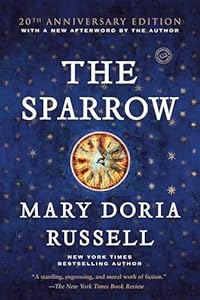
I first encountered Mary Doria Russell's fiction in her debut novel "The Sparrow", which was followed by a direct sequel, "Children of God", both of which are perhaps best characterized as literary science fiction. I don't normally read historical fiction, but on the strength of Russell's superb characterization and scene-setting, I will read any fiction she writes no matter what the genre.
"Dreamers of the Day" is told from the point of view of Agnes Shanklin, a never-married Ohio schoolteacher who has lost all of her family is the great influenza epidemic that followed World War I. Her beloved younger sister and her brother-in-law had spent several years near Beirut as missionaries, and Agnes, inspired by her sister's life, decides to show more use her inheritance to visit Egypt and Palestine. Once in Cairo, she immediately becomes an intimate witness to the doings of the Cairo Peace Conference, where T.E. Lawrence (aka Lawrence of Arabia), Winston Churchill, and other luminaries are gathered to determine the fate of the troubled Middle East.
As always, Russell's characterization is brilliant. I love Agnes's personality, and her honesty with herself and the audience to whom she's narrating. Her relationships -- with Lawrence, with a German Jew and intelligence officer named Karl Weilbacher, and even with her dog, Rosie -- are utterly charming. I also enjoyed the larger-than-life personalities of Churchill and Lawrence himself.
As expected, the setting is well drawn. There are so many details of sights, sounds, and smells than it's easy to imagine the Cairo that Agnes experienced. I will admit that the historical elements were a bit dry for me, and that the subtle political machinations were sometimes over my head, but that's a failing in my knowledge of history rather than a failing on the part of the author.
My only real quibble is with the device of having Agnes narrate these past events from her afterlife-in-limbo along a ghostly Nile River. It's an awkward device, and the supernatural element is at odds with the realism that Russell's detailed settings always evoke. Further, it appears that Russell did this mainly because she wanted to comment upon, without naming it outright, September 11 and its aftermath, and how that tragedy can perhaps be traced back to the Peace Conference in the 1920s. I would have much preferred an elderly but still living Agnes to look back on her life and the historical events she witnessed, but obviously a character that age could not have lived to see September 11, so we are stuck with this awkward pseudo-afterlife that does not reveal anything of Russell's idea (if she has one) about the reality of God or Heaven.
Going one step further, it even seems to me that Russell wrote the entire book to be able to end with one particular line almost at the end, about men selling fear, an obvious comment on the current administration in this country. I agree with her sentiments, and I understand she would have been leaving out something important to her by not commenting on current events, but the awkward device just doesn't work for me.
Nonetheless, I would still give this book 4 out of 5 stars. Russell's writing is just that good, plain and simple -- and, to be fair, other readers may not find this narrative device as problematic as I did. There were many wonderful lines that I marked as I read so I could peruse them again later. I'll continue to follow Russell's fiction anywhere she chooses to take it. show less
"Dreamers of the Day" is told from the point of view of Agnes Shanklin, a never-married Ohio schoolteacher who has lost all of her family is the great influenza epidemic that followed World War I. Her beloved younger sister and her brother-in-law had spent several years near Beirut as missionaries, and Agnes, inspired by her sister's life, decides to show more use her inheritance to visit Egypt and Palestine. Once in Cairo, she immediately becomes an intimate witness to the doings of the Cairo Peace Conference, where T.E. Lawrence (aka Lawrence of Arabia), Winston Churchill, and other luminaries are gathered to determine the fate of the troubled Middle East.
As always, Russell's characterization is brilliant. I love Agnes's personality, and her honesty with herself and the audience to whom she's narrating. Her relationships -- with Lawrence, with a German Jew and intelligence officer named Karl Weilbacher, and even with her dog, Rosie -- are utterly charming. I also enjoyed the larger-than-life personalities of Churchill and Lawrence himself.
As expected, the setting is well drawn. There are so many details of sights, sounds, and smells than it's easy to imagine the Cairo that Agnes experienced. I will admit that the historical elements were a bit dry for me, and that the subtle political machinations were sometimes over my head, but that's a failing in my knowledge of history rather than a failing on the part of the author.
Going one step further, it even seems to me that Russell wrote the entire book to be able to end with one particular line almost at the end, about men selling fear, an obvious comment on the current administration in this country. I agree with her sentiments, and I understand she would have been leaving out something important to her by not commenting on current events, but the awkward device just doesn't work for me.
Nonetheless, I would still give this book 4 out of 5 stars. Russell's writing is just that good, plain and simple -- and, to be fair, other readers may not find this narrative device as problematic as I did. There were many wonderful lines that I marked as I read so I could peruse them again later. I'll continue to follow Russell's fiction anywhere she chooses to take it. show less
This review was written for LibraryThing Early Reviewers.Russell excels at characterization, and Dreamers of the Day is no exception. The protagonist's journey and maturation are beautifully drawn.
Russell is also a dab hand at describing societies -- their details and nuances -- and here she demonstrates this skill, as well. The historical detail and historical characterizations are rich and fascinating, and it's no surprise that so many of the (currently 86) other reviewers say they were drawn to further reading about the era.
As for her political views and 'preachiness' -- I have no problem with an author sharing her views in a work, so long as she does it well and those views don't interfere with the bookly quality. Russell does such an outstanding job with characterization and setting show more that her politics, while evident, don't interfere with the story. Plotting can also be destroyed by preaching, but Russell's plots are so measured and stately that it would take a lot more preaching than is present in this book to upset them.
Recommended for lovers of well-crafted, serious historical fiction. show less
Russell is also a dab hand at describing societies -- their details and nuances -- and here she demonstrates this skill, as well. The historical detail and historical characterizations are rich and fascinating, and it's no surprise that so many of the (currently 86) other reviewers say they were drawn to further reading about the era.
As for her political views and 'preachiness' -- I have no problem with an author sharing her views in a work, so long as she does it well and those views don't interfere with the bookly quality. Russell does such an outstanding job with characterization and setting show more that her politics, while evident, don't interfere with the story. Plotting can also be destroyed by preaching, but Russell's plots are so measured and stately that it would take a lot more preaching than is present in this book to upset them.
Recommended for lovers of well-crafted, serious historical fiction. show less
This review was written for LibraryThing Early Reviewers.Members
- Recently Added By
Lists

Recommend the 20 best books you've read in the last five years
2,168 works; 606 members

ALA The Reading List
490 works; 28 members

real people in fiction circumstances
74 works; 10 members

Books We Discovered On LibraryThing
530 works; 130 members
Author Information

8 Works 17,740 Members
Some Editions
Awards and Honors
Common Knowledge
- Canonical title
- Dreamers of the Day
- Original publication date
- 2008
- People/Characters
- Agnes Shanklin; T. E. Lawrence; Karl Weilbacher; Winston Churchill; Sgt. Walter H. Thompson; Gertrude Bell (show all 12); Clementine Churchill; Mildred Hope; Lillian Shanklin; Ernest Shanklin; Mumma; Rosie (a dachshund)
- Important places
- Cairo, Egypt; Cleveland, Ohio, USA; Cedar Glen, Ohio, USA; Egypt
- Important events
- Cairo Peace Conference, 1921; World War I; Influenza pandemic (1918)
- First words
- I suppose I ought to warn you at the outset that my present circumstances are puzzling, even to me.
- Quotations
- And yet, I will confess to you, from time to time I envied my youthful self—that girl who could still dream and want more, who could still imagine someone who had never materialized, except during those brief weeks before D... (show all)ouglas fell in love with Lillie. However briefly, Douglas had seen my true self, and he had not laughed or sneered or sighed. He was only being kind, I suppose. But kindness is so important, wouldn't you agree?
He had a smile like sunrise.
India was the primary source of British prosperity, Karl continued. "It is governed by bureaucrats who live like royalty with palaces and servants," he said. "Who among them would give up wealth and privilege for such airy id... (show all)eals as liberty and equality for brown people?"
I imagine everyone's forgotten the difference between suffragists and suffragettes after all these years, but believe me, it was significant. Anyone who favored votes for women was a suffragist, whether male or female. Suffra... (show all)gettes were women only, radicals determined to wrest their rights from the patriarchy by any means necessary, including the occasional plot to push a government official or two under the odd locomotive.
"It's no wonder they're angry! If powerful people won't even ask what you want—it's as if you don't matter a bit. And that's not fair, because we all matter the same amount!" I insisted, cringing away from the shrieking, ge... (show all)sticulating men I was defending. "President Wilson was right about that! All nations matter the same amount, even if they aren't rich and powerful like Great Britain!"
For the first time in my life I began to understand why people enjoy drinking. Barriers are dissolved. Conversation is easy and unexamined. Nothing you say seems stupid, and everything seems amusing. No wonder gin parties wer... (show all)e all the rage back home!
While I do not remember getting into the taxi with him, I do recall his tolerant chivalry when I warned him that I was probably going to be sick. The colonel snapped an order to the driver, who pulled to the side of the road ... (show all)halfway over the Gazirah Bridge. Lawrence got out, opened my door, told Rosie to "Stay!" and steadied me on the way to the railing, where I abruptly contributed to the general fetidness of the Nile.
I laughed, amazed by the notion, and said, "I suppose there are two sides to every story."
"Or three, or four," he said.
It was such a simple idea, really, but many things seemed to click into place for me. It was not scandalous or sinful or dangerous to understand a different point of view. I had been raised to believe that to do so was to ris... (show all)k error at least and damnation at worst. Knowing Karl taught me that it was simply good manners, and a more interesting way to live.
"Frankly," he confided as we retreated down the hill, "I think the world will be a better place when science has swept all religion into the dustbin of history. What is religion but a shared belief in things that cannot be kn... (show all)own? When we substitute concurrence for fact, fantasy quickly replaces knowledge. Why? Because knowledge is much more trouble to acquire!"
"The Christians of Egypt are called Copts. The word is a corruption of the Greek for Egypt: Ai-gup-tios. The Arabs turned gup to qop, and the medieval Latinists made that Coptus. Typical of Egypt: ... (show all)layer upon layer," he said with a smile. "The Copts claim to be the true descendants of the ancient Egyptians, and they may be correct. Look there! Can you see how the Egyptian ankh has become a Christian cross? Paintings of the Virgin suckling Jesus are very like those of Isis nursing the baby Horus. Most Egyptians converted to Islam thirteen hundred years ago. Coptic Christians are very few today. They have not much influence."
"Islamic theology is sublime, Agnes. For Jews, I think, it is more familiar than Christianity—a true monotheism, unlike the Trinity. But at the level of the family?" He shook his head, and we walked on. "Most religions seem... (show all) to concentrate on making sure that men do not raise someone else's sons. And if little girls are married off at twelve—"
"There is less opportunity for the gods to visit in the night."
"And fewer inconvenient babies."
"Agnes, the war had nothing to do with the archduke! It was planned for years. The Prussians told the kaiser, 'Germany will be at the peak of military power between 1913 and 1915, but France will catch up by 1916.' When a foo... (show all)trace is to begin, a shot is fired, yes? But the gunshot is not the reason for the race. The assassination of Archduke Ferdinand was not a reason for the war. It was merely the gunshot that began it."
Once I returned from a museum visit to find Rosie fast asleep in Karl's arms, flat on her back with her short legs twitching. "She is dreaming of ancient times," Karl whispered with soft solemnity, "when sausage dogs were tal... (show all)l."
"She has no idea how small she is! My theory is that dogs believe they are the size of whomever they bark at, which is why small dogs are so fierce and big dogs are often gentle."
"It is remarkable what people choose to do, and then insist they had no choice."
In those hours, far from home, beyond the scrutiny of those who knew me in Ohio, the very meaning of sin began to change. To leave the apple unpicked—that was sin. To choose loneliness if love—even illicit love—were off... (show all)ered, that seemed worse than sin.
That would make my life a tragedy.
the burly Winston Churchill had a topcoat on, and its added bulk made him look more than ever like Mr. Toad of Toad Hall.
A week—a day, an hour—earlier, I would have shrunk from her, convinced of my own inadequacy. Instead, I laughed, transformed by a kiss and a man who had pronounced me handsome, accomplished, and brave.
"Nothing to grab but sky," he snarled, fear making him angry. "How the hell do you steer this thing?"
How easy it is to begin a journey in ignorance and how quickly one can come to regret it, I thought.
"You poor thing," I said aloud, and firmly. "Colonel Lawrence, you look exhausted."
"The longest fortnight I have ever lived," he admitted. "Forty points of view, forty opinions to bring into balance...And then it all has ... (show all)to be written up." He smiled briefly and looked away. "Winston's idea of working hard is to assign an impossible task to others and wait for the report." He leaned toward me slightly and confided, "War was easier."
"And the two shall be as one," Miss Bell intoned. "The one, of course, is always the husband."
"Well! When six decades of nice manners fail to produce a result, you have to become a nuisance or you'll never get justice."
"I'm curious, Miss Shanklin. The Marquis de Lafayette. Generals Kosciuszko and Pulaski...they all came from Europe to aid the American colonists' fight for independence from the British Empire. What do you suppose would have ... (show all)happened if they'd proposed afterward to divide North America between France and Poland?"
The snickering schoolboy, the Oxford scholar, the teasing gadfly—all these had disappeared; in their flashing, prismatic place was a strong, slim figure of intensely male beauty.
It was like seeing an opal turn to diamon... (show all)d.
The tall one, with his long bony limbs and ginger hair, looked like a metal farm implement left to rust in a field.
"One thing ab out the Middle East seems certain: another army is always waiting, just around the bend."
War after war, I thought. Generations of boys growing up with weapons as toys and no one but warriors to admire...
"Nothing here is easy. Blood feuds are never settled or forgotten. Compromise is all but impossible. If a tribe is weak, they say, How can we yield anything to our enemies? If a tribe is strong, they ask, Why should we yield ... (show all)anything to our enemies?"
Dust rises at every step, fine as flour. It is dried river silt, that dust. Add water, and the soil is so fertile that you could plant a pencil and harvest a book.
It's funny, isn't it, how you can be so different when you're away from home? Then, surrounded by familiar people and things, you slip right back into all your habits, as though you were pulling on an old woolen cardigan: str... (show all)etched out and unflattering, but comfortable and soft.
The stock market was like Old Faithful, regularly spouting fortunes. Playing it was fun—like being paid to shop! And it was a social event, as well: someplace convivial to go, like a bridge club but infinitely more exciting... (show all). There were the ticker tapes with their exotic alphabetical symbols, clattering along like racehorses. You had to read them in a rush, and the ladies who could decipher them the quickest were held in high esteem.
Rarely has so much been decided by so few to the detriment of so many as in that fancy hotel back in 1921. - Last words
- (Click to show. Warning: May contain spoilers.)Try not to remember my name.
- Blurbers
- Fowler, Karen Joy
Classifications
Statistics
- Members
- 1,138
- Popularity
- 22,055
- Reviews
- 137
- Rating
- (3.66)
- Languages
- English, French
- Media
- Paper, Audiobook, Ebook
- ISBNs
- 13
- ASINs
- 5
