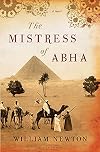
The Mistress of Abha: A Novel
by William Newton
On This Page
Description
The year is 1930 and the British are in Arabia. Ivor Willoughby, a young Orientalist, embarks on an ambitious quest to find his father, an officer abroad with the British Army. In all of Ivor's life, Robert has returned to England only once, bedraggled and wild-eyed with tales of As'ir, a land of Sheikhs and white-turbaned bandits, where he is fighting alongside Captain Lawrence and is known by the name 'Ullobi'. After that single meeting which left such a mark on his son, Robert is never show more heard from again. Ten years on, Ivor must find out what became of him. So he sets out on the journey of a lifetime. Travelling to Cairo to join the Locust Bureau, then circuitously to Abha, Yemen, and along the Red Sea coast, Ivor searches everywhere for clues about Ullobi, but no one appears to remember him. Or perhaps they are afraid to admit to it. Along the way Ivor hears whispers of a woman warrior called Na'ema who was once a slave. Her story seems tantalizingly connected with his father's, and Ivor finds himself in the misty heights of Ayinah looking for an Abyssinian seer who was carried on the same slave ship as Na'ema in 1914 and might unlock the mystery. show lessTags
Recommendations







Member Recommendations

y2pk Historical Fiction set in the Middle East between the two World Wars.
Member Reviews
It's never a good sign when having read the final word of a novel your first thought is, "Why did the author even bother writing this down?" Alas, that is the question which readers of The Mistress of Abha are likely to ask upon completing the book. The back cover promises a tale of high adventure, but this never materialises. Instead of plot, the novel's 310 pages are a series of loosely-related and increasingly improbable episodes, unapologetically told, not shown, narrated by three main characters who possess all the dimensionality of paper dolls, and a single narrative voice. Which is to say the author's voice--the afterword (itself only tangentially related to the "plot" of the novel) is so indistinguishable from the novel proper I show more originally didn't even realise it was an afterward. Newton excels at describing the physical scenery of Arabia, but in every other aspect of writing--from the ridiculous omniscience of his narrators and his even more ridiculous attempts to "explain" why they know so much, to the random, one-time-only insertion of expository paragraphs by tertiary characters (occasionally from beyond the grave), to the (and I use this word lightly) characterization of the titular Mistress and her lover, both of which border on parodies of the worst aspects of stereotypical gender roles, it is clear that Newton had a long way to go as an author. Don't get me wrong; The Mistress of Abha is not so egregiously bad as to become enjoyable for its awfulness. Rather, it's just not a very good book. show less
 This review was written for LibraryThing Early Reviewers.
I very much enjoyed this novel by William Newton and was sad to see on the book cover that he just passed away this year. I would have liked him to know that he transported me to Arabia - a place I know very little about, nor did I think I wanted to know about, and made the lives of his characters come alive for me. This book is really two stories - Ivor Willoughbys search across Arabia for his father, and his father Roberts' story who as a military man disappeared on a mission many years ago. It has action, adventure, mystery, danger, beauty and it's nicely written - even funny in a few spots. I especially enjoyed the two lead female characters, Na'ema and Etza her slave and their stories. It kept my attention and I would recommend it show more to anyone interested in the history of Arabia/Middle East. It makes the history/cultural lessons go down a lot easier.
Recommended. show less
Recommended. show less
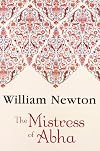
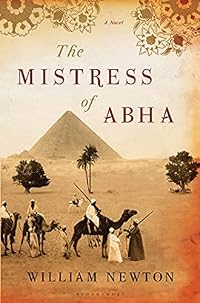
This review was written for LibraryThing Early Reviewers.Do I like the cover?: No. I mean, it is very pretty, but the novel takes place in Saudi Arabia. There is no call for a pyramid.
Did... I feel excessively grateful for the classes I took on Islamic history back in college?: YES. There's a small map and a very brief list of major players at the beginning of the book, but hoo-boy, Newton doesn't bother explaining anything.
Did... I eventually find myself wishing my commute were shorter so I could stop reading?: YES. When I found myself twice stopping this book with a good deal of my commute left, I decided to call a spade a spade and quit.
Review: I didn't finish this book. I read the first 100 pages 120, to be exact) and the last 100 pages, and I don't think I missed anything in between.
The show more narration has a very odd sense to it and I can't tell if it's simply Newton's style of writing or if it's an attempt at giving the narrator, Ivor Willoughby, some personality. The story is first person but Willoughby constantly comments on his own story. If he says something odd to another character, he observes it; if he does something strange, he points it out. It's slightly clunky but grows familiar as one reads on, and I found it vaguely endearing -- until it grew tiresome.
I think the intent is for this to be a kind of epic saga -- son searching for his father - but I found it awkward and clunky and slow. There's a lot of politics and a lot of skirmishes but the narration and storyline just bored me to no end. And, ultimately, the story at it's root was just so unappealing to me. I'm not a huge fan of infidelity especially when it's part of the hero's grand romance; that, coupled with the very disturbing exoticization of the slaves, concubines, and other women in this book, left me feeling pretty gross. I'm all for a good cross-cultural romance, but when a married English officer takes on a second wife because he's all Arab 'at heart' and hates his life back in England, I find that selfish, not romantic. The narrator is very pro-Empire and colonialisation, which is accurate for the setting of the story (pre WWII, post-Lawrence of Arabia), but as a result, it's a mixture of white man's burden and the noble savage motif. It also feels a bit like cheap shorthand to create an epic quality to this story. In the end, the awkward style kept me from being fully pulled in and what I did absorb turned me off. show less
Did... I feel excessively grateful for the classes I took on Islamic history back in college?: YES. There's a small map and a very brief list of major players at the beginning of the book, but hoo-boy, Newton doesn't bother explaining anything.
Did... I eventually find myself wishing my commute were shorter so I could stop reading?: YES. When I found myself twice stopping this book with a good deal of my commute left, I decided to call a spade a spade and quit.
Review: I didn't finish this book. I read the first 100 pages 120, to be exact) and the last 100 pages, and I don't think I missed anything in between.
The show more narration has a very odd sense to it and I can't tell if it's simply Newton's style of writing or if it's an attempt at giving the narrator, Ivor Willoughby, some personality. The story is first person but Willoughby constantly comments on his own story. If he says something odd to another character, he observes it; if he does something strange, he points it out. It's slightly clunky but grows familiar as one reads on, and I found it vaguely endearing -- until it grew tiresome.
I think the intent is for this to be a kind of epic saga -- son searching for his father - but I found it awkward and clunky and slow. There's a lot of politics and a lot of skirmishes but the narration and storyline just bored me to no end. And, ultimately, the story at it's root was just so unappealing to me. I'm not a huge fan of infidelity especially when it's part of the hero's grand romance; that, coupled with the very disturbing exoticization of the slaves, concubines, and other women in this book, left me feeling pretty gross. I'm all for a good cross-cultural romance, but when a married English officer takes on a second wife because he's all Arab 'at heart' and hates his life back in England, I find that selfish, not romantic. The narrator is very pro-Empire and colonialisation, which is accurate for the setting of the story (pre WWII, post-Lawrence of Arabia), but as a result, it's a mixture of white man's burden and the noble savage motif. It also feels a bit like cheap shorthand to create an epic quality to this story. In the end, the awkward style kept me from being fully pulled in and what I did absorb turned me off. show less
This review was written for LibraryThing Early Reviewers.I don't remember why I requested The Mistress of Abha from Early Reviewers; likely I was just picking everything that sounded remotely interesting. Because, to be honest, I'm not a great fan of contemporary historical fiction and have no particular interest in the history of the Arabian peninsula. However, it arrived, and now I've finally read it.
Ivor Willoughby, the scion of an old British military family, heads to Arabia in the 1920s to find the father he saw only once a decade or so before. He wanders around the region seeking people who can tell him about his father, along the way learning a great deal about the family of his father's best friend, Tabarhla the Amir of Abha--particularly his second wife, the sheikha Na'ema.
All this show more plays rather like a novel of the period of his Edwardian father's adventures (albeit slightly more explicit at times than those I've read), but without anything particularly important or exciting occurring. I guessed the only "revelation" of the novel's ending long before, and the characters tend very much towards the stereotypical. The narrator's voice is practically nonexistent, and his reactions are very slow. I actually would have preferred the story without the framing device of the son and his journeys, if that meant that the extra time was devoted to making the main characters more than traditional figures--the over-sexed sheikh, the doughty (and also over-sexed) British adventurer, the captive princess (two of them!), the devoted slave, the adoring concubine, and so on. In the end, the only thing I can say I really appreciated was the novel's historical facts (summarized in an afterword) and vivid depictions of the landscape. But, of course, I'm not the ideal audience. show less
Ivor Willoughby, the scion of an old British military family, heads to Arabia in the 1920s to find the father he saw only once a decade or so before. He wanders around the region seeking people who can tell him about his father, along the way learning a great deal about the family of his father's best friend, Tabarhla the Amir of Abha--particularly his second wife, the sheikha Na'ema.
All this show more plays rather like a novel of the period of his Edwardian father's adventures (albeit slightly more explicit at times than those I've read), but without anything particularly important or exciting occurring. I guessed the only "revelation" of the novel's ending long before, and the characters tend very much towards the stereotypical. The narrator's voice is practically nonexistent, and his reactions are very slow. I actually would have preferred the story without the framing device of the son and his journeys, if that meant that the extra time was devoted to making the main characters more than traditional figures--the over-sexed sheikh, the doughty (and also over-sexed) British adventurer, the captive princess (two of them!), the devoted slave, the adoring concubine, and so on. In the end, the only thing I can say I really appreciated was the novel's historical facts (summarized in an afterword) and vivid depictions of the landscape. But, of course, I'm not the ideal audience. show less
This review was written for LibraryThing Early Reviewers.The Mistress of Abha is the story of Ivor Willoughby's search in Arabia for his father, Robert Willoughby, a British soldier, who had been sent to the region with his unit, and other than a brief visit home to England when Ivor was 17, had been there ever since. At 26, Ivor sets out on a journey to find out what happened to his father. Good or bad, dead or alive, he wants to know the truth.
Although his first attempts at getting a lead on his father's whereabouts come up empty, he eventually connects with the captain of a river boat who knew him and relates their adventures to Ivor and sends him to a second contact, a slave dealer, who might have some information. In this way, the story progresses; that is, an interview with one show more character (who relates a portion of his father's story) leads Ivor to the next character who adds another piece to the puzzle.
I liked the format of the story. Ivor narrates throughout, telling his own story, but also leading into and out of the stories told to him by other characters. I've read in many reviews that the story moves too slowly, but that is the point. On page 52, Ivor decides that his rushing about has been ineffective because his philosophy is so at odds with the Arabian world, and resolves to adapt to their ways as far as his quest. That is, he will choose no more than a general direction, and be patient, allowing his travels to be shaped by events.
I enjoyed reading historical fiction about this area of the world so much in the news today and characterized so very differently. Although most characters are fictional, some real life events and people are referred to. The names of cities, tribes and characters can seem daunting at first, and the author uses many Arabic words within the narrative, but I never had any problem understanding them in that context.
I was initially put off by so many bad reviews and ratings, but finally decided I should buckle down and start reading my early reviewer copy. If I didn't like the story, I'd know soon enough and just say so. But I was pleasantly surprised to be caught up in Ivor's story almost immediately. I read 50+ pages the first day and finished the book on the fourth day. It's not an easy read, but I liked it a lot. I may read it again one day. show less
Although his first attempts at getting a lead on his father's whereabouts come up empty, he eventually connects with the captain of a river boat who knew him and relates their adventures to Ivor and sends him to a second contact, a slave dealer, who might have some information. In this way, the story progresses; that is, an interview with one show more character (who relates a portion of his father's story) leads Ivor to the next character who adds another piece to the puzzle.
I liked the format of the story. Ivor narrates throughout, telling his own story, but also leading into and out of the stories told to him by other characters. I've read in many reviews that the story moves too slowly, but that is the point. On page 52, Ivor decides that his rushing about has been ineffective because his philosophy is so at odds with the Arabian world, and resolves to adapt to their ways as far as his quest. That is, he will choose no more than a general direction, and be patient, allowing his travels to be shaped by events.
I enjoyed reading historical fiction about this area of the world so much in the news today and characterized so very differently. Although most characters are fictional, some real life events and people are referred to. The names of cities, tribes and characters can seem daunting at first, and the author uses many Arabic words within the narrative, but I never had any problem understanding them in that context.
I was initially put off by so many bad reviews and ratings, but finally decided I should buckle down and start reading my early reviewer copy. If I didn't like the story, I'd know soon enough and just say so. But I was pleasantly surprised to be caught up in Ivor's story almost immediately. I read 50+ pages the first day and finished the book on the fourth day. It's not an easy read, but I liked it a lot. I may read it again one day. show less
This review was written for LibraryThing Early Reviewers.Part mystery, part romance, and heavily a cultural war story, The Mistress of Abha may manage to hold the reader's interest on at least half its pages. Which pages are interesting, of course, will have to do with the reader's preferences for fiction.
The story takes place in the Middle East in the old "Arabia" around 1930. Ivor Willoughby goes to Arabia in search of what happened to his father, a British gentleman who may or may not have been in the employ of the British military. The mystery of the lost Robert Willoughby and his son's journey to look for his lost father is one of the more interesting parts of the novel. It is, in a way, the frame of the story into which are injected many sub-stories, some better than others.
For those show more who know nothing of the old-fashioned Arabia in the days before what we now know as the Middle East was created, it is doubtful that this novel will offer them any pure introduction. Although obviously there are stories to tell about Arabia and well as stories to learn, this particular book of fiction is not going to do it.
What, then, does this book do well? Although it may come as a surprise, The Mistress of Abha manages to offer the reader several strong female characters of the sort not normally associated with Islam. The two strongest and most interesting characters are Na'ema who rides horses like a man, is headstrong, lustful, and fiercely independent, and Etza, the mysterious Abyssinian reader of omens who seems to be able to predict everyone's future as well as take care of everyone's problems as if by magic.
If anything, Etza and Na'ema make the book worth reading. There are other women, too, who stand as strong and unusual characters for their times: Lady Parthenope Willoughby who is introduced as an intriguing character early on in the book only to be forgotten later, and Ayesha, a wise woman with whom Na'ema shares a husband.
But if one is not looking for strong women characters or endless pages of battles among the desert tribes, this book is probably going to disappoint. It is too disjointed, has too much going on, and starts too many fantasies it can't finish to be truly a memorable book. Still, the author obviously created a labor of love, and he addressed an area of the world often neglected in literature, so there are some redeeming factors. A few . . . . . . show less
The story takes place in the Middle East in the old "Arabia" around 1930. Ivor Willoughby goes to Arabia in search of what happened to his father, a British gentleman who may or may not have been in the employ of the British military. The mystery of the lost Robert Willoughby and his son's journey to look for his lost father is one of the more interesting parts of the novel. It is, in a way, the frame of the story into which are injected many sub-stories, some better than others.
For those show more who know nothing of the old-fashioned Arabia in the days before what we now know as the Middle East was created, it is doubtful that this novel will offer them any pure introduction. Although obviously there are stories to tell about Arabia and well as stories to learn, this particular book of fiction is not going to do it.
What, then, does this book do well? Although it may come as a surprise, The Mistress of Abha manages to offer the reader several strong female characters of the sort not normally associated with Islam. The two strongest and most interesting characters are Na'ema who rides horses like a man, is headstrong, lustful, and fiercely independent, and Etza, the mysterious Abyssinian reader of omens who seems to be able to predict everyone's future as well as take care of everyone's problems as if by magic.
If anything, Etza and Na'ema make the book worth reading. There are other women, too, who stand as strong and unusual characters for their times: Lady Parthenope Willoughby who is introduced as an intriguing character early on in the book only to be forgotten later, and Ayesha, a wise woman with whom Na'ema shares a husband.
But if one is not looking for strong women characters or endless pages of battles among the desert tribes, this book is probably going to disappoint. It is too disjointed, has too much going on, and starts too many fantasies it can't finish to be truly a memorable book. Still, the author obviously created a labor of love, and he addressed an area of the world often neglected in literature, so there are some redeeming factors. A few . . . . . . show less
This review was written for LibraryThing Early Reviewers.Ivor Willoughby’s father has been a non-existent presence in his life. Apart from a couple of weeks when Ivor was a boy, his father has spent the entirety of his life in Arabia, soldiering and having adventures. The Willoughby family have always been warriors, so when Ivor grows to manhood he realizes that he, too, longs to travel to Arabia. He aims primarily to find his father, but when he arrives in Abha he discovers that the people are not as forthcoming as he would have liked. Instead, he hears stories of a woman called Na’ema, and as he searches further wonders just how this warrior woman is tied to his father.
I very rarely outright dislike books that I choose to read these days, but unfortunately this book just did not sit show more right with me and I did not enjoy reading it. If I hadn’t received it from LibraryThing Early Reviewers, I can guarantee it would have been a DNF. Unfortunately I did feel obliged to review it, and so I trudged onward and managed to get the whole thing read.
At first glance, the book looks very appealing. Lately, my aim in historical fiction and history has been to experience places and stories that are new to me, that I haven’t read twenty times before. Saudi Arabia is most definitely new to me, and I loved the idea of a mysterious warrior woman. Ivor’s search for his father is clearly meant to be very epic, with lots of adventure, or at least that’s how I interpreted the premise.
Unfortunately, the book fails on these levels. The story itself is, frankly, not interesting. There is a great deal of set-up at the beginning, but when Ivor actually gets to Arabia he does very little but listen to other people tell him stories about his father. The book cover promises whispers of Na’ema’s story, but in reality her story is shouted from the rooftops and all he has to do is find her. She’s not particularly mysterious except in one aspect, which I won’t spoil but which was not actually that exciting. I couldn’t help but think the story would have been far more compelling from Ivor’s father Robert’s point of view. All the action happens around him, so why not just tell it from his perspective? The characters would surely have been more fleshed out if the reader had actually met them.
Moreover, I struggled to get along with the actual history of the book. Newton more or less drops us in it and doesn’t really explain the wider context of the story. I felt I would have liked to know which bits were true, if any, and which weren’t; this would have made it more valuable as historical fiction at least. Instead, I just feel confused, like I’ve wasted the time I spent reading it. To make matters worse, the writing isn’t even particularly good, and at times Ivor’s interjections to the reader are clunky and irritating. There is absolutely no suspense and nothing to keep the reader going through the pages of telling.
I had high hopes for The Mistress of Abha, but I was let down. As a result, I regrettably would not recommend this book. show less
I very rarely outright dislike books that I choose to read these days, but unfortunately this book just did not sit show more right with me and I did not enjoy reading it. If I hadn’t received it from LibraryThing Early Reviewers, I can guarantee it would have been a DNF. Unfortunately I did feel obliged to review it, and so I trudged onward and managed to get the whole thing read.
At first glance, the book looks very appealing. Lately, my aim in historical fiction and history has been to experience places and stories that are new to me, that I haven’t read twenty times before. Saudi Arabia is most definitely new to me, and I loved the idea of a mysterious warrior woman. Ivor’s search for his father is clearly meant to be very epic, with lots of adventure, or at least that’s how I interpreted the premise.
Unfortunately, the book fails on these levels. The story itself is, frankly, not interesting. There is a great deal of set-up at the beginning, but when Ivor actually gets to Arabia he does very little but listen to other people tell him stories about his father. The book cover promises whispers of Na’ema’s story, but in reality her story is shouted from the rooftops and all he has to do is find her. She’s not particularly mysterious except in one aspect, which I won’t spoil but which was not actually that exciting. I couldn’t help but think the story would have been far more compelling from Ivor’s father Robert’s point of view. All the action happens around him, so why not just tell it from his perspective? The characters would surely have been more fleshed out if the reader had actually met them.
Moreover, I struggled to get along with the actual history of the book. Newton more or less drops us in it and doesn’t really explain the wider context of the story. I felt I would have liked to know which bits were true, if any, and which weren’t; this would have made it more valuable as historical fiction at least. Instead, I just feel confused, like I’ve wasted the time I spent reading it. To make matters worse, the writing isn’t even particularly good, and at times Ivor’s interjections to the reader are clunky and irritating. There is absolutely no suspense and nothing to keep the reader going through the pages of telling.
I had high hopes for The Mistress of Abha, but I was let down. As a result, I regrettably would not recommend this book. show less
This review was written for LibraryThing Early Reviewers.Members
- Recently Added By
Author Information
2 Works 214 Members
Common Knowledge
- Original publication date
- 2010
- People/Characters
- Ivor Willoughby; Robert "Ullobi" Willoughby; Zeid bin Tahir; Tabarhla (son of Zeid bin Tahir); Ahmet Vartak; Etza (show all 10); Na'ema; Ayesha; Isis; Lavender Willoughby
- Important places
- Cairo, Egypt; Yemen; Abyssinia
- Dedication
- To Mary, my wife
- First words
- Sir Hugh and Lady Parthenope Willoughby were my grandparents.
- Last words
- (Click to show. Warning: May contain spoilers.)I pray that this may find you in good health.
Classifications
Statistics
- Members
- 71
- Popularity
- 440,741
- Reviews
- 27
- Rating
- (2.46)
- Languages
- English
- Media
- Paper, Ebook
- ISBNs
- 9
- ASINs
- 1