Chaka
by Thomas Mofolo
On This Page
Description
A brand new Afrikaans translation of Thomas Mofolo's iconic novel Chaka has recently appeared at Unisa Press academic scholars of Unisa - The University of South Africa. It was first published in Sesotho in 1925. It relates the life and in particular the leadership style of the mighty Zulu king Shaka, although in imaginative fictionalised format. It took the Paris Evangelical Mission Society fifteen years to decide to publish the book, yet it has been translated into five languages and is show more regarded as one of the best works in African literature from the previous century. Chris Swanepoel translated the work into Afrikaans in 1974 and has now done so again. show lessTags
Recommendations








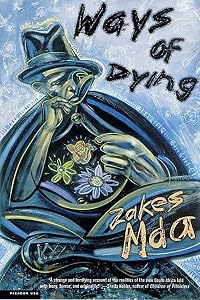
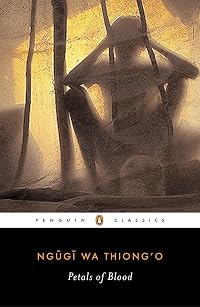
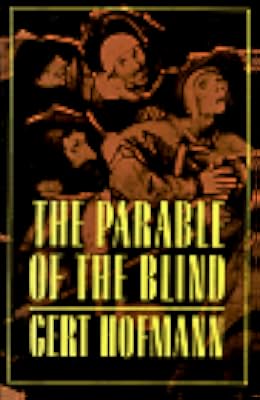
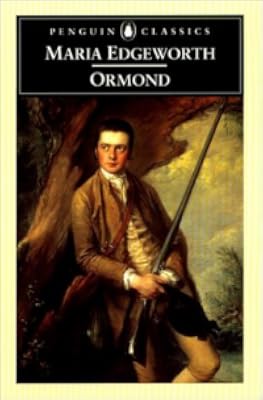







Member Recommendations

thorold Early historical novels by black South African writers
Member Reviews
Shaka has always been a controversial figure: a strong, successful African leader and innovative general who created a powerful new nation at the moment when Europeans were beginning to dominate the continent, or a psychotic dictator and mass-murderer who provided colonialists with a convenient stereotype of African depravity?
Mofolo exploits this tension by putting him into the centre of a tragic epic, entirely African and pre-Christian in its idiom, but also heavy with what look like biblical, Homeric and Shakespearean accents. We meet Chaka as a brave, talented, but persecuted youth whose enemies are trying to deny his royal blood. He's driven out into the wilderness, where he meets a mysterious sorcerer-figure, Isanusi, who offers show more him dominion over the kingdoms of this world: Chaka only pauses to ask "where do I sign?"
With the help of Isanusi's assistant demons, Ndlebe and Malunga, he is able to defeat his half-brothers and inherit his father's kingdom, and then that of his suzerain Dingiswayo. And before we know where we are, he's rebranded the nation. According to Mofolo — who may be letting his Basotho prejudices slip in here — they were previously called "People of the male organ of the dog". MaZulu, "People of the sky," does seem to have a classier touch. And he's built a capital, reformed the army, altered military tactics, killed tens of thousands of his own people and his enemies, and conquered most of the known world. Then Isanusi comes round to collect his fee, and it all starts going horribly wrong.
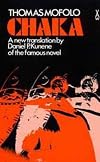
Kunene's translation has a very stately, Authorised Version sort of feel about it, and he has an odd kind of insistence on keeping out Afrikaans words, even when they are very familiar. Veld slips in a couple of times, but that's about it. This is the only Southern African book I've ever read in which a livestock enclosure is called a "fold" instead of a kraal. This perhaps comes from Mofolo's insistence on keeping the presence of Europeans completely out of the story until Chaka's reference to them in his ominous last words. In real life, Chaka had a few Europeans in his entourage, and his strategic situation was very strongly affected by the advancing Afrikaners pushing the Xhosa back towards his territory.
A fabulous epic, which would make a great opera... show less
Mofolo exploits this tension by putting him into the centre of a tragic epic, entirely African and pre-Christian in its idiom, but also heavy with what look like biblical, Homeric and Shakespearean accents. We meet Chaka as a brave, talented, but persecuted youth whose enemies are trying to deny his royal blood. He's driven out into the wilderness, where he meets a mysterious sorcerer-figure, Isanusi, who offers show more him dominion over the kingdoms of this world: Chaka only pauses to ask "where do I sign?"
With the help of Isanusi's assistant demons, Ndlebe and Malunga, he is able to defeat his half-brothers and inherit his father's kingdom, and then that of his suzerain Dingiswayo. And before we know where we are, he's rebranded the nation. According to Mofolo — who may be letting his Basotho prejudices slip in here — they were previously called "People of the male organ of the dog". MaZulu, "People of the sky," does seem to have a classier touch. And he's built a capital, reformed the army, altered military tactics, killed tens of thousands of his own people and his enemies, and conquered most of the known world. Then Isanusi comes round to collect his fee, and it all starts going horribly wrong.
Kunene's translation has a very stately, Authorised Version sort of feel about it, and he has an odd kind of insistence on keeping out Afrikaans words, even when they are very familiar. Veld slips in a couple of times, but that's about it. This is the only Southern African book I've ever read in which a livestock enclosure is called a "fold" instead of a kraal. This perhaps comes from Mofolo's insistence on keeping the presence of Europeans completely out of the story until Chaka's reference to them in his ominous last words. In real life, Chaka had a few Europeans in his entourage, and his strategic situation was very strongly affected by the advancing Afrikaners pushing the Xhosa back towards his territory.
A fabulous epic, which would make a great opera... show less
Chaka by Lesotho writer Thomas Mofolo was originally published in 1925 and first translated into English in 1931. This is a mythic retelling of the life of Chaka Zulu the first king of the Zulu empire who lived from 1787 to 1828, ruling from 1816 to 1828. He is credited with inventing the assegai, the short stabbing spear that enabled his warriors to repeatedly attack instead of just throwing one spear.
Chaka had a difficult life as one of the sons of a warrior chief. There was jealousy and plots among both the chief’s many wives and the sons who jostled for position. At one point Chaka and his mother were forced to leave, and Chaka was constantly bullied and tormented. According to this legend, Chaka became involved with a sorcerer show more who practised black magic and showed Chaka the path to power. Upon the death of his father, one of his brothers comes for him, but Chaka defeated him and became chief. At this point his ambition grew and he continued to overtake tribes and band them together into the newly formed Zulu nation. He was physically imposing and had witchcraft helping him but his personality changed and he was responsible for the deaths of thousands, including that of his mother and the love of his life.
Chaka reads like a classic story of blind ambition that turns a young man into a power-hungry monster. He is originally described as tall, handsome, brave and hardworking but as his craving for control and dominance grows he changes and becomes distrustful of all, willing to sacrifice whoever is closest to him. Although at times the writing can be a little stilted, this is an engaging and tragic story that certainly held my interest. show less
Chaka had a difficult life as one of the sons of a warrior chief. There was jealousy and plots among both the chief’s many wives and the sons who jostled for position. At one point Chaka and his mother were forced to leave, and Chaka was constantly bullied and tormented. According to this legend, Chaka became involved with a sorcerer show more who practised black magic and showed Chaka the path to power. Upon the death of his father, one of his brothers comes for him, but Chaka defeated him and became chief. At this point his ambition grew and he continued to overtake tribes and band them together into the newly formed Zulu nation. He was physically imposing and had witchcraft helping him but his personality changed and he was responsible for the deaths of thousands, including that of his mother and the love of his life.
Chaka reads like a classic story of blind ambition that turns a young man into a power-hungry monster. He is originally described as tall, handsome, brave and hardworking but as his craving for control and dominance grows he changes and becomes distrustful of all, willing to sacrifice whoever is closest to him. Although at times the writing can be a little stilted, this is an engaging and tragic story that certainly held my interest. show less
‘Chaka’ is unusual amongst that African literature I have read because it is both written in a native language (Sesotho) and is relatively old (written in 1910). It is the story of Chaka, the first great King of the Zulu nation, and his rise to power among the people of the western Cape. The story is biblical in tone, and in structure, with Chaka appearing as an almost Christ-like figure at first. He is threatened with death as a baby because of his destiny, flees into the wilderness and even has his mission reawakened within him by his own John the Baptist figure - an itinerant doctor and magician (Isanusi). The biblical tone may not be co-incidental, as Mofolo was resident in a Christian mission while he was writing. However, show more these analogies fall by the wayside as Chaka must choose between his humanity and his lust for power, and chooses the latter with bloody consequences, precipitating a descent into murderous madness. ‘Chaka’ is not, as I had first assumed, a book celebrating the rise to power of the Zulu nation , but becomes a psychological study of power and greed, and the corruption that only absolute power can bring to a once good man. Although written last century, the tone is more in keeping with ancient classics, reminding me both in style and subject of the Icelandic classic ‘Egil’s Saga’. It is deeply disturbing, portentous and, by the end, swimming in blood, but is nevertheless a wonderful book if you have the stomach for it. show less
This is a somewhat unreadable book detailing the life of Chaka, a unifying king of previously unaffiliated and often warring Southern African communities/kingdoms. The book is halting and the flow is strained. The author has jumbled spurts of accounts of the daily life of 19th century African tribal life, spiritual rituals, political philosophy, and other detail. This winds around the life story of Chaka, an orphan of sorts, born into a situation where everyone around him in power wants him dead or sent away. The story follows his life and extreme struggles to become the most powerful tribal king in recent memory in Southern Africa. The story is filled with myth almost enough to seem cosmological. One especially painful recurring gush show more is the repetitive, repeating discourses of Chaka's spiritual mentor/witch doctor, who says the same five sentences more than twenty times throughout the book. Ultimately Chaka returns to a small kinghood and slowly accumulates and stretches his realm. In the process, he betrays the one closest to him and becomes something very far from his original innocent self. show less
Chaka is a novel that tells the fictionalized account story of the Zulu hero, Chaka. It is considered to be one of Africa’s first contributions to classic literature. It takes the reader through the entire life of Chaka from his birth and through his rise to power and ultimately to his decline.
I found this to be an engaging and interesting read. I particularly enjoyed the fact that the style of the novel makes you feel like you are listening to someone tell a story rather than reading a book. The story has a morale too, warning readers about the dangers of striving for power.
There is a fair amount of violence in the book but this is expected since the bulk of his life is about fighting and war and dominating his enemies.
I found this to be an engaging and interesting read. I particularly enjoyed the fact that the style of the novel makes you feel like you are listening to someone tell a story rather than reading a book. The story has a morale too, warning readers about the dangers of striving for power.
There is a fair amount of violence in the book but this is expected since the bulk of his life is about fighting and war and dominating his enemies.
Romanzo più noto di Thomas Mofolo, scrittore nato nel 1876 nel villaggio di Khojane in Basutoland (ora Lesotho). Scritto in lingua sotho del sud e pubblicato nel 1925, è la storia romanzata dell'ascesa e caduta di Shaka re-imperatore degli Zulu. È stata indicata, da un comitato organizzato da Ali Mazrui, come una delle 12 migliori opere della letteratura africana del 20 secolo.
Sep 11, 2017Italian
Ratings
Members
- Recently Added By
Lists

Black Authors
384 works; 32 members

Short and Sweet
246 works; 24 members

Trinity College Booklist (1951): Class Five, Travel and Geography
52 works; 2 members

Fiction with Men's Given Names in the Title
302 works; 11 members

Books Read in 2021
5,361 works; 113 members

Tour of Africa
54 works; 2 members

Books and authors mentioned by Le Clézio in his Nobel Prize speech
87 works; 3 members

Books We Discovered On LibraryThing
530 works; 130 members
Author Information

Mofolo is not only the father of literature in his native Sesotho language, but is also widely considered to be the father of modern black South African writing. Educated in Protestant mission schools, Mofolo worked as a teacher in the mission school system and regarded his writings as an instrument for the propagation of the Christian faith among show more the Sotho-speaking people. He is best known for his ostensibly biographical, but largely fictional, narrative Chaka (1925). The novel presents a satanic image of the great Zulu general of that name, reflecting his adherence to traditional Zulu magic. Mofolo also wrote three other works that are deeply rooted in Christian morality. Moeti Oa Bochabela (Traveller of the East) (1907) presents a romantic journey to the East in a quest for the truth, reminiscent of John Bunyan's Pilgrim's Progress. L'Ange Dechu (The Fallen Angel), which remains unpublished, was written in reaction against the effusive sentimentality of popular romances. And Pitseng (In the Pot) is an autobiographical account of Mofolo's own school days. (Bowker Author Biography) show less
Some Editions
Awards and Honors
Notable Lists
Series
Belongs to Publisher Series
Common Knowledge
- Canonical title
- Chaka
- Original title
- Chaka
- Alternate titles*
- Chaka: Une épopée bantoue
- Original publication date
- 1925
- People/Characters
- Shaka Zulu
- Important places*
- Lesotho
- First words
- South Africa is a large headland situated between two oceans, one to the east and one to the west. (Daniel P. Kunene)
The country of South Africa is a large peninsula lying between two oceans, one to the east and one to the west of it. (F. H. Dutton) - Last words
- (Click to show. Warning: May contain spoilers.)Even to this very day the Zulus, when they think that they were once a strong nation in the days of Chaka, and how other nations dreaded them so much that they could hardly swallow their food, and when they remember their kingdom which has fallen, tears well up in their eyes, and they say: "They ferment, they curdle! Even great pools dry away!" (Daniel P. Kunene)
(Click to show. Warning: May contain spoilers.)Even to-day the Mazulu remember how that they were men once, in the time of Chaka, and how the tribes in fear and trembling came to them for protection, And when they think of their lost empire the tears pour down their cheeks and they say: 'Kingdoms wax and wane. Springs that once were mighty dry away.' (F. H. Dutton) - Original language
- Sesotho
- Canonical DDC/MDS
- 896.3977231
*Some information comes from Common Knowledge in other languages. Click "Edit" for more information.
Classifications
- Genres
- General Fiction, Fiction and Literature, Historical Fiction
- DDC/MDS
- 896.3977231 — Literature & rhetoric Literatures of other languages African literatures Niger-Congo languages Bantu languages Southern and south eastern Bantu languages Sotho–Tswana languages Southern Sotho Southern Sotho fiction –1960
- LCC
- PL8689.9 .M57 .C513 — Language and Literature Languages and literatures of Eastern Asia, Africa, Oceania Languages of Eastern Asia, Africa, Oceania African languages and literature Special languages (alphabetically)
- BISAC
Statistics
- Members
- 240
- Popularity
- 135,368
- Reviews
- 6
- Rating
- (3.43)
- Languages
- English, French, German, Italian
- Media
- Paper, Ebook
- ISBNs
- 15
- ASINs
- 9