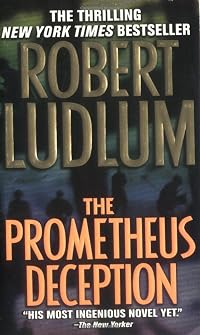
The Prometheus Deception
by Robert Ludlum
On This Page
Description
Robert Ludlum is the acknowledged master of suspense and international intrigue. For over thirty years, in over twenty international bestsellers, he has a set a standard that has never been equaled. Now, with the Prometheus Deception, he proves that he is at the very pinnacle of his craft. Nicholas Bryson spent years as a deep cover operative for the American secret intelligence group, the Directorate. After critical undercover mission went horribly wrong, Bryson was retired to a new show more identity. Years later, his closely held cover is cracked and Bryson learns that the Directorate was not what it claimed - that he was a pawn in a complex scheme against his own country's interests. Now, it has become increasingly clear that the shadowy Directorate is headed for some dangerous endgame - but no one knows precisely who they are and what they are planning. With Bryson their only possible asset, the director of the CIA recruits Bryson to find, reinfiltrate, and stop the Directorate. But after years on the sidelines, Bryson's field skills are rusty, his contacts unreliable, and his instincts suspect. With everything he thought he knew about his own life in question, Bryson is all alone in a wilderness of mirrors - unsure what is and isn't true and who, if anyone, he can trust - with the future of millions in the balance. show lessTags
Recommendations







Member Reviews
Ludlum is an acknowledged master of spy thrillers and intrigue, another favorite genre of mine. I haven’t read any for several years, but got started on this one, and became caught up in the levels of deception. Nick Bryson is a top agent for a super-secret agency called the Directorate. He is retired after a deep-cover operation goes awry and is given a new identity as professor in a small college. Several years later, his former agent instincts still intact, he realizes he is being shadowed by other agents apparently determined to kidnap him — at least that’s his initial impression. He eludes their trap, only to be approached more civilly by their boss, the head of the CIA, who has a fantastic story to tell. It appears that show more Bryson had been working for a Russian mole operation that recruited American citizens for super- secret operations that were supposedly in the American national interest: the Directorate. The CIA discovered this hidden agency only after examination of files following the fall of the Soviet Union. Bryson is stunned and agrees to work for the CIA to determine what the Directorate is now planning; evidence has mounted they are still operating and planning some kind of major action. (Ludlum never explains how Bryson could just vanish from his college, but, as with most books in this genre, a certain suspension of belief is necessary. Bryson is also the luckiest man alive because he happens to notice things just before his head is about to get blown off. He should have been a professional gambler; the way he beats the odds, he could have been rich at much less risk.) In a rush to get at the truth and to prevent the machinations of the Directorate, or is it another even more secret organization, Prometheus, he flits from one country to another, followed by assassins and tragedies: anthrax in Vienna, exploding passenger trains, crashing airliners, massive surveillance of everything we do.
As it turns out, the Directorate is one of the good guys, but in one of those ironies so typical of these great conspiracy theory books, the good guys have to rely on the web of surveillance networks and hidden conspiracies to prevention of takeover of the world by bad guys who want to legalize the kind of surveillance the Directorate relies on to get the bad guys. I don’t think you can have it both ways. To finally gather the evidence they need, Elena and Nick manage to read through practically the entire British Library in about two hours, something that strained my credulity.
Ludlum seems to have as his theme the dangers of a wired world with its potential for destruction of privacy, but this one lacks the subtlety of his earlier books. But if you like James Bond movies and are willing to suspend reality, you’ll love this book. show less
As it turns out, the Directorate is one of the good guys, but in one of those ironies so typical of these great conspiracy theory books, the good guys have to rely on the web of surveillance networks and hidden conspiracies to prevention of takeover of the world by bad guys who want to legalize the kind of surveillance the Directorate relies on to get the bad guys. I don’t think you can have it both ways. To finally gather the evidence they need, Elena and Nick manage to read through practically the entire British Library in about two hours, something that strained my credulity.
Ludlum seems to have as his theme the dangers of a wired world with its potential for destruction of privacy, but this one lacks the subtlety of his earlier books. But if you like James Bond movies and are willing to suspend reality, you’ll love this book. show less
Boy was Ludlum prescient on this one! Terrorists are hitting hard all over. And so the demand for greater security is really taking off too. And guess who's benefiting? Not to give anything away, but while the details may differ, I think Ludlum's thriller is a great description of the Bush gang's modus operandi.
This book had a good beginning, bad ending. The whole premise of the book is about secret spy organizations and their machinations. It's cool to see the main character struggle to find out the truth, and as a reader you're just waiting to find out what really is going on.
But about 2/3 into the book big plot points are revealed and then it just goes downhill from there. At this point Ludlum just turns off the credibility factor and turns up the wonkiness. Things that don't make logical sense just keep occurring and characters that have nothing to do with the main plot appear. Even weirder, the baddies keep doing things to the main character that there doesn't seem to be any motivation for. But they do them anyway. Weird. I think Ludlum show more was trying to go for a cool, wow factor, but it fell flat.
I've read a few Ludlum books right now, and I think his earlier books must be his best because his later books just don't seem that good. show less
But about 2/3 into the book big plot points are revealed and then it just goes downhill from there. At this point Ludlum just turns off the credibility factor and turns up the wonkiness. Things that don't make logical sense just keep occurring and characters that have nothing to do with the main plot appear. Even weirder, the baddies keep doing things to the main character that there doesn't seem to be any motivation for. But they do them anyway. Weird. I think Ludlum show more was trying to go for a cool, wow factor, but it fell flat.
I've read a few Ludlum books right now, and I think his earlier books must be his best because his later books just don't seem that good. show less
This spy novel started out good. A master spy is put out to pasture by his organization, only to discover later that the group he worked for wasn't what he thought it was and he had been working for the wrong side all the time. He then tries to get back in to discover what is going on. The chase lasts the rest of the book with improbably twist after improbably twist. I lost count of how many people he killed and how many times he escapes certain death. He heals amazingly quickly from knife wounds, gunshots and every other thing that comes his way. Somehow he can fight off five people at once and kill them all without too serious of wounds himself. It seems everyone in the world wants him dead. Why? Who knows.
The end of this novel show more unveils a Big Brother plot where everyone in the world (literally, everyone everywhere) is under computerized surveillance and no one will commit crime because everyone will know about it. Privacy will be non existent and they believe that everyone will be happy to have it. While I find the concept of having every house, every building bugged ridiculous, the methods by which the Prometheus group goes about implementing their plan is quite unnerving. I believe how they do it is completely possible in today's world. A conspiracy between a relatively small group of people, well funded and well placed, could cause this kind of havoc if left unchecked. I would like to think that it couldn't happen, but I have to admit it could. The worst part is that there probably isn't some Super James Bond type who can single handedly stop them.
This book, while interesting, becomes laughable at about three quarters through it. After awhile, it becomes silly that if this group has all this incredible surveillance capability, why can't they seem to kill this one guy. They miss him at least a dozen times. Get a sniper and take him out, for crying out loud. Clancy could have killed him easily! show less
The end of this novel show more unveils a Big Brother plot where everyone in the world (literally, everyone everywhere) is under computerized surveillance and no one will commit crime because everyone will know about it. Privacy will be non existent and they believe that everyone will be happy to have it. While I find the concept of having every house, every building bugged ridiculous, the methods by which the Prometheus group goes about implementing their plan is quite unnerving. I believe how they do it is completely possible in today's world. A conspiracy between a relatively small group of people, well funded and well placed, could cause this kind of havoc if left unchecked. I would like to think that it couldn't happen, but I have to admit it could. The worst part is that there probably isn't some Super James Bond type who can single handedly stop them.
This book, while interesting, becomes laughable at about three quarters through it. After awhile, it becomes silly that if this group has all this incredible surveillance capability, why can't they seem to kill this one guy. They miss him at least a dozen times. Get a sniper and take him out, for crying out loud. Clancy could have killed him easily! show less
As with many of Ludlum's later books, we've seen this all before in various permutations. Double crosses, triple crosses, lost loves and immense conspiracies. As always, Ludlum is enjoyable but although it turned out that I'd never read this one, I kept feeling like I had.
Well I don’t know about lost, stolen maybe, exploited more like. The whole plot is based on the control of personal, governmental and corporate information. For years a secret consortium has been plotting to take over the private stewardship of all information. They are called the Prometheus Group. The Directive, the agency Bryson was connected with was supposed to expose them.
The P Group is made up of world leaders and corporate leaders and their plan is finally coming together only Bryson is in their face. They try to eliminate him but of course, they fail. So they all meet at the head man’s estate in Washington. Bryson and his wife break into the place and Bryson sets off an Electro Magnetic Pulse that completely disables all show more electronics within the compound, including the smart guns all the bad guys have. Only he has a gun that will work. At the same time, he starts a fire. Because the electronics of the super house (so eerily like Bill Gates’s life, it’s scary) are ruined, the conspirators are locked in and they almost all die.
Of course a few escape and turn up just at the end of the novel. The end was stupid. He and the wife are retired to some tropical island and are expecting a baby (gak!). Bryson sees a tiny article in the newspaper and remarks to the wife that it may all be starting up again. Then suddenly the tv comes on and it’s one of the old Prometheus/Directive guys and he’s been monitoring the couple all along. Despite the information that Bryson has lodged with a dozen people around the world, this guy is going to try it all over again. show less
The P Group is made up of world leaders and corporate leaders and their plan is finally coming together only Bryson is in their face. They try to eliminate him but of course, they fail. So they all meet at the head man’s estate in Washington. Bryson and his wife break into the place and Bryson sets off an Electro Magnetic Pulse that completely disables all show more electronics within the compound, including the smart guns all the bad guys have. Only he has a gun that will work. At the same time, he starts a fire. Because the electronics of the super house (so eerily like Bill Gates’s life, it’s scary) are ruined, the conspirators are locked in and they almost all die.
Of course a few escape and turn up just at the end of the novel. The end was stupid. He and the wife are retired to some tropical island and are expecting a baby (gak!). Bryson sees a tiny article in the newspaper and remarks to the wife that it may all be starting up again. Then suddenly the tv comes on and it’s one of the old Prometheus/Directive guys and he’s been monitoring the couple all along. Despite the information that Bryson has lodged with a dozen people around the world, this guy is going to try it all over again. show less
Would have gotten 5 stars if it wasn't so long.
Love Ludlum, it is very good but not his best work.
Love Ludlum, it is very good but not his best work.
Members
- Recently Added By
Author Information

200+ Works 77,219 Members
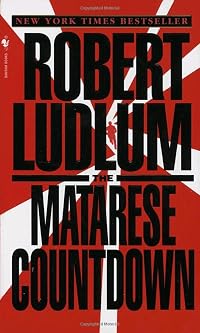
Robert Ludlum was born May 25, 1927 in New York City. He enlisted in the Marines at the age of eighteen and received a B.A. from Wesleyan University in 1951. He began acting professionally at the age of sixteen in the 1943 Broadway production of Junior Miss. He also had roles in summer stock and appeared in over 200 television dramas for such live show more programs as Studio One and Kraft Television Theater. He then tried producing with the 1956 Broadway production of The Owl and the Pussycat. He took the play, four years later, to his creation of Shopping-Center Theater at Playhouse-on-the-Mall in Paramus, New Jersey. His first novel, The Scarlatti Inheritance, was published in 1971. His other works include The Matlock Paper, The Chancellor Manuscript, The Bourne Identity, The Scorpio Illusion, The Matarese Countdown, and The Bancroft Strategy. He also wrote under the pseudonyms Jonathan Ryder and Michael Shepherd. He died on March 12, 2001 at the age of 74. (Bowker Author Biography) show less
Some Editions
Awards and Honors
Distinctions
Work Relationships
Is contained in
Common Knowledge
- Canonical title*
- La trahison Prométhée
- Original title
- The Prometheus Deception
- Original publication date
- 2000
- People/Characters
- Nick Bryson
- Important places
- Europe; Tunisia
- Epigraph
- Prometheus swept down from the heavens bringing the gift of fire. Wrong move.
- First words
- The driving rain was unrelenting, whipped into a frenzy by howling winds, and the waves surged and crashed against the coast, a maelstrom in the black night.
- Last words
- (Click to show. Warning: May contain spoilers.)At moments, he almost thought he had left the world behind. Almost.
- Original language*
- Anglais
*Some information comes from Common Knowledge in other languages. Click "Edit" for more information.
Classifications
Statistics
- Members
- 2,285
- Popularity
- 8,785
- Reviews
- 17
- Rating
- (3.29)
- Languages
- 15 — Czech, Danish, Dutch, English, Estonian, Finnish, French, German, Hungarian, Italian, Norwegian (Bokmål), Polish, Portuguese, Spanish, Swedish
- Media
- Paper, Audiobook, Ebook
- ISBNs
- 70
- ASINs
- 15