On This Page
Description
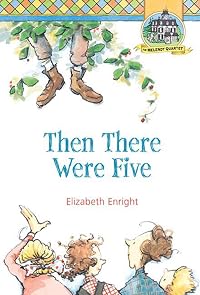
A summer that promises to be eventful turns into something extra special when the four Melendy children become friends with the orphaned Mark Heron.Tags
Recommendations









Member Reviews
Parts of this book were very powerful and/or very amusing, but the gender roles seem to be getting more strict now that the girls are getting older, and I find that a little wearing. It's extra wearing since I recognize that in our household, I tend to reinforce these gender stereotypes by doing most of the cooking and cleaning, not because it's my duty as a woman to cook and clean but just because people are hungry and things are messy and someone's got to do something about it. The result is the same, though, I fear.
7/11
Practically perfect, especially at the beginning of summer. I want a kitchen full of glowing canned goods, and a well full of gentians. I love, love, love this book. And we get to see Randy writing TATSINDA!
1/10
This is without a doubt my favorite Melendy book, what with all the botanizing. And the excitement of meeting Mark, and the evil Oren. The Melendy kids are a little more grown-up, and their world is so lovely that one wishes one could walk inside the pages and sleep in the cupola. Even the spectre of the war, which has taken Father to Washington for the duration, doesn't tarnish the magic.
Enright's writing is lyrical and almost transcendent in places. Her ability to see to the heart of a person is magical, and unlike so many show more new writers, she peers into good and loving hearts. She looks deeply at the people one wants to know, and more importantly, the people one wants to be.
It's because of Enright I can't look at a gentian without thinking of wells.
Some lines:
"Used-to doesn't mean anything any more, Randy. The used-to-world is all cut away from us now; floating away in the distance like a balloon or a bubble. It isn't real any longer. Perhaps it's a good thing that it's gone. I hope so."
"Floating out of the dark, knocking against the overhang, came something so beautiful, so fairylike that Oliver hardly dared to breathe. The thing was a moth, but like no other moth that he had seen. Its wings were as wide as his two hands opened out, as frail as a pair of petals, and colored a pale, pale green: a moonlit silvery green." show less
Practically perfect, especially at the beginning of summer. I want a kitchen full of glowing canned goods, and a well full of gentians. I love, love, love this book. And we get to see Randy writing TATSINDA!
1/10
This is without a doubt my favorite Melendy book, what with all the botanizing. And the excitement of meeting Mark, and the evil Oren. The Melendy kids are a little more grown-up, and their world is so lovely that one wishes one could walk inside the pages and sleep in the cupola. Even the spectre of the war, which has taken Father to Washington for the duration, doesn't tarnish the magic.
Enright's writing is lyrical and almost transcendent in places. Her ability to see to the heart of a person is magical, and unlike so many show more new writers, she peers into good and loving hearts. She looks deeply at the people one wants to know, and more importantly, the people one wants to be.
It's because of Enright I can't look at a gentian without thinking of wells.
Some lines:
"Used-to doesn't mean anything any more, Randy. The used-to-world is all cut away from us now; floating away in the distance like a balloon or a bubble. It isn't real any longer. Perhaps it's a good thing that it's gone. I hope so."
"Floating out of the dark, knocking against the overhang, came something so beautiful, so fairylike that Oliver hardly dared to breathe. The thing was a moth, but like no other moth that he had seen. Its wings were as wide as his two hands opened out, as frail as a pair of petals, and colored a pale, pale green: a moonlit silvery green." show less
Beautifully narrated, which is such a relief. One worries, especially when old favorites are at stake.
I love this book best of any of Enright's work, which is saying a lot. It's a perfectly splendid book, full of botany (gentians!), fauna (luna moth! bats!), the best children ever, the most congenial adults, and most of all, Enright's tender, lyrical, transcendent prose. Do yourself a favor- read, re-read or listen to this one right away.
"Used-to doesn't mean anything any more, Randy. The used-to-world is all cut away from us now; floating away in the distance like a balloon or a bubble. It isn't real any longer. Perhaps it's a good thing that it's gone. I hope so."
I love this book best of any of Enright's work, which is saying a lot. It's a perfectly splendid book, full of botany (gentians!), fauna (luna moth! bats!), the best children ever, the most congenial adults, and most of all, Enright's tender, lyrical, transcendent prose. Do yourself a favor- read, re-read or listen to this one right away.
"Used-to doesn't mean anything any more, Randy. The used-to-world is all cut away from us now; floating away in the distance like a balloon or a bubble. It isn't real any longer. Perhaps it's a good thing that it's gone. I hope so."
The Melendy children continue to have delightful adventures in and around their home in the country, and one of those adventures eventually results in a new addition to the family.
I’m still enjoying these books very much. I noticed in this one a few comments indicative of the period in which they were written — somewhat stereotypical remarks about Gypsies and Indians. Nothing as pejorative as what is found in, say, Little House on the Prairie, but enough that modern readers might want to be aware of it.
I’m still enjoying these books very much. I noticed in this one a few comments indicative of the period in which they were written — somewhat stereotypical remarks about Gypsies and Indians. Nothing as pejorative as what is found in, say, Little House on the Prairie, but enough that modern readers might want to be aware of it.
Although written 70 years ago, this story of the four Melendy siblings' summer adventures in the countryside captivated my girls. Several elements were so old fashioned that I could only describe them by hearsay (telephone operators that connected and listened in on calls, horse and carriage rides, war rations), but the story of the siblings embarking on summer projects, befriending a boy with an abusive cousin, and figuring out the meaning of courage and friendship was timeless. I liked the old-fashioned touches that reminded me of a more innocent era (for example, the extent of the swear words are "Jeepers!" and "Golly!"). The girls loved this so much we are now going back to the beginning of the series and listening to the rest of show more the books. (This review was of the audio book) show less
With Father in Washington and Cuffy, their housekeeper, away visiting a sick cousin, almost anything might happen to the Melendy kids left behind at the Four-Story Mistake. In the Melendy family, adventures are inevitable: Mr. Titus and the catfish; the villainy of the DeLacey brothers; Rush's composition of Opus 3; Mona's first rhubarb pie and all the canning; Randy's arrowhead; the auction and fair for the Red Cross. But best of all is the friendship with Mark Herron, which begins with a scrap-collection mission and comes to a grand climax on Oliver's birthday.
Here is Elizabeth Enright's classic story of a long and glorious summer in the country with the resourceful, endearing Melendy bunch.
Here is Elizabeth Enright's classic story of a long and glorious summer in the country with the resourceful, endearing Melendy bunch.
The Melendy family is another year older. This time Mona (15), Rush (14), Randy (12) and Oliver (almost 8) are collecting scraps to aid in the war effort. It's an interesting concept for a children's story. At each farmhouse (they still live in the country in that weird house) the children meet people they normally wouldn't ever encounter otherwise. At one particular house they meet Mark, a boy living in an abusive home. He becomes a fast friend...and the fifth member of the Melendy household.
Members
- Recently Added By
Lists

Favorite Childhood Books
1,651 works; 519 members

Childhood Favorites
427 works; 24 members
Honey For a Child's Heart
1,152 works; 25 members

75 Books for Fall Literacy Block - Dr. Reed
67 works; 2 members

CCE 1000 Good Books List
1,033 works; 12 members

Ambleside Y3
36 works; 1 member
Children's Literature 1900 - 1950 in order
413 works; 8 members

Newbery Adjacent
747 works; 3 members

Books Read in 2024
4,727 works; 128 members

Books We Love to Reread
695 works; 299 members

Ambleside Year 3
47 works; 1 member

HMS: Make Your Child a Lover of Books, Ages 9 & up
111 works; 2 members
Author Information

28+ Works 12,429 Members
Some Editions
Series

Work Relationships
Is contained in
Common Knowledge
- Original title
- Then There Were Five
- Original publication date
- 1944
- People/Characters
- Mona Melendy; Rush Melendy; Randy Melendy; Oliver Melendy
- Dedication
- For two Roberts
- First words
- What a noise there was that day!
- Last words
- (Click to show. Warning: May contain spoilers.)"Home again," repeated Mark. And he said it solemnly and joyfully as if he had said the word "Amen;" and quickly followed it with the word "Hooray!"
Classifications
- Genres
- Children's Books, Kids, Fiction and Literature, Tween
- DDC/MDS
- 813.52 — Literature & rhetoric American literature in English American fiction in English 1900-1999 1900-1945
- LCC
- PZ7 .E724 .T — Language and Literature Fiction and juvenile belles lettres Fiction and juvenile belles lettres Juvenile belles lettres
- BISAC
Statistics
- Members
- 1,061
- Popularity
- 24,363
- Reviews
- 13
- Rating
- (4.33)
- Languages
- Danish, English, Italian
- Media
- Paper, Audiobook, Ebook
- ISBNs
- 16
- UPCs
- 1
- ASINs
- 13