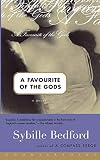
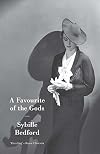
A Favourite of the Gods
by Sybille Bedford
On This Page
Description
One autumn in the late 1920s, a beautiful woman called Constanza boards a train to Brussels and a new marriage. With her is her young daughter, who is going to England. An odd incident interrupts their journey, and Constanza makes a decision that changes the course of both their lives.One autumn in the late 1920s, a beautiful woman called Constanza boards a train to Brussels and a new marriage. With her is her young daughter, who is going to England. An odd incident interrupts their journey, show more and Constanza makes a decision that changes the course of both their lives. show lessTags
Recommendations




















Member Recommendations
Member Reviews
Sybille Bedford entführt uns mit diesem Roman in die Welt der Aristokratie: mit Eleganz und Ironie erzählt sie die Geschichte dreier starker Frauen zu Beginn des 20. Jahrhunderts. Im Mittelpunkt steht die schöne, elegante Constanza, die die exzentrische Lebensweise ihrer Eltern – einer reichen Amerikanerin und eines dekadenten römischen Fürsten – kultiviert und auf die Spitze treibt.
This novel—set in Rome, London, and (to a lesser extent) the south of France, mostly in the first part of the twentieth century—concerns Constanza, a beautiful free-spirited, sexually liberal woman. Born sometime in the 1890s, she’s the daughter of a New England heiress, Anna Howland, and Rico, an Italian prince. Constanza’s life isn’t exactly exotic, but it’s hardly conventional. It’s not an upbringing that most of Bedford’s readers would have personal experience of, and while not entirely in line with “the lives of the rich and famous”, it certainly borders on it, or is perhaps is a smaller Roman version.
Initially, I thought Bedford was interested in exploring some of the same themes as Henry James, specifically show more the clash of American romanticism and idealism with Old World realism and pragmatism. Constanza’s mother’s fortune was likely a large part of her appeal to Prince Rico, whose family fortune was in decline and grand palazzo in Rome in some disrepair. Bedford does examine cultural difference to some extent, but her real focus is on marital infidelity.
Rico, it turns out, has a very long-standing extramarital relationship with Giulia, the wife of a marchese. Anna finds out, is wounded, enraged, and repulsed. She leaves her young son Giorgio behind and flees with her daughter to London. (She can do this because her money has all been protected by her American solicitors.) Rico, his aristocratic family, and their extensive social circle cannot understand Anna’s reaction, her prudishness, and dramatics. Friends side with him. Bedford would have us believe that infidelity is widespread and tolerated in Roman society. Even teenage Constanza, who follows in her father’s footsteps and is sexually precocious, is aware of her father’s liaison with Giulia. She thinks nothing of it, and can’t believe that this would be the reason her mother has taken her away and barred her from seeing her father. Anna refuses to clarify the nature of her husband’s crime, and for a time Constanza thinks his offence must be a financial one.
The large central section of the novel focuses on Anna and Constanza’s life in London. Anna nurses a depression while Constanza sows her wild oats in the manner typical of a young man, restlessly entering and exiting many sexual relationships. And so it goes until she makes the acquaintance of Simon Herbert, a loquacious and entertaining young man. His presence brings joy into the life of the apathetic, defeated Anna. It’s at this point—in my opinion, at least—that Bedford’s novel goes off the rails and turns into a semi-ridiculous soap opera. Constanza acts in a way that is inconsistent with her free-spirited, independent, and mostly selfish orientation. To please her mother, she agrees to marry Simon, though he’s not her type and she’s not in love with him. His awareness of her lack of feeling for him eventually erodes the marriage. Both end up having affairs. I found the whole thing implausible and silly.
I enjoyed aspects of Bedford’s novel, but feel that it missed the mark overall. Characterization is not strong. I believe I was at some disadvantage reading this, as I know almost nothing about Italian history, culture, and politics—all of which figure in the book. There’s lots of Italian language content, not all of which I could guess the meaning of by using context clues alone. I sought online translation. I found Bedford’s style a little odd. I wasn’t confident I was making the correct inferences when I read dialogue between characters. For example, when Rico’s infidelity comes out, he pronounces that Anna “cannot have it both ways.” Can’t have what both ways? Here, and elsewhere, it wasn’t clear to me what the character was actually referring to. Possibly it was that she could not deny him a mistress when she was not interested in a sexual relationship with him.
Initially an interesting novel and engaging enough to complete, A Favourite of the Gods ultimately did not fully deliver for me. It is, in my view, a lesser novel. show less
Initially, I thought Bedford was interested in exploring some of the same themes as Henry James, specifically show more the clash of American romanticism and idealism with Old World realism and pragmatism. Constanza’s mother’s fortune was likely a large part of her appeal to Prince Rico, whose family fortune was in decline and grand palazzo in Rome in some disrepair. Bedford does examine cultural difference to some extent, but her real focus is on marital infidelity.
Rico, it turns out, has a very long-standing extramarital relationship with Giulia, the wife of a marchese. Anna finds out, is wounded, enraged, and repulsed. She leaves her young son Giorgio behind and flees with her daughter to London. (She can do this because her money has all been protected by her American solicitors.) Rico, his aristocratic family, and their extensive social circle cannot understand Anna’s reaction, her prudishness, and dramatics. Friends side with him. Bedford would have us believe that infidelity is widespread and tolerated in Roman society. Even teenage Constanza, who follows in her father’s footsteps and is sexually precocious, is aware of her father’s liaison with Giulia. She thinks nothing of it, and can’t believe that this would be the reason her mother has taken her away and barred her from seeing her father. Anna refuses to clarify the nature of her husband’s crime, and for a time Constanza thinks his offence must be a financial one.
The large central section of the novel focuses on Anna and Constanza’s life in London. Anna nurses a depression while Constanza sows her wild oats in the manner typical of a young man, restlessly entering and exiting many sexual relationships. And so it goes until she makes the acquaintance of Simon Herbert, a loquacious and entertaining young man. His presence brings joy into the life of the apathetic, defeated Anna. It’s at this point—in my opinion, at least—that Bedford’s novel goes off the rails and turns into a semi-ridiculous soap opera. Constanza acts in a way that is inconsistent with her free-spirited, independent, and mostly selfish orientation.
I enjoyed aspects of Bedford’s novel, but feel that it missed the mark overall. Characterization is not strong. I believe I was at some disadvantage reading this, as I know almost nothing about Italian history, culture, and politics—all of which figure in the book. There’s lots of Italian language content, not all of which I could guess the meaning of by using context clues alone. I sought online translation. I found Bedford’s style a little odd. I wasn’t confident I was making the correct inferences when I read dialogue between characters. For example, when Rico’s infidelity comes out, he pronounces that Anna “cannot have it both ways.” Can’t have what both ways? Here, and elsewhere, it wasn’t clear to me what the character was actually referring to. Possibly it was that she could not deny him a mistress when she was not interested in a sexual relationship with him.
Initially an interesting novel and engaging enough to complete, A Favourite of the Gods ultimately did not fully deliver for me. It is, in my view, a lesser novel. show less
A Favourite of the Gods is an unusual story. Set in the late 1920s it revolves around the impetuous action of a young woman, Costanza, as a result of losing a ring. The story then jumps back in time to Costanza’s childhood, and tells the story also of her mother Anna, an American heiress who married an Italian count. The beginning part of the novel is told from the point of view of Costanza’s daughter, Flavia, although Flavia is never a fully rounded character, only a literary device.
The story does jump around, but in a sense the narrative is a lot like Costanza: impetuous, lively, outgoing, jumpy. Because there’s no real chronology it was a little hard for me to get into the book at first. But once I got used to it, the better show more the book got for me, because I was immediately drawn to Anna and Costanza, women who were very different and yet so similar to each other. However, I got a little bit irritated with Costanza after a while, because of her singular disinterest in other people, particularly how her actions affect others. Much more likeable was Anna, who has the strength to leave her husband, the unnamed Count, after he cheats on her (though, realistically, where could she have gone, in the late 19th/early 20th centuries?). I also wish that Flavia had been much more of a character, rather than a narrator, because I was interested to see how the patterns in the women’s lives might perpetuate themselves (or not) in the third generation.
The novel’s main theme is, of course, the relationships between mothers and daughters, but it doesn’t present this theme in a sappy, sentimental way. Rather, A Favourite of the Gods depicts the highly nuanced and often complicated relationships that mothers and daughters have with each other. The novel is also about patterns: how certain patterns in people’s lives seem to repeat themselves even without consciousness of doing so. These things made the book seem all that much more rich for me. show less
The story does jump around, but in a sense the narrative is a lot like Costanza: impetuous, lively, outgoing, jumpy. Because there’s no real chronology it was a little hard for me to get into the book at first. But once I got used to it, the better show more the book got for me, because I was immediately drawn to Anna and Costanza, women who were very different and yet so similar to each other. However, I got a little bit irritated with Costanza after a while, because of her singular disinterest in other people, particularly how her actions affect others. Much more likeable was Anna, who has the strength to leave her husband, the unnamed Count, after he cheats on her (though, realistically, where could she have gone, in the late 19th/early 20th centuries?). I also wish that Flavia had been much more of a character, rather than a narrator, because I was interested to see how the patterns in the women’s lives might perpetuate themselves (or not) in the third generation.
The novel’s main theme is, of course, the relationships between mothers and daughters, but it doesn’t present this theme in a sappy, sentimental way. Rather, A Favourite of the Gods depicts the highly nuanced and often complicated relationships that mothers and daughters have with each other. The novel is also about patterns: how certain patterns in people’s lives seem to repeat themselves even without consciousness of doing so. These things made the book seem all that much more rich for me. show less
Extraordinary dialogue. Delightfully charged sentences: Bedford ends key paragraphs or chapters in a way that made me laugh often, just because they were so unexpected. A wonderful read.
Ratings
Members
- Recently Added By
Lists

Top Five Books of 2017
757 works; 231 members
Author Information

16+ Works 2,890 Members
Series
Belongs to Publisher Series
Virago Modern Classics (134)
Serie Piper (4909)
Work Relationships
Is contained in
Common Knowledge
- Canonical title
- A Favourite of the Gods
- Original title
- A favourite of the gods
- Original publication date
- 1963
- People/Characters*
- Constanza
- Dedication
- To Eda Lord
- First words
- One autumn in the late nineteen-twenties for no particular reason at all, as it would seem, we began to live in France.
- Last words*
- (Click to show. Warning: May contain spoilers.)Dort findest du auch das ein oder andere Buch.
*Some information comes from Common Knowledge in other languages. Click "Edit" for more information.
Classifications
Statistics
- Members
- 302
- Popularity
- 105,719
- Reviews
- 4
- Rating
- (3.77)
- Languages
- 6 — English, French, German, Spanish, Swedish, Turkish
- Media
- Paper, Audiobook, Ebook
- ISBNs
- 15
- ASINs
- 3