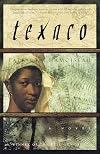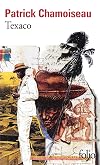
Texaco
by Patrick Chamoiseau
On This Page
Description
"Chamoiseau is a writer who has the sophistication of the modern novelist, and it is from that position (as an heir of Joyce and Kafka) that he holds out his hand to the oral prehistory of literature." --Milan Kundera Of black Martinican provenance, Patrick Chamoiseau gives us Texaco (winner of the Prix Goncourt, France's most prestigious literary prize), an international literary achievement, tracing one hundred and fifty years of post-slavery Caribbean history: a novel that is as much show more about self-affirmation engendered by memory as it is about a quest for the adequacy of its own form. In a narrative composed of short sequences, each recounting episodes or developments of moment, and interspersed with extracts from fictive notebooks and from statements by an urban planner, Marie-Sophie Laborieux, the saucy, aging daughter of a slave affranchised by his master, tells the story of the tormented foundation of her people's identity. The shantytown established by Marie-Sophie is menaced from without by hostile landowners and from within by the volatility of its own provisional state. Hers is a brilliant polyphonic rendering of individual stories informed by rhythmic orality and subversive humor that shape a collective experience. A joyous affirmation of literature that brings to mind Boccaccio, La Fontaine, Lewis Carroll, Montaigne, Rabelais, and Joyce, Texaco is a work of rare power and ambition, a masterpiece. show lessTags
Recommendations









Member Reviews
Texaco is essentially an oral history of Martinique from the 1820s to the 1980s, told from the point of view of Marie Sophie Labourieux, the founder of an illegal shanty-town built on the fringes of an oil depot in Fort-de-France. With only a little bit of necessary time-compression, Chamoiseau manages to fit this whole span (containing inter alia the end of slavery and collapse of the plantation system, the 1902 volcano disaster, two world wars, and the transition from colony to overseas Département) into the combined memories of Marie Sophie and her father Esternome, who was born a plantation slave and later became a joiner and smallholder before moving to Fort-de-France in the aftermath of the eruption that destroyed St Pierre. show more Marie Sophie works for most of her life as a domestic servant, but falls into the role of a community leader in her old age when she finds herself fighting the city and the oil company for the right to squat on the waste land below the tank-farm.
We are supposed to imagine Marie Sophie telling her story to the Urbaniste - a town-planner who has come to see Texaco for himself before advising the city to clear it or incorporate and improve it - but the author comes back in an afterword to explain to us that it's actually based on a series of interviews he, in his self-defined capacity of Marqueur de paroles (i.e. collector of folklore), had with the woman who was the original for Marie Sophie. In addition, the text is punctuated by excerpts from notebooks in which Marei Sophie recorded her own thoughts or the memories of her father, and with letters from the Urbaniste to the Marqueur de paroles.
The text itself is a complicated mixture of formal literary French, street language and Creole, always exciting, always poetic, and constantly undermining our expectations and prejudices. It's divided into sections in the way academic historians like to do "periodisation", but the periods are far from conventional: Temps de pail, Temps de bois-caisse, Temps de fibrociment, Temps béton (straw age, packing-case-wood age, asbestos age, concrete age). Creole words are introduced deliberately and systematically, and always turn out to have far more levels of meaning than the equivalent term in standard French.
Two terms in particular, turn out to be key concepts that keep on expanding in meaning and complexity as we go on through the book: l'En-ville, which is not just the city but the whole idea of urbanisation and everything associated with it; and the competing anarchistic Noutéka, ("us-ness"), an evocation of the powerful mutuality of small communities. Creole is rooted in African spirituality and in the disruptions of slavery, but we're never allowed to forget that Creole has a huge stake in the French language as well. Marie Sophie turns out to be a fan of Montaigne and Rabelais, and just when we're least expecting it, she will hit us with a couple of alexandrines buried in the middle of a passage of prose (...du matin de chaque jour aux beaux néons du soir). Or we suddenly get a couple of pages of vers-libre that looks suspiciously like a parody of Césaire's Cahier d'un retour. And there are some really awful jokes - as when de Gaulle visits the island and no-one is quite sure afterwards whether his speech was celebrating the Frenchness of the Martiniqueans ("Mon dieu, mon dieu, comme vous êtes français!") or exclaiming at their colour ("Mon dieu, mon dieu, comme vous êtes foncés!").
This novel won Chamoiseau the most prestigious French literary award, the Prix Goncourt, in 1992 - he was only the second Caribbean writer to win (the first being his fellow-Martiniquean, René Maran, in 1921). It's not hard to see why: it uses both language and history in original and exciting ways to show us where creole culture comes from, what it can do, and why it matters that little bits of anarchic individuality like Texaco should be able to exist in the world. show less
We are supposed to imagine Marie Sophie telling her story to the Urbaniste - a town-planner who has come to see Texaco for himself before advising the city to clear it or incorporate and improve it - but the author comes back in an afterword to explain to us that it's actually based on a series of interviews he, in his self-defined capacity of Marqueur de paroles (i.e. collector of folklore), had with the woman who was the original for Marie Sophie. In addition, the text is punctuated by excerpts from notebooks in which Marei Sophie recorded her own thoughts or the memories of her father, and with letters from the Urbaniste to the Marqueur de paroles.
The text itself is a complicated mixture of formal literary French, street language and Creole, always exciting, always poetic, and constantly undermining our expectations and prejudices. It's divided into sections in the way academic historians like to do "periodisation", but the periods are far from conventional: Temps de pail, Temps de bois-caisse, Temps de fibrociment, Temps béton (straw age, packing-case-wood age, asbestos age, concrete age). Creole words are introduced deliberately and systematically, and always turn out to have far more levels of meaning than the equivalent term in standard French.
Two terms in particular, turn out to be key concepts that keep on expanding in meaning and complexity as we go on through the book: l'En-ville, which is not just the city but the whole idea of urbanisation and everything associated with it; and the competing anarchistic Noutéka, ("us-ness"), an evocation of the powerful mutuality of small communities. Creole is rooted in African spirituality and in the disruptions of slavery, but we're never allowed to forget that Creole has a huge stake in the French language as well. Marie Sophie turns out to be a fan of Montaigne and Rabelais, and just when we're least expecting it, she will hit us with a couple of alexandrines buried in the middle of a passage of prose (...du matin de chaque jour aux beaux néons du soir). Or we suddenly get a couple of pages of vers-libre that looks suspiciously like a parody of Césaire's Cahier d'un retour. And there are some really awful jokes - as when de Gaulle visits the island and no-one is quite sure afterwards whether his speech was celebrating the Frenchness of the Martiniqueans ("Mon dieu, mon dieu, comme vous êtes français!") or exclaiming at their colour ("Mon dieu, mon dieu, comme vous êtes foncés!").
This novel won Chamoiseau the most prestigious French literary award, the Prix Goncourt, in 1992 - he was only the second Caribbean writer to win (the first being his fellow-Martiniquean, René Maran, in 1921). It's not hard to see why: it uses both language and history in original and exciting ways to show us where creole culture comes from, what it can do, and why it matters that little bits of anarchic individuality like Texaco should be able to exist in the world. show less
Written history gives us ages, demarcation points, like the Romanov Empire or the Industrial Revolution, capitalized to enforce just how important such people and developments are. But what of all the people and events whose history never sees the light of day, is lost along with the people whose oral record it was?
Marie-Sophie Labourieux believed in stories, believed in places, believed in her people. Constantly changing, constantly evolving, their origins were in danger of being lost to memory. A people who had descended from African slaves and French colonists, and from all those who came later to their island, a people who had fled the plantations and the masters only to be swallowed by the sugar refineries and City, had little show more chance of an official history. Even had such a thing existed, it could never capture the sounds, the smells, the tastes and colours of her world. Marie-Sophie set out to do this.
Thirty-five years earlier, Marie-Sophie had left City (Fort de France) and gone around the harbour to the land of the Texaco company. Here she set up her solitary hut, living alone until gradually a whole community of squatters grew up around her. Such places are never left in peace though. The oil people left, City noticed the wonderful vistas and needed more space. A connecting highway, the Pénétrante, was built. Now urban renewal threatened to destroy her community, the "insalubrious" Texaco.
By now, Marie-Sophie was regarded as a matadora, a woman of knowledge, worthy of respect. She was selected to entertain the first urban planner to assay her Texaco over glasses of rum in her hut. In her words
Slowly she wove for him the stories of her island and her people. More slowly, she filled notebook after notebook with them. From City, the place where she was born, there was Adélina, or was it Sophélise, one of two sisters who left this world so late that no one knew who she might be; their mother Théresa-Marie-Rose, who carried baskets of oranges and volumes of Montaigne across to the guards at the asylum where her husband, the man who had introduced Marie-Sophie to literature, but went mad and ate his library when war was declared, was incarcerated. From this family she had the books that followed her always.
From Texaco there was Nelta, the man she loved, whose goal was partir as soon as he had enough money, a goal they both tacitly acknowledged; partir, a French word to take him to France. There was Iréné the shark catcher with whom she would live out her days; Marie-Clémence, whose tongue was "televised news", "dispensing just enough bitterness to make life passionate"; Julot the Mangy, the Boss, afraid only of his dead mother's return to earth; the raids by police trying to flatten the community and the raids by foreign sailors trying to flatten the women.
Marie-Sophie told it all with the immediacy and yet also the mythic quality only an oral culture can convey. Marie-Sophie herself recognized the loss that the writing of history imposes on its material, a loss framed by the very language that seeks to preserve.
If there is, Marie-Sophie and Patrick Chamoiseau have captured it. show less
Marie-Sophie Labourieux believed in stories, believed in places, believed in her people. Constantly changing, constantly evolving, their origins were in danger of being lost to memory. A people who had descended from African slaves and French colonists, and from all those who came later to their island, a people who had fled the plantations and the masters only to be swallowed by the sugar refineries and City, had little show more chance of an official history. Even had such a thing existed, it could never capture the sounds, the smells, the tastes and colours of her world. Marie-Sophie set out to do this.
Thirty-five years earlier, Marie-Sophie had left City (Fort de France) and gone around the harbour to the land of the Texaco company. Here she set up her solitary hut, living alone until gradually a whole community of squatters grew up around her. Such places are never left in peace though. The oil people left, City noticed the wonderful vistas and needed more space. A connecting highway, the Pénétrante, was built. Now urban renewal threatened to destroy her community, the "insalubrious" Texaco.
By now, Marie-Sophie was regarded as a matadora, a woman of knowledge, worthy of respect. She was selected to entertain the first urban planner to assay her Texaco over glasses of rum in her hut. In her words
The angel of destruction had come that morning to familiarize himself with the setting for his future exploits.
-- But what's the use of visiting something you're going to raze?
He hadn't known what to answer and had concentrated on emptying his glass. So I took a real deep breath: I suddenly understood that it was I, around this table with this poor old rum, with my word for my only weapon, who had to wage --- at my age --- the decisive battle for Texaco's survival.
-- Little fellow, permit me to tell you Texaco's story...
Slowly she wove for him the stories of her island and her people. More slowly, she filled notebook after notebook with them. From City, the place where she was born, there was Adélina, or was it Sophélise, one of two sisters who left this world so late that no one knew who she might be; their mother Théresa-Marie-Rose, who carried baskets of oranges and volumes of Montaigne across to the guards at the asylum where her husband, the man who had introduced Marie-Sophie to literature, but went mad and ate his library when war was declared, was incarcerated. From this family she had the books that followed her always.
Some Montaigne of course, whom I feel I can still hear murmuring in his freezing castle; Alice, Lewis Carroll's, wandering from wonder to wonder as in a true Creole tale; Monsieur de La Fontaine's fables, where writing looks easy; and, of course, some Rabelais... I like to read my Rabelais, I don't understand much, but his bizarre language reminds me of my dear Esternome's strange sentences stuck between his desire to speak good French and his hill Creole -- a singular quality that I was never able to capture in my notebooks.
From Texaco there was Nelta, the man she loved, whose goal was partir as soon as he had enough money, a goal they both tacitly acknowledged; partir, a French word to take him to France. There was Iréné the shark catcher with whom she would live out her days; Marie-Clémence, whose tongue was "televised news", "dispensing just enough bitterness to make life passionate"; Julot the Mangy, the Boss, afraid only of his dead mother's return to earth; the raids by police trying to flatten the community and the raids by foreign sailors trying to flatten the women.
Marie-Sophie told it all with the immediacy and yet also the mythic quality only an oral culture can convey. Marie-Sophie herself recognized the loss that the writing of history imposes on its material, a loss framed by the very language that seeks to preserve.
The feeling of death became even more present when I began to write about myself, and about Texaco. It was like petrifying the tatters of my flesh. I was emptying my memory into immobile notebooks without having brought back the quivering of the living life which at each moment modifies what's just happened. Texaco was dying in my notebooks though it wasn't finished. And I myself was dying there though I felt the person I was now... still elaborating. ...
Is there such a thing as writing informed by the word, and by the silences, and which remains a living thing, moving in a circle and wandering all the time, ceaselessly irrigating with life the things written before, and which reinvents the circle each time like a spiral which at any moment is in the future, ahead, each loop modifying the other, nonstop, without losing a unity difficult to put into words?
If there is, Marie-Sophie and Patrick Chamoiseau have captured it. show less
Like most whypipo, I knew very little about the history of Martinique. This author brings the history of this tiny island to life. Starting in the 1700s, when bekes (white) owned humans kidnapped, or born, into slavery, and forced them with overseer whips to work in their Fields, their houses, make babies with them, through the 1800s, when Abolition created a false freedom, to the fight for keeping their tiny hutches in their shantytowns, Chamoiseau shares the word of the Storyteller, who stood in front and took blow after blow for the right to exist.
Bought this book in Melbourne in 1998 when I was seeking out wider inspiration from Black, anti-colonialist authors, in this case from the French colony of Martinique. Back then I think I convinced myself I liked it even though had an abiding memory that did not live up to initial expectation. Rereading some 20 years later, I can be more forthright, this is a really uninspiring book! The opening salvo is brilliantly told from multiple perspectives - a rock is hurled at "the Christ", an urban planner facilitating the proposed demolition of the shantytown on the fringes of the City. But it leads to a painful history of the place following the abolition of slavery and through the 19th and 20th centuries. Which of course has a lot of show more potential, as does the playful language mixing Creole and French and contested narration between an intermediary versed in progress and a oral historian grounded in community. So much potential, and yet so boring in its recounting... feels like a magical realism history by numbers. Frustrating. show less
Poetic poetic masterpiece. Think Ulysses of the French Carribean, Creole wandering in persistent poverty. Some people say Gabriel Garcia Marquez of French Antilles. I suppose except I have never read Marquez so can't compare. Or take it as a history of Martinique in the voice of the people who never won, and I think you have it. Sentences simply shine, language at its best, wonderful.
Texaco is a former Prix Goncourt winner that aims to be a narrative history of the island of Martinique. It is narrated by Marie-Sophie Laborieux, and begins with her meeting a town planner, who has come to the shantytown of Texaco (part of the capital city of Fort-de-France) with the aim of developing it and integrating it into the city. In order to protect her home, Marie-Sophie tells the story of how Texaco came into being, focusing on the stories of her ancestors (particularly her father Esternome) on their journey from slaves to free people to homeowners. Through her telling, the story of Texaco’s foundation becomes the story of the poor black underclass that for so long made up Martinique’s powerless majority, and becomes a show more powerful narrative history of the cycles of oppression and enfranchisement that shaped the island’s past.
Texaco is written using beautifully lyrical flowing prose, that the translators have done a wonderful job of preserving. Disturbing, occasionally horrific, events are told with a comforting humour that reminded me of writers like V.S. Naipaul and Rushdie. Reading the translators’ notes, it is unfortunately clear how much was necessarily lost in translation. Chamoiseau’s attempts to tell the history of Martinique from the Creole perspective include a playfulness with language that is central to the book, including the importance of alternating French with Creole French, middle-class patois and English. I get the impression that the translators were forced to sacrifice a lot of linguistic subtlety; perhaps more so than is usual with translated literature. Nevertheless, the translation is still excellent. My only gripe with the book (and unfortunately it is a fairly big one) is that, as with many narrative histories, characters are lost as they serve as ciphers for the events they represent. Esternome is the main character for most of the book, but I never feel like I got to know him. The oral structure (the book is as told by Marie-Sophie) also leads to strange pacing (the 20 years between World Wars I and II is dealt with in a matter of two pages). This lead to an oddly disjointed feel to the book as a whole, and, in the absence of characters that I felt I was able to get to know, made the book feel much more didactic than it could have been.
I would still recommend this book on the strength of the beautiful language, and fans of the other authors I mentioned should definitely check it out, as should anyone interested in Caribbean history and culture. Make no mistake this is a very good book, in my opinion. It just didn’t quite get the balance right between being a narrative history of Martinique and a personal history of some of its inhabitants. show less
Texaco is written using beautifully lyrical flowing prose, that the translators have done a wonderful job of preserving. Disturbing, occasionally horrific, events are told with a comforting humour that reminded me of writers like V.S. Naipaul and Rushdie. Reading the translators’ notes, it is unfortunately clear how much was necessarily lost in translation. Chamoiseau’s attempts to tell the history of Martinique from the Creole perspective include a playfulness with language that is central to the book, including the importance of alternating French with Creole French, middle-class patois and English. I get the impression that the translators were forced to sacrifice a lot of linguistic subtlety; perhaps more so than is usual with translated literature. Nevertheless, the translation is still excellent. My only gripe with the book (and unfortunately it is a fairly big one) is that, as with many narrative histories, characters are lost as they serve as ciphers for the events they represent. Esternome is the main character for most of the book, but I never feel like I got to know him. The oral structure (the book is as told by Marie-Sophie) also leads to strange pacing (the 20 years between World Wars I and II is dealt with in a matter of two pages). This lead to an oddly disjointed feel to the book as a whole, and, in the absence of characters that I felt I was able to get to know, made the book feel much more didactic than it could have been.
I would still recommend this book on the strength of the beautiful language, and fans of the other authors I mentioned should definitely check it out, as should anyone interested in Caribbean history and culture. Make no mistake this is a very good book, in my opinion. It just didn’t quite get the balance right between being a narrative history of Martinique and a personal history of some of its inhabitants. show less
This sweeping saga traces one hundred and fifty years of Martinique history. Mostly told from the point of view of Marie-Sophie Laborieux, the daughter of a former slave, texaco is the story of a shantytown of the same name besieged from every angle. From within, the society is wrathful and distrusting. From without everyone is a stranger. The language is mystical but I found my mind wandering as a result.
As I mentioned earlier, I tried reading this once before and failed. No different this time around.
As I mentioned earlier, I tried reading this once before and failed. No different this time around.
Members
- Recently Added By
Lists

Top Five Books of 2013
1,562 works; 715 members

Best of French Literature
138 works; 26 members

Favourite Books
1,819 works; 316 members

Best of World Literature
434 works; 51 members

Favorite Caribbean Books
60 works; 28 members

Literature by People of Color
81 works; 9 members
Books Set in the Caribbean
18 works; 5 members
Best African and African diaspora books
111 works; 4 members

Black Authors
384 works; 32 members

Five star books
1,755 works; 107 members

This is the Canon: Decolonize Your Bookshelf in 50 Books
51 works; 5 members

All Things France
100 works; 8 members

Speculative Fiction from around the World
610 works; 17 members

Books Read in 2016
4,666 works; 197 members

Books translated from Romance Languages into English
102 works; 7 members

Books Read in 2013
1,630 works; 51 members

Books and authors mentioned by Le Clézio in his Nobel Prize speech
87 works; 3 members

Les 50 meilleurs livres de langue française de 1900 à aujourd’hui
69 works; 2 members

Schomburg Centennial Reading List
100 works; 4 members
Author Information

53+ Works 1,820 Members
Some Editions
Awards and Honors
Series
Belongs to Publisher Series
Common Knowledge
- Canonical title*
- Texaco
- Original title
- Texaco
- Original publication date
- 1997 (English) (English); 1992 (French) (French)
- Important places
- Martinique, France
- Epigraph
- What will the scribe recall, who through herself already tells of the stern destiny of all these women forever condemned to pregnancies, who, in order to foresee the day's weather and figure out what labors to take on, are ex... (show all)pert at deciphering the prophecies of the wind, of dusk, or of the misty halo which sometimes seems to ooze out of the moon; these women who, while fighting -- as much as men -- to survive, made what is known as a fatherland, and whome calendars reduce to a few noisy holidays, to a vainglory after which streets are named?
--Hector Bianciotti
The city was the sanctuary of the word, of the gester and the geste, of struggle.
You, game ... are nothing but a city-blackman: that's where you have to speak from! ...
--Édouard Glissant - First words
- Upon his entrance into Texaco, the Christ was hit by a stone -- an aggression that surprised no one.
- Last words
- (Click to show. Warning: May contain spoilers.)I wanted it to be sung somewhere, in the ears of future generations, that we had fought with City, not to conquer it (it was City that gobbled us), but to conquer ourselves in the Creole unsaid which we had to name -- in ourselves and for ourselves -- until we came into our own.
- Original language
- French
*Some information comes from Common Knowledge in other languages. Click "Edit" for more information.
Classifications
Statistics
- Members
- 722
- Popularity
- 39,242
- Reviews
- 13
- Rating
- (3.92)
- Languages
- 9 — Dutch, English, French, German, Italian, Norwegian (Bokmål), Portuguese (Portugal), Spanish, Swedish
- Media
- Paper, Ebook
- ISBNs
- 24
- ASINs
- 9