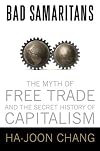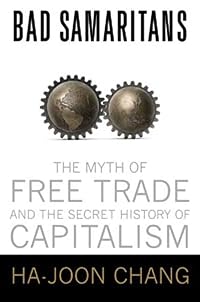
Bad Samaritans: The Myth of Free Trade and the Secret History of Capitalism
by Ha-Joon Chang
On This Page
Description
Contrarian economist Chang blasts holes in the "World Is Flat" theories of Thomas Friedman and other neo-liberal economists who argue that only unfettered capitalism and wide-open international trade can lift struggling nations out of poverty. On the contrary, Chang shows, today's economic superpowers--from the United States to Britain to his native South Korea--all attained prosperity by protectionism and government intervention in industry. We in the wealthy nations have conveniently show more forgotten this fact, telling ourselves a fairy tale about the magic of free trade and forcing policies that suit ourselves on the developing world. Unlike typical economists who construct models of how economies are supposed to behave, Chang examines the past: what has actually happened. He calls on America to return to its abandoned role, embodied in programs like the Marshall Plan, to offer a helping hand, instead of a closed fist, to countries struggling to follow in our footsteps.--From publisher description. show lessTags
Recommendations
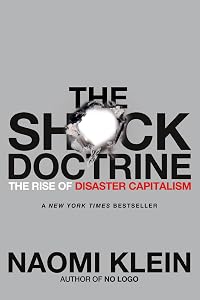
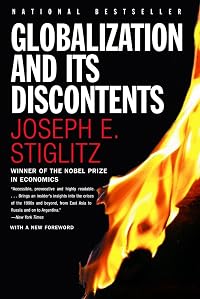
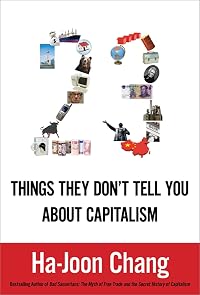
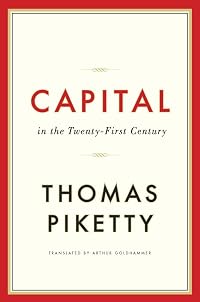

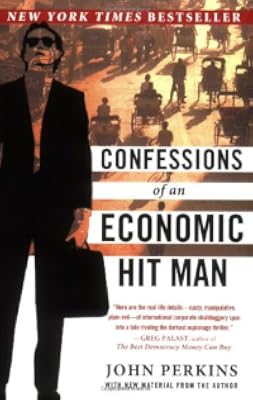
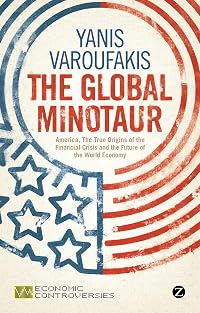
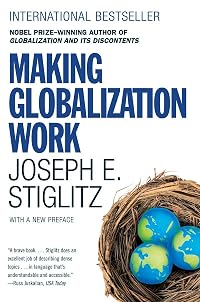
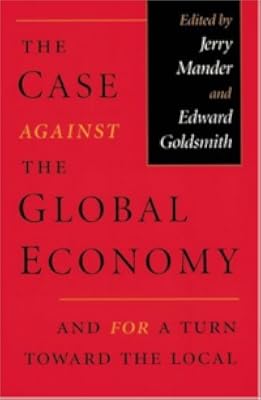
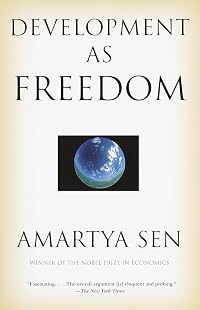
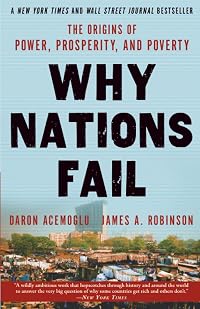
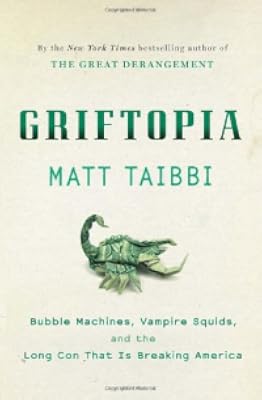
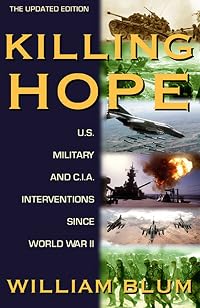


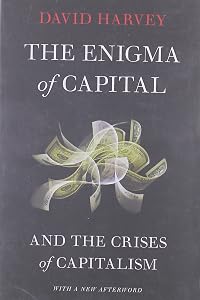
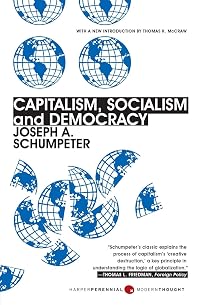
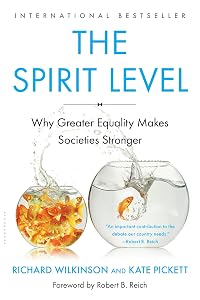
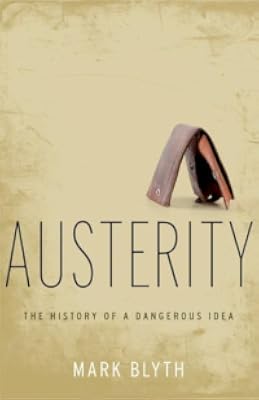
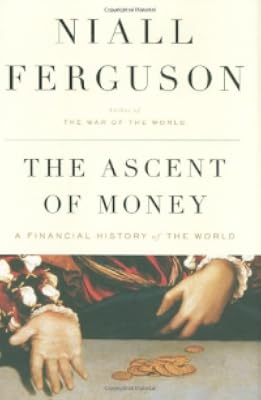
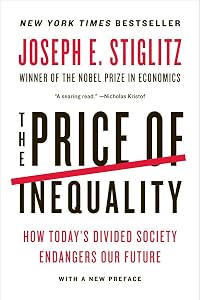
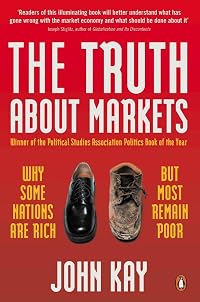
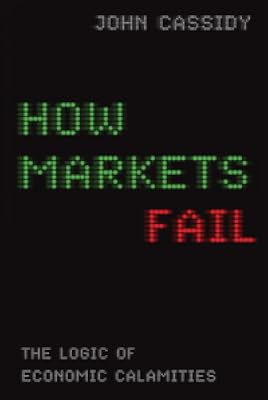
Member Recommendations
Member Reviews
One of the more popular lines about economists is, "an economist is a person who sees something working in practice and wonders if they could make it work in theory." Never is this more true than in the world of development economics, where individuals from all sides of politics tend to make grand theoretical pronouncements to explain the success of this or that country. Neo-liberals argue that free trade and privatisation are the only way for a nation to develop, because the theory of economics teaches us that when a trade takes place, everybody wins. Anti-colonial leftists argue that self-determination and grass-roots development are essential because they economically empower previously disempowered peoples.
In this book, Ha-Joon show more Chang dismisses the neoliberal theoretical approach (and doesn't address the less economically focused leftist one). Instead, he opts for a plan for development based on a reading of history. As a current student of economics, I can vouch for the lack of knowledge of economic history among economists graduating today. This is a very dangerous situation because it makes economists susceptible to believing glib statements about the world that don't have any evidence to back them up. Although in some regards economics is a technical discipline (graphs! statistics! regression analysis!), it is still a social science and is thus founded on untestable principles. For instance, the idea of comparative advantage (look it up on wikipedia!) is wonderfully elegant way of explaining how transactions work to benefit both parties. However, Chang argues, the evidence indicates that there is a flaw in the idea, which makes it less attractive, more complex, but historically more accurate. He also points out many other points of history that are assumed by neoliberals (eg. the US and Great Britain through free trade) but are not supported by historical records (eg. they actually adopted free trade only after getting rich).
The book is written in an engaging style and provides a very interesting history lesson. I found it inspiring and it has further reinforced my belief that economic history is a subject much more important than it is given credit for. show less
In this book, Ha-Joon show more Chang dismisses the neoliberal theoretical approach (and doesn't address the less economically focused leftist one). Instead, he opts for a plan for development based on a reading of history. As a current student of economics, I can vouch for the lack of knowledge of economic history among economists graduating today. This is a very dangerous situation because it makes economists susceptible to believing glib statements about the world that don't have any evidence to back them up. Although in some regards economics is a technical discipline (graphs! statistics! regression analysis!), it is still a social science and is thus founded on untestable principles. For instance, the idea of comparative advantage (look it up on wikipedia!) is wonderfully elegant way of explaining how transactions work to benefit both parties. However, Chang argues, the evidence indicates that there is a flaw in the idea, which makes it less attractive, more complex, but historically more accurate. He also points out many other points of history that are assumed by neoliberals (eg. the US and Great Britain through free trade) but are not supported by historical records (eg. they actually adopted free trade only after getting rich).
The book is written in an engaging style and provides a very interesting history lesson. I found it inspiring and it has further reinforced my belief that economic history is a subject much more important than it is given credit for. show less
I don't always read books on economy and politics, but when I do... All kidding aside, this is the third book by Chang I've read. The first one was the very informative [b:Economie: de gebruiksaanwijzing|22639658|Economie de gebruiksaanwijzing|Ha-Joon Chang|https://images.gr-assets.com/books/1404420312s/22639658.jpg|40021992] (Orig.: Economics: The User's Guide). You can read my (Dutch) review here. It offered insight in what economics is about, which kinds/school exist, how and what role politics play, and so on.
The other one was [b:23 Things They Don't Tell You About Capitalism|10733801|23 Things They Don't Tell You About Capitalism|Ha-Joon Chang|https://images.gr-assets.com/books/1459265244s/10733801.jpg|14015226] (my [Dutch] review show more target="_top">here), which also provided a lot of interesting information on capitalism, the economy, and related things. As M. Chang referred in 'Economics: The User's Guide' to his other books, I had to read [b:Bad Samaritans: Rich Nations, Poor Policies And The Threat To The Developing World|3673899|Bad Samaritans Rich Nations, Poor Policies And The Threat To The Developing World|Ha-Joon Chang|https://images.gr-assets.com/books/1347524047s/3673899.jpg|1018297], obviously.
What it's basically about - I won't go into much detail, as economics isn't my field of specialty: free trade vs protectionism. The West vs the East vs the South. Or more specifically, the rich western countries, including the (un)holy trinity of The World Bank, the IMF and the World Trade Organisation (WTO), imposing rules and ways of economics development on poor(er) countries, so those western countries can more easily trade and even invade those countries.
It's about the pot calling the kettle black. Each country had to start somewhere, either with free trade or with protectionism to let its national companies grow and improve their performance. But rich western countries don't like limitations, as they want to earn as much money as possible. Who doesn't, ey?
Anyway, even those rich western countries have known periods of protectionism to let their companies grow to be able to compete with foreign companies. Either they blocked products or certain sectors, or they provided subsidies, or invested in a different way. That's sometimes what (some of) those developing countries want(ed) to do, but couldn't or weren't allowed because of certain trade agreements.
Sometimes developing or poor countries can't take off due to copyright, patents, intellectual property, and so on. That's when some rich western countries - yes, it's really an attack on the rich west, which has risen to high levels of economic development, so they want to secure their position vis-à-vis other countries - decided and told the poorer countries how to be economically active. Do as I say, not as I do.
Chang once again wrote an eye-opening book and allows you to look at economy with a different view. You don't have to agree 100% with his point of view, but you can't deny that some/most/... of his statements and explanations are bull's-eye. Nowadays, the book has become very actual again, as US-president Trump wants to (and will?) impose tariffs on foreign steel and aluminum. Tariffs were also used by western countries, by eastern countries, and were something the western ones were opposing when wanting to trade or invest in those eastern countries.
Chang has used the US, the UK, France, Germany, Korea, China, Japan, Africa, ... as examples to explain the different themes. Some of those countries have totally changed their behaviour and culture in the last few decades. Yes, culture is also an aspect that influences or is influenced by economic development. He also showed how one solution may work for country x, but not necessarily country y. And thus, that one should let country x or y choose their own solutions, if tey deem them better than what the west (or someone else) advises/imposes.
In case you wondered, corruption is also addressed in this book, for good and for bad. Corruption is part of the game, but not always as we think it is.
The book should be accessible for a large audience, as Chang tried to keep the language as simple as possible, despite the not-so-accessible subject. I can only recommend this one and his other two books to anyone who seeks to understand and/or expand his/her knowledge on economy. Everyone, in fact, can learn something from these or such books. show less
The other one was [b:23 Things They Don't Tell You About Capitalism|10733801|23 Things They Don't Tell You About Capitalism|Ha-Joon Chang|https://images.gr-assets.com/books/1459265244s/10733801.jpg|14015226] (my [Dutch] review show more target="_top">here), which also provided a lot of interesting information on capitalism, the economy, and related things. As M. Chang referred in 'Economics: The User's Guide' to his other books, I had to read [b:Bad Samaritans: Rich Nations, Poor Policies And The Threat To The Developing World|3673899|Bad Samaritans Rich Nations, Poor Policies And The Threat To The Developing World|Ha-Joon Chang|https://images.gr-assets.com/books/1347524047s/3673899.jpg|1018297], obviously.
What it's basically about - I won't go into much detail, as economics isn't my field of specialty: free trade vs protectionism. The West vs the East vs the South. Or more specifically, the rich western countries, including the (un)holy trinity of The World Bank, the IMF and the World Trade Organisation (WTO), imposing rules and ways of economics development on poor(er) countries, so those western countries can more easily trade and even invade those countries.
It's about the pot calling the kettle black. Each country had to start somewhere, either with free trade or with protectionism to let its national companies grow and improve their performance. But rich western countries don't like limitations, as they want to earn as much money as possible. Who doesn't, ey?
Anyway, even those rich western countries have known periods of protectionism to let their companies grow to be able to compete with foreign companies. Either they blocked products or certain sectors, or they provided subsidies, or invested in a different way. That's sometimes what (some of) those developing countries want(ed) to do, but couldn't or weren't allowed because of certain trade agreements.
Sometimes developing or poor countries can't take off due to copyright, patents, intellectual property, and so on. That's when some rich western countries - yes, it's really an attack on the rich west, which has risen to high levels of economic development, so they want to secure their position vis-à-vis other countries - decided and told the poorer countries how to be economically active. Do as I say, not as I do.
Chang once again wrote an eye-opening book and allows you to look at economy with a different view. You don't have to agree 100% with his point of view, but you can't deny that some/most/... of his statements and explanations are bull's-eye. Nowadays, the book has become very actual again, as US-president Trump wants to (and will?) impose tariffs on foreign steel and aluminum. Tariffs were also used by western countries, by eastern countries, and were something the western ones were opposing when wanting to trade or invest in those eastern countries.
Chang has used the US, the UK, France, Germany, Korea, China, Japan, Africa, ... as examples to explain the different themes. Some of those countries have totally changed their behaviour and culture in the last few decades. Yes, culture is also an aspect that influences or is influenced by economic development. He also showed how one solution may work for country x, but not necessarily country y. And thus, that one should let country x or y choose their own solutions, if tey deem them better than what the west (or someone else) advises/imposes.
In case you wondered, corruption is also addressed in this book, for good and for bad. Corruption is part of the game, but not always as we think it is.
The book should be accessible for a large audience, as Chang tried to keep the language as simple as possible, despite the not-so-accessible subject. I can only recommend this one and his other two books to anyone who seeks to understand and/or expand his/her knowledge on economy. Everyone, in fact, can learn something from these or such books. show less
Finally, some facts and empirics on globalization, trade and development. This is a book I wish I'd read when I took my economics and international trade courses. Chang shows that the neo-liberal free-trade agenda is based on assumptions and beliefs that in fact do not reflect reality. He shows in detail how those countries that did improve their relative position and are now economically developed - the US, UK, Finland, Japan, South Korea - and those developing countries that are doing the best - including China - are those that ignore the neoliberal strictures. All these countries practiced some forms of protectionism, none of them followed the neo-liberal line. Chang makes a good argument that following neoliberalism is the surest show more way to remain underdeveloped and poor. Chang is not against trade, and shows how it does help countries develop. He's just against the neoliberal version because it prevents development.
This book should be required reading for anyone interested in international trade. It won't change the mind of the true believers - who seem to see neoliberalism as some religious faith - but for most people it'll be an interesting and much needed addition to our understanding of trade and development. show less
This book should be required reading for anyone interested in international trade. It won't change the mind of the true believers - who seem to see neoliberalism as some religious faith - but for most people it'll be an interesting and much needed addition to our understanding of trade and development. show less
عندما يتحدث المختص يصمت الهواة , ها جون جانك بالتاكيد اقتصادي من الدرجة الممتازة , يغوص في هذا الكتاب ويبحث تاريخ اقتصاد الدول الغنية ويخبرنا بطريقة مشوقة وسهلة الفهم على القارئ العادي كيف ان ما يخبرنا به النيوليبراليون هو مغلوط عن طرق نجاح الدول النامية بتحقيق النجاح الاقتصادي على عكس ما يوصي به الثالوث غير المقدس كما يسميه ) البنك الدولي و صندوق النقد الدولي ومنظمة التجارة العالمية
A very interesting book. I read it to discover how misguided the author is, and he convinced me. Free trade (as in Adam Smith's Wealth of Nations) is still the best economic model, but only between equal partners. Developing countries needs protection so that they can develop to the point where they can compete, just like kids are protected at home while getting an education...
This is a very readable discussion of “globalism” from a point of view of an expert dissenter on the subject. The author makes the case that first world countries and international organizations controlled by them (e.g. IMF, World Bank, and WTO), often set rules of international trade which appear to be unbiased, but actually favor the more powerful countries. These rules were ignored by the same countries for decades or centuries in order to allow their own economies develop to the fullest potential. (Whether intentionally or not does not matter – it was necessary for developing countries to ignore the rules to achieve economic success). The arguments are supported with numerous references, and by footnotes which are actually show more quite readable, while still unobtrusive. The author is an economist who grew up in South Korea while South Korea was transforming from an undeveloped country to an industrial power. His description of Korea then and now is one of the most interesting parts of the book. The last two chapters - on democracy and economics, and on culture and economics - were the most subjective, in my opinion. However, they are informative and well supported with references.
If you think economics is dismal and dry, you are correct. But this book overcomes both of those faults. show less
If you think economics is dismal and dry, you are correct. But this book overcomes both of those faults. show less
Loved this book's clear and repeated truth-telling to power (to the power of the usually-failed neo-liberals).
My only complaint is that a more systematic handling of examples: in place of "these countries experienced X, so there", instead "these 46 countries experienced X, 3 to 7 not X" would have been better. There was some of that.
Good book.
My only complaint is that a more systematic handling of examples: in place of "these countries experienced X, so there", instead "these 46 countries experienced X, 3 to 7 not X" would have been better. There was some of that.
Good book.
Members
- Recently Added By
Lists

My List
302 works; 1 member

2024-2025 Ezra Klein Guest Recommendations
213 works; 6 members
Author Information

26 Works 3,597 Members
Dr Ha-Joon Chang is Assistant Director of Development Studies at the University of Cambridge
Common Knowledge
- Canonical title
- Bad Samaritans: The Myth of Free Trade and the Secret History of Capitalism
- Original title
- Bad Samaritans: The Myth of Free Trade and the Secret History of Capitalism
- Original publication date
- 2007
Classifications
Statistics
- Members
- 821
- Popularity
- 33,669
- Reviews
- 14
- Rating
- (4.00)
- Languages
- 6 — English, Italian, Korean, Polish, Portuguese, Spanish
- Media
- Paper, Audiobook, Ebook
- ISBNs
- 21
- ASINs
- 10