On This Page
Description
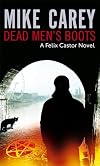
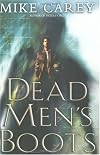
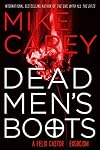
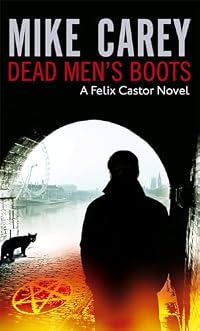
Castor's fellow exorcist John Gittings made several calls asking for help before his untimely demise, and if Castor had answered them, his friend might still be alive. So when a smooth-talking lawyer comes out of nowhere to claim the corpse, Castor owes it to John's unhappy ghost and even more miserable widow to help out. But life is rarely that simply for Felix Castor.--From publisher's description.Tags
Recommendations
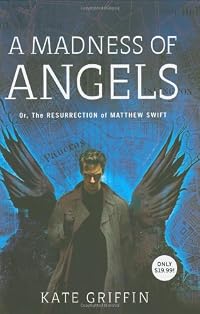
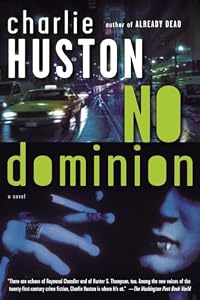

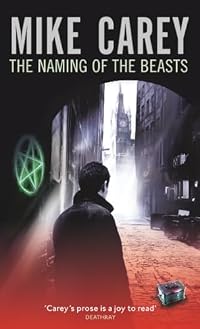

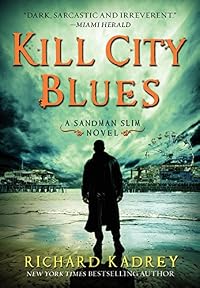

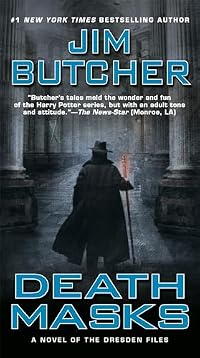
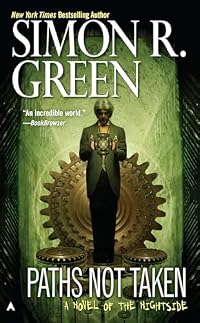
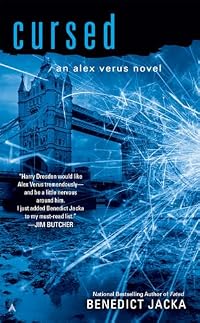

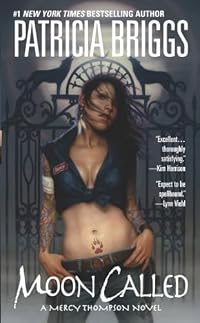
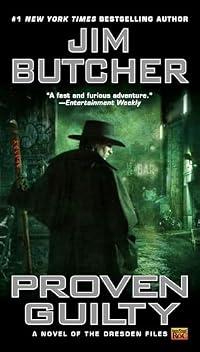
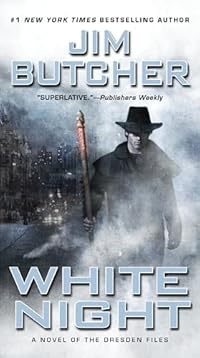
Member Recommendations
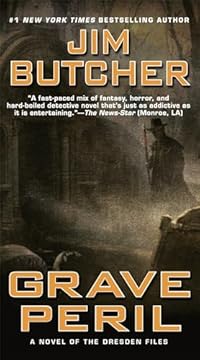
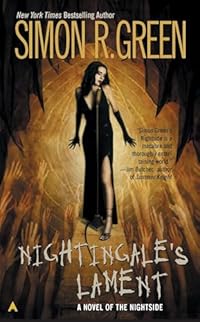
amberwitch First book in the Nightside series, featuring a supernatural P.I. in the 'shadow' London where myths and boogiemen lives.
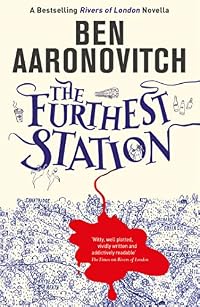
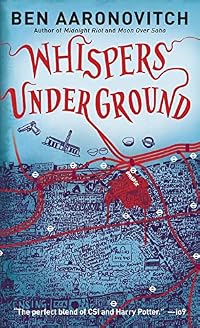
LongDogMom Similar type of writing and characterization
Member Reviews
I think this novel deserves a good long run and a mighty jump... the waters might be cold, but it's like Fix says about death. You get used to it real damn quick.
This world of mystery continues along its deep mystery roots, including such near caricatures of women that it nearly passes through to the other side, as if through death, to become something utterly strange and familiar. Femme Fatale? Try Femme Demonic, and you'll be on solid, unconsecrated grounds and wishing you'd paid just a little more attention to what your mother tried to tell you about 'dem women.
I'm not just talking about Juliet. I'm talking about all undead women forced into poltergeist holding patterns of serial murder.
(But don't assume you'll really guess the show more un-beating heart of this locked-room mystery. Things tend to shift and slide as in all good mysteries, but it can get awfully complicated when you throw in immortal demons feeding on lusts or rarified murders, zombies being brutally mistreated by uncaring main characters, or plain old sympathies for the devil. Welcome to the jungle.)
I have to admit I like this one better than the previous two volumes. There's enough twists and turns and eventual reconnecting threats and threads to make anyone's head swim, but it's the cold heart of Fix that ties everything back together in the end.
Is Fix really that likeable?
Jury is still out on that one. He borders a lot more closely to being an anti-hero than two-books would have you believe. It's easy to assume, since he is pretty passionate about helping the downtrodden dead, that he might be able to give a shit for any of the living.
Frankly, I'm not really sure about that. He gets along all right and enters into all types of social contracts readily enough, but like I said, his heart's really not in it.
It's probably pretty fortunate that he's not an overpowered UF protagonist.
He might then have the power potential and the heart to murder the world. (Am I the only one to think this? lol, maybe... but I just can't bring myself to TRUST him.)
Still, a fine and entertaining read! show less
This world of mystery continues along its deep mystery roots, including such near caricatures of women that it nearly passes through to the other side, as if through death, to become something utterly strange and familiar. Femme Fatale? Try Femme Demonic, and you'll be on solid, unconsecrated grounds and wishing you'd paid just a little more attention to what your mother tried to tell you about 'dem women.
I'm not just talking about Juliet. I'm talking about all undead women forced into poltergeist holding patterns of serial murder.
(But don't assume you'll really guess the show more un-beating heart of this locked-room mystery. Things tend to shift and slide as in all good mysteries, but it can get awfully complicated when you throw in immortal demons feeding on lusts or rarified murders, zombies being brutally mistreated by uncaring main characters, or plain old sympathies for the devil. Welcome to the jungle.)
I have to admit I like this one better than the previous two volumes. There's enough twists and turns and eventual reconnecting threats and threads to make anyone's head swim, but it's the cold heart of Fix that ties everything back together in the end.
Is Fix really that likeable?
Jury is still out on that one. He borders a lot more closely to being an anti-hero than two-books would have you believe. It's easy to assume, since he is pretty passionate about helping the downtrodden dead, that he might be able to give a shit for any of the living.
Frankly, I'm not really sure about that. He gets along all right and enters into all types of social contracts readily enough, but like I said, his heart's really not in it.
It's probably pretty fortunate that he's not an overpowered UF protagonist.
He might then have the power potential and the heart to murder the world. (Am I the only one to think this? lol, maybe... but I just can't bring myself to TRUST him.)
Still, a fine and entertaining read! show less
On an urban fantasy/mystery level, this was as fun as the last two. Creepy ghosts and great fight scenes and the edge-of-the-seat question of how Castor’s going to win, plus a great noir voice, good humour, and a series arc I still need to know the resolution for. It was just want I needed at the time I read it. Two thumbs up. However…
It’s been a few years at least since I read one of the Castor books and clearly my eyes have been opened in the meantime. Carey’s … not great … when it comes to his female characters. They’re all given different personalities and are clearly living lives away from Castor (and neither put up with his shit or particularly want to sleep with him), but at the same time, nearly every female intro show more includes Castor’s assessment of their looks, a mention of how they’d slept or nearly slept together in the past, or both. Plus there’s the case of Juliet, the reformed succubus who’s still deathly attractive to every man and who is the center of “walk into a flagpole” type jokes and comments at every turn, and the hit-woman’s backstory isn’t all that enlightened either. Sigh.
Still liked the book over all and will still be reading the others, but will I buy them? Probably not, and they’ve gone from “good series” to “guilty pleasure” now.
Warnings: Gore and graphic violence; mention of more of the same; mentions of rape and extreme sexual violence; the thing with Juliet; “it’s okay, the abuse made her do it.”
6/10 (would be a 7 except for the female character stuff) show less
It’s been a few years at least since I read one of the Castor books and clearly my eyes have been opened in the meantime. Carey’s … not great … when it comes to his female characters. They’re all given different personalities and are clearly living lives away from Castor (and neither put up with his shit or particularly want to sleep with him), but at the same time, nearly every female intro show more includes Castor’s assessment of their looks, a mention of how they’d slept or nearly slept together in the past, or both. Plus there’s the case of Juliet, the reformed succubus who’s still deathly attractive to every man and who is the center of “walk into a flagpole” type jokes and comments at every turn, and the hit-woman’s backstory isn’t all that enlightened either. Sigh.
Still liked the book over all and will still be reading the others, but will I buy them? Probably not, and they’ve gone from “good series” to “guilty pleasure” now.
Warnings: Gore and graphic violence; mention of more of the same; mentions of rape and extreme sexual violence; the thing with Juliet; “it’s okay, the abuse made her do it.”
6/10 (would be a 7 except for the female character stuff) show less
Felix "Fix" Castor, ex-exorcist and provider of "spiritual services" (no, he doesn't know what it means either) is having woman troubles, and not just romantic ones. Sure, after the events of Vicious Circle, Pen, his unrequited love interest, isn't speaking to him, and Juliet, demonic succubus and his unrequited lust interest, has a committed relationship with another woman, but he has far more problems than that. Pen has gotten him embroiled in a nasty court case over his demonically- possessed friend Rafi, all while trying to ignore his existence. Carla Gittings, widow of another exorcist, is being haunted by the angry geist of her late husband and has enlisted Fix's help. If that weren't enough, Fix has been hired by a distressed show more wife to prove that her husband didn't commit a murder--an extremely dead psychopathic American murderess did it instead. As I said. Woman troubles. As Fix begins to try to make sense of the situation, he begins to think that the cases are related and that Carla Gittings' husband may have stumbled into a horrific conspiracy of murder and possession. As Fix's involvement brings him to the attention of some of the most deadly antagonists he has yet faced, it's time to follow "The gospel according to Castor, Chapter 1, Verse 1: When in doubt, duck."
As always, Carey's book was a wild ride. I love Fix's wry voice, and the vivid writing and dialogue bring the characters and world to life. As always, I'm not sure this is a perfect fit for fans of The Dresden Files; not only are the world and tone much darker, but even the basic structure is somewhat different: Harry Dresden typically goes up against antagonists several power grades above him, but his formidable magical talents make him a serious threat. Fix has the same powers as any exorcist, but nothing more; only his determination, guile hero tendencies, and dependence on stronger allies allow him to make it through. As Fix himself says, "I'm like Avis rent-a-car: Because I'm insignificant, I try harder." The world itself is fascinating. Personally, I think that Castor is in the middle of the Rapture, and for once, the protagonist had nothing to do with bringing about the apocalypse. The mysteries beyond the grave come back to haunt the living, and society has no rules defining the interactions with the undead. Exorcists, as Fix once did, contend that the ghosts and zombies are nothing but echoes and that exterminating them is as benign as flipping off a radio. Some, like Fix's colleague Jemma-Jane Mullbridge, take advantage of the lack of guidelines to perform experiments on the undead that no ethical board would allow any living creature. A growing group of bright-eyed idealists have become activists who assert that both human rights and life itself continue "after breath". Fix Castor isn't sure what happens after death, and now carries a heavy weight of guilt from his past actions as a carefree exorcist. All of the supernatural beings in Fix's world, other than demons, are human in origin, so there are no easy and guilt-free salt'em-burn'em solutions as there are in most other urban fantasy series. In the end, every atrocity Fix encounters is inherently a human one, so the story repeatedly explores the lengths humans will go to retain some semblance of life.
Even the interactions with demons are an exploration of humanity. Juliet is now in a relationship, apparently in love with the bookish Susan Book. She seems as confused as the reader in understanding what this means, and I was intrigued by her attempts to construct a human identity and to rationalize her own past as a being repeatedly forced to use her sexuality to destroy others. Juliet's actions raised one aspect of the books that I had difficulty in describing coherently: the portrayal of women. The hardboiled/noir genre has a proud history of partitioning women into either "damsels in distress" or "femme fatales," but Carey goes one step farther, utilizing the gender divisions from the 19th century. All but one of the women in every single book (as far as I can recall) are repeatedly described as vibrant, animalistic, and ruled by their passions, while men base their actions on logic and calculation. The only individual to break the dichotomy is Jemma-Jane Mullbridge, and Castor actually describes her as "unfeminine" a few times. Personally, I think it's a generalization best left to the Victorian times. On a lighter note, Carey is one of the few writers in the genre who creates honest-to-goodness mystery stories, and I think this is his best so far; you'll figure out much of what is going on before Fix does, but it will take half the book instead of half a dozen pages. There is also an encore of one of the creepiest instances of a were-beast I've personally encountered...it might even make you look at all those internet kitty memes a little differently.
One of the formulas for naming your hardboiled/noir protagonist is to combine a mundane first name with a proper-noun-and-meaningful last-name. That's how you get Harry "the building was on fire and it wasn't my fault" Dresden, Alex "I see the the true future" Verus, James "Sandman Slim" Stark, etc. "Castor" is indeed apropos: castor oil is used therapeutically as a purgative, but it also happens to be a major source of ricin. Like his namesake, Fix starts out attempting to do good, but his presence is often disastrous for those around him. His given name and nickname have a certain irony: he is certainly not happy, his presence is rarely felicitous, and however hard he tries to fix all of the problems he sees, he is doomed to failure, at least in his assessment of himself. Fix Castor is a man drowning in his own guilt, submerged and isolated from the rest of humanity by his remorse and self-loathing. He walks the mean streets, dragging his crushing weight of guilt and self-hatred behind him, making every interaction into a hostile one because he fears that forming attachments will eventually lead him to fail someone else he cares about. Every single story that Fix has told about himself is a story of self-recrimination, from his childhood dealings with Katie to his failure to save Rafi. Every single story he tells us, including the major plot of each novel, ends with him blaming himself. Considering Fix as an unreliable narrator, this is an interesting effect: either Fix remembers all incidents in his life from the perspective of his own failings, or he is actively attempting to present himself negatively to the reader. In either case, it creates an oddly vulnerable, human, and ultimately likeable character, to be seen not as a lost, violent soul, but only as a hollow man.
Yet again, the most depressing aspect of the book for me was the isolation, which is in no small part created by Fix's shell of hostility. Fix has scant trust and even less respect for most of the people he encounters, and in the dingy world that Carey has created, it is difficult to blame him. After the last book, his friendship with Pen and Coldwood have practically disintegrated, and the events of the story put even his relationship with Juliet into jeopardy. As always, Fix and Nick are openly and aggressively hostile, with Fix going out of his way to antagonize the zombie; I can't comprehend why Nicky ever lets Castor through his doors, and I really don't understand why he continues to help. Yet as usual, Fix tries to be there for whoever leans on him, from Carla to Juliet to Pen. Yet again, he sees himself as failing them all.
Dead Men's Boots is a deeply satisfying story: a tightly plotted, entertaining mystery placed in an imaginative world that explores the boundaries of humanity and death. I can't wait to start the next book.
~4.5 show less
As always, Carey's book was a wild ride. I love Fix's wry voice, and the vivid writing and dialogue bring the characters and world to life. As always, I'm not sure this is a perfect fit for fans of The Dresden Files; not only are the world and tone much darker, but even the basic structure is somewhat different: Harry Dresden typically goes up against antagonists several power grades above him, but his formidable magical talents make him a serious threat. Fix has the same powers as any exorcist, but nothing more; only his determination, guile hero tendencies, and dependence on stronger allies allow him to make it through. As Fix himself says, "I'm like Avis rent-a-car: Because I'm insignificant, I try harder." The world itself is fascinating. Personally, I think that Castor is in the middle of the Rapture, and for once, the protagonist had nothing to do with bringing about the apocalypse. The mysteries beyond the grave come back to haunt the living, and society has no rules defining the interactions with the undead. Exorcists, as Fix once did, contend that the ghosts and zombies are nothing but echoes and that exterminating them is as benign as flipping off a radio. Some, like Fix's colleague Jemma-Jane Mullbridge, take advantage of the lack of guidelines to perform experiments on the undead that no ethical board would allow any living creature. A growing group of bright-eyed idealists have become activists who assert that both human rights and life itself continue "after breath". Fix Castor isn't sure what happens after death, and now carries a heavy weight of guilt from his past actions as a carefree exorcist. All of the supernatural beings in Fix's world, other than demons, are human in origin, so there are no easy and guilt-free salt'em-burn'em solutions as there are in most other urban fantasy series. In the end, every atrocity Fix encounters is inherently a human one, so the story repeatedly explores the lengths humans will go to retain some semblance of life.
Even the interactions with demons are an exploration of humanity. Juliet is now in a relationship, apparently in love with the bookish Susan Book. She seems as confused as the reader in understanding what this means, and I was intrigued by her attempts to construct a human identity and to rationalize her own past as a being repeatedly forced to use her sexuality to destroy others. Juliet's actions raised one aspect of the books that I had difficulty in describing coherently: the portrayal of women. The hardboiled/noir genre has a proud history of partitioning women into either "damsels in distress" or "femme fatales," but Carey goes one step farther, utilizing the gender divisions from the 19th century. All but one of the women in every single book (as far as I can recall) are repeatedly described as vibrant, animalistic, and ruled by their passions, while men base their actions on logic and calculation. The only individual to break the dichotomy is Jemma-Jane Mullbridge, and Castor actually describes her as "unfeminine" a few times. Personally, I think it's a generalization best left to the Victorian times. On a lighter note, Carey is one of the few writers in the genre who creates honest-to-goodness mystery stories, and I think this is his best so far; you'll figure out much of what is going on before Fix does, but it will take half the book instead of half a dozen pages. There is also an encore of one of the creepiest instances of a were-beast I've personally encountered...it might even make you look at all those internet kitty memes a little differently.
One of the formulas for naming your hardboiled/noir protagonist is to combine a mundane first name with a proper-noun-and-meaningful last-name. That's how you get Harry "the building was on fire and it wasn't my fault" Dresden, Alex "I see the the true future" Verus, James "Sandman Slim" Stark, etc. "Castor" is indeed apropos: castor oil is used therapeutically as a purgative, but it also happens to be a major source of ricin. Like his namesake, Fix starts out attempting to do good, but his presence is often disastrous for those around him. His given name and nickname have a certain irony: he is certainly not happy, his presence is rarely felicitous, and however hard he tries to fix all of the problems he sees, he is doomed to failure, at least in his assessment of himself. Fix Castor is a man drowning in his own guilt, submerged and isolated from the rest of humanity by his remorse and self-loathing. He walks the mean streets, dragging his crushing weight of guilt and self-hatred behind him, making every interaction into a hostile one because he fears that forming attachments will eventually lead him to fail someone else he cares about. Every single story that Fix has told about himself is a story of self-recrimination, from his childhood dealings with Katie to his failure to save Rafi. Every single story he tells us, including the major plot of each novel, ends with him blaming himself. Considering Fix as an unreliable narrator, this is an interesting effect: either Fix remembers all incidents in his life from the perspective of his own failings, or he is actively attempting to present himself negatively to the reader. In either case, it creates an oddly vulnerable, human, and ultimately likeable character, to be seen not as a lost, violent soul, but only as a hollow man.
Yet again, the most depressing aspect of the book for me was the isolation, which is in no small part created by Fix's shell of hostility. Fix has scant trust and even less respect for most of the people he encounters, and in the dingy world that Carey has created, it is difficult to blame him. After the last book, his friendship with Pen and Coldwood have practically disintegrated, and the events of the story put even his relationship with Juliet into jeopardy. As always, Fix and Nick are openly and aggressively hostile, with Fix going out of his way to antagonize the zombie; I can't comprehend why Nicky ever lets Castor through his doors, and I really don't understand why he continues to help. Yet as usual, Fix tries to be there for whoever leans on him, from Carla to Juliet to Pen. Yet again, he sees himself as failing them all.
Dead Men's Boots is a deeply satisfying story: a tightly plotted, entertaining mystery placed in an imaginative world that explores the boundaries of humanity and death. I can't wait to start the next book.
~4.5 show less
Okay, I’m a full-fledged Felix Castor fan now. Among other things, I like how the exorcist/gumshoe has the exact same excuse for missing calls that I do—given the other stuff going on in his life, I believe that he forgot to charge his phone, even though it’s plot-convenient. I also like how his choices are often legitimately bad ones—he has bad alternatives and sometimes he screws up, and people die. Here, he investigates a murder that soon seems to involve something even the ghost-hunters and demons think impossible: possession of a human by a ghost. He’s also still trying to deal with the friend into whose body he accidentally sealed a demon several years ago. And if the plot comes together a bit neatly in the end, show more there’s very little neatness in the world so I don’t mind. show less
The third in a paranormal thriller series, Dead Men’s Boots was absolutely great! I had to say that before writing the summary – that’s how much I enjoyed it.
Felix Caster is a professional exorcist. And not just any old exorcist but one who uses music as a way to send departed but lost and often angry souls on to wherever it is they should go after dying. This is a unique method of exorcism to me but then I’ve not read too many paranormal thrillers involving exorcists. (Are there a lot?)
At the beginning of the story Felix is attending the funeral of a colleague when he is approached by the grieving widow with a plea for help. Would Felix deal with an aggressive attorney who is obligated to carry out the departed’s wishes even show more though his wife insists he wasn’t in his right mind when he made those wishes known? Felix feels reluctantly obligated. From here the story just gets better and better. The reader is taken on an underworld joyride and the action never stops.
The writing is good too and captured me from the very first paragraph:
"I don’t do funerals all that often, and when I do, I prefer to be either falling-down drunk or dosed up on some herbal fuzz-bomb like salvinorin to the point where I start to lose feeling from the feet on up, like a kind of rising damp of the central nervous system. Today I was as sober as a judge, and that was only the start of it. The cemetery was freezing cold-cold enough to chill me even through the Russian-army greatcoat I was wearing (I never fought, but poor bloody infantry is a state of mind). The sun was still locked up for winter, a gusty west wind was stopping itself sharp on my face, and guilt was working its slow way through my mind like a weighted cheese wire through a block of ice."
The only negative thing I can say is that I didn’t have the opportunity to read the first two in the series! When I realized how much I liked the story I checked my local big box store for The Devil You Know and Vicious Circle and they don’t even have them available to order! What?! And apparently there are now five books in the series. Given that the books are published in England it may be that they are harder to get in North America. In any case my search will go on because this series is worth it! show less
Felix Caster is a professional exorcist. And not just any old exorcist but one who uses music as a way to send departed but lost and often angry souls on to wherever it is they should go after dying. This is a unique method of exorcism to me but then I’ve not read too many paranormal thrillers involving exorcists. (Are there a lot?)
At the beginning of the story Felix is attending the funeral of a colleague when he is approached by the grieving widow with a plea for help. Would Felix deal with an aggressive attorney who is obligated to carry out the departed’s wishes even show more though his wife insists he wasn’t in his right mind when he made those wishes known? Felix feels reluctantly obligated. From here the story just gets better and better. The reader is taken on an underworld joyride and the action never stops.
The writing is good too and captured me from the very first paragraph:
"I don’t do funerals all that often, and when I do, I prefer to be either falling-down drunk or dosed up on some herbal fuzz-bomb like salvinorin to the point where I start to lose feeling from the feet on up, like a kind of rising damp of the central nervous system. Today I was as sober as a judge, and that was only the start of it. The cemetery was freezing cold-cold enough to chill me even through the Russian-army greatcoat I was wearing (I never fought, but poor bloody infantry is a state of mind). The sun was still locked up for winter, a gusty west wind was stopping itself sharp on my face, and guilt was working its slow way through my mind like a weighted cheese wire through a block of ice."
The only negative thing I can say is that I didn’t have the opportunity to read the first two in the series! When I realized how much I liked the story I checked my local big box store for The Devil You Know and Vicious Circle and they don’t even have them available to order! What?! And apparently there are now five books in the series. Given that the books are published in England it may be that they are harder to get in North America. In any case my search will go on because this series is worth it! show less
This is a series I really enjoy listening to on audiobook, even though the protagonist is fairly unlikeable and none of the women in the series are fleshed out at all; they're all fairly one dimensional caricatures. (They all have pretty much one defining characteristic and... that's it. That's all there is too them.) But if you can get past the complete lack of character development, this is a fun urban fantasy series with a reluctant exorcist trying to make a living in a London where the dead have begun rising in noticeable numbers. We've gotten a few slight hints that there's some bigger, overarching story going on. In this book we a few demons obliquely mentioning some "Great Project" that happened - or maybe didn't happen? - in show more hell, so I'm sure that's going to come back to bite Fix at some point. I really appreciate when a series lays out some breadcrumbs along the way for a bigger story down the line, especially in this genre.
Honestly this a bit of a poor man's Dresden Files, but it's like spending the day at the amusement part. You're not bettering yourself, you're not learning any deep truths, and you're not going to change your life. But you're still gonna have a hell of a ride and it'll be a good time. show less
Honestly this a bit of a poor man's Dresden Files, but it's like spending the day at the amusement part. You're not bettering yourself, you're not learning any deep truths, and you're not going to change your life. But you're still gonna have a hell of a ride and it'll be a good time. show less
Third in the Felix Castor series. A fellow exorcist has committed suicide and then gone geist. His widow wants Fix to try and find out why the departed is staying around. His conscience pricks him into agreeing as John Gittings had asked for his help on a case before his death and due to a bad incident on their last case together Fix ignored the calls. He also gets a new client when Jan Hunter asks him to look into her husband's case. He went full psycho on a rent boy and it seems like the MO of a long dead serial killer. Could it be something the exorcist community had thought impossible? A ghost possessing a living human? All this and then there's Jenna-Jane Mulbridge who wants to take Rafi, his demon possessed friend, to her show more institute and probably won't treat him quite so well. Fix has got to stop her so he can get back in the good books of his former Landlady, Pen.
The rest of the usual gang of recurring characters, Nicky the information gathering zombie and Juliet the succubus turned exorcist, also make welcome appearances. Although this is a self-contained story I think the series is best read in order to fully appreciate the who's who and the rules of the world it takes place within. This is a fast-paced tale set firmly in the hard-boiled detective end of the urban fantasy market. The writing is descriptive but never flowery, actions have consequences and moral dilemma's faced. An excellent continuation of the series. show less
The rest of the usual gang of recurring characters, Nicky the information gathering zombie and Juliet the succubus turned exorcist, also make welcome appearances. Although this is a self-contained story I think the series is best read in order to fully appreciate the who's who and the rules of the world it takes place within. This is a fast-paced tale set firmly in the hard-boiled detective end of the urban fantasy market. The writing is descriptive but never flowery, actions have consequences and moral dilemma's faced. An excellent continuation of the series. show less
Members
- Recently Added By
Lists

Books Read in 2017
4,249 works; 130 members

Best Urban Fantasy
632 works; 77 members

Paranormal investigators and space detectives
274 works; 9 members
Author Information

683+ Works 38,490 Members
Series

Common Knowledge
- Canonical title
- Dead Men's Boots
- Original title
- Dead Men's Boots
- Original publication date
- 2007-09-26
- People/Characters
- Felix Castor; Juliet Salazar (Ajulutsikael); Nicholas "Nicky" Heath; Jonathan Gittings; Carla Gittings; Reginald Tang (show all 35); Gregory Lockyear; Therese O'Driscoll; Bill "Bourbon" Bryant; Cath Bryant; Larry Tallowhill; Louise Beddows; Bill "Jonah" Schofield; Ade Underwood; Sita Lovejoy; Michelle Mooney; Pamela Elisa "Pen" Bruckner; Jenna-Jane Mulbridge; Michael Trevelyan; Maynard Todd; Janine Hunter; Douglas Hunter; Christopher Merill; Myriam Seaforth Kale; Stephan Bass; Gary Coldwood; Peter Covington; Dr. Maxwell; Vincent Chesney; Moloch; Lionel Palance; Aaron Silver; Jamie Pomfret; Scrub; Susan Book
- Important places
- London, England, UK; Brokenshire, Alabama, USA
- Dedication
- To Charlotte Oria, my transatlantic connection for a quarter of a century, with much love and gratitude.
- First words
- I don't do funerals all that often, and when I do, I prefer to be either falling-down drunk or dosed up on some herbal fuzz-bomb like salvinorin to the point where I start to lose feeling from the feet on up, like a kind of r... (show all)ising damp of the central nervous system.
- Quotations
- Most of the people waving placards and chanting rhythmically were in their teens or early twenties. What did they know about death? They hadn't even gotten all that far with life yet.
- Last words
- (Click to show. Warning: May contain spoilers.)I'm gambling the first ten seconds or so will be the worst.
Classifications
Statistics
- Members
- 736
- Popularity
- 38,144
- Reviews
- 30
- Rating
- (3.90)
- Languages
- English, French, Polish
- Media
- Paper, Audiobook, Ebook
- ISBNs
- 20
- ASINs
- 11