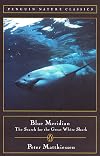
Blue Meridian: The Search for the Great White Shark
by Peter Matthiessen
On This Page
Description
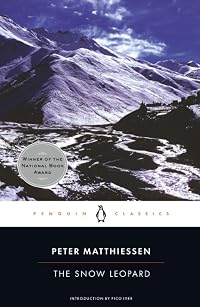
A classic work of nature and humanity, by renowned writer Peter Matthiessen (1927-2014), author of the National Book Award-winning The Snow Leopard and the new novel In Paradise National Book Award-winning author Peter Matthiessen takes readers on an expedition to find the most dangerous predator on Earth--the legendary great white shark. On a trek that lasts 17 months and takes him from the Caribbean to the whaling grounds off South Africa, and across the Indian Ocean to the South show more Australian coast, Matthiessen describes the awesome experience of swimming in open water among hundreds of sharks; the beauties of strange seas and landscapes; and the camaraderie, tension, humor, and frustrations that develop when people continually risking their lives dwell in close proximity day after day. Filled with acute observations of natural history in exotic areas around the world, Blue Meridian records a harrowing account of one of the great adventures of our time. For more than seventy years, Penguin has been the leading publisher of classic literature in the English-speaking world. With more than 1,700 titles, Penguin Classics represents a global bookshelf of the best works throughout history and across genres and disciplines. Readers trust the series to provide authoritative texts enhanced by introductions and notes by distinguished scholars and contemporary authors, as well as up-to-date translations by award-winning translators. show lessTags
Recommendations






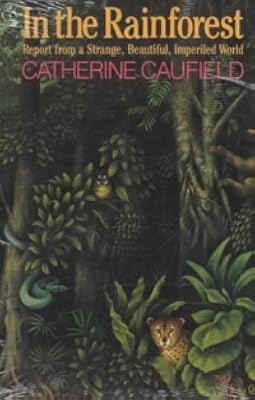
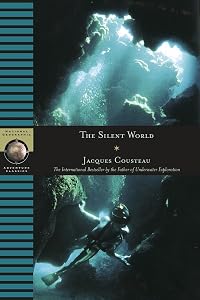
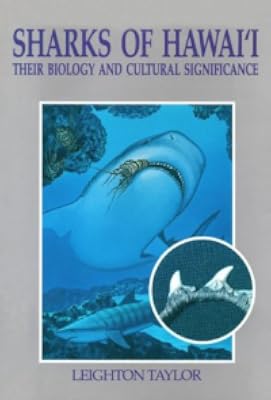












Member Reviews
Peter Mathiessen' Blue Meridian: The Search for the Great White Shark provides as useful antidote to the excesses of both sides of the debate. Mathiessen is one of our great nature writers and an environmentalist from the days before it became fashionable. Peter Gimble invited him along on a trip to South African waters to see if they could get some film footage of great whites from the inside of free-floating aluminum cages. The plan was to follow whaling ships out of Durban who, after harpooning the whale, inflate them with air so they will float and can be towed into shore later. On occasions when many sharks have been present, attracted by the blood, a frenzy has erupted that, after six or seven hours, might leave only the backbone. show more C. carcharias has a fearsome reputation. In Australia the great white is known as the " death" and numerous documented accounts exist of them attacking small skiffs and dories. A good friend of one of the divers on Gimble's trip had been bitten in half by a great white. His diver companion had hauled the top half back to shore where he took some photographs (which could never be sold because of their gruesome nature) before reporting the incident.
One great white that had been harpooned by a whale boat had a jaw measuring a vertical opening of three feet. While in South Africa, the team experienced the lunacy of apartheid. Two shipmates from the Cape who had been hired to work on their boat were formally classified as "" by the South African government, but they were light enough to pass as white and often went to European bars where they were rarely challenged. On one evening they were accompanied by the second engineer who looked so "black" that he was told to leave even though he was officially classified as "white" but he had forgotten his card that proved it. " In other words, this weird classification of human beings isn't even efficient, so that in the end all the dull cruelty it has meant for millions will have been in vain." show less
One great white that had been harpooned by a whale boat had a jaw measuring a vertical opening of three feet. While in South Africa, the team experienced the lunacy of apartheid. Two shipmates from the Cape who had been hired to work on their boat were formally classified as "" by the South African government, but they were light enough to pass as white and often went to European bars where they were rarely challenged. On one evening they were accompanied by the second engineer who looked so "black" that he was told to leave even though he was officially classified as "white" but he had forgotten his card that proved it. " In other words, this weird classification of human beings isn't even efficient, so that in the end all the dull cruelty it has meant for millions will have been in vain." show less
This book describes the making of the film "Blue Water, White Death". Peter Matthiessen, the author, was along for the ride as amateur diver, "tame naturalist", journalist and general adventurer. The resulting work is a travelogue, adventure story, psychological study and natural history essay all at once. The writing, while not actually spectacular, is better than good and the story gets richer as you move toward the end of the film-making and of the book. One theme glancingly touched on here and there without any conclusion being drawn is what drives the obsessive adventurer.
Matthiessen provides a succinct description of the actual experience of the trip when he says: "We are so much the victims of nature ... We depend on water show more clarity, wind, waves, light, marine life, complicated equipment, a half-assed ship owned by a pirate, and many people whose health is continually under great jeopardy."
While I personally would have preferred somewhat less adventure and significantly more natural science, I enjoyed reading the book and rated it at 4 stars. show less
Matthiessen provides a succinct description of the actual experience of the trip when he says: "We are so much the victims of nature ... We depend on water show more clarity, wind, waves, light, marine life, complicated equipment, a half-assed ship owned by a pirate, and many people whose health is continually under great jeopardy."
While I personally would have preferred somewhat less adventure and significantly more natural science, I enjoyed reading the book and rated it at 4 stars. show less
2.5 stars
In the 1970s, the author managed to get himself on an excursion that is filming a movie about sharks. Matthiessen learns how to dive with one of those cages to keep him safe from any sharks that may come by.
The book couldn’t keep my attention and I kept falling asleep (granted, it was also a busy, stressful week). It was very slow to read, even when I was paying attention. I wasn’t happy with the animals (particularly the whales) they used as bait to attract the sharks. There was also very little about the sharks themselves, beyond how dangerous they are. I wanted to know more about the sharks, and not the emphasis on how dangerous, which I feel has contributed to the scary shark stereotype. But then, the focus was more on show more making the movie. The cages were cool – it sounded like they were fairly new at the time. There were some really good photos included in the book. Overall, though, I was disappointed in this. show less
In the 1970s, the author managed to get himself on an excursion that is filming a movie about sharks. Matthiessen learns how to dive with one of those cages to keep him safe from any sharks that may come by.
The book couldn’t keep my attention and I kept falling asleep (granted, it was also a busy, stressful week). It was very slow to read, even when I was paying attention. I wasn’t happy with the animals (particularly the whales) they used as bait to attract the sharks. There was also very little about the sharks themselves, beyond how dangerous they are. I wanted to know more about the sharks, and not the emphasis on how dangerous, which I feel has contributed to the scary shark stereotype. But then, the focus was more on show more making the movie. The cages were cool – it sounded like they were fairly new at the time. There were some really good photos included in the book. Overall, though, I was disappointed in this. show less
Ratings
Members
- Recently Added By
Author Information

48+ Works 13,947 Members
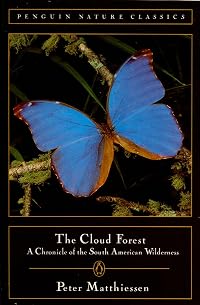
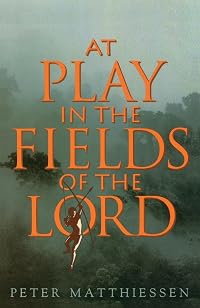
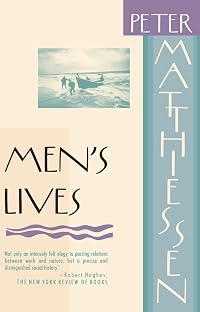
Peter Matthiessen was born in Manhattan, New York on May 22, 1927. He served in the Navy at Pearl Harbor. He graduated with a degree in English from Yale University in 1950. It was around this time that he was recruited by the CIA and traveled to Paris, where he became acquainted with several young expatriate American writers. In the postwar years show more the CIA covertly financed magazines and cultural programs to counter the spread of Communism. While in Paris, he helped found The Paris Review in 1953. After returning to the United States, he worked as a commercial fisherman and the captain of a charter fishing boat. His first novel, Race Rock, was published in 1954. His other fiction works include Partisans, Raditzer, Far Tortuga, and In Paradise. His novel, Shadow Country, won a National Book Award. His novel, At Play in the Fields of the Lord, was made into a movie. He started writing nonfiction after divorcing his first wife. An assignment for Sports Illustrated to report on American endangered species led to the book Wildlife in America, which was published in 1959. His travels took him to Asia, Australia, South America, Africa, New Guinea, the Florida swamps, and beneath the ocean. These travels led to articles in The New Yorker as well as numerous nonfiction books including The Cloud Forest: A Chronicle of the South American Wilderness, Under the Mountain Wall: A Chronicle of Two Seasons of Stone Age New Guinea, Blue Meridian: The Search for the Great White Shark, The Tree Where Man Was Born, and Men's Lives. The Snow Leopard won the 1979 National Book Award for nonfiction. He died from leukemia on April 5, 2014 at the age of 86. (Bowker Author Biography) show less
Series
Belongs to Publisher Series
Harvill (172)
Classifications
Statistics
- Members
- 162
- Popularity
- 200,854
- Reviews
- 3
- Rating
- (3.75)
- Languages
- English
- Media
- Paper, Ebook
- ISBNs
- 6
- ASINs
- 8