Spilling the Beans
by Clarissa Dickson Wright
On This Page
Description
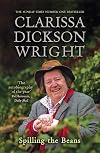
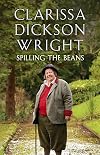
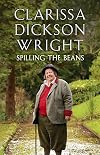
Clarissa was born into wealth and privilege, as a child, shooting and hunting were the norm and pigeons were flown in from Cairo for supper. Her mother was an Australian heiress, her father was a brilliant surgeon to the Royal family. But he was also a tyrannical and violent drunk who used to beat her and force her to eat carrots with slugs still clinging to them. Clarissa was determined and clever, though, and her ambition led her to a career in the law. At the age of 21, she was the show more youngest ever woman to be called to the Bar. Then disaster struck when her adored mother died suddenly. It was to lead to a mind-numbing decade of wild over-indulgence. Rich from her inheritance, in the end Clarissa had partied away her entire fortune. It was a long, hard road to recovery along which Clarissa finally faced her demons and turned to the one thing that had always brought her joy - cooking. Now at last she has found success, sobriety - and peace. With the stark honesty and the brilliant wit we love her for, Clarissa recounts the tale of a life lived to extremes. A vivid and funny story, it is as moving as it is a cracking good read. show lessTags
Recommendations








Member Recommendations
Member Reviews
Spilling the Beans by Clarissa Dickson Wright, one of the Two Fat Ladies from the British cooking show, is written in the time-honoured tradition of the overblown celebrity autobiography. Outspoken, opinionated, exaggerated, name-dropping, gossipy, and highly entertaining. I don't agree with some of her opinions, some of her anecdotes and "facts" are questionable, but she is definitely an interesting person, who has led a life very far removed from my own experience. Much of the book deals with serious issues of abuse and addiction, but I never felt that I had to put it down because it got too depressing. The behind the scenes look at the production of the "Two Fat Ladies" show is fascinating, as is the glimpse at a privileged lifestyle show more that was not all that it seemed. It is not great literature, but it is everything one looks for in a celebrity memoir. show less
Someone whose inner child needs a large hug. Her father was an abusive doctor who drank himself into a regular stupor and took his issues out on her and her mother. She was a bit of a whoops baby, born later than her siblings. Her mother was an Australian heiress. She went to boarding school and later became a lawyer (and claims that she was the youngest to be called to the bar but others have said that the maths doesn't add up). Her mother died when she was relatively young and her inheritance was tied up in legal issues. And then she drank her way through her fortune until she found a path to recovery with the help of AA and a residential clinic (or two).
She's the quintessential British (though she lived in Scotland for many years, show more and died there) jolly hockeysticks type of woman that live on the edges of the upper class and are of a type. She was a dedicated hunter, courser and meat-eater and has little time for vegetarianism (and claimed to have reformed a few in her time) she also comes across as someone who believes in "pulling yourself together" and "getting on with things" and also sounds like she has left a few messes in her wake. While she spills a lot of beans and at the same time doesn't name everyone she encounters or has encounters with.
While a bit bloodthirsty I found it fascinating and at times hilarious. show less
She's the quintessential British (though she lived in Scotland for many years, show more and died there) jolly hockeysticks type of woman that live on the edges of the upper class and are of a type. She was a dedicated hunter, courser and meat-eater and has little time for vegetarianism (and claimed to have reformed a few in her time) she also comes across as someone who believes in "pulling yourself together" and "getting on with things" and also sounds like she has left a few messes in her wake. While she spills a lot of beans and at the same time doesn't name everyone she encounters or has encounters with.
While a bit bloodthirsty I found it fascinating and at times hilarious. show less
Not to Speak Ill of the Dead, but. . . .
Television's Two Fat Ladies are now deceased. Clarissa Dickson Wright passed away in March 2014 at the age of 56. Dickson Wright's motorcycle pilot and sidekick, Jennifer Paterson, was 71 years old when she died in 1999. When Paterson died, the Two Fat Ladies cooking show died with her. Wherever the old girls are now, we should all hope they aren't tortured by wicked imps and forced to bake Devil's Food cakes.
Paterson dead, Dickson Wright was left to get a living on her own. Clarissa decided to write and was successful as the author of several books. In 2007, she published an autobiography titled "Spilling the Beans". I bought and eagerly read my own copy in 2009; I can't remember just when. The show more book and my thoughts concerning it drew my attention again when I saw in Wikipedia that Dickson Wright died in 2014.
I wasn't writing reviews when I read Dickson Wright's book in 2009. Now the thing has my attention again, I spent a few hours skimming through "Spilling the Beans" once more and what follows is my reaction.
The Last Fat Lady Standing. . . .
Speaking strictly of autobiographers, Dickson Wright was more fun than most and better reading than a great many. She was a competent writer, a side-splitting raconteur (think Clarissa Dangerfield), and a maniacal name-dropper. If she actually kew half the people she claimed to know or have encountered on occasion (I personally don't doubt her.) she did enough living for a few dozen clods like yours truly.
Overall I was most impressed by Dickson Wright's forthright confession to acute alcoholism, to sleeping on the streets occasionally, to squandering every dime she had, to the swamp of shame and degradation into which John Barleycorn leads those who (like this writer) are fool enough to follow. Members of polite society who have never been to the Swamp or seen someone fall in have no idea how low one can actually sink on a liquor binge.
Whatever Clarissa left out is between her and her god, and that's exactly as it should be because addictive behavior can be hideously disgusting. For example, I once sat in a 12-step meeting and listened to a seemingly angelic young woman tell how she formerly went to the loo at the supper club where she worked as a hostess, there to lock herself in a stall so she could squat over the john and "cook" her cocaine fix in a spoonful of water dipped from the bowl beneath her.
Experience tells me that sober drunks and "clean" dope addicts often lack the nerve to admit such things. However, when I consider the things she did 'fess up to, I believe Dickson Wright told most of her truth in "Spilling the Beans."
I also believe that the miracle of Dickson Wright's recovery had much to do with the fact that she was born into and grew up in a home where social skills were appreciated by at least one parent or guardian. If her father was a drunk and a child beater (as she alleges), her mother or her nanny or her teachers or someone instilled social skills in the children by whatever means. I say so because however unhappy Clarissa's childhood may have been, she at least came up in the world knowing the worth of friends, how to make friends, and how to keep them. Looking past the horror stories so often told about boarding schools (Orwell, Dickens, Graves, et al.) the experience seems to have been beneficial in Clarissa's case.
I'll guess some more by saying that Clarissa Dickson Wright was one of those whom folks in recovery label "a high-bottom drunk." The label implies that Clarissa fell off of twenty stories but somehow landed on the seventeenth floor, so she didn't get killed or hurt so badly as those who hurtle headlong all the way to the pavement. In her case, she lost her home; she lost her money; she lost her looks; she lost her dignity. But she didn't lose all of her friends.
Again, I'll guess and say the good things that happened for Clarissa after she sobered up didn't simply fall into her lap nor did she herself create them all. Always giving her credit for having sense enough to seize an opportunity when she stumbled upon one, some of those opportunities were surely dropped in her way by old friends from better days, friends who had hoped for her recovery and were quick to help her when the chance came. My hat's off to people like them and to Clarissa, who must have given thanks when she knew thanks were due.
On a darker note, it looks to me that Clarissa's 12-step commitment to "rigorous personal honesty" was somewhat less than rigorous where matters other than alcohol were at issue. The following paragraph is one I swiped from "Spilling the Beans," p. 271:
In Los Angeles ". . . the three of us went to Nobu for dinner, where The Food Network had in error booked us seats at the sushi bar rather than at a table in the restaurant. . . . I went to bat with a splendid tantrum in my best English vowels. A rather ordinary-looking man with stubble on his chin and unkempt hair came up and said we could have his table. On being seated, Pat asked how we had got the table and I pointed out the man. . . . her jaw dropped, since the man was none other than Robert de Niro, the owner of the restaurant. We thanked him profusely but . . . he wouldn't join us. De Niro had discovered and backed chef Matsuhisa, the creator of his new wave Japanese cuisine. There are now Nobu restaurants in New York, Paris, London, Aspen and even very bravely in Tokyo. I find his food incredibly exciting and whenever Pat offers to take me out to dinner in London I ask to go to Nobu."
What I believe I see there is that television star Clarissa couldn't bother being civil to "an ordinary-looking man with stubble on his chin and unkempt hair." But when that same man turned out to be Robert de Niro, Clarissa was ready, willing, and eager to kiss his butt from L.A. to Tokyo and back. Others will feel as they may, but toadies make me hurl.
Same goes for Clarissa's politics. Upper middle-class, hypocritical, Tory conservatism was Dickson Wright's political milier, and in the last three chapters of "Spilling the Beans," all of that comes to the fore. She accused opponents of being paid terrorists. She told horror stories about searching for bombs under her car. She alleged that her television series, "Clarissa and the Countryman," came to an end because BBC big-shots sympathized with her political enemies. But she cited nothing to substantiate any of those accusations.
So it was that when she entered into politics Dickson Wright exhibited the sort of behavior that, in her opponents, she would decry as lies or crackpot conspiracies. It was with Clarissa just as it is with most activists everywhere: Those who engage in confrontational politics typically yell "Foul!!!!" when a fire they themselves started gets a little too hot. Well, I don't like boohoos any better than toadies.
The first three quarters of "Spilling the Beans" is some of the best tragicomic entertainment that human nature can offer. In this reader those first chapters built an empathy for Clarissa that, unfortunately, the author went a way toward wrecking in the final few chapters. Still, I must admit that Dickson Wright gave us what seems to me a fearless autobiography.
Summing up: When one of the "Two Fat Ladies" died, the other should have stayed in the kitchen. Five stars for good writing, some good laughs, and a fine story overall. Minus one star for mucking up what had been a highly entertaining autobiography with three final chapters of snobbery and crank politics.
Advice to bookies: By all means read "Spilling the Beans" if you get the itch. The book is worth your while no matter what you've survived. I believe all books written by either or both of the Fat Ladies are for sale at bookstores all over the WWW. If you buy new or used doesn't matter any more 'cuz both of the old gals are dead.
And finally: For those who want more, there is more to have. "The London Daily Mail" published a wonderful piece on the death of Jennifer Paterson, the end of the Two Fat Ladies, and the final career of Clarissa Dickson Wright. The Daily Mail article / eulogy features what's alleged to be a candid look at the relationship between the two women. On the whole it's a fine, fun read and the photos are swell. Any true fan of the Two Fat Ladies should run that story down and read it.
Clarissa Dixon Wright
"Spilling the Beans: The Autobiography of One of Television's Two Fat Ladies"
New York: The Overlook Press
Hardcover: 336 pages
ISBN-13: 978-1-59020-296-8; 328 pp. 2009. $29.95
Four Stars.
Solomon Sed. show less
Television's Two Fat Ladies are now deceased. Clarissa Dickson Wright passed away in March 2014 at the age of 56. Dickson Wright's motorcycle pilot and sidekick, Jennifer Paterson, was 71 years old when she died in 1999. When Paterson died, the Two Fat Ladies cooking show died with her. Wherever the old girls are now, we should all hope they aren't tortured by wicked imps and forced to bake Devil's Food cakes.
Paterson dead, Dickson Wright was left to get a living on her own. Clarissa decided to write and was successful as the author of several books. In 2007, she published an autobiography titled "Spilling the Beans". I bought and eagerly read my own copy in 2009; I can't remember just when. The show more book and my thoughts concerning it drew my attention again when I saw in Wikipedia that Dickson Wright died in 2014.
I wasn't writing reviews when I read Dickson Wright's book in 2009. Now the thing has my attention again, I spent a few hours skimming through "Spilling the Beans" once more and what follows is my reaction.
The Last Fat Lady Standing. . . .
Speaking strictly of autobiographers, Dickson Wright was more fun than most and better reading than a great many. She was a competent writer, a side-splitting raconteur (think Clarissa Dangerfield), and a maniacal name-dropper. If she actually kew half the people she claimed to know or have encountered on occasion (I personally don't doubt her.) she did enough living for a few dozen clods like yours truly.
Overall I was most impressed by Dickson Wright's forthright confession to acute alcoholism, to sleeping on the streets occasionally, to squandering every dime she had, to the swamp of shame and degradation into which John Barleycorn leads those who (like this writer) are fool enough to follow. Members of polite society who have never been to the Swamp or seen someone fall in have no idea how low one can actually sink on a liquor binge.
Whatever Clarissa left out is between her and her god, and that's exactly as it should be because addictive behavior can be hideously disgusting. For example, I once sat in a 12-step meeting and listened to a seemingly angelic young woman tell how she formerly went to the loo at the supper club where she worked as a hostess, there to lock herself in a stall so she could squat over the john and "cook" her cocaine fix in a spoonful of water dipped from the bowl beneath her.
Experience tells me that sober drunks and "clean" dope addicts often lack the nerve to admit such things. However, when I consider the things she did 'fess up to, I believe Dickson Wright told most of her truth in "Spilling the Beans."
I also believe that the miracle of Dickson Wright's recovery had much to do with the fact that she was born into and grew up in a home where social skills were appreciated by at least one parent or guardian. If her father was a drunk and a child beater (as she alleges), her mother or her nanny or her teachers or someone instilled social skills in the children by whatever means. I say so because however unhappy Clarissa's childhood may have been, she at least came up in the world knowing the worth of friends, how to make friends, and how to keep them. Looking past the horror stories so often told about boarding schools (Orwell, Dickens, Graves, et al.) the experience seems to have been beneficial in Clarissa's case.
I'll guess some more by saying that Clarissa Dickson Wright was one of those whom folks in recovery label "a high-bottom drunk." The label implies that Clarissa fell off of twenty stories but somehow landed on the seventeenth floor, so she didn't get killed or hurt so badly as those who hurtle headlong all the way to the pavement. In her case, she lost her home; she lost her money; she lost her looks; she lost her dignity. But she didn't lose all of her friends.
Again, I'll guess and say the good things that happened for Clarissa after she sobered up didn't simply fall into her lap nor did she herself create them all. Always giving her credit for having sense enough to seize an opportunity when she stumbled upon one, some of those opportunities were surely dropped in her way by old friends from better days, friends who had hoped for her recovery and were quick to help her when the chance came. My hat's off to people like them and to Clarissa, who must have given thanks when she knew thanks were due.
On a darker note, it looks to me that Clarissa's 12-step commitment to "rigorous personal honesty" was somewhat less than rigorous where matters other than alcohol were at issue. The following paragraph is one I swiped from "Spilling the Beans," p. 271:
In Los Angeles ". . . the three of us went to Nobu for dinner, where The Food Network had in error booked us seats at the sushi bar rather than at a table in the restaurant. . . . I went to bat with a splendid tantrum in my best English vowels. A rather ordinary-looking man with stubble on his chin and unkempt hair came up and said we could have his table. On being seated, Pat asked how we had got the table and I pointed out the man. . . . her jaw dropped, since the man was none other than Robert de Niro, the owner of the restaurant. We thanked him profusely but . . . he wouldn't join us. De Niro had discovered and backed chef Matsuhisa, the creator of his new wave Japanese cuisine. There are now Nobu restaurants in New York, Paris, London, Aspen and even very bravely in Tokyo. I find his food incredibly exciting and whenever Pat offers to take me out to dinner in London I ask to go to Nobu."
What I believe I see there is that television star Clarissa couldn't bother being civil to "an ordinary-looking man with stubble on his chin and unkempt hair." But when that same man turned out to be Robert de Niro, Clarissa was ready, willing, and eager to kiss his butt from L.A. to Tokyo and back. Others will feel as they may, but toadies make me hurl.
Same goes for Clarissa's politics. Upper middle-class, hypocritical, Tory conservatism was Dickson Wright's political milier, and in the last three chapters of "Spilling the Beans," all of that comes to the fore. She accused opponents of being paid terrorists. She told horror stories about searching for bombs under her car. She alleged that her television series, "Clarissa and the Countryman," came to an end because BBC big-shots sympathized with her political enemies. But she cited nothing to substantiate any of those accusations.
So it was that when she entered into politics Dickson Wright exhibited the sort of behavior that, in her opponents, she would decry as lies or crackpot conspiracies. It was with Clarissa just as it is with most activists everywhere: Those who engage in confrontational politics typically yell "Foul!!!!" when a fire they themselves started gets a little too hot. Well, I don't like boohoos any better than toadies.
The first three quarters of "Spilling the Beans" is some of the best tragicomic entertainment that human nature can offer. In this reader those first chapters built an empathy for Clarissa that, unfortunately, the author went a way toward wrecking in the final few chapters. Still, I must admit that Dickson Wright gave us what seems to me a fearless autobiography.
Summing up: When one of the "Two Fat Ladies" died, the other should have stayed in the kitchen. Five stars for good writing, some good laughs, and a fine story overall. Minus one star for mucking up what had been a highly entertaining autobiography with three final chapters of snobbery and crank politics.
Advice to bookies: By all means read "Spilling the Beans" if you get the itch. The book is worth your while no matter what you've survived. I believe all books written by either or both of the Fat Ladies are for sale at bookstores all over the WWW. If you buy new or used doesn't matter any more 'cuz both of the old gals are dead.
And finally: For those who want more, there is more to have. "The London Daily Mail" published a wonderful piece on the death of Jennifer Paterson, the end of the Two Fat Ladies, and the final career of Clarissa Dickson Wright. The Daily Mail article / eulogy features what's alleged to be a candid look at the relationship between the two women. On the whole it's a fine, fun read and the photos are swell. Any true fan of the Two Fat Ladies should run that story down and read it.
Clarissa Dixon Wright
"Spilling the Beans: The Autobiography of One of Television's Two Fat Ladies"
New York: The Overlook Press
Hardcover: 336 pages
ISBN-13: 978-1-59020-296-8; 328 pp. 2009. $29.95
Four Stars.
Solomon Sed. show less
Acquired via BookCrossing 04 Jul 2009 - from the Unconvention books table
Autobiography of the woman best known for the Two Fat Ladies TV series. A larger than life character, she seems to be very honest and unsparing with herself, particularly with regard to her dysfunctional family and struggles with alcoholism. This made for an interesting but uncomfortable read. Of particular interest to me was her friendship with friend of BookCrossing (and me!) Christine Coleman. Christine and her family are mentioned throughout the book, and Christine has been a very good friend to Clarissa over the years. It's good to have friendship acknowledged as so important and, indeed, life-saving.
Autobiography of the woman best known for the Two Fat Ladies TV series. A larger than life character, she seems to be very honest and unsparing with herself, particularly with regard to her dysfunctional family and struggles with alcoholism. This made for an interesting but uncomfortable read. Of particular interest to me was her friendship with friend of BookCrossing (and me!) Christine Coleman. Christine and her family are mentioned throughout the book, and Christine has been a very good friend to Clarissa over the years. It's good to have friendship acknowledged as so important and, indeed, life-saving.
Clarissa was born into wealth and privilege, as a child, shooting and hunting were the norm and pigeons were flown in from Cairo for supper. Her mother was an Australian heiress, her father was a brilliant surgeon to the Royal family. But he was also a tyrannical and violent drunk who used to beat her and force her to eat carrots with slugs still clinging to them. Clarissa was determined and clever, though, and her ambition led her to a career in the law. At the age of 21, she was the youngest ever woman to be called to the Bar. Disaster struck when her adored mother died suddenly. It was to lead to a mind-numbing decade of wild over-indulgence. Rich from her inheritance, in the end Clarissa partied away her entire fortune. It was a show more long, hard road to recovery along which Clarissa finally faced her demons and turned to the one thing that had always brought her joy - cooking. Now at last she has found success, sobriety and peace. With the stark honesty and the brilliant wit we love her for, Clarissa recounts the tale of a life lived to extremes. A vivid and funny story, it is as moving as it is a cracking good read. show less
Ghastly *ghastly* woman. Self-aggrandising, taking credit for things for which she had nothing to do whatsoever and exaggerating to such a degree that I'm tempted to think she fabricated many of her anecdotes. She comes off as so damned pleased with herself that even when describing her dark alcoholic days, she can't stop being boastful and one gets the feeling she's proud of being THE WORST ALCOHOLIC IN THE HISTORY OF THE WORLD. And let's not get started on the racism. As if that weren't enough, I nearly ran out of red ink correcting all the grammatical and spelling mistakes in this sorry excuse for a book.
Never having watched Two Fats Ladies I wasn't sure if this was going to be, just a book about cooking. Well it's not, and I certainly wasn't expecting such a roller coaster of a ride. You've heard the saying - everyone has a story? Well what a story Clarissa has to tell and she tells it very well. I was truely amazed. I hate to admit it but, I made the terrible mistake of judging Clarissa on her looks, a bad call by me and it serves me right - Clarissa put me in my place for prejudging. What a life this woman has had - born into a fairly privileged family then suffering badly at the hands of her father, she survived, luckily, leaving home to start life as a young woman in the 1960s when times were changing quickly. She became a show more successful barrister then sadly her life took a terrible dive into darkness and drink which lasted ten years! Having squandered her substantial inheritance she now had to start and earn a living. The Two Fat Ladies television programme gave her that opportunity. I can definitely recommend this book and ...never judge a book, or a person by their cover. show less
Members
- Recently Added By
Lists

Food Memoirs
97 works; 9 members
Author Information

25+ Works 1,692 Members
Clarissa Dickson Wright was born on June 24, 1947. At the age of 21, she became the country's youngest female barrister. Her career as a barrister at Gray's Inn ended due to her battle with alcohol. After leaving law, she worked as a cook at St James's club and in private houses before managing the Books for Cooks Shop in London and then the Cooks show more Book Shop in Edinburgh. She also ran her own catering business, worked on a yacht in the Caribbean, and became one of only two women in England to become a guild butcher. She and Jennifer Paterson became the TV cookery duo Two Fat Ladies, which ran for four seasons before the death of Paterson in 1999. Afterward, Dickson Wright appeared in the series Clarissa and the Countryman, which ran until 2003. She also worked with students as the Rector of the University of Aberdeen from 1998 to 2004. She wrote several books including Spilling the Beans, Rifling through My Drawers, and Clarissa's England. She died on March 15, 2014 at the age of 66. (Bowker Author Biography) show less
Awards and Honors
Awards
Common Knowledge
- People/Characters
- Clarissa Dickson Wright
- Important places
- University College London, London, England, UK
Classifications
- Genres
- Biography & Memoir, Nonfiction, Food & Cooking, General Nonfiction
- DDC/MDS
- 641 — Applied science & technology Home economics & family management Food, Cooking & Recipes / Meals, Picnics
- LCC
- HV5447 .D52 — Social sciences Social pathology. Social and public welfare. Criminology Social pathology. Social and public welfare. Alcoholism. Intemperance. Temperance reform
- BISAC
Statistics
- Members
- 292
- Popularity
- 110,083
- Reviews
- 14
- Rating
- (3.77)
- Languages
- English
- Media
- Paper, Audiobook, Ebook
- ISBNs
- 10
- ASINs
- 3