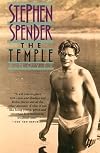
The Temple
by Stephen Spender
On This Page
Description
"Beyond the wonderful insights ... there is a portrait of the world in the eye of the storm between two world wars. It is a novel of awakening -- awakening to sex, yes ... but also an awakening to the presence of evil in the world and to the possibilities of love and friendship." -- The Bloomsbury ReviewTags
Recommendations






























Member Reviews
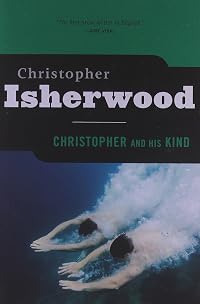
To know that The Temple is a semi-autobiographical fiction gives weight to Spender's words. Most everything that happens to the main character, poet Paul Schoner, in The Temple is something that happened to Spender in and around 1929. He thinly disguises his relationship with other writers (most significantly W. H. Auden and Christopher Isherwood) as he travels to Hamburg from Oxford. It is important to remember that in the 1920s censorship was prevalent in England. As a homosexual, Spender needed to live his life in lies. His true identity was hidden like a secret. Germany in 1929, while more forgiving about lifestyles, was also going through its own dark period. Spender includes the growing sense of foreboding as Hitler comes to show more power. Though fascists and Nazis Spender paints a picture of a society that foregoes the history of friendship for the sake of power. It's violent ending is a sign of dark days ahead. show less
This is an enjoyable book, although rather inconsistent. Some of the passages, especially those that are heavy on dialogue, are awkward and with a purpose that is far from clear. Others are bright and evocative. Although none of the characters is simple, nor are they alive or engaging, particularly in the first part of the book.
Spender's novel on his time spent in Germany with Isherwood and Auden. This book is part fiction part non-fiction. The first half is largely just a recount of actual events and accounts of the time he spent in Germany with the aforementioned companions but the second half is largely fiction.
A terrific book it's a lovely story about love, war, friendship, and homosexuality in the early part of the 20th Century.
A terrific book it's a lovely story about love, war, friendship, and homosexuality in the early part of the 20th Century.
Spender's own pre-WW2 idyllic romp around 1929 Germany as war slowly encroaches.
Ratings
Members
- Recently Added By
Lists

Pre-1969 LGBTQ Literature
182 works; 69 members

Fiction Set During a Revolution
55 works; 24 members

Good LGBT fiction for LGBT folk and friends
546 works; 50 members
Author Information

121+ Works 2,463 Members
Stephen Harold Spender was born on February 28, 1909 in London, England. He was educated at University College, Oxford University. With the help of a small independent income, he left Oxford in 1931 to devote himself entirely to poetry writing. His first collection of poetry, Twenty Poems, was published in 1930. His other poetry collections show more include Poems of Dedication, Edge of Being: Poems, and Dolphins. His first prose book, The Destructive Element, was published in 1934. His other works included The Burning Cactus, Forward from Liberalism, European Witness, World Within World, Learning Laughter, The Year of the Young Rebels, Love-Hate Relations: English and American Sensibilities, and The Thirties and After. He also taught English literature at several universities including the University College of London University. He was named a Commander of the British Empire in 1962 and was awarded the Queen's Gold Medal for Poetry in 1971. In 1965, he was the first non-American to serve as Consultant in Poetry in English to the Library of Congress. He was knighted in 1983. He died on July 16, 1995 at the age of 86. (Bowker Author Biography) show less
Some Editions
Awards and Honors
Awards
Common Knowledge
- Canonical title
- The Temple
- Original title
- The Temple
- Original publication date
- 1988
- Important places
- Hamburg, Germany
- Epigraph*
- Came summer like a flood, did never greediest gardener
Make blossoms further:
Sunday meant lakes for many, a browner body,
Beauty from burning:
Far out in the water two heads discussed the position... (show all),
Out of the reeds like a fowl jumped the undressed German,
And Stephen signalled from the sand dunes like a wooden madman
'Destroy this temple.'
It did fall. The quick hare died to the hounds' hot breathing,
The Jewess fled shouthwards
W.H. Auden, from the first of Six Odes (January 1931) - Dedication
- The original manuscript was dedicated in 1930 to W.H. Auden and Christopher Isherwood. Now I add: 'With memories of Herbert List.'
- First words
- What Paul loved about Marston was his self-evident (so he passionately believed) innocence.
- Last words
- (Click to show. Warning: May contain spoilers.)Lives, risen a moment, joined or separate,
Fall heavily, then are ever separate,
Sod lifted, turend, slapped back again with spade. - Original language*
- Engels
*Some information comes from Common Knowledge in other languages. Click "Edit" for more information.
Classifications
Statistics
- Members
- 411
- Popularity
- 75,388
- Reviews
- 5
- Rating
- (3.40)
- Languages
- 9 — Catalan, Dutch, English, French, German, Italian, Portuguese (Portugal), Russian, Spanish
- Media
- Paper
- ISBNs
- 17
- ASINs
- 3