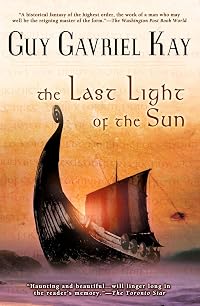
The Last Light of the Sun
by Guy Gavriel Kay
On This Page
Description
HTML:A powerful, moving saga evoking the Celtic, Anglo-Saxon and Norse cultures of a thousand years ago from the acclaimed author of The Fionavar Tapestry.Bern Thorkellson, punished for his father's sins, denied his heritage and home, commits an act of vengeance and desperation that brings him face-to-face with a past he's been trying to leave behind ...
In the Anglcyn lands of King Aeldred, the shrewd king, battling inner demons all the while, shores up his defenses with alliances and show more diplomacy—and with swords and arrows. Meanwhile his exceptional, unpredictable sons and daughters give shape to their own desires when battle comes and darkness falls
in the spirit wood ...
And in the valleys and shrouded hills of the Cyngael, whose voices carry music even as they feud and raid amongst each other, violence and love become deeply interwoven when the dragon ships come and Alun ab Owyn, pursuing an enemy in the night, glimpses strange lights gleaming above forest pools ...
Making brilliant use of motifs from saga and song and chronicle, Guy Gavriel Kay conjures a work of subtle, intricate richness, bringing to life an unforgettable world balanced on the knife-edge of change.
"A historical fantasy of the highest order, the work of a man who may well be the reigning master of the form."—Washington Post Book World. Fantasy. Fiction. show less
Tags
Recommendations
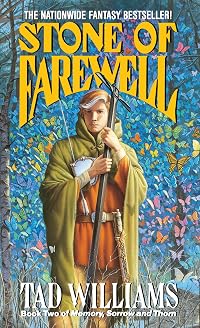
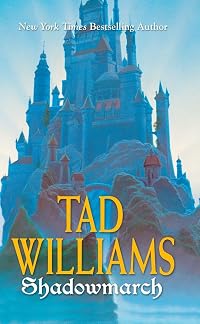
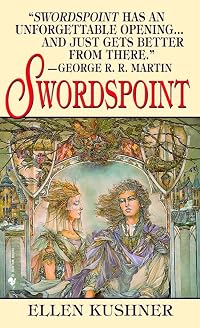
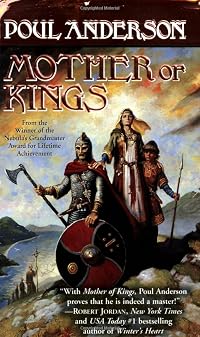


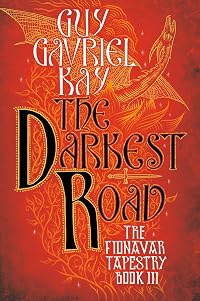
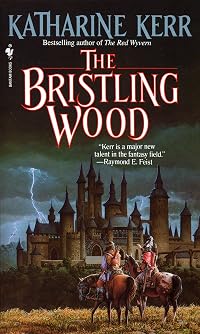
Member Recommendations
Member Reviews
The wind-age, the wolf-age, and the men who try to build a table.
I came to this book late. I had already read The Lions of Al-Rassan, Tigana, Under Heaven, the usual entry points into Kay's world. Someone told me The Last Light of the Sun was the "Viking one." I expected longships, shield walls, and blood-eagles. I got all of that. But I also got something quieter, stranger, and more haunting: a book about the end of an era, told not in the roar of battle but in the spaces between raids, the silences around a hearth, and the weight of a father's failed promises.
What it is:
Three cultures collide in Kay's version of ninth-century Britain. The Erlings (Vikings) of Vinmark ravage the coasts of the Anglcyn (Anglo-Saxons) and the Cyngael show more (Celts/Welsh), bringing fire, iron, and the fury of the north. But the world is changing. King Aeldred of the Anglcyn, clearly modeled on Alfred the Great, builds ships, fortifies towns, and dreams of a future where his people no longer live in fear of dragon-prowed ships. Meanwhile, a young Erling named Bern Thorkellson, punished for his exiled father's crimes, joins a raiding party to prove himself. A Cyngael prince named Alun ap Owyn, bitter and reckless, makes a choice that sets fire to his own world. And an aging cleric named Ceinion carries the memory of a lost love and a desperate hope for peace between peoples who have only ever known war.
The novel follows these threads, and many more as they slowly, inevitably, weave together. There is no single hero. There is no final battle that settles everything. There is only the last light of the sun falling on a world that is dying, and the people who will live in whatever rises from its ashes.
Why it stayed with me:
1. The prose is Kay at his leanest. The Sarantine novels are lush. The Lions of Al-Rassan is lyrical. But The Last Light of the Sun is something else: clipped, direct, almost stark. Sentences are shorter. Paragraphs are sharper. The prose itself feels like the northern landscape: harsh, beautiful, and unforgiving. There is a passage where Bern watches his father's hands, scarred from years of rowing and fighting, and Kay describes them as "two things that had learned cruelty and knew nothing else." I underlined it. I am still thinking about it.
2. The theme of fathers and sons is devastating. Kay has written about legacy before, but this book makes it central. Bern is defined by his father's disgrace. Aethelbert, the king's son, can never escape the shadow of the father he loves but cannot equal. Thorkell, the exiled Erling, spends the whole novel trying to make amends for a single drunken murder. The relationships are messy, unresolved, and deeply human. The scene where Bern and Thorkell reunite is brief and brutal. It broke me.
3. The world feels real and the fantasy elements are perfectly placed. This is not a high-magic book. There are no wizards, no spells, no elaborate systems. But there are two moons in the sky. There are haunted forests where the "half-world" (faerie) bleeds through. There are spirits in the woods and fate-touched encounters that feel like the sagas Kay clearly studied. The magic is not a solution. It is a texture; a reminder that in a world of ravens and rowan trees, some things cannot be explained by steel alone.
4. King Aeldred is one of Kay's greatest characters. He is not a warrior-king in the usual sense. He is a builder, a strategist, a man who understands that the way to defeat the Erlings is not to out-fight them but to out-last them. He builds a navy. He fortifies towns. He plans a great fair to encourage trade instead of war. And he does all of this while knowing that his son may not be capable of carrying on his work. His chapters are slow, thoughtful, and quietly heroic. The scene where he walks through his unfinished hall at night, touching the beams and dreaming of a future he will not live to see, is one of Kay's finest.
5. The violence is brutal but never gratuitous. A character named Ivarr Ragnarson, a deformed, sadistic monster haunts the book like a shadow from an older, crueler age. His desire to perform a blood-eagle (cracking open the ribs and extracting the lungs while the victim is still alive) is not described in detail, but the threat of it is enough to make your skin crawl. Kay does not shy away from the horrors of the Viking age. But he also never lingers for cheap shock. The violence has weight. It changes people.
6. The ending is a promise, not a resolution. I finished the book and felt, for a moment, unsatisfied. Where was the catharsis? Where was the final reckoning? Then I realized: Kay is not writing a story about war. He is writing a story about the end of war. The last light of the sun is fading. Something new is being born. And the characters who survive are the ones who learn to build instead of burn. That is not a tidy ending. It is a hopeful one. And hope, in Kay's world, is harder to earn than victory.
Where it might lose some readers (honest, even as a fan):
1. The cast is sprawling. The novel follows at least a dozen point-of-view characters across three cultures. Some appear for a few chapters and then vanish. Kay even includes a note acknowledging that "at the margins of any tale there are lives that come into it only for a moment." Some readers find this frustrating. I found it immersive.
2. The pacing is slow. Very slow. Kay is not in a hurry. He spends pages on a conversation, a meal, a walk through the woods. If you need constant action or a ticking clock, this will feel like wading through honey. I loved the pace. It matches the rhythm of a world where winter lasts half the year and the next raid could come at any moment.
3. There is no map. In a book about geography: coastlines, kingdoms, the path of the sun, this is a deliberate choice. Kay wants you to feel unmoored, lost in the mists, just like his characters. I understand the artistic decision. I still wanted a map.
4. The fantasy elements are light. If you come from Sanderson or Rothfuss expecting elaborate magic systems, you will find almost nothing. The "half-world" appears, but it is never explained. Some readers find this frustrating. I found it perfectly suited to the tone.
Who should read this:
Fans of The Last Kingdom or Vikings who want more depth and less melodrama.
Readers who loved Kay's The Lions of Al-Rassan and want to see him apply the same historical-filtered-through-fantasy technique to the Viking age.
Anyone who has ever thought about what it means to build something that will outlast you.
Lovers of slow, atmospheric, character-driven fiction.
Who might struggle:
If you need a tight plot with clear heroes and villains.
If you dislike sprawling casts and meandering pacing.
If you find darkness and melancholy exhausting (this is not a happy book).
Final verdict:
The Last Light of the Sun is not Kay's most famous book. It is not his most beloved. But it might be his most honest. It is a book about the end of an era, not with a bang, but with a long, slow fade, like the last light of the sun over a cold sea. It is about men who have spent their whole lives fighting and women who have spent their whole lives waiting. It is about fathers who fail and sons who try to be better. And it is about the small, stubborn, almost foolish hope that one day, someone will build a table instead of a longship.
I read it slowly, over a week of cold evenings. I finished it and sat for a while, watching the light fade from my own window. Then I turned back to the first page and read the quote from the Elder Edda: "A Wind-Age, a Wolf-Age, until the world falls."
But the world does not fall. Not quite. The last light lingers. And that, Kay suggests, is enough.
Five stars. For Bern. For Aeldred. For the priest who carries a dead woman's memory across a continent. For the dog that is not a gimmick. And for the last light that touches the western hills before the darkness comes. show less
I came to this book late. I had already read The Lions of Al-Rassan, Tigana, Under Heaven, the usual entry points into Kay's world. Someone told me The Last Light of the Sun was the "Viking one." I expected longships, shield walls, and blood-eagles. I got all of that. But I also got something quieter, stranger, and more haunting: a book about the end of an era, told not in the roar of battle but in the spaces between raids, the silences around a hearth, and the weight of a father's failed promises.
What it is:
Three cultures collide in Kay's version of ninth-century Britain. The Erlings (Vikings) of Vinmark ravage the coasts of the Anglcyn (Anglo-Saxons) and the Cyngael show more (Celts/Welsh), bringing fire, iron, and the fury of the north. But the world is changing. King Aeldred of the Anglcyn, clearly modeled on Alfred the Great, builds ships, fortifies towns, and dreams of a future where his people no longer live in fear of dragon-prowed ships. Meanwhile, a young Erling named Bern Thorkellson, punished for his exiled father's crimes, joins a raiding party to prove himself. A Cyngael prince named Alun ap Owyn, bitter and reckless, makes a choice that sets fire to his own world. And an aging cleric named Ceinion carries the memory of a lost love and a desperate hope for peace between peoples who have only ever known war.
The novel follows these threads, and many more as they slowly, inevitably, weave together. There is no single hero. There is no final battle that settles everything. There is only the last light of the sun falling on a world that is dying, and the people who will live in whatever rises from its ashes.
Why it stayed with me:
1. The prose is Kay at his leanest. The Sarantine novels are lush. The Lions of Al-Rassan is lyrical. But The Last Light of the Sun is something else: clipped, direct, almost stark. Sentences are shorter. Paragraphs are sharper. The prose itself feels like the northern landscape: harsh, beautiful, and unforgiving. There is a passage where Bern watches his father's hands, scarred from years of rowing and fighting, and Kay describes them as "two things that had learned cruelty and knew nothing else." I underlined it. I am still thinking about it.
2. The theme of fathers and sons is devastating. Kay has written about legacy before, but this book makes it central. Bern is defined by his father's disgrace. Aethelbert, the king's son, can never escape the shadow of the father he loves but cannot equal. Thorkell, the exiled Erling, spends the whole novel trying to make amends for a single drunken murder. The relationships are messy, unresolved, and deeply human. The scene where Bern and Thorkell reunite is brief and brutal. It broke me.
3. The world feels real and the fantasy elements are perfectly placed. This is not a high-magic book. There are no wizards, no spells, no elaborate systems. But there are two moons in the sky. There are haunted forests where the "half-world" (faerie) bleeds through. There are spirits in the woods and fate-touched encounters that feel like the sagas Kay clearly studied. The magic is not a solution. It is a texture; a reminder that in a world of ravens and rowan trees, some things cannot be explained by steel alone.
4. King Aeldred is one of Kay's greatest characters. He is not a warrior-king in the usual sense. He is a builder, a strategist, a man who understands that the way to defeat the Erlings is not to out-fight them but to out-last them. He builds a navy. He fortifies towns. He plans a great fair to encourage trade instead of war. And he does all of this while knowing that his son may not be capable of carrying on his work. His chapters are slow, thoughtful, and quietly heroic. The scene where he walks through his unfinished hall at night, touching the beams and dreaming of a future he will not live to see, is one of Kay's finest.
5. The violence is brutal but never gratuitous. A character named Ivarr Ragnarson, a deformed, sadistic monster haunts the book like a shadow from an older, crueler age. His desire to perform a blood-eagle (cracking open the ribs and extracting the lungs while the victim is still alive) is not described in detail, but the threat of it is enough to make your skin crawl. Kay does not shy away from the horrors of the Viking age. But he also never lingers for cheap shock. The violence has weight. It changes people.
6. The ending is a promise, not a resolution. I finished the book and felt, for a moment, unsatisfied. Where was the catharsis? Where was the final reckoning? Then I realized: Kay is not writing a story about war. He is writing a story about the end of war. The last light of the sun is fading. Something new is being born. And the characters who survive are the ones who learn to build instead of burn. That is not a tidy ending. It is a hopeful one. And hope, in Kay's world, is harder to earn than victory.
Where it might lose some readers (honest, even as a fan):
1. The cast is sprawling. The novel follows at least a dozen point-of-view characters across three cultures. Some appear for a few chapters and then vanish. Kay even includes a note acknowledging that "at the margins of any tale there are lives that come into it only for a moment." Some readers find this frustrating. I found it immersive.
2. The pacing is slow. Very slow. Kay is not in a hurry. He spends pages on a conversation, a meal, a walk through the woods. If you need constant action or a ticking clock, this will feel like wading through honey. I loved the pace. It matches the rhythm of a world where winter lasts half the year and the next raid could come at any moment.
3. There is no map. In a book about geography: coastlines, kingdoms, the path of the sun, this is a deliberate choice. Kay wants you to feel unmoored, lost in the mists, just like his characters. I understand the artistic decision. I still wanted a map.
4. The fantasy elements are light. If you come from Sanderson or Rothfuss expecting elaborate magic systems, you will find almost nothing. The "half-world" appears, but it is never explained. Some readers find this frustrating. I found it perfectly suited to the tone.
Who should read this:
Fans of The Last Kingdom or Vikings who want more depth and less melodrama.
Readers who loved Kay's The Lions of Al-Rassan and want to see him apply the same historical-filtered-through-fantasy technique to the Viking age.
Anyone who has ever thought about what it means to build something that will outlast you.
Lovers of slow, atmospheric, character-driven fiction.
Who might struggle:
If you need a tight plot with clear heroes and villains.
If you dislike sprawling casts and meandering pacing.
If you find darkness and melancholy exhausting (this is not a happy book).
Final verdict:
The Last Light of the Sun is not Kay's most famous book. It is not his most beloved. But it might be his most honest. It is a book about the end of an era, not with a bang, but with a long, slow fade, like the last light of the sun over a cold sea. It is about men who have spent their whole lives fighting and women who have spent their whole lives waiting. It is about fathers who fail and sons who try to be better. And it is about the small, stubborn, almost foolish hope that one day, someone will build a table instead of a longship.
I read it slowly, over a week of cold evenings. I finished it and sat for a while, watching the light fade from my own window. Then I turned back to the first page and read the quote from the Elder Edda: "A Wind-Age, a Wolf-Age, until the world falls."
But the world does not fall. Not quite. The last light lingers. And that, Kay suggests, is enough.
Five stars. For Bern. For Aeldred. For the priest who carries a dead woman's memory across a continent. For the dog that is not a gimmick. And for the last light that touches the western hills before the darkness comes. show less
Oh where do I begin with the glories that are this book? It brings the heartbreak and beauty that live in the world(s) of Guy Gavriel Kay, interconnected tales of Byzantium and southern France and medieval Spain. Now we have the realms of England and Wales and the Vikings, told as they begin to shift and change from constant invasion and warfare to wisdom and tentative alliance.
The book begins on the island of Rabady and delves into the ways and customs of the Erlings, starting with the theft of a grey stallion by an exiled warrior's son, Bern. And Bern manages to escape his fate, with the stallion, while he pursues a warrior's way amongst the fierce mercenaries of Jormsvik on the mainland.
Into the tale, told in a bit of hindsight, is show more the rise of King Aeldred of the Anglcyns, last survivor of his royal line when the Erling raiders slaughter his father and brother. Aeldred manages to survive in the Anglcyn marshes for a season with two brothers-in-arms, attracting more Anglcyn survivors to him, until he makes his revenge on the Erling raiders and wins back his kingdom.
By the time of the main storyline, King Aeldred has established peace in his kingdom for 25 years, married and has 4 children, and is set to have his third annual fair and festival with the rebuilding of his kingdom. The cleric, Ceinion, of the Cyngael, journeys between the Anglcyn kingdom and that of the Cyngael.
The Cyngael are represented by the Arbreth and the Cadyr, two factions who are often caught stealing cattle and raiding one another's farms, and that is how Alun and Dai enter the tale when they try to start a cattle raid on Brynn ap Hywll's farm and holdings. It is in the land of the Cyngael that a hint of magic takes place, with the Fae and their Queen and mysterious lights that hint at another world coexisting with the one in this tale.
The language of this book is one of longing and sorrow and hope and youth, and weaves in observations about the commonality of human experience and knowledge and what happens when fates and choices overlap. I especially liked the bits of lives of incidental characters, who would never make it into the songs or history books, but whose lives are forever changed by encounters with the larger world. show less
The book begins on the island of Rabady and delves into the ways and customs of the Erlings, starting with the theft of a grey stallion by an exiled warrior's son, Bern. And Bern manages to escape his fate, with the stallion, while he pursues a warrior's way amongst the fierce mercenaries of Jormsvik on the mainland.
Into the tale, told in a bit of hindsight, is show more the rise of King Aeldred of the Anglcyns, last survivor of his royal line when the Erling raiders slaughter his father and brother. Aeldred manages to survive in the Anglcyn marshes for a season with two brothers-in-arms, attracting more Anglcyn survivors to him, until he makes his revenge on the Erling raiders and wins back his kingdom.
By the time of the main storyline, King Aeldred has established peace in his kingdom for 25 years, married and has 4 children, and is set to have his third annual fair and festival with the rebuilding of his kingdom. The cleric, Ceinion, of the Cyngael, journeys between the Anglcyn kingdom and that of the Cyngael.
The Cyngael are represented by the Arbreth and the Cadyr, two factions who are often caught stealing cattle and raiding one another's farms, and that is how Alun and Dai enter the tale when they try to start a cattle raid on Brynn ap Hywll's farm and holdings. It is in the land of the Cyngael that a hint of magic takes place, with the Fae and their Queen and mysterious lights that hint at another world coexisting with the one in this tale.
The language of this book is one of longing and sorrow and hope and youth, and weaves in observations about the commonality of human experience and knowledge and what happens when fates and choices overlap. I especially liked the bits of lives of incidental characters, who would never make it into the songs or history books, but whose lives are forever changed by encounters with the larger world. show less
Ah, I love Guy Gavriel Kay so much! He writes fantasy with the lyrical prose of a masterful author and the striking character insights of someone who understands the depth of the human spirit. I lost track of how many times I fell madly in love with one of his characters within a page or two of them being introduced. Now that's some masterful writing right there!
I also appreciated the pace of this book: slow without meandering, detailed without being bogged down in minutia. And the various glimpses into seemingly random people's whole lifespans were both unexpected and always welcome. Kay made me believe I was reading about real people: people who lived, died, and MATTERED.
I'm so glad to have picked this one up.
I also appreciated the pace of this book: slow without meandering, detailed without being bogged down in minutia. And the various glimpses into seemingly random people's whole lifespans were both unexpected and always welcome. Kay made me believe I was reading about real people: people who lived, died, and MATTERED.
I'm so glad to have picked this one up.
The Last Light of the Sun - Guy Gavriel Kay
Audio performance by Holter Graham
4 stars
In this fictional medieval saga, Kay’s King Aeldred of the Anglcyn is a stand-in for the historical Alfred the Great. However, the story begins with the other side of the territorial coin, with the Vikings (or Danes), which Kay mutates into the Erlings. In addition, there is the neighboring tribe of the Cyngael, place holding for the Celts. The Cyngael bring along their traditional mythology of fairies existing in a ‘half’ world which threatens the tenets of Jad, a sun god whose worshippers resemble medieval Christians.
Have you got all of that?
The amazing thing is that eventually, I did get it, all the little pieces of the story puzzle show more fell into place. It was a bit more difficult with this book than with some of Kay’s other books. There were too many subplots; so many that much of the resolution at the end of the book was rushed and underdeveloped.
Still, I have only minor complaints. Once again, I found that persisting with the complicated, interwoven plots of a G.G. Kay saga paid off in the end. This is essentially a tripled coming of age story. There are three young men, one from each of these warring cultures. Athelbert, son of King Aeldred; Prince Alan ab Owyn of the Cyngael; and Bern, the runaway son of the mercenary Erling, Red Thorkell. There are some interesting dynamics between the various fathers and sons and some less interesting interactions with fairies and dead people. I was engaged in the difficult lives of these young men, but this book would have been better without the supernatural element. (There was a bit of telepathy thrown in at the end that really made no sense to me.) The female characters in this book are vibrant and interesting, but they are not major players in the story. To give Kay credit, he did allow more than one of his ladies to express frustration with the restrictions of their lives.
I did have the audio performance of this book, but I gave up on it. There were too many names that sounded similar and too many plot convolutions to keep track of. Holter Graham’s fairy voice was very annoying and may be why I disliked that aspect of the book. The text provides a character breakdown of the three cultures, which I found very helpful, even necessary, to understanding the story. show less
Audio performance by Holter Graham
4 stars
In this fictional medieval saga, Kay’s King Aeldred of the Anglcyn is a stand-in for the historical Alfred the Great. However, the story begins with the other side of the territorial coin, with the Vikings (or Danes), which Kay mutates into the Erlings. In addition, there is the neighboring tribe of the Cyngael, place holding for the Celts. The Cyngael bring along their traditional mythology of fairies existing in a ‘half’ world which threatens the tenets of Jad, a sun god whose worshippers resemble medieval Christians.
Have you got all of that?
The amazing thing is that eventually, I did get it, all the little pieces of the story puzzle show more fell into place. It was a bit more difficult with this book than with some of Kay’s other books. There were too many subplots; so many that much of the resolution at the end of the book was rushed and underdeveloped.
Still, I have only minor complaints. Once again, I found that persisting with the complicated, interwoven plots of a G.G. Kay saga paid off in the end. This is essentially a tripled coming of age story. There are three young men, one from each of these warring cultures. Athelbert, son of King Aeldred; Prince Alan ab Owyn of the Cyngael; and Bern, the runaway son of the mercenary Erling, Red Thorkell. There are some interesting dynamics between the various fathers and sons and some less interesting interactions with fairies and dead people. I was engaged in the difficult lives of these young men, but this book would have been better without the supernatural element. (There was a bit of telepathy thrown in at the end that really made no sense to me.) The female characters in this book are vibrant and interesting, but they are not major players in the story. To give Kay credit, he did allow more than one of his ladies to express frustration with the restrictions of their lives.
I did have the audio performance of this book, but I gave up on it. There were too many names that sounded similar and too many plot convolutions to keep track of. Holter Graham’s fairy voice was very annoying and may be why I disliked that aspect of the book. The text provides a character breakdown of the three cultures, which I found very helpful, even necessary, to understanding the story. show less
Viking fantasy!
The only other stories I've read with such a strong Scandinavian historical flavor are Michael Critchton's Eaters of the Dead and the incomparable Beowulf. It isn't all Scandinavian, though, Celtic and English early Medieval cultures are also featured. Like Guy Gavriel Kay's Tigana, this novel is set in a vivid and realistic, with a rollicking plot and a small bit of magic thrown into a largely historical setting. The plot contains a handful of nice twists, and it wraps up very neatly at the end.
The large cast of characters is written in such a way that I had very strong opinions about even barely-described supporting cast members. I was greatly disappointed with one main character (who fulfilled one too many stereotypes show more for my tastes), but my complaints were resolved in a quite satisfying way.
My favorite moment of the book was when I found myself uncertain whether I could root for a marauding raider, considering the victims of the raid. I wanted him to succeed because I liked him, but his enterprise was so horrible I wanted it to fail utterly.
I felt most emotionally invested when the characters explored themes of legacy and familial bonds. The story asks, “Is it ever possible for a child to escape their parents' influence? What is the best legacy to leave your children? How do the memories of great deeds shape those who grow up with those memories?”
These questions aren’t all unequivocally answered, but I feel like I learned something from exploring them. show less
The only other stories I've read with such a strong Scandinavian historical flavor are Michael Critchton's Eaters of the Dead and the incomparable Beowulf. It isn't all Scandinavian, though, Celtic and English early Medieval cultures are also featured. Like Guy Gavriel Kay's Tigana, this novel is set in a vivid and realistic, with a rollicking plot and a small bit of magic thrown into a largely historical setting. The plot contains a handful of nice twists, and it wraps up very neatly at the end.
The large cast of characters is written in such a way that I had very strong opinions about even barely-described supporting cast members. I was greatly disappointed with one main character (who fulfilled one too many stereotypes show more for my tastes), but my complaints were resolved in a quite satisfying way.
My favorite moment of the book was when I found myself uncertain whether I could root for a marauding raider, considering the victims of the raid. I wanted him to succeed because I liked him, but his enterprise was so horrible I wanted it to fail utterly.
I felt most emotionally invested when the characters explored themes of legacy and familial bonds. The story asks, “Is it ever possible for a child to escape their parents' influence? What is the best legacy to leave your children? How do the memories of great deeds shape those who grow up with those memories?”
These questions aren’t all unequivocally answered, but I feel like I learned something from exploring them. show less
The talent of fantasy writing can be a tricky thing. When it works, the reader effortlessly suspends disbelief, joyously transported to worlds of magic and power. Seasoned travelers through these realms include C.S. Lewis, Charles de Lint, Clive Barker, and, of course, J.R.R. Tolkien.
When it doesn’t work, as is far too often the case, it is all so many water nymphs and ogres trudging through the ink, making a cheap buck though series such as Forgotten Realms and Dungeons & Dragons, the over-praised work of Robert Jordan, and others too tawdry to mention.
Guy Gavriel Kay knows how to make it work. Highly regarded in the field as a master of fanciful storytelling with a deep interest in historical accuracy, the Canadian author has earned show more comparisons with both Lewis and Tolkien, even collaborating with Christopher Tolkien on the posthumous publication of his father’s The Silmarillion.
Now, decades after the release of his seminal work The Fionavar Tapestry (recently released in a 20th anniversary edition), Kay has decided to depart slightly from his oeuvre, concentrating instead on a historical fiction with muted elements of the fantastic. The change does him good; The Last Light of the Sun ranks as one of his finest.
Last Light is set firmly in the Norse and Celtic traditions of the north, in a time where “axe and sword were perfectly good responses to treachery.” In a land balanced on the razor’s edge of change, the peoples of the Anglcyn and the Cyngael live in a precarious form of peace, each struggling to prosper under the constant threat of murderous raids by the Erlings.
Into this rich world Kay introduces a host of fascinating characters. Bern Einarson is a man new to the fraternity of mercenaries, while his absent father Thorkell has been taken prisoner. King Aeldred of the Anglcyn fights to keep his people free and thriving, while Ceinion, high cleric of the Cyngael, yearns to bring stability to a universe of fairy worship and an apocalyptic religious faith of giant serpents and world trees.
With all due respect to J.R.R. Tolkien, Kay is by far the better writer. His atmospheric worlds equal Tolkien’s Middle-Earth in complexity and wonderment, while his grasp of character development and dialogue far outpace the master’s.
Part of the gratification of well-designed fantasy is searching for significant parallels in the world beyond the page. Like the best of fantasy, analogous elements to Last Light’s feudal world can be found in today’s uneven mixture of political instability, religious factionalism, and cultural intolerance. Yet Kay is wise enough never to write his fables as polemic; they function equally as amusement and as social criticism, content to let the readers unwrap as many layers and motifs as they deem fit.
The Last Light of the Sun is exhilarating entertainment, a bold trek to a land where one’s finest wish is to die on one’s feet. Kay, now a fantasy veteran, is a maestro of “the dance, the thrust and twist of words, of meanings half-shown and then hidden, that underlay all the great songs and deeds of courts.” The Last Light of the Sun, a taut and gripping novel, is a first-rate work, by any standard. show less
When it doesn’t work, as is far too often the case, it is all so many water nymphs and ogres trudging through the ink, making a cheap buck though series such as Forgotten Realms and Dungeons & Dragons, the over-praised work of Robert Jordan, and others too tawdry to mention.
Guy Gavriel Kay knows how to make it work. Highly regarded in the field as a master of fanciful storytelling with a deep interest in historical accuracy, the Canadian author has earned show more comparisons with both Lewis and Tolkien, even collaborating with Christopher Tolkien on the posthumous publication of his father’s The Silmarillion.
Now, decades after the release of his seminal work The Fionavar Tapestry (recently released in a 20th anniversary edition), Kay has decided to depart slightly from his oeuvre, concentrating instead on a historical fiction with muted elements of the fantastic. The change does him good; The Last Light of the Sun ranks as one of his finest.
Last Light is set firmly in the Norse and Celtic traditions of the north, in a time where “axe and sword were perfectly good responses to treachery.” In a land balanced on the razor’s edge of change, the peoples of the Anglcyn and the Cyngael live in a precarious form of peace, each struggling to prosper under the constant threat of murderous raids by the Erlings.
Into this rich world Kay introduces a host of fascinating characters. Bern Einarson is a man new to the fraternity of mercenaries, while his absent father Thorkell has been taken prisoner. King Aeldred of the Anglcyn fights to keep his people free and thriving, while Ceinion, high cleric of the Cyngael, yearns to bring stability to a universe of fairy worship and an apocalyptic religious faith of giant serpents and world trees.
With all due respect to J.R.R. Tolkien, Kay is by far the better writer. His atmospheric worlds equal Tolkien’s Middle-Earth in complexity and wonderment, while his grasp of character development and dialogue far outpace the master’s.
Part of the gratification of well-designed fantasy is searching for significant parallels in the world beyond the page. Like the best of fantasy, analogous elements to Last Light’s feudal world can be found in today’s uneven mixture of political instability, religious factionalism, and cultural intolerance. Yet Kay is wise enough never to write his fables as polemic; they function equally as amusement and as social criticism, content to let the readers unwrap as many layers and motifs as they deem fit.
The Last Light of the Sun is exhilarating entertainment, a bold trek to a land where one’s finest wish is to die on one’s feet. Kay, now a fantasy veteran, is a maestro of “the dance, the thrust and twist of words, of meanings half-shown and then hidden, that underlay all the great songs and deeds of courts.” The Last Light of the Sun, a taut and gripping novel, is a first-rate work, by any standard. show less
Summary: The Last Light of the Sun takes place in the same world as Kay's Sarantium Mosaic and The Lions of Al-Rassan, although far to the North. It's a world like-but-not-quite Earth, and Last Light sits at a junction that's part Poetic Edda, part Beowulf, and part Arthurian legend. In this world, the Erling warriors in their longships have been conducting fierce raids on the coasts of the North for time out of mind, but the Anglcyn king has subdued them with a treaty that has held for decades. However, their uneasy peace is shattered by an unexpected nighttime raid on the inland household of one of Cyngael, the fractious principalities to the west of Anglcyn.
Two princes of the Cyngael were present at that raid, and Alun ab Owyn is show more left in a dark despair after the death of his older brother and the loss of his soul. He rides with Cennion, the high cleric of the Cyngael, to Anglcyn, to warn the King - and his four intelligent but idle children - of the renewed danger. A separate storyline follows Bern Thorkellson, a young Erling whose father was exiled from their island home for murder. His life's hopes tainted by his father's crimes, Bern sets off for the mainland, seeking to join an elite group of mercenary fighters... but tensions with the Anglcyn are high, and mercenaries cannot always choose the motivations behind the jobs that they are given.
Review: Guy Gavriel Kay writes like no one else I've ever read. He can take a scene that by any rights should be something fairly small - something that in another writer's hands would hardly register in my brain - and imbue it with such power that it reaches up and grabs you by the heart and the throat and steals your breath away when you are least expecting it. He's also incredibly adept at building his worlds and setting the scene with a remarkably small amount of description. One of the things I liked best about this book was how vividly it felt like I was in the middle of a Viking encampment or a Welsh farmstead, all without one word about the furniture or the dresses. Guy Gavriel Kay's writing is a large part of why his books typically take me a while to read. Not that the writing is particularly difficult or dense - although neither is it easy and light - but that it's got such power that I find myself wanting to take it slowly, to give myself time to roll around in it, to absorb it, to give it space to breathe.
But... there's a but. While the writing in The Last Light of the Sun was as good as in any of Kay's other books, the story was not my favorite. It kept me interested, without a doubt, and didn't drag, but I also never really got particularly invested in it, either. I think it may have been due to the preponderance of characters. I prefer Kay's books more when they focus on one or a few main POV characters, while Last Light of the Sun had a substantial number of characters that wound up evenly sharing the narration. As a result, the story felt a bit scattered, with not enough time spent with any one character to build a proper emotional connection. Similarly, there were a number of story elements - Cennion's past, the Viking seer, Kendra's newfound gift - that didn't get as much development as they deserved. I still really enjoyed reading it, it just didn't quite have the resonance and oomph of Tigana or The Lions of Al-Rassan. 4 out of 5 stars.
Recommendation: I say this every time I review one of Guy Gavriel Kay's novels, but it's a damn shame more people aren't reading them too. And not just fans of grown-up fantasy, either, but historical fiction fans as well, since apart from taking place in not-quite-Earth, these books are essentially historical fiction. Last Light of the Sun has more fantasy elements than most of his books (but less than, say, Tigana), but it's all of the folklore-ish variety - spirit woods with actual spirits in them, mostly. So, the upshot is: Read them! If you've got a particular affinity for Vikings, then start with Last Light of the Sun, otherwise I'd recommend starting with Lions of Al-Rassan, to get a feel for Kay at his best. show less
Two princes of the Cyngael were present at that raid, and Alun ab Owyn is show more left in a dark despair after the death of his older brother and the loss of his soul. He rides with Cennion, the high cleric of the Cyngael, to Anglcyn, to warn the King - and his four intelligent but idle children - of the renewed danger. A separate storyline follows Bern Thorkellson, a young Erling whose father was exiled from their island home for murder. His life's hopes tainted by his father's crimes, Bern sets off for the mainland, seeking to join an elite group of mercenary fighters... but tensions with the Anglcyn are high, and mercenaries cannot always choose the motivations behind the jobs that they are given.
Review: Guy Gavriel Kay writes like no one else I've ever read. He can take a scene that by any rights should be something fairly small - something that in another writer's hands would hardly register in my brain - and imbue it with such power that it reaches up and grabs you by the heart and the throat and steals your breath away when you are least expecting it. He's also incredibly adept at building his worlds and setting the scene with a remarkably small amount of description. One of the things I liked best about this book was how vividly it felt like I was in the middle of a Viking encampment or a Welsh farmstead, all without one word about the furniture or the dresses. Guy Gavriel Kay's writing is a large part of why his books typically take me a while to read. Not that the writing is particularly difficult or dense - although neither is it easy and light - but that it's got such power that I find myself wanting to take it slowly, to give myself time to roll around in it, to absorb it, to give it space to breathe.
But... there's a but. While the writing in The Last Light of the Sun was as good as in any of Kay's other books, the story was not my favorite. It kept me interested, without a doubt, and didn't drag, but I also never really got particularly invested in it, either. I think it may have been due to the preponderance of characters. I prefer Kay's books more when they focus on one or a few main POV characters, while Last Light of the Sun had a substantial number of characters that wound up evenly sharing the narration. As a result, the story felt a bit scattered, with not enough time spent with any one character to build a proper emotional connection. Similarly, there were a number of story elements - Cennion's past, the Viking seer, Kendra's newfound gift - that didn't get as much development as they deserved. I still really enjoyed reading it, it just didn't quite have the resonance and oomph of Tigana or The Lions of Al-Rassan. 4 out of 5 stars.
Recommendation: I say this every time I review one of Guy Gavriel Kay's novels, but it's a damn shame more people aren't reading them too. And not just fans of grown-up fantasy, either, but historical fiction fans as well, since apart from taking place in not-quite-Earth, these books are essentially historical fiction. Last Light of the Sun has more fantasy elements than most of his books (but less than, say, Tigana), but it's all of the folklore-ish variety - spirit woods with actual spirits in them, mostly. So, the upshot is: Read them! If you've got a particular affinity for Vikings, then start with Last Light of the Sun, otherwise I'd recommend starting with Lions of Al-Rassan, to get a feel for Kay at his best. show less
Members
- Recently Added By
Lists

Recommended Faerie books
67 works; 22 members

Slipstream or Interstitial Fiction
160 works; 19 members

Alternate Englands
34 works; 7 members

Epic Fiction
42 works; 12 members

Epic Fantasy
12 works; 7 members
Speculative Fiction to Read
706 works; 31 members

Authors from Canada
18 works; 1 member

Books Read in 2022
5,226 works; 112 members

Books Read in 2021
5,361 works; 113 members

Books Read in 2010
631 works; 11 members
Genre Benders: Historical Speculative Fiction
22 works; 7 members

Canadian Jurist-Novelists
316 works; 1 member
Author Information

35+ Works 38,854 Members
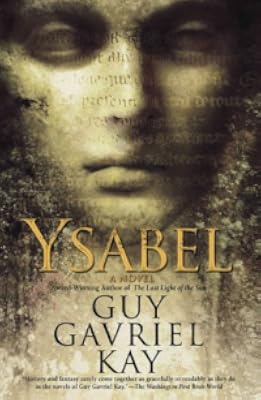
Guy Gavriel Kay was born on November 7, 1954 in Weyburn, Saskatchewan, Canada. He became interested in fantasy fiction while working as an assistant to Christopher Tolkien. He assisted him with the editing of J. R. R. Tolkien's The Silmarillion. After receiving a law degree from the University of Toronto, he became principal writer and associate show more producer for the CBC radio series, The Scales of Justice. He also wrote several episodes when the series moved to television. He has written social and political commentary for several publications including the National Post, The Globe and Mail, and The Guardian. His first fantasy novels were The Summer Tree, The Wandering Fire, and The Darkest Road, which make up the Fionavar Tapestry Trilogy. His other works include A Song for Arbonne, The Lions of Al-Rassan, Beyond This Dark House, The Last Light of the Sun, and Under Heaven. He has received numerous awards including and the Aurora Award for Tigana and The Wandering Fire, the 2008 World Fantasy Award for Best Novel for Ysabel, and the International Goliardos Award for his work in the fantasy field. (Bowker Author Biography) show less
Some Editions
Awards and Honors
Awards
Distinctions
Notable Lists
Series
Belongs to Publisher Series
Work Relationships
Common Knowledge
- Canonical title
- The Last Light of the Sun
- Original title
- The Last Light of the Sun
- Original publication date
- 2004
- People/Characters
- Aeldred, son of Gademar (King of the Anglcyn); Elswith; Athelbert (son of Aeldred); Judit; Kendra; Gareth (son of Aeldred) (show all 41); Osbert (son of Cuthwulf); Burgred (Earl of Denferth); Thorkell "Red Thorkell" Einarson; Frigga (daughter of Skadi); Bern Thorkellson; Siv (daughter of Thorkell); Athira (daughter of Thorkell); Iord (seer of Rabady); Anrid; Halldr Thinshank; Sturla "Sturla One-Hand" Ulfarson; Gurd Thollson; Brand Leofson; Carsten Friddson; Garr Hoddson; Guthrum Skallson; Thira; Kjarten Vidurson; Siggur "the Volgan" Volganson; Mikkel Ragnarson; Ivarr Ragnarson; Ingemar Svidrirson; Hakon Ingemarson; Ceinion of Llywerth "Cyngalus"; Dai ab Owyn; Alum ab Owyn; Gryffeth ap Ludh; Brynn ap Hywll "Erling's Bane"; Enid of Brynnfell; Rhiannon mer Brynn; Helda; Rania; Eirin; Siawn; Firaz ibn Bakir
- Epigraph
- I have a tale for you: a stag bells;
winter pours summer has gone.
The wind is high, cold; the sun is low;
its course is short the sea is strong running.
The bracken is very red; its shape... (show all) has been hidden.
The cry of the barnacle goose has become usual.
Cold has taken the wings of birds.
Season of ice; this is my tale.
---from the Liber Hymnorum manuscript - Dedication
- for George Jonas
- First words
- A horse, he came to understand, was missing.
- Last words
- (Click to show. Warning: May contain spoilers.)End it with the ending of a night.
- Original language
- English
Classifications
- Genres
- Fantasy, Fiction and Literature, General Fiction, Historical Fiction
- DDC/MDS
- 813.54 — Literature & rhetoric American literature in English American fiction in English 1900-1999 1945-1999
- LCC
- PR9199.3 .K39 .L37 — Language and Literature English English Literature English literature: Provincial, local, etc.
- BISAC
Statistics
- Members
- 2,136
- Popularity
- 9,638
- Reviews
- 53
- Rating
- (3.75)
- Languages
- 6 — Czech, English, French, German, Polish, Swedish
- Media
- Paper, Audiobook, Ebook
- ISBNs
- 32
- UPCs
- 1
- ASINs
- 13