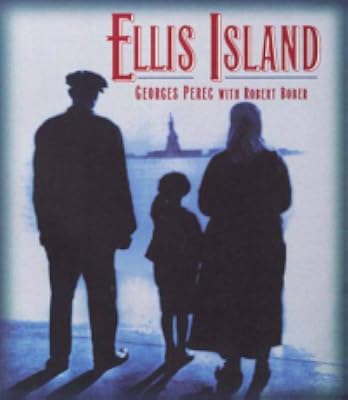
Ellis Island
by Georges Perec, Robert Bober
On This Page
Description
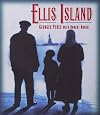
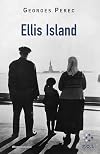
Georges Perec, employing lyrical prose meditations, lists, and inventories, conjures up the sixteen million people who, between 1890 to 1954, arrived as foreigners and stayed on to become Americans. Perec (who by the age of nine was an orphan: his father was killed by a German bullet, and his mother perished in Auschwitz) is wide-awake to the elements of chance in immigration and survival: "To me Ellis Island is the ultimate place of exile. That is, the place where place is absent, the show more non-place, the nowhere. Ellis Island belongs to all those whom intolerance and poverty have driven and still drive from the land where they grew up."Ellis Island is a slender Perec masterwork, unique among his many singular works. The acclaimed poet and scholar Mónica de la Torre contributes an afterword that keeps Perec's writing front and center while situatingEllis Island in the context of America's current fierce battles over immigration. show lessTags
Recommendations































Member Reviews
Life A User's Manual is one of my desert island books, so when I came across this short book in the library I checked it out. Perec collaborated with documentary filmmaker Robert Bober, and in 1978 accompanied him on a visit to Ellis Island. The book begins with a short factual introduction giving a brief history of Ellis Island followed by a "prose poem" by Perec about Ellis Island and his visit. Access to America was more or less free until 1875, and then gradually restrictive measures were added. Still, between 1892 and 1924 16 million people passed through the Ellis Island reception center: "Essentially Ellis Island was a sort of factory for manufacturing Americans." I learned the difference between E-migrant (leaving a country) and show more I-mmigrant (arriving in a new country), which I had never thought of before.
Here's a brief excerpt of the prose poem:
This was the golden door
right there, in sight, almost at hand,
was the America of a thousand dreams,
the land of freedom where all men were equal,
the place where everyone could finally have his chance,
the new world, the free world,
where life could start over again
but this was not America, not yet,
only an extension of the boat,
a remnant of the old world
where nothing had yet been assured,
where those who had left
still hadn't arrived,
where those who had given up everything
had so far obtained nothing
This was a slight book, but I enjoyed it.
3 stars show less
Here's a brief excerpt of the prose poem:
This was the golden door
right there, in sight, almost at hand,
was the America of a thousand dreams,
the land of freedom where all men were equal,
the place where everyone could finally have his chance,
the new world, the free world,
where life could start over again
but this was not America, not yet,
only an extension of the boat,
a remnant of the old world
where nothing had yet been assured,
where those who had left
still hadn't arrived,
where those who had given up everything
had so far obtained nothing
This was a slight book, but I enjoyed it.
3 stars show less
The premise of this book lies around a film that Perec and the French filmmaker Robert Bober made in the late 70's concerning European emigration to the United States and in particular Ellis Island the last stop before entry where a person was either allowed to go on or sent back. Using photography (I believe stills from the subsequent film) and Perec's descriptive talents the book gives the reader an idea of what it was like and what it meant for people to leave their countries and come to America to seek a better life. The last section is made up of several interviews mostly with elderly people who originally came here in the first decade of the 20th century and who describe their journeys and the reasons they made them. I found it to show more be an interesting book although Perec's prose in this non-fictional setting is much more spare than what it is in a fictional setting. Bober's photographs help to move the book along though and Perec as an interviewer is thoughtful in his questions and allows his interviewees to take center stage. A nice book. show less
Page 14: an entire paragraph dedicated to explaining how inspectors at Ellis Island changed peoples' names.
OK, that never happened. It's a myth. This is known (see links below), now. I was hoping for a footnote explaining the error. No? OK...well, I imagine it will be discussed in the afterword. Wrong! Page 59: "As lore had it, they seemed to translate last names almost homophonically, subjecting them to distortions that rendered them unrecognizable..." NOOOOOO. The inspectors at Ellis Island did not even write down names. The names were written--the passenger lists you can view online--were written at the point of embarkation, when the tickets were purchased (and crossed out names purchased tickets but did not embark). This is not show more lore, this is MYTH.
Don't hire a poet to write about and explain history. Please. As a historian and genealogist, we don't need myths like this spread further.
Some name change articles (there are LOTS):
Smithsonian Mag: https://www.smithsonianmag.com/smithsonian-institution/ask-smithsonian-did-ellis...
NYPL: https://www.nypl.org/blog/2013/07/02/name-changes-ellis-island
JewishGen: https://www.jewishgen.org/infofiles/ellismythnames.html
ALA Journal: https://journals.ala.org/index.php/dttp/article/view/6655/8939
Times of Israel: https://www.timesofisrael.com/jewish-americans-changed-their-names-but-not-at-el... show less
OK, that never happened. It's a myth. This is known (see links below), now. I was hoping for a footnote explaining the error. No? OK...well, I imagine it will be discussed in the afterword. Wrong! Page 59: "As lore had it, they seemed to translate last names almost homophonically, subjecting them to distortions that rendered them unrecognizable..." NOOOOOO. The inspectors at Ellis Island did not even write down names. The names were written--the passenger lists you can view online--were written at the point of embarkation, when the tickets were purchased (and crossed out names purchased tickets but did not embark). This is not show more lore, this is MYTH.
Don't hire a poet to write about and explain history. Please. As a historian and genealogist, we don't need myths like this spread further.
Some name change articles (there are LOTS):
Smithsonian Mag: https://www.smithsonianmag.com/smithsonian-institution/ask-smithsonian-did-ellis...
NYPL: https://www.nypl.org/blog/2013/07/02/name-changes-ellis-island
JewishGen: https://www.jewishgen.org/infofiles/ellismythnames.html
ALA Journal: https://journals.ala.org/index.php/dttp/article/view/6655/8939
Times of Israel: https://www.timesofisrael.com/jewish-americans-changed-their-names-but-not-at-el... show less
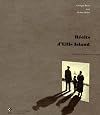
Georges Perec & Robert Bober - Récits d'Ellis Island - 1980 - De 1892 à1924, près de seize millions d'émigrants en provenance d'Europe sont passés par Ellis Island, un îlot de quelques hectares où avait été aménagé un centre de transit, tout près de la statue de la Liberté, à New York. Parce qu'ils se sentaient directement concernés par ce que fut ce gigantesque exil, Georges Perec et Robert Bober ont dans un film, "écits d'Ellis Island, histoires d'errance et d'espoir"INA 1979, décrit ce qui restait alors de ce lieu unique, et recueilli les traces de plus en plus rares qui demeurent dans la mémoire de ceux qui, au début du siècle, ont accompli ce voyage sans retour. "écits d'Ellis Island, histoires d'errance et show more d'espoir" le livre (éditions P.O.L) se compose de trois grandes parties. La première restitue, à travers une visite à Ellis Island et à l'aide de textes et de documents, ce que fut la vie quotidienne sur ce que certains appelèrent "l'île des larmes". .Dans la deuxième, "Description d'un chemin", Georges Perec évoque sa relation personnelle avec les thèmes de la dispersion et de l'identité. La troisième, " Mémoires" reprend les témoignages d'hommes et de femmes qui, enfants, sont passés par Ellis Island et racontent leur attente, leur espoir, leurs rêves, leur insertion dans la vie américaine. (fonte: Ina) show less
Sep 9, 2020Italian
- Film en 2 parties, 57mn et 60mn
- Entretiens tv dans : "Lecture pour tous" 1965 et 1967
- "Ciné Regards" 1979 avec G. Perec, P. Dumayet, A. Andreu, A. Corneau 34mn
- Entretiens audio dans : "Radioscopie" en 1978 et "Cinquante choses que j'aimerais faire avant de mourir" en 1981 70mn (fonte: cine-ressources)
- Entretiens tv dans : "Lecture pour tous" 1965 et 1967
- "Ciné Regards" 1979 avec G. Perec, P. Dumayet, A. Andreu, A. Corneau 34mn
- Entretiens audio dans : "Radioscopie" en 1978 et "Cinquante choses que j'aimerais faire avant de mourir" en 1981 70mn (fonte: cine-ressources)
Jun 19, 2020Italian
Ratings
Members
- Recently Added By
Author Information

150+ Works 13,587 Members
Georges Perec was born in Paris on March 7, 1936 and was educated in Claude-Bernard and Geoffroy-Saint-Hilaire. Perec was a parachutist in the French Military before he began publishing his writing in magazines like Partisans. Perec also wrote the book, Life: A Users Manual. Perec is noted for his constrained writing: his 300-page novel La show more disparition (1969) is a lipogram, written without ever using the letter "e". Perec won the Prix Renaudot in 1965, the Prix Jean Vigo in 1974, the Prix Médicis in 1978. Georges Perec died on March 3, 1982. (Bowker Author Biography) show less

18+ Works 264 Members
Some Editions
Classifications
- DDC/MDS
- 304 — Society, government, & culture Social sciences, sociology & anthropology Factors affecting social behavior
- LCC
- JV6450 .P4713 — Political Science Colonies and colonization. Emigration and immigration. International migration Colonies and colonization. Emigration and Emigration and immigration. International United States
- BISAC
Statistics
- Members
- 140
- Popularity
- 234,311
- Reviews
- 5
- Rating
- (3.36)
- Languages
- 9 — English, French, German, Greek, Italian, Japanese, Portuguese, Spanish, Swedish
- Media
- Paper, Audiobook, Ebook
- ISBNs
- 22
- ASINs
- 6