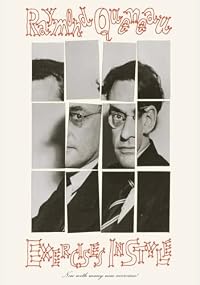
Exercises in Style
by Raymond Queneau
On This Page
Description
On a crowded bus at midday, the narrator observes one man accusing another of jostling him deliberately. When a seat is vacated, the first man takes it. Later, in another part of town, the man is spotted again, while being advised by a friend to have another button sewn onto his overcoat. Exercises in Style retells this apparently unremarkable tale ninety-nine times, employing a variety of styles, ranging from sonnet to cockney to mathematical formula. Too funny to be merely a pedantic show more thesis, this virtuoso set of themes and variations is a linguistic rustremover, a guide to literary forms and a demonstration of imagery and inventiveness. show lessTags
Recommendations








Member Reviews
One very effective way I have found to squeeze the juice of wisdom from the books I read is to write a review, which forces me to formulate my ideas and opinions in precise and clear (at least that is my intent) language. However, with Raymond Queneau's Exercises in Style, we have a book that contains not only wisdom but many flavors of linguistic magic. Thus, I need to do more than simply write a review. I found the solution: I read Barbara Wright's translation aloud, recording my voice on a digital recorder, and then listen whilst taking my walks.
Each of the 99 variations of this short tale of a young man with his long neck and felt hat is worth reading and listening to multiple times; matter of fact, it would be an aesthetic show more injustice to read through this novel once or twice and put it down, thinking you finished the book and did the author justice. No, no, no - that would be anti-Queneau!
Should I attempt to be linguistically clever, verbally crafty, syntactically cunning, offering astute wordplay, adroit repartee or ingenious punning? I should not and I will not. I will simply say how Queneau's novel is a one-of-a-kind adventure into language and the ways language can be used to tell a story. And, oh, lest I forget - the chapter heading are complete with fanciful, cartoonish illustrations of humans posing as the beginning letters of words, making the entire work that much more charming and piquant. Thank you Stefan Themerson for your artwork and thank you New Directions for your publishing creativity.
Barbara Wright does the English translation. And what a translation! A work of art in its own right (no pun intended). Barbara Wright's first career was that of a pianist and she found translating and playing piano have a great deal in common. She noted how both require an ability to, as she says in her own words, "present artistic works to an audience in a manner acceptable and satisfying to the composer or writer and honest in their interpretation."
As by way of example, here is the first line of the chapter entitled `Parechesis'. We read, "On the butt-end of a bulging bus which was transbustling an abundance of incubuses and Buchmanites from bumbledom towards their bungalows, a bumptious buckeen whose buttocks were remote from his bust and who was buttired in a boody ridiculous busby, buddenly had a bust-up with a robust buckra who was bumping into him: "Buccaneer, buzz off, you're butting my bunions!" Now such a beautiful boutique of buzzes baffles the brain . . . - well, you get the idea; I will stop there so as not to get carried away and bore.
Now that I put the finishing touches on my review, I bid you ado as I am off to the park, digital recorder in hand, poised to listen to Exercises In Style, and by so listening to float up into an ocean of linguistic light and aesthetic bliss. Tally-ho with Raymond Queneau. show less
Some books are clever in theory but dull in execution, whether due to the abstruseness of the underlying ideas or some incapacity of the writer. Exercises In Style is not one of those; even in translation (performed ably by Barbara Wright), it's obvious that this is one of those books that came out just as the author intended. While the underlying conceit may seem a bit lame, the underlying product is quite funny and enjoyable.
The central conceit is that Queneau takes a boring, everyday scene - the unnamed narrator watches two other men jostle for space on a bus, and then later sees one of them again being given fashion advice - and describes it in 99 different ways. Each form can be something as simple as changing the verb tenses to show more set the scene in the past, more complex such as various poetic styles, or just funny as in Cockney accents or pig Latin. Each different style emphasizes either a different facet of the encounter or a different way of perceiving the action, bringing to mind McLuhan's famous "the medium is the message" dictum. Sometimes the particular style will be almost unintelligible (I'm thinking of ones like the arrangements of permutations of certain numbers of letters), but since every detail of the scene becomes intimately familiar very quickly, the nuances of each particular descriptive technique take center stage. This is a book truly immune to spoilers, but enriched by repetition.
In terms of novelty, it reminds me of Pynchon's later "You never did the Kenosha Kid" scene in Gravity's Rainbow, though apparently it actually has more in common with chapter 33 of Erasmus' De Copia, where Erasmus comes up with 195 different ways to write the sentence "Your letter pleased me greatly" as part of a demonstration of technique. Regardless of provenance or influence or originality, my main takeaway is that this is a really creative way to emphasize the arbitrariness of presentation - there are an almost infinite number of ways to tell a story, and Queneau is showing so many to demonstrate that true artistry lies in selecting the right one (perhaps Flaubert's line about "le mot juste" should be amended to "le style juste" in this case). Most of these styles are obviously unsuitable for a "normal" novel, yet the concept of an entire novel being told in the form of a cross-examination, for example, seems like it could stimulate the right sort of author looking for inspiration.
There is no "point" to the book - I'm not sure I'd call it a novel - beyond its display of rhetorical technique, but even this formal exercise is engaging over its course, and even if some of the styles don't quite translate (Wright quite reasonably chooses analogous English modes in some instances, which of course provokes further thoughts on the question of limits of style beyond language), the book shows that a clever writer can make even the simplest idea and the simplest story entertaining. show less
The central conceit is that Queneau takes a boring, everyday scene - the unnamed narrator watches two other men jostle for space on a bus, and then later sees one of them again being given fashion advice - and describes it in 99 different ways. Each form can be something as simple as changing the verb tenses to show more set the scene in the past, more complex such as various poetic styles, or just funny as in Cockney accents or pig Latin. Each different style emphasizes either a different facet of the encounter or a different way of perceiving the action, bringing to mind McLuhan's famous "the medium is the message" dictum. Sometimes the particular style will be almost unintelligible (I'm thinking of ones like the arrangements of permutations of certain numbers of letters), but since every detail of the scene becomes intimately familiar very quickly, the nuances of each particular descriptive technique take center stage. This is a book truly immune to spoilers, but enriched by repetition.
In terms of novelty, it reminds me of Pynchon's later "You never did the Kenosha Kid" scene in Gravity's Rainbow, though apparently it actually has more in common with chapter 33 of Erasmus' De Copia, where Erasmus comes up with 195 different ways to write the sentence "Your letter pleased me greatly" as part of a demonstration of technique. Regardless of provenance or influence or originality, my main takeaway is that this is a really creative way to emphasize the arbitrariness of presentation - there are an almost infinite number of ways to tell a story, and Queneau is showing so many to demonstrate that true artistry lies in selecting the right one (perhaps Flaubert's line about "le mot juste" should be amended to "le style juste" in this case). Most of these styles are obviously unsuitable for a "normal" novel, yet the concept of an entire novel being told in the form of a cross-examination, for example, seems like it could stimulate the right sort of author looking for inspiration.
There is no "point" to the book - I'm not sure I'd call it a novel - beyond its display of rhetorical technique, but even this formal exercise is engaging over its course, and even if some of the styles don't quite translate (Wright quite reasonably chooses analogous English modes in some instances, which of course provokes further thoughts on the question of limits of style beyond language), the book shows that a clever writer can make even the simplest idea and the simplest story entertaining. show less
This book should be the dullest thing ever. A simple recount of a fairly mundane event (or two events, I suppose) retold 99 different ways; instead it's a fascinating, highly entertaining demonstration of the multiple possibilities of narrative. The first 20 versions or so race along and Queneau's playful inventiveness provides plenty of laughs along the way. I'll admit to skimming most of the remainder and not even beginning to understand the concepts behind several, but that's not to diminish the brilliance of the whole.
If you like this kind of thing you must also read Matt Madden's 'Exercises in Style' a cartoon version of Queneau's narrative game that makes for even better reading.
If you like this kind of thing you must also read Matt Madden's 'Exercises in Style' a cartoon version of Queneau's narrative game that makes for even better reading.
Queneau escribe una anodina historia sobre un encuentro en el autobús y otro posterior frente a la estación de Saint-lazare. Luego, la vuelve a escribir 99 veces, cada vez en un estilo distinto. Seguro que se ha dicho mil veces que es un verdadero tour de force, pero me apunto a ese carro. Hace falta perseverar para conseguir llegar a tantas variaciones. Los que hacen una crítica el libro siguiendo sus propias reglas notan la dificultad.
Por supuesto, las hay mejores y peores. De las 99, yo pondría 15 o 20 como geniales, otras 15 o 20 como divertidas, y el resto entre ah, psé y bof (la del sueño, por ejemplo, en la que solo escribe el relato diciendo que había algo de bruma y no se veía con claridad, o la del "entonces", que show more supongo que viene como traducción muy poco adaptable del francés usando todo el rato el "doncs"). Eso si lo leemos desde el punto de vista del entretenimiento. claro. Pero a lo mejor unos ejercicios de estilo no deben verse desde ese punto de vista. Algunas de ellas son maravillosas porque no son solo ejercicios de estilo sino que sirven como artículos de opinión (la de la propaganda editorial, por ejemplo, es maravillosa, o la del escritor torpe). Otras son ejercicios clásicos de fuerza, como poner la historia en versos alejandrinos, en forma de soneto, en forma de Tanka (un poema japonés con estructura de sílabas 5-7-5-7-7). También me han servido para aprender términos lingüísticos: la sínquisis, la políptoton, aféresis (que es lo contrario de apócope, que esa sí me la sabía), la parequesis, próstesis, epéntesis...
Otros son muestra de lo que luego sería el movimiento lipogramático, como la traslación (escribir el texto y sustituir cada palabra por la que viene siete puestos después en el diccionario, o el clásico lipograma, escrito sin la letra e (loas al traductor, de nuevo).
Otra parte muy importante del libro es la maravillosa introducción de más de 40 páginas, escrita por el propio traductor (más sobre él luego), Antonio Fernández Ferrer, en la que aprendemos cómo al autor se le ocurrieron estos ejercicios de estilo al escuchar las infinitas y sutiles variaciones de una fuga de Bach. Y pone como ejemplo previo el soliloquio de Cyrano de Bergerac en el que encuentra cuarenta maneras distintas de burlarse de su propia nariz. También nos da algunos ejemplos de ideas que prueba Queneau en este libro, por ejemplo el monólogo de las gallinas de Cortázar. Y nos hace una maravillosa introducción a la lipogramática y al movimiento Oulipo.
Y la traducción, la traducción es en sí misma otro ejercicio de literatura, porque hay algunas variaciones rimadas, y otras en argot, que el traductor ha tenido que hacer desde cero. Vaya como ejemplo el principio de Distinguo:
En conjunto es una lectura muy recomendable, un clásico que hay que leer, una fuente de cultura y un rato maravilloso. show less
Por supuesto, las hay mejores y peores. De las 99, yo pondría 15 o 20 como geniales, otras 15 o 20 como divertidas, y el resto entre ah, psé y bof (la del sueño, por ejemplo, en la que solo escribe el relato diciendo que había algo de bruma y no se veía con claridad, o la del "entonces", que show more supongo que viene como traducción muy poco adaptable del francés usando todo el rato el "doncs"). Eso si lo leemos desde el punto de vista del entretenimiento. claro. Pero a lo mejor unos ejercicios de estilo no deben verse desde ese punto de vista. Algunas de ellas son maravillosas porque no son solo ejercicios de estilo sino que sirven como artículos de opinión (la de la propaganda editorial, por ejemplo, es maravillosa, o la del escritor torpe). Otras son ejercicios clásicos de fuerza, como poner la historia en versos alejandrinos, en forma de soneto, en forma de Tanka (un poema japonés con estructura de sílabas 5-7-5-7-7). También me han servido para aprender términos lingüísticos: la sínquisis, la políptoton, aféresis (que es lo contrario de apócope, que esa sí me la sabía), la parequesis, próstesis, epéntesis...
Otros son muestra de lo que luego sería el movimiento lipogramático, como la traslación (escribir el texto y sustituir cada palabra por la que viene siete puestos después en el diccionario, o el clásico lipograma, escrito sin la letra e (loas al traductor, de nuevo).
Otra parte muy importante del libro es la maravillosa introducción de más de 40 páginas, escrita por el propio traductor (más sobre él luego), Antonio Fernández Ferrer, en la que aprendemos cómo al autor se le ocurrieron estos ejercicios de estilo al escuchar las infinitas y sutiles variaciones de una fuga de Bach. Y pone como ejemplo previo el soliloquio de Cyrano de Bergerac en el que encuentra cuarenta maneras distintas de burlarse de su propia nariz. También nos da algunos ejemplos de ideas que prueba Queneau en este libro, por ejemplo el monólogo de las gallinas de Cortázar. Y nos hace una maravillosa introducción a la lipogramática y al movimiento Oulipo.
Y la traducción, la traducción es en sí misma otro ejercicio de literatura, porque hay algunas variaciones rimadas, y otras en argot, que el traductor ha tenido que hacer desde cero. Vaya como ejemplo el principio de Distinguo:
Por la mañana (y no por Ana la maña) viajaba en la plataforma (pero no formaba en la vieja plata) del autobús (no confundir con el alto obús) y, como estaba llena (no me como esta ballena)...
En conjunto es una lectura muy recomendable, un clásico que hay que leer, una fuente de cultura y un rato maravilloso. show less
This is a fascinating, and as far as I know, unique book. It presents a very simple story, an encounter on a crowded tube train with a brief meeting later the same afternoon. Nothing special in that you may think. What is unique about this book is not the story, but the way in which it is presented, or ways in which it is presented to be more accurate, for the same story is presented 99 times.
Now we may at first wonder that there are nine, let alone 99 different ways of describing such a simple tale. The magic of the book is the multiplicity of styles Queneau uses. We might imagine the story told from the different perspectives of the participants. But imagine it observed passively, or described by someone hesitatingly, or with extreme show more precision. Imagine it told through a sonnet, or a play, or in a tactile way, as the notes in a policeman’s notebook, or focussing on sounds, through spoonerisms, or by a mathematician.
The result is that one is left thinking that there are so many more ways that even such a simple story could be told.
The effect is many-fold. Never again will I be able to see a description of anything without being aware of just how partial that description must be. It illuminates the reality of multiple perspectives from which everything can be seen.
For the writer, reader, speaker and listener it changes the way you perceive the description of everything. Opening up new opportunities and raising countless new questions.
This is a truly fascinating book, which has become a timeless classic. show less
Now we may at first wonder that there are nine, let alone 99 different ways of describing such a simple tale. The magic of the book is the multiplicity of styles Queneau uses. We might imagine the story told from the different perspectives of the participants. But imagine it observed passively, or described by someone hesitatingly, or with extreme show more precision. Imagine it told through a sonnet, or a play, or in a tactile way, as the notes in a policeman’s notebook, or focussing on sounds, through spoonerisms, or by a mathematician.
The result is that one is left thinking that there are so many more ways that even such a simple story could be told.
The effect is many-fold. Never again will I be able to see a description of anything without being aware of just how partial that description must be. It illuminates the reality of multiple perspectives from which everything can be seen.
For the writer, reader, speaker and listener it changes the way you perceive the description of everything. Opening up new opportunities and raising countless new questions.
This is a truly fascinating book, which has become a timeless classic. show less
Exercises in Style by Raymond Queneau is a collection of the same story, written 99 different ways.
Some of the stories are fascinating retellings in various styles. Some are stereotypes (feminine , cockney, Gallacism, exclamations), some are in different perspectives (past, present, blurb, ignorance), some are different styles (noble, comedy, cross-examination, notation, sonnet, ode), and some are rather odd (dog latin, permutations by groups of letters).
Exercises in Style is short and sweet. It sets out what it was trying to do: show how style can change a story, depending on either the narrator or the particular way of writing. Some of them were a perfect example of the impact of style, while others seemed odd to me. In the end, it show more was a quick read that gave me ideas for developing my own writing style - and it gave me ideas for fun practice in imitating others and changing voice.
More on my blog show less
Some of the stories are fascinating retellings in various styles. Some are stereotypes (feminine , cockney, Gallacism, exclamations), some are in different perspectives (past, present, blurb, ignorance), some are different styles (noble, comedy, cross-examination, notation, sonnet, ode), and some are rather odd (dog latin, permutations by groups of letters).
Exercises in Style is short and sweet. It sets out what it was trying to do: show how style can change a story, depending on either the narrator or the particular way of writing. Some of them were a perfect example of the impact of style, while others seemed odd to me. In the end, it show more was a quick read that gave me ideas for developing my own writing style - and it gave me ideas for fun practice in imitating others and changing voice.
More on my blog show less
Queneau sets for himself the challenge of writing the same story, and it is a very slight story indeed, using several different styles and techniques. This edition also includes the efforts of current writers who have taken up the challenge. The story is something like this, a rather pathetic and petulant specimen of man with an overlong neck and a hat with an eccentric band quarrels with another passenger on an overcrowded bus Our hero, as it were, accuses the other gentleman of jostling him, on purpose, no less. Our star then throws himself upon the first available seat. Later in the day the narrator sees the petulant fellow being advised as to the placement of the button of his coat. Queneau's tour de force is to tell this same show more mundane story multiple ways. Some of his renditions are laugh until you cry funny, others, a bit forced. I would not recommend reading them all at once because the exercise then seems tedious. One or two as a treat after dinner is more the way to go. Each rendition is accompanied by a quirky Thurberesque drawing. These are also assured to bring a few giggles. While Exercises in Style is often considered the author's masterpiece, I still reserve that designation for The Sunday of Life. show less
Members
- Recently Added By
Lists

1001 Books You Must Read Before You Die
1,448 works; 1,132 members

Best of French Literature
138 works; 27 members

French Books
102 works; 15 members

1940s
221 works; 25 members

Experimental Literature
141 works; 18 members

Best public-transport fiction
72 works; 17 members

Short and Sweet
243 works; 23 members

One Book, Many Authors
441 works; 40 members

1,001 BYMRBYD Concensus
723 works; 27 members

Желаемое
5 works; 1 member

Cooper
79 works; 1 member
Author Information

171+ Works 9,830 Members
This French author of treatises on mathematics and other scholarly works has made his reputation writing comic novels. Raymond Queneau (through one of his characters) once defined humor as "an attempt to purge lofty feelings of all the baloney." Roger Shattuck interprets his philosophy: "Life is of course absurd and it is ludicrous to take it show more seriously; only the comic is serious." Life is so serious to Queneau that only laughter makes it bearable. He has written a play, screenplays, poetry, numerous articles, and many novels, the first of which, Le Chiendent (The Bark Tree), was published in 1933. In Exercises in Style (1947) he tells a simple anecdote 99 different ways. According to some critics, The Blue Flowers (1965) represents Queneau at his best. Its jokes, puns, double-entendres, deceptions, wild events, tricky correspondences, and bawdy language make it a feast of comic riches. The influence of Charlie Chaplin, as well as James Joyce is detectable in Queneau's fiction. (Bowker Author Biography) show less
Some Editions
Awards and Honors
Series
Belongs to Publisher Series
De Bezige Bij 70 ([11])
Bezige Bij pocket (89)
Mínima minor (39)
Gli struzzi [Einaudi] (282)
Volk und Welt Spektrum (176)
Bibliothek Suhrkamp (148)
Gallimard, Folio (1363)
Work Relationships
Inspired
Has as a student's study guide
Common Knowledge
- Canonical title
- Exercises in Style
- Original title
- Exercices de style
- Original publication date
- 1947
- Important places
- Paris, France
- First words
- Dans l'S, une heure d'affluence.
- Original language
- French
Classifications
- Genres
- Fiction and Literature, General Fiction
- DDC/MDS
- 848.91207 — Literature & rhetoric French & related literatures French miscellaneous writings 1900- 1900-1999 1900-1945 Without identifiable literary form
- LCC
- PQ2633 .U43 .E93 — Language and Literature French, Italian, Spanish and Portuguese literatures French literature Modern literature 1900-1960
- BISAC
Statistics
- Members
- 2,891
- Popularity
- 6,188
- Reviews
- 56
- Rating
- (3.92)
- Languages
- 28 — Basque, Bulgarian, Catalan, Chinese, Czech, Danish, Dutch, English, Estonian, Finnish, French, German, Greek, Hungarian, Icelandic, Italian, Japanese, Lithuanian, Norwegian (Nynorsk), Polish, Portuguese, Romanian, Serbian, Croatian, Spanish, Swedish, Turkish, Ukrainian
- Media
- Paper, Audiobook, Ebook
- ISBNs
- 85
- ASINs
- 21