On This Page
Description
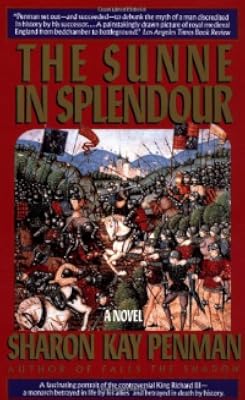
A glorious novel of the controversial Richard III—-a monarch betrayed in life by his allies and betrayed in death by historyIn this beautifully rendered modern classic, Sharon Kay Penman redeems Richard III—-vilified as the bitter, twisted, scheming hunchback who murdered his nephews, the princes in the Tower—-from his maligned place in history with a dazzling combination of research and storytelling.
Born into the treacherous courts of fifteenth-century England, in the midst of what show more history has called The War of the Roses, Richard was raised in the shadow of his charismatic brother, King Edward IV. Loyal to his friends and passionately in love with the one woman who was denied him, Richard emerges as a gifted man far more sinned against than sinning.
This magnificent retelling of his life is filled with all of the sights and sounds of battle, the customs and lore of the fifteenth century, the rigors of court politics, and the passions and prejudices of royalty.
. show less
Tags
Recommendations
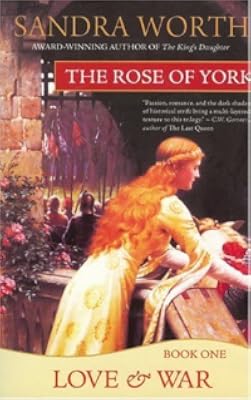
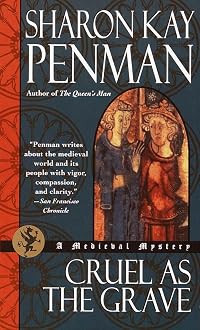
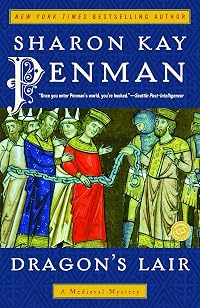
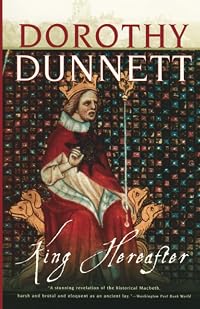

Member Recommendations
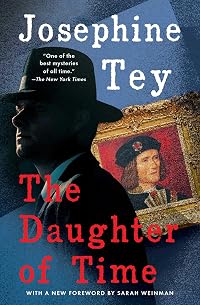
LisaMaria_C For me The Daughter of Time and The Sunne in Splendour go hand in hand. The first is the classic mystery "solving" the mystery of the Two Princes in the Tower and the second a sympathetic biographical novel of Richard III which is well-researched and moving.
71

Member Reviews
** SPOILERS ** (But then, this is a fictional retelling of real historical events, so is a spoiler warning even necessary? In any case, you've been warned.)
The Sunne in Splendour, by Sharon Kay Penman, follows the life of England's King Richard III. Penman painstakingly recreates the courts and customs of 15th century England, and the final years of the War of the Roses - the years before the Tudors claimed the throne. We follow Richard's life from the time he is a young boy until his death at Bosworth Field, ending Plantagenet rule.
Penman masterfully recreates Richard's world. I'm not a historian - far from it - but from what I understand, Penman's scholarship is excellent. The story is always exciting, and Penman keeps the reader's show more interest high throughout the book. I think what she does best, though, is characterization. Each character comes alive in The Sunne in Splendour. Richard is extremely loyal to his brother, deeply in love with his wife, and has a strict moral sense - almost too strict. He is also too trusting of others, unwilling or unable to see what betrayal may lie ahead. Edward IV - Ned - is a larger-than-life character: handsome, brave, able to read people, politically astute, but in the end brought down by his excessive lifestyle. Richard's wife, Anne, is frail, devoted, intelligent, while Edward's wife, Elizabeth, is a beautiful viper, always scheming to ensure her family's position. Additionally, all of the other characters - and there are probably hundreds - are well-drawn and individual; Penman has taken the time to make each one come alive.
As the book came to an end, I found myself wishing that I didn't know what was going to happen. Penman does an excellent job of keeping the reader's interest high throughout the book, but as I got within the last 150 pages or so, I started reading slower and slower. However, I think in some ways Penman anticipates this. Once Richard had lost his son and his wife, the other characters in the book start worrying about whether he has the will to go on. I found that the story almost takes on the cast of a Shakespearean drama. Richard's "fatal flaws" begin to drive him - and the story - and each event seems to have the feeling of inevitability. I'm not sure if this is intentional: Is Penman is trying to counter Shakespeare's King Richard III in any way, or are the events that happen just so overwhelmingly tragic (in the traditional dramatic sense of the word) that any retelling will seem like, well, a Grand Tragedy?
This is an excellent book. Highly recommended. show less
The Sunne in Splendour, by Sharon Kay Penman, follows the life of England's King Richard III. Penman painstakingly recreates the courts and customs of 15th century England, and the final years of the War of the Roses - the years before the Tudors claimed the throne. We follow Richard's life from the time he is a young boy until his death at Bosworth Field, ending Plantagenet rule.
Penman masterfully recreates Richard's world. I'm not a historian - far from it - but from what I understand, Penman's scholarship is excellent. The story is always exciting, and Penman keeps the reader's show more interest high throughout the book. I think what she does best, though, is characterization. Each character comes alive in The Sunne in Splendour. Richard is extremely loyal to his brother, deeply in love with his wife, and has a strict moral sense - almost too strict. He is also too trusting of others, unwilling or unable to see what betrayal may lie ahead. Edward IV - Ned - is a larger-than-life character: handsome, brave, able to read people, politically astute, but in the end brought down by his excessive lifestyle. Richard's wife, Anne, is frail, devoted, intelligent, while Edward's wife, Elizabeth, is a beautiful viper, always scheming to ensure her family's position. Additionally, all of the other characters - and there are probably hundreds - are well-drawn and individual; Penman has taken the time to make each one come alive.
As the book came to an end, I found myself wishing that I didn't know what was going to happen. Penman does an excellent job of keeping the reader's interest high throughout the book, but as I got within the last 150 pages or so, I started reading slower and slower. However, I think in some ways Penman anticipates this. Once Richard had lost his son and his wife, the other characters in the book start worrying about whether he has the will to go on. I found that the story almost takes on the cast of a Shakespearean drama. Richard's "fatal flaws" begin to drive him - and the story - and each event seems to have the feeling of inevitability. I'm not sure if this is intentional: Is Penman is trying to counter Shakespeare's King Richard III in any way, or are the events that happen just so overwhelmingly tragic (in the traditional dramatic sense of the word) that any retelling will seem like, well, a Grand Tragedy?
This is an excellent book. Highly recommended. show less
Not Shakespeare's Richard III
It's long been generally believed that Richard III probably wasn't as evil as his enemies made him out to be. After his bones were examined it was also clear that the physical deformities he supposedly had were made up. The victors definitely wrote his history. But who was the real Richard and what was he like?
There are people called Ricardians who are dedicated to redeeming his reputation, some within organized groups and others simply on their own. Sharon Kay Penman is obviously one of them though I have no idea if she belongs to any Ricardian societies. Her Richard III is a loving husband, father, brother, son, and yes, even uncle. He is a morally upright man with a conscience who wants to do right by show more everyone. The real Richard III was probably somewhere between the Bard's monster and Penman's all around good guy.
When an author of historical fiction does it right, you find yourself rooting for historical figures even when you know their fate was not what you're hoping for. Penman did it right. She makes you care about them, root for them, and even though you know how it ends, hold out a tiny sliver of hope that maybe it didn't really end that way. show less
It's long been generally believed that Richard III probably wasn't as evil as his enemies made him out to be. After his bones were examined it was also clear that the physical deformities he supposedly had were made up. The victors definitely wrote his history. But who was the real Richard and what was he like?
There are people called Ricardians who are dedicated to redeeming his reputation, some within organized groups and others simply on their own. Sharon Kay Penman is obviously one of them though I have no idea if she belongs to any Ricardian societies. Her Richard III is a loving husband, father, brother, son, and yes, even uncle. He is a morally upright man with a conscience who wants to do right by show more everyone. The real Richard III was probably somewhere between the Bard's monster and Penman's all around good guy.
When an author of historical fiction does it right, you find yourself rooting for historical figures even when you know their fate was not what you're hoping for. Penman did it right. She makes you care about them, root for them, and even though you know how it ends, hold out a tiny sliver of hope that maybe it didn't really end that way. show less
I bought this book a few months ago, and kept putting off reading it because it is *very* long. But I picked it up about a week ago, after hearing a lot of people on one of my bookgroups talk about it. And with good reason- I truly loved reading this book.
It's long, yes, and not exactly quick reading. But Penman, as always, manages to pull you into her world so convincingly that you really feel as though you understand Medieval England's political situation. I finished the book late last night and today, in spare moments, I find myself mulling over the fickle nature of history, which is always written by the victors, and wondering just how factual our history lessons might be. Penman almost overnight made me a staunch fan of show more RIII.
Richard III is portrayed as a loyal, idealistic man who adored his elder brother the king and was greatly shaken when he learned Edward had feet of clay. His family, friends, and enemies all come animatedly to life, but Richard (IMO) steals the show.
This is a gripping read that pulls you immediately in- I was sniffling almost non-stop through the last hundred pages. Highly recommended if you are a historical fiction fan. I also recommend SKP's Welsh Trilogy, starting with Here be Dragons. show less
It's long, yes, and not exactly quick reading. But Penman, as always, manages to pull you into her world so convincingly that you really feel as though you understand Medieval England's political situation. I finished the book late last night and today, in spare moments, I find myself mulling over the fickle nature of history, which is always written by the victors, and wondering just how factual our history lessons might be. Penman almost overnight made me a staunch fan of show more RIII.
Richard III is portrayed as a loyal, idealistic man who adored his elder brother the king and was greatly shaken when he learned Edward had feet of clay. His family, friends, and enemies all come animatedly to life, but Richard (IMO) steals the show.
This is a gripping read that pulls you immediately in- I was sniffling almost non-stop through the last hundred pages. Highly recommended if you are a historical fiction fan. I also recommend SKP's Welsh Trilogy, starting with Here be Dragons. show less
Again, Sharon Kay Penman made history come alive for me. Although this book is 936 pages (yes, I know, wow!) and it took me three weeks to finish it, I did enjoy it.
Penman takes the historical renderings about King Richard III and dissects it engagingly to present a completely different (and seemingly much more accurate) picture of the man and the King. Though Richard III was reviled as a bitter, twisted, scheming hunchback who murdered his nephews to gain the crown of England, Penman disputes that with detailed historical research and compelling logic.
I liked the man as described in this book, and wonder how anyone lived through that period in time, especially a man with moral fiber. It was filled with love, loss, betrayal and show more suffering - no matter if you were King or common man.
I did feel that some of the battle scenes went on a little too long, making the book one that takes a lot of time to read. Unless you have a LOT of free time, plan on setting aside weeks to read this. It IS worth it, though, if you're a fan of historical novels. Penman's research with each of her books is amazing. show less
Penman takes the historical renderings about King Richard III and dissects it engagingly to present a completely different (and seemingly much more accurate) picture of the man and the King. Though Richard III was reviled as a bitter, twisted, scheming hunchback who murdered his nephews to gain the crown of England, Penman disputes that with detailed historical research and compelling logic.
I liked the man as described in this book, and wonder how anyone lived through that period in time, especially a man with moral fiber. It was filled with love, loss, betrayal and show more suffering - no matter if you were King or common man.
I did feel that some of the battle scenes went on a little too long, making the book one that takes a lot of time to read. Unless you have a LOT of free time, plan on setting aside weeks to read this. It IS worth it, though, if you're a fan of historical novels. Penman's research with each of her books is amazing. show less
Well, I am certainly never going to be able to process the words "Richard, Duke of Gloucester" or "Richard III" in the same way ever again.
There were so many things that I loved about this book. I'm actually a little mad I didn't come across Penman's writing sooner. Now that I have, I am going to be scouring stores for every single book she has ever written and will not rest until I have read them all. I do have a few criticisms and niggles with this retelling of the War of the Roses, but the overall enjoyment and richness I found in these pages far outweighed any negatives for me. The depth, attention to detail, epic scale, scope of human experiences and emotions covered in its pages, not to mention the very subject matter it dealt show more with, among other things, all came together to make this a delightful and deeply immersive read for me.
Some of the major highlights for me were definitely how Penman wrote characters and relationships. Edward IV's reputation for philandering has always made me view him with a bit of contempt, but I found myself growing quite fond of him over the course of this novel because of the way Penman portrayed him, and I think that is in no small part because of how she handled the brotherly bond between him and Richard. The relationship between Richard and his niece, Elizabeth of York also pleasantly surprised me, and it was a detail relating to their bond that came closest to drawing some tears from me towards the end of the book. In a much smaller word count than that dedicated to Edward IV or Elizabeth of York, Edmund, Earl of Rutland's brief point-of-view scenes endeared me to him so much that despite their brevity and culmination, he—rather unfortunately for me—became and remained my favourite character for the vast bulk of the novel.
The attention paid to Richard's relationship with Anne Neville was also unexpected and quite sweet, although at times it did feel overbearing.
With regards to Richard himself, I enjoyed his journey as a character and sympathised with him throughout. Although there were also a few sections of the novel where he felt a little distant. Before reading this novel I had never given much independent thought to Richard, usually taking what various sources told me about him at face value. But now I am very curious to pick through the sources myself and investigate the historical truth about the man and find out a bit more about how much creative liberty Penman used in her portrayal of him.
I also appreciated the way Penman handled both the brutality and the licentiousness of the era and its players, finding that content generally quite respectfully and tastefully dealt with while avoiding the extremes of gratuitous excess, awkward sanitisation or total omission.
My major issues and niggles are pretty much the same touched on by the user Craig in his review, and are more nitpicks than things which negatively impacted my enjoyment or immersion:
1. I know this book is already very long, but there were some key moments that were summarised or relayed through dialogue instead of shown. I feel like this diminished their impact a little.
2. In her quest to absolve Richard, Penman makes him, at times, a little too saintly and I felt this made his character feel less nuanced and complex. For me Anne Neville suffered a bit of the same, but more from a sense that the author was trying too hard to make her endearing rather than trying too hard to absolve her.
3. In that same quest to absolve Richard, other characters necessarily have to take on the role of instigator, murderer, schemer, etc. The way this was handled for some of the other characters (namely the Woodvilles, and Elizabeth Woodville in particular) made them come across as a little a too villainous and conniving, and so diminished their nuance and complexity as well.
Despite these little qualms, this book was a rich and lavish journey that I am so glad I found! It also happens to be Penman's debut novel, and I am beyond excited to see how her writing and characterisation evolve over the course of her other novels if this is how she starts off!
Before getting to any of Penman's other works, however, I am very much looking forward to letting Anya Seton take me back a hundred or so years before these events to read about Katherine Swynford and John of Gaunt, First Duke of Lancaster, who are basically the ones to blame for this whole War of the Roses conflict happening in the first place.
9/10 will absolutely be re-reading this door-stopper,even knowing that the character I become most attached to dies on page 42 of the edition I have and I will spend the next 830 pages feeling kind of sad about it . show less
There were so many things that I loved about this book. I'm actually a little mad I didn't come across Penman's writing sooner. Now that I have, I am going to be scouring stores for every single book she has ever written and will not rest until I have read them all. I do have a few criticisms and niggles with this retelling of the War of the Roses, but the overall enjoyment and richness I found in these pages far outweighed any negatives for me. The depth, attention to detail, epic scale, scope of human experiences and emotions covered in its pages, not to mention the very subject matter it dealt show more with, among other things, all came together to make this a delightful and deeply immersive read for me.
Some of the major highlights for me were definitely how Penman wrote characters and relationships. Edward IV's reputation for philandering has always made me view him with a bit of contempt, but I found myself growing quite fond of him over the course of this novel because of the way Penman portrayed him, and I think that is in no small part because of how she handled the brotherly bond between him and Richard. The relationship between Richard and his niece, Elizabeth of York also pleasantly surprised me, and it was a detail relating to their bond that came closest to drawing some tears from me towards the end of the book. In a much smaller word count than that dedicated to Edward IV or Elizabeth of York, Edmund, Earl of Rutland's brief point-of-view scenes endeared me to him so much that despite their brevity and culmination, he—rather unfortunately for me—became and remained my favourite character for the vast bulk of the novel.
The attention paid to Richard's relationship with Anne Neville was also unexpected and quite sweet, although at times it did feel overbearing.
With regards to Richard himself, I enjoyed his journey as a character and sympathised with him throughout. Although there were also a few sections of the novel where he felt a little distant. Before reading this novel I had never given much independent thought to Richard, usually taking what various sources told me about him at face value. But now I am very curious to pick through the sources myself and investigate the historical truth about the man and find out a bit more about how much creative liberty Penman used in her portrayal of him.
I also appreciated the way Penman handled both the brutality and the licentiousness of the era and its players, finding that content generally quite respectfully and tastefully dealt with while avoiding the extremes of gratuitous excess, awkward sanitisation or total omission.
My major issues and niggles are pretty much the same touched on by the user Craig in his review, and are more nitpicks than things which negatively impacted my enjoyment or immersion:
1. I know this book is already very long, but there were some key moments that were summarised or relayed through dialogue instead of shown. I feel like this diminished their impact a little.
2. In her quest to absolve Richard, Penman makes him, at times, a little too saintly and I felt this made his character feel less nuanced and complex. For me Anne Neville suffered a bit of the same, but more from a sense that the author was trying too hard to make her endearing rather than trying too hard to absolve her.
3. In that same quest to absolve Richard, other characters necessarily have to take on the role of instigator, murderer, schemer, etc. The way this was handled for some of the other characters (namely the Woodvilles, and Elizabeth Woodville in particular) made them come across as a little a too villainous and conniving, and so diminished their nuance and complexity as well.
Despite these little qualms, this book was a rich and lavish journey that I am so glad I found! It also happens to be Penman's debut novel, and I am beyond excited to see how her writing and characterisation evolve over the course of her other novels if this is how she starts off!
Before getting to any of Penman's other works, however, I am very much looking forward to letting Anya Seton take me back a hundred or so years before these events to read about Katherine Swynford and John of Gaunt, First Duke of Lancaster, who are basically the ones to blame for this whole War of the Roses conflict happening in the first place.
9/10 will absolutely be re-reading this door-stopper,
When most people think of Richard III, they picture a hunchbacked villain who was obsessed with being king and who murdered the princes in the Tower as a result. But in this novel, the last Plantagenet king is portrayed in a very different light: Richard (or Dickon, as most characters call him) is noble and loyal to a fault, and these good traits are ultimately what cause his downfall. The novel begins with Dickon's childhood, when his father, the Duke of York, is killed in the war against the Lancastrian Henry VI. Dickon's oldest brother Edward subsequently takes his father's place in leading the Yorkist faction against Henry; eventually, he is crowned as Edward IV, and Dickon becomes one of his most trusted advisers and most skilled show more battle commanders. But as Edward obtains more and more power, Dickon becomes disillusioned with his brother's morally questionable choices, and the struggle of brother against brother mirrors the broader conflict between York and Lancaster.
As always, in this book Sharon Kay Penman manages to bring the Middle Ages to life. I always enjoy her vivid descriptions of daily life during this period, as well as her depictions of medieval religion, warfare, and politics. This book in particular is a fascinating political study, showing that the cutthroat nature of modern politics is rooted in a long tradition. I also like the fact that this novel approaches Richard III from a countercultural perspective. While I don't know enough about the subject to judge whether Penman's interpretation is justified, it makes sense to me that Henry Tudor (who acceded to the throne after Richard's death) would want to do everything in his power to discredit his predecessor. It's always important to remember that history is written by the victors! All in all, I heartily recommend this book to anyone who is interested in Richard III, the War of the Roses, or the Middle Ages in general. show less
As always, in this book Sharon Kay Penman manages to bring the Middle Ages to life. I always enjoy her vivid descriptions of daily life during this period, as well as her depictions of medieval religion, warfare, and politics. This book in particular is a fascinating political study, showing that the cutthroat nature of modern politics is rooted in a long tradition. I also like the fact that this novel approaches Richard III from a countercultural perspective. While I don't know enough about the subject to judge whether Penman's interpretation is justified, it makes sense to me that Henry Tudor (who acceded to the throne after Richard's death) would want to do everything in his power to discredit his predecessor. It's always important to remember that history is written by the victors! All in all, I heartily recommend this book to anyone who is interested in Richard III, the War of the Roses, or the Middle Ages in general. show less
The subtitle of this book should be changed from "A Novel of Richard III" to "THE Novel of Richard III". If anyone is looking for a way into the life of Richard III, then this is it. I was hooked from page one and could not put it down. It is meticulously researched and beautifully written. I am definitely sympathetic to Richard and the poignancy of his remains having been found recently only adds to this.
Sharon Penman gets inside the mind and the times of Richard and his family and portrays them as real people, not the monsters or heroes drawn in other works (including Shakespeare). You can see the troubles and loyalties which shaped Richard as a boy; his admiration of his brother, Edward IV; and his love for Anne Neville. The story show more leads us through Richard's inevitable decisions following Edward's death and the revelation that the king's marriage was illegitimate. Penman shows us, not an evil, scheming wicked uncle, but a true statesman faced with impossible situations. The whole spectrum of characters is displayed with a truth which is so engaging you miss them when they've died or once you've finished the book. It's so close to reality that you find yourself hoping that Richard can find a way of avoiding Bosworth and remain king! show less
Sharon Penman gets inside the mind and the times of Richard and his family and portrays them as real people, not the monsters or heroes drawn in other works (including Shakespeare). You can see the troubles and loyalties which shaped Richard as a boy; his admiration of his brother, Edward IV; and his love for Anne Neville. The story show more leads us through Richard's inevitable decisions following Edward's death and the revelation that the king's marriage was illegitimate. Penman shows us, not an evil, scheming wicked uncle, but a true statesman faced with impossible situations. The whole spectrum of characters is displayed with a truth which is so engaging you miss them when they've died or once you've finished the book. It's so close to reality that you find yourself hoping that Richard can find a way of avoiding Bosworth and remain king! show less
Members
- Recently Added By
Lists

Best Historical Fiction
620 works; 261 members

Top-Rated Books on LibraryThing
272 works; 116 members
Historical Fiction
889 works; 91 members

Five star books
1,767 works; 109 members

One Book, Many Authors
441 works; 40 members

Top Five Books of 2016
795 works; 229 members

Historical Fiction Lovers
88 works; 4 members

Set in the 15th and 16th Centuries
28 works; 4 members

KayStJ's to-read list
1,616 works; 11 members

Authors from the United States
245 works; 3 members

The Hive Recommends
62 works; 2 members

THE WAR ROOM
813 works; 24 members
Author Information

20+ Works 19,016 Members
Sharon Kay Penman was born in New York City on August 13, 1945. She received a bachelor's degree in history from the University of Texas at Austin and a Juris Doctor degree from Rutgers University School of Law. She worked as a tax lawyer before becoming a full-time writer. She wrote The Sunne in Splendour, which chronicled the life of Richard show more III, while she was a student and a tax lawyer. After finishing the manuscript, her only copy was stolen from her car. She eventually rewrote the book and it was published in 1982. Her other works include Here Be Dragons, The Reckoning, When Christ and His Saints Slept, The Queen's Man, Cruel as the Grave, Dragon's Lair, Prince of Darkness, Lionheart and A King's Ransom. She won the 2001 Career Achievement Award for Historical Mysteries from Romantic Times. (Bowker Author Biography) show less

Sharon Kay Penman is a LibraryThing Author, an author who lists their personal library on LibraryThing.
Some Editions
Awards and Honors
Notable Lists
Series

Work Relationships
Common Knowledge
- Canonical title
- The Sunne in Splendour
- Original publication date
- 1982
- People/Characters
- Richard III, King of England; Anne Neville, Queen Consort of England; Richard Neville, 16th Earl of Warwick (Warwick the Kingmaker); Edward IV, King of England; George, Duke of Clarence; Lady Eleanor Talbot (show all 14); Jane Shore; Cecily Neville, Duchess of York; Richard Plantagenet, 3rd Duke of York; Elizabeth Woodville, Queen Consort of England; Henry VII, King of England (as Henry Tudor); Elizabeth of York; Lady Margaret Beaufort; Henry Stafford, 2nd Duke of Buckingham
- Important places
- York, North Yorkshire, England, UK; London, England, UK; Market Bosworth, Leicestershire, England, UK
- Important events
- Wars of the Roses (1455 | 1485); Battle of Bosworth Field (1485-08-22)
- Dedication
- To Julie McCaskey Wolff
- First words
- Richard did not become frightened until darkness began to settle over the woods.
- Quotations
- And what of those who didn't know him? What happens, too, when all who knew him are dead, when people know only what they've been told? What truth will we be talking about, then?
- Last words
- (Click to show. Warning: May contain spoilers.)For when all is said and done, the truth will be all we have.
Classifications
Statistics
- Members
- 2,552
- Popularity
- 7,526
- Reviews
- 80
- Rating
- (4.46)
- Languages
- English, Spanish
- Media
- Paper, Ebook
- ISBNs
- 16
- ASINs
- 17