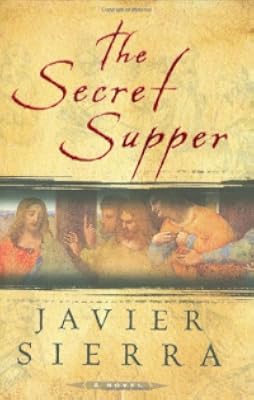
The Secret Supper
by Javier Sierra
On This Page
Description
In 1497 a Dominican inquisitor is sent to Milan to supervise the final phase of the painting of The Last Supper by Leonardo da Vinci. Never a conformist, da Vinci creates a masterpiece that raises questions that have yet to be answered. Unlike his contemporaries, he does not hold strictly to the religious doctrine of the scriptures, but adds touches advocated by a repressed heritical sect. Could da Vinci be a member of the secret society?Tags
Recommendations
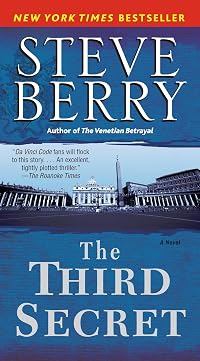
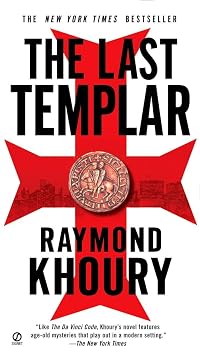
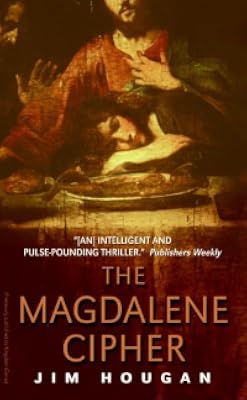
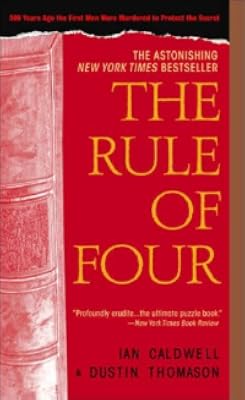




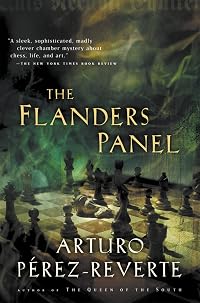
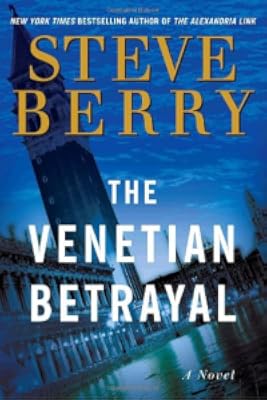
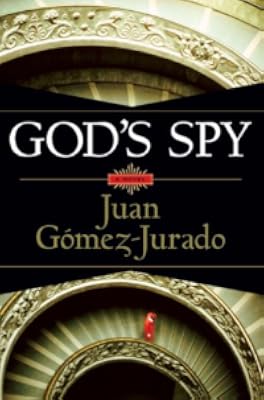
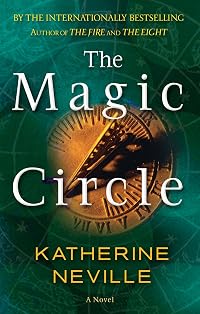

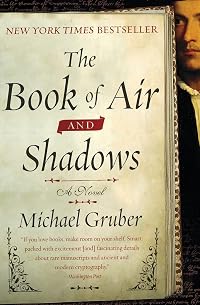
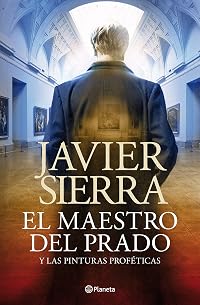
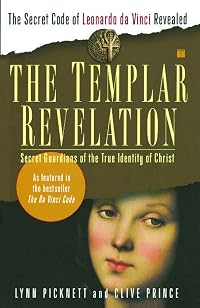
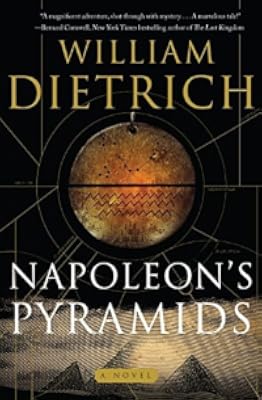

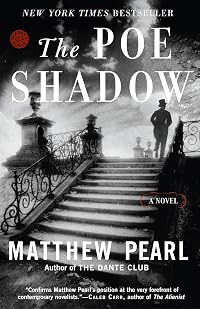

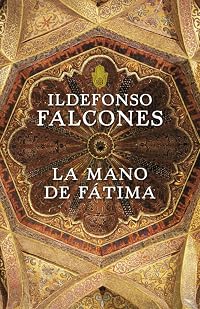

Member Recommendations

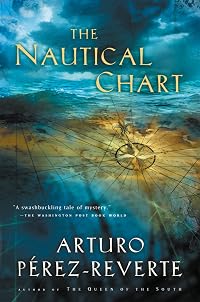
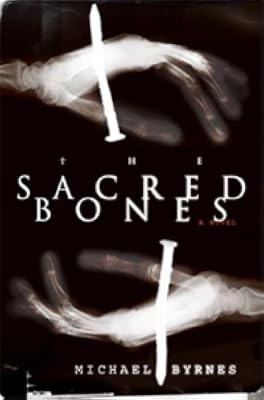
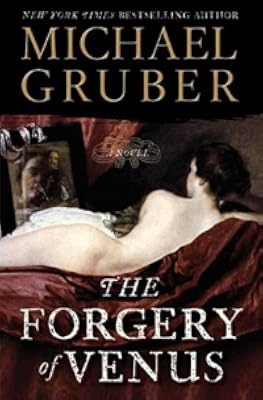
Limelite Two clerics sent to investigate mysterious and secretive goings on in abbeys encounter murder and revelation as they successfully untangle and avert the web of church politics and conflicts over man's greatest artistic and literary heritage.
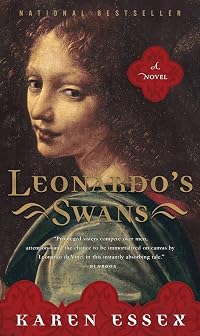
Caramellunacy Leonardo's Shadow is a young adult novel surrounding the artist's Last Supper - including a puzzle hidden in its depths. It's less puzzle-thriller than Secret Supper, but a good read.
Member Reviews
I wanted to like this book because I find the subject interesting, but it read like an over-zealous professor trying to make a dull subject interesting. The irony is that it isn't a dull story, but the over abundance of facts reiterated throughout the story made it tedious. I kept getting the feeling there would be a test later. If I wanted an education on 15th century religion and artwork I would read a text book. I wanted an intriguing story and didn't find it here.
I have mixed feelings about this book. I actually came across it at a dollar store, and the synopsis seemed interesting, so I picked it up. As far as research into how people lived at that time went, the author does a nice job of bringing to us a taste of late 15th-century Italy, and the politics of that time and how closely enmeshed with religion it was.
As for the "secret message" part (think of a ultra-light version of the Da Vinci Code) I actually found it somewhat underwhelming. Perhaps I had my expectations set too high, but this was still an enjoyable novel. 3.5/5 stars.
As for the "secret message" part (think of a ultra-light version of the Da Vinci Code) I actually found it somewhat underwhelming. Perhaps I had my expectations set too high, but this was still an enjoyable novel. 3.5/5 stars.
A BOOK about heretical symbols in The Last Supper will elicit comparison with The Da Vinci Code, but even in translation Sierra’s work is of a quality of which Dan Brown could only dream. Father Leyre of the Inquisition is sent to Milan after anonymous letters accuse Leonardo of concealing heretical propaganda in a mural in the Santa Maria Delle Grazie monastery. A murder mystery, it appears to promulgate the Albigension Heresy, leaving readers to decide if the Cathars were more sinning than sinned against.
My first comment: NOT a Da Vinci Code ripoff, not a clone, not even close! So don't let this put you off of reading this book. The author has written a good mystery which stands on its own, so if you're worried about "oh no, another DaVinci Code," forget it. Or, conversely, if you're looking for a Da Vinci Code type book, this isn't it.
Set in late 15th-century Milan, when one of my favorite historical bad guys is gaining in popularity (Savanarola), the story is told by a Father Augustino Leyre, who is an agent for the Office of the Inquisition from Rome. Several letters, all signed by someone calling himself "Soothsayer" have been received there that send Father Leyre to a monastery in Milan. He can gain nothing from the latest letter, show more which is a cryptic puzzle, except that the writer was probably a Dominican monk, based on some of the phrases used in the letter. So he decides to visit the monastery and try to ascertain the identity of the writer. At issue: the painting of The Last Supper, by Leonardo DaVinci. The question: is the great Leonardo a heretic? Why has he altered the traditional view of the Last Supper? What is he trying to say with this painting, and to whom? Should the Inquisition haul him up on charges of heresy? While Father Augustino is trying to get to the root of the problem, there are several mysterious deaths that all somehow seem to be linked.
Serra's work is very well researched; most of his characters are actual people who lived at the time under study here, and there is a guide to the characters in the back of the book. You'll find yourself referring to the painting often (I did); the author has placed a reproduction inside the cover, clearly labeled so that you can easily tell who is who as the story unfolds.
A very good mystery and one that is easily read. If you enjoy cyphers, puzzles and historical fiction, you will want to read this one. Now let's see if the popularity of this book gets some more of Serra's works translated into English! show less
Set in late 15th-century Milan, when one of my favorite historical bad guys is gaining in popularity (Savanarola), the story is told by a Father Augustino Leyre, who is an agent for the Office of the Inquisition from Rome. Several letters, all signed by someone calling himself "Soothsayer" have been received there that send Father Leyre to a monastery in Milan. He can gain nothing from the latest letter, show more which is a cryptic puzzle, except that the writer was probably a Dominican monk, based on some of the phrases used in the letter. So he decides to visit the monastery and try to ascertain the identity of the writer. At issue: the painting of The Last Supper, by Leonardo DaVinci. The question: is the great Leonardo a heretic? Why has he altered the traditional view of the Last Supper? What is he trying to say with this painting, and to whom? Should the Inquisition haul him up on charges of heresy? While Father Augustino is trying to get to the root of the problem, there are several mysterious deaths that all somehow seem to be linked.
Serra's work is very well researched; most of his characters are actual people who lived at the time under study here, and there is a guide to the characters in the back of the book. You'll find yourself referring to the painting often (I did); the author has placed a reproduction inside the cover, clearly labeled so that you can easily tell who is who as the story unfolds.
A very good mystery and one that is easily read. If you enjoy cyphers, puzzles and historical fiction, you will want to read this one. Now let's see if the popularity of this book gets some more of Serra's works translated into English! show less
I happened across this book during one of my genre frenzies (this particular one being religious fiction), and after being bombarded with recommendations for this book in every genre search I conducted, I decided to read it. The story is about Father Agostino who is sent by the church inquisition to investigate Leonardo Da Vinci’s current painting, The Last Supper, and to find proof to convict Da Vinci as a heretic. Cue Christian religion conspiracy subplots.
As I am sure you can tell from the gist of my setup, this was like The Da Vinci Code in 300 pages, of which you may have already discovered Emera and I are entirely not fans. Admittedly, it wasn’t as excessively dramatic as The Da Vinci Code — now that would be an amazing show more feat– but it was an intensely painful read. Above all, it was *boring*, one of those books where you stop every 20 pages to look at the cover or read the blurb again to get a sense of what you’re holding out for. The main character was completely devoid of personality, although the supporting characters were slightly more developed. There was a crapload of anagramming and cryptogramming that required huge reaches of the imagination to seem plausible. Not only was the plot weak, but each 3-page chapter was also a subplot that didn’t really lend any meat to the overarching story, therefore rendering the quality of storytelling nil. Overall, I’d say this experience was a frustrating waste of time.
I’m curious as to whether this novel was influenced directly by The Da Vinci Code/Angels & Demons. After all, both garnered international fame and were published before The Secret Supper. However, it seems that Sierra has been publishing historical intrigue for many years and perhaps it’s just bad luck that he chose Da Vinci at this time and that I’ve been holding him up to Dan Brown...
... continue reading at: http://theblackletters.net/the-secret-supper-by-javier-sierra-2004-k/ show less
As I am sure you can tell from the gist of my setup, this was like The Da Vinci Code in 300 pages, of which you may have already discovered Emera and I are entirely not fans. Admittedly, it wasn’t as excessively dramatic as The Da Vinci Code — now that would be an amazing show more feat– but it was an intensely painful read. Above all, it was *boring*, one of those books where you stop every 20 pages to look at the cover or read the blurb again to get a sense of what you’re holding out for. The main character was completely devoid of personality, although the supporting characters were slightly more developed. There was a crapload of anagramming and cryptogramming that required huge reaches of the imagination to seem plausible. Not only was the plot weak, but each 3-page chapter was also a subplot that didn’t really lend any meat to the overarching story, therefore rendering the quality of storytelling nil. Overall, I’d say this experience was a frustrating waste of time.
I’m curious as to whether this novel was influenced directly by The Da Vinci Code/Angels & Demons. After all, both garnered international fame and were published before The Secret Supper. However, it seems that Sierra has been publishing historical intrigue for many years and perhaps it’s just bad luck that he chose Da Vinci at this time and that I’ve been holding him up to Dan Brown...
... continue reading at: http://theblackletters.net/the-secret-supper-by-javier-sierra-2004-k/ show less
The Secret Supper, which is a big hit in Europe, has been described as the thinking-person's Da Vinci Code. It is not quite the page-turner that is the DVC (which is about the only positive thing I can think to say about it, providing one can overlook the plot gaffes and writing), nor does it project a conspiracy into the modern day (which is the true appeal of the DVC), but it is well-written and well-plotted, and it does share a fascination with Leondardo Da Vinci and Mary Magdalene. In this case, the story centres around Da Vinci's painting of the Last Supper in 1497 and whether or not he is incorporating secret symbols and messages sympathetic to the theology of the Cathars (see, by way of reference, Stephen O'Shea's: The Perfect show more Heresy). A number of people are mysteriously murdered, and there are a number of clever riddles to be solved in the search for final answers. Father Agostino Leyre, an inquisitor from a secret office in Rome, is sent to Milan to try to fathom what is happening. He does discover the underlying plot and secret objective of Da Vinci, and undergoes his own conversion on the way. Sierra describes well the political struggles between the Vatican and the temporal powers, and within the church as well as it fights everywhere against real, or imagined, "heretics" who would question the authority and glory and spoils of the Christian church as defined by Rome. This particularly applies to the Cathars who argued for direct connections to God and thus no need for the intermediary of corrupt and hierarchical church structures.
The theme of the Cathars and repressed Christian sects is timely given the recent revelations of lost Gospels that reverse the traditional view of Judas (far from being a traitor, he was just doing what had to be done: if Jesus weren't killed, he could hardly rise again from the dead and thus prove his divinity). (See also Elaine Pagels: Beyond Belief.) Also interesting to note, which I had not appreciated before, that Egyptian mythology contains a resurrection fable centred on the god Orisis who comes back after death and dismemberment before he proceeds, in a solar boat, to the eternal regions. I certainly don't see why this fable should be treated with any less credulity than that of the Christian one or, for that matter, that of the Easter Bunny.
(May/06) show less
The theme of the Cathars and repressed Christian sects is timely given the recent revelations of lost Gospels that reverse the traditional view of Judas (far from being a traitor, he was just doing what had to be done: if Jesus weren't killed, he could hardly rise again from the dead and thus prove his divinity). (See also Elaine Pagels: Beyond Belief.) Also interesting to note, which I had not appreciated before, that Egyptian mythology contains a resurrection fable centred on the god Orisis who comes back after death and dismemberment before he proceeds, in a solar boat, to the eternal regions. I certainly don't see why this fable should be treated with any less credulity than that of the Christian one or, for that matter, that of the Easter Bunny.
(May/06) show less
A well written historical suspense book about the Cathars. The premises are believable, and the historical detail well researched.
I rather suspect that this would not have been published in English if it weren't for the Da Vinci Code. Which is about the first positive thing I've ever said about that book. Even if you have had an overdose of Leonardo Da Vinci and Mary Magdalene, you might want to give this one a chance.
I rather suspect that this would not have been published in English if it weren't for the Da Vinci Code. Which is about the first positive thing I've ever said about that book. Even if you have had an overdose of Leonardo Da Vinci and Mary Magdalene, you might want to give this one a chance.
Members
- Recently Added By
Author Information

36+ Works 3,886 Members
Some Editions
Awards and Honors
Awards
Distinctions
Common Knowledge
- Canonical title
- The Secret Supper
- Original title
- La Cena Secreta (Spain) (Spain)
- Original publication date
- 2004
- People/Characters
- Leonardo da Vinci; Father Agostino Leyre; Beatrice d'Este, duchess of Milan; Isabella d'Este, marchesa of Mantua
- Important places
- Milan, Lombardy, Italy; Rome, Italy; Santa Maria delle Grazie, Milan, Lombardy, Italy
- Dedication
- To Eva,
who has illuminated the path of this traveller - First words
- No one took any notice.
- Last words
- (Click to show. Warning: May contain spoilers.)The cave in Yabel el-Tarif where Father Agostino Leyre died in August of 1526 was less than one hundred feet away from the niche where these books were found.
Classifications
- Genres
- Fiction and Literature, General Fiction, Historical Fiction, Mystery
- DDC/MDS
- 863.7 — Literature & rhetoric Spanish Literature Spanish fiction 21st Century
- LCC
- PQ6719 .I54 .C4613 — Language and Literature French, Italian, Spanish and Portuguese literatures Spanish literature Individual authors, 2001-
- BISAC
Statistics
- Members
- 1,885
- Popularity
- 11,386
- Reviews
- 50
- Rating
- (3.34)
- Languages
- 27 — Catalan, Chinese, Czech, Danish, Dutch, English, Estonian, Finnish, French, German, Hebrew, Hungarian, Icelandic, Italian, Lithuanian, Norwegian (Bokmål), Polish, Romanian, Serbian, Slovak, Slovenian, Spanish, Swedish, Thai, Turkish, Ukrainian, Portuguese (Portugal)
- Media
- Paper, Audiobook, Ebook
- ISBNs
- 101
- ASINs
- 18