On This Page
Description
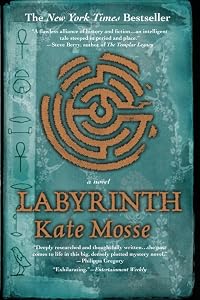
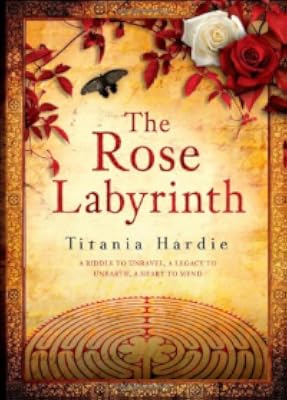
July 2005. In the Pyrenees mountains near Carcassonne, Alice, a volunteer at an archaeological dig, stumbles into a cave and makes a startling discovery-two crumbling skeletons, strange writings on the walls, and the pattern of a labyrinth. Eight hundred years earlier, on the eve of a brutal crusade that will rip apart southern France, a young woman named Alais is given a ring and a mysterious book for safekeeping by her father. The book, he says, contains the secret of the true Grail, and show more the ring, inscribed with a labyrinth, will identify a guardian of the Grail. Now, as crusading armies gather outside the city walls of Carcassonne, it will take a tremendous sacrifice to keep the secret of the labyrinth safe.. show less
Tags
Recommendations


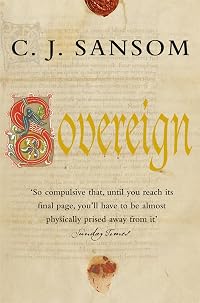
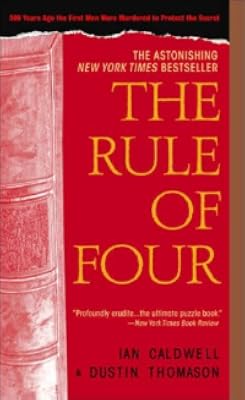
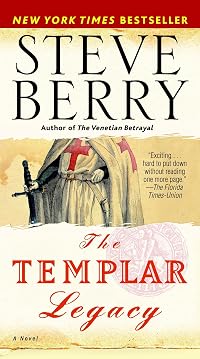
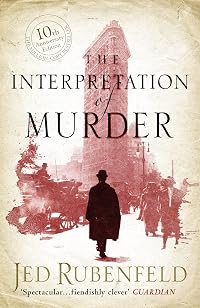






Member Recommendations
Member Reviews
This book had all the makings of a great read, but in the end it turned out to be mildly pleasant, and mildly irritating. I consumed the first 100 pages or so in a flash, as it promised to deliver so much more than it did. The historical facts are far too thinly veiled within some sort of romantic notion of (once again) what the Holy Grail might, or might not be. Ultimately, it was disappointing as I was hoping for a more inspired suggestion on the origins of the Grail. There are no great revelations here.
I did enjoy the history of the Cathars and the machinations that led to the origin of the Inquisition. I longed for more, but, alas, it was only meant as an appetizer. It did manage to pique my interest enough to pursue further reading show more on the topic. If Mosse had offered more of this substance, it could have been a great book, instead of just a pedestrian one. show less
I did enjoy the history of the Cathars and the machinations that led to the origin of the Inquisition. I longed for more, but, alas, it was only meant as an appetizer. It did manage to pique my interest enough to pursue further reading show more on the topic. If Mosse had offered more of this substance, it could have been a great book, instead of just a pedestrian one. show less
When I am wrong...Well, I am just wrong. I was so wrong about Kate Mosse's Labyrinth. I read it a few years ago and HATED it. I mean seriously hated it. The structure and almost everything else about it. But the plot brought me back. I am so glad it did. Before I get into the book I will admit that at times I will read several books one after the other to the point of delirium and I do not skim...I read every word and wear it on my sleeve. In return I may pick up a book and find myself absolutely disenchanted with the writing style. Rookie mistake for someone who reads so much. Well. I think I have learned my lesson with Labyrinth. What I found hard to give a star now gets four and has encouraged me to explore the remainder of the Mosse show more catalogue. Now onto the book.
Labyrinth is the story (actually two stories) woven around each other in a rather seamless manner. A rather original take on the not so humble beginnings of the Inquisition. In a time when the Crusades to the Middle East had all but fizzled out the Church decided to turn it's lances in the direction of its own people. Much of what takes place in the story is true and one can argue that because the Catholics could not defeat the Muslims and take their land they decided to take it from those under their own care. Mosse has taken this idea and tossed in a fresh take on the Grail, its origins and purpose. She connects it to a timeline well before Christianity and long after its establishment in the modern day. Reading this novel is like being tied to a boulder that is rolling down a hill. The author plays on an idea and lays out snares that the reader knows are in the way but is determined to step in regardless. Why? Because as readers we want to know what that rope around our ankle feels like. This story is tragic and heartfelt, at times you want to hold onto the characters and comfort them and at times you want to run away. Do not do as I did and run away from this book, pick it up and digest it. You might just enjoy it. This is a subject that is easy to make convoluted and watered down. There are so many novels about the Crusades, The Grail and multitudes of conspiracy theories abound and at times the subject just gets oversaturated by the media. Not in this case. It is nice to see a historical fiction book that does not start out with someone receiving a letter, finding a box from a dead uncle or having visions in a library. show less
Labyrinth is the story (actually two stories) woven around each other in a rather seamless manner. A rather original take on the not so humble beginnings of the Inquisition. In a time when the Crusades to the Middle East had all but fizzled out the Church decided to turn it's lances in the direction of its own people. Much of what takes place in the story is true and one can argue that because the Catholics could not defeat the Muslims and take their land they decided to take it from those under their own care. Mosse has taken this idea and tossed in a fresh take on the Grail, its origins and purpose. She connects it to a timeline well before Christianity and long after its establishment in the modern day. Reading this novel is like being tied to a boulder that is rolling down a hill. The author plays on an idea and lays out snares that the reader knows are in the way but is determined to step in regardless. Why? Because as readers we want to know what that rope around our ankle feels like. This story is tragic and heartfelt, at times you want to hold onto the characters and comfort them and at times you want to run away. Do not do as I did and run away from this book, pick it up and digest it. You might just enjoy it. This is a subject that is easy to make convoluted and watered down. There are so many novels about the Crusades, The Grail and multitudes of conspiracy theories abound and at times the subject just gets oversaturated by the media. Not in this case. It is nice to see a historical fiction book that does not start out with someone receiving a letter, finding a box from a dead uncle or having visions in a library. show less
I've committed a lot of book abandonment so far this year--sixteen titles through October--and here, alas, is yet one more: Labyrinth is going down at just past the midpoint.
When I take a day or two off from my main read, my bedtime read, and don't miss it, it's doomed.
In the present case, it's definitely a matter of the author's handling of her material. She must have got the idea somewhere that it's a good plan to dispense with exposition and get right to the action, plunging the reader headlong into the story instead of weighing it down with description and explanation.
This is all very well in a certain kind of novel, but here is one with two main characters, very many secondary and minor characters (several of whose names are show more similar), two timelines separated by eight centuries, unfamiliar settings, historical situations, and fantasy elements that only the author can tell us about. This is too much to get by inference or retain in memory and then keep track of without enough reminders at each shift of time and place. The author seems to think that keeping a reader disoriented (not disorientated, Kate) arouses curiosity and suspense, whereas I simply find it annoying. In medias res is one thing; a constant state of "What's going on? And who are these people? Are they new, or am I supposed to know them already?" is wearing.
As it happens, I've done a fair bit of research into that period and place myself, having read some eight or ten books on medieval France and the Cathars in particular, so I'm receptive to its power to fascinate. And I do appreciate the way the author evokes the sensory experience of the setting. But what's bogging me down is trying to hold in mind a large assortment of characters without enough clues to which ones are going to be important or enough reminders as to their interrelationships.
This becomes even harder when the author's own slips occur. For instance, on page 148 Amiel is a blacksmith in a stable. On page 180 another Amiel, Amiel de Coursan, performs a rescue. On page 247 people are praising the bravery of Amaury, not Amiel, de Coursan. An Amazon search tells me that there are two other Amaurys mentioned in the book.
In fact, there are altogether too many names beginning with A throughout, including the two principals, whose similarity of names is obviously deliberate and who ought to have been enough for the A's.
I'm also bothered by a certain self-conscious preciousness of style, having already been put off by the presence of four exclamation points in two pages of acknowledgments up front (two in the same paragraph). At numerous points I get the feeling that the author is preening a little, showing off technique and research instead of keeping her craftsmanship smooth and invisible. The result, to me, is lack of polish. A rigorous and fearless edit might have done wonders with what ought to have been a marvelous story.
On another front, I prefer a little more restraint in my sex scenes. A matter of taste, yes, I realize that; but still.
I can't let this pass without a mention: by page 117, the author has handled the physical descriptions of not one, not two, but three female characters using the amateurish device of having them study their reflections in a mirror.
Probably I should have stopped at the first one.
(Abandoned; unrated.) show less
When I take a day or two off from my main read, my bedtime read, and don't miss it, it's doomed.
In the present case, it's definitely a matter of the author's handling of her material. She must have got the idea somewhere that it's a good plan to dispense with exposition and get right to the action, plunging the reader headlong into the story instead of weighing it down with description and explanation.
This is all very well in a certain kind of novel, but here is one with two main characters, very many secondary and minor characters (several of whose names are show more similar), two timelines separated by eight centuries, unfamiliar settings, historical situations, and fantasy elements that only the author can tell us about. This is too much to get by inference or retain in memory and then keep track of without enough reminders at each shift of time and place. The author seems to think that keeping a reader disoriented (not disorientated, Kate) arouses curiosity and suspense, whereas I simply find it annoying. In medias res is one thing; a constant state of "What's going on? And who are these people? Are they new, or am I supposed to know them already?" is wearing.
As it happens, I've done a fair bit of research into that period and place myself, having read some eight or ten books on medieval France and the Cathars in particular, so I'm receptive to its power to fascinate. And I do appreciate the way the author evokes the sensory experience of the setting. But what's bogging me down is trying to hold in mind a large assortment of characters without enough clues to which ones are going to be important or enough reminders as to their interrelationships.
This becomes even harder when the author's own slips occur. For instance, on page 148 Amiel is a blacksmith in a stable. On page 180 another Amiel, Amiel de Coursan, performs a rescue. On page 247 people are praising the bravery of Amaury, not Amiel, de Coursan. An Amazon search tells me that there are two other Amaurys mentioned in the book.
In fact, there are altogether too many names beginning with A throughout, including the two principals, whose similarity of names is obviously deliberate and who ought to have been enough for the A's.
I'm also bothered by a certain self-conscious preciousness of style, having already been put off by the presence of four exclamation points in two pages of acknowledgments up front (two in the same paragraph). At numerous points I get the feeling that the author is preening a little, showing off technique and research instead of keeping her craftsmanship smooth and invisible. The result, to me, is lack of polish. A rigorous and fearless edit might have done wonders with what ought to have been a marvelous story.
On another front, I prefer a little more restraint in my sex scenes. A matter of taste, yes, I realize that; but still.
I can't let this pass without a mention: by page 117, the author has handled the physical descriptions of not one, not two, but three female characters using the amateurish device of having them study their reflections in a mirror.
Probably I should have stopped at the first one.
(Abandoned; unrated.) show less
The worst thing I've started reading in years. My irritation began at the outset, when in the prologue an archaeological student commits a half dozen procedural errors, each worthy of expulsion. Then, back to the past, 13th century France. The author's tedious, plodding style consists of complete, exhaustive descriptions of everything -- every object, every locale (with historical notes), every person, every facial expression, every thought, every (overwrought) emotion. Even a little soft-core porn back in the castle couldn't hold my interest. Awful.
Religion is a solace to many but it has also been the reason for some of the bloodiest wars in history (and now). The Crusades were perhaps one of the earliest examples of warfare sanctioned by religious bodies. Mostly when we think of the Crusades we think of Christian soldiers from Europe going off to fight the infidel in the East. However, there was one Crusade which took place entirely in France and this book uses the Albigensian Crusade as the framework for a Grail mystery.
Dr. Alice Tanner is volunteering at an archaelogical dig in the Languedoc area of southwestern France. On her last afternoon at the dig she finds an ancient buckle beneath a boulder. After she excavates the buckle the boulder suddenly crashes down the mountain show more and exposes a cave. Alice knows she should contact the head of the dig but she wants to take a peek alone. Experiencing deja vu, she finds a carved staircase leading down to a vault and within the vault there are two skeletons as well as an altar and a labyrinth carving. With her tweezers Alice lifts up a ring from one of the skeletons but then she hears someone coming into the cave. She drops the ring, stumbles and knocks herself out for a few minutes. The police are called and an official from a nearby city also turns up. The police order the dig shut down while they investigate. The official, Monsieur Authie, is very interested in the ring and also if she found a book. At this point the modern storyline is suspended and we are taken back some 800 years. Carcasonne is a prosperous medieval city which welcomes different religions. The Cathars freely congregate and there is a thriving Jewish community. Alais is the daughter of an important man and is married to a chevalier. She has been trained as a herbalist and healer by a Cathar woman. When the Catholic church announces a Crusade against the Cathars Alais's father tells her of the books he and two others have been entrusted with. He says they contain the secret of the true Grail and that the three need to be taken to a place of safety. It now becomes obvious how the two storylines are connected. Many adventures and near misses ensue in both storylines.
One of the nice things about this book is the prominence of the female characters. The author has said that she always enjoyed adventure books but regretted that often women were only on the sidelines. Alice and Alais are intelligent, resourceful, strong and loyal just like the heroes of adventure stories. There is also frequent mention of reincarnation which was a belief of the Cathars but I'm not sure that this worked quite as well as the strong female characters.
I was glad to learn more about the Cathars. Five years ago I read A Murderous Procession by Ariana Franklin which had encounters with Cathars and that was the first time I had ever heard of them. I think it would be fascinating to visit the Languedoc region and see the spots where Catharism flourished. show less
Dr. Alice Tanner is volunteering at an archaelogical dig in the Languedoc area of southwestern France. On her last afternoon at the dig she finds an ancient buckle beneath a boulder. After she excavates the buckle the boulder suddenly crashes down the mountain show more and exposes a cave. Alice knows she should contact the head of the dig but she wants to take a peek alone. Experiencing deja vu, she finds a carved staircase leading down to a vault and within the vault there are two skeletons as well as an altar and a labyrinth carving. With her tweezers Alice lifts up a ring from one of the skeletons but then she hears someone coming into the cave. She drops the ring, stumbles and knocks herself out for a few minutes. The police are called and an official from a nearby city also turns up. The police order the dig shut down while they investigate. The official, Monsieur Authie, is very interested in the ring and also if she found a book. At this point the modern storyline is suspended and we are taken back some 800 years. Carcasonne is a prosperous medieval city which welcomes different religions. The Cathars freely congregate and there is a thriving Jewish community. Alais is the daughter of an important man and is married to a chevalier. She has been trained as a herbalist and healer by a Cathar woman. When the Catholic church announces a Crusade against the Cathars Alais's father tells her of the books he and two others have been entrusted with. He says they contain the secret of the true Grail and that the three need to be taken to a place of safety. It now becomes obvious how the two storylines are connected. Many adventures and near misses ensue in both storylines.
One of the nice things about this book is the prominence of the female characters. The author has said that she always enjoyed adventure books but regretted that often women were only on the sidelines. Alice and Alais are intelligent, resourceful, strong and loyal just like the heroes of adventure stories. There is also frequent mention of reincarnation which was a belief of the Cathars but I'm not sure that this worked quite as well as the strong female characters.
I was glad to learn more about the Cathars. Five years ago I read A Murderous Procession by Ariana Franklin which had encounters with Cathars and that was the first time I had ever heard of them. I think it would be fascinating to visit the Languedoc region and see the spots where Catharism flourished. show less
I liked the story and the idea behind it; the book was well written and the language was vivid and expressive. I have the illustrated hardcover edition, which was an added bonus for me, as it showed the locations where the story played out as well as contemporary drawings and paintings. I thought there were some problems with the book: I felt it was too long - or should have been longer and then made into two books. Some characters could have been developed and explained a bit better (Guilem especially). The character of Oriane was ridiculously two-dimesional as the scheming evil femme fatale, she just didn't seem real to me. Overall though, I enjoyed it and it made me want to read more about the Cathars.
Oh dear me. This was really two books in one, with the most spurious connection between the two. On one level you've got a tale of the 1200s in southern France, connected to the Cathar persecution, and the protection of a religious treasure. But the treasure that is in danger isn't actually a Cathar treasure - but one from a strange mish-mash of religion that is from all creeds and none. Overlaid on this is the same story, with (so you're supposed to accept) descendants of the same people in the first story, who have, by some strange quirk of genetic fate come to play the same roles 800 years later. The memory transferance betwen Alais/Alice seemed contrived. In a sense, either book would have been OK - it's hardly great literature, but show more readable - but together it was just terribly far-fetched and ludicrously long. Tosh and I wont be looking the auther out again... show less
Members
- Recently Added By
Published Reviews
(.. .) Kate Mosse réussit son coup. A défaut de faire date - elle n'est quand même pas la première à mettre en scène des femmes ! -, son talent de conteuse fait mouche. Et peut séduire cet été.
added by Ariane65
Le roman 'Labyrinthe' contient tous les ingrédients d'un best-seller estival.
added by Ariane65
Lists

Historical Fiction
889 works; 91 members

Best 21st Century Books (So Far)
679 works; 86 members

Female Author
1,234 works; 66 members

Slipstream or Interstitial Fiction
160 works; 19 members

Best Time Travel Novels
165 works; 125 members

Jean's Sci Fi/Fantasy Reading list
189 works; 12 members

Crime and Mysteries to Read
746 works; 31 members

French Books
102 works; 15 members

A Novel Cure
742 works; 23 members

Book-Themed Mysteries
21 works; 5 members

Books Read in 2006
424 works; 8 members

A Good Read (Radio 4)
287 works; 1 member

Stories set in Western Europe
36 works; 1 member

Books Read in 2018
4,360 works; 110 members

al.vick-series
381 works; 2 members

Queen Camilla's Reading Room
65 works; 6 members

BBC World Book Club
267 works; 5 members
Author Information

40+ Works 16,513 Members
Some Editions
Awards and Honors
Series

Belongs to Publisher Series
Dwarsliggers (91)
Knaur Taschenbuch (63161)
Work Relationships
Is contained in
Common Knowledge
- Canonical title*
- Het verloren labyrint
- Original title
- Labyrinth
- Original publication date
- 2005
- People/Characters
- Alice Tanner; Alaïs du Mas, nee Pelletier; Bertrand Pelletier; Audric Baillard; Paul Authié; Jehan Congost (show all 16); Esclarmonde de Servian; Guy d'Evreux; Guilhem du Mas; Jeanne Giraud; Marie-Cécile de l'Oradore; Oriane Congost-Pelletier; Sajhë de Servian; Raymond-Roger Trencavel; Simeon; Will Franklin
- Important places
- Carcassone, Aude, Occitanie, France; Chartres, Eure-et-Loir, Centre-Val de Loire, France; Europe; France; Languedoc, France; Montségur, Occitanie, France
- Related movies
- Labyrinth (2012 | IMDb | Mini-Series)
- Epigraph
- And ye shall know the truth, and the truth shall make you free. Gospel according to St. John, 8:32
L'histoire est un roman qui a été, le roman est une histoire qui aurait pu être. History is a novel that has been lived, a novel is history that could have been. E & J de Goncourt
Tên përdu, jhamâi së rëcôbro. Time lost can never be regained. Medieval Occitan proverb. - Dedication
- To my father, Richard Mosse, a man of integrity -
a modern-day chevalier
To Greg, as always, for all things -
past, present and yet to come - First words
- A single line of blood trickles down the pale underside of her arm, a red seam on a white sleeve.
- Quotations*
- En gij zult de waarheid verstaan, en de waarheid zal u vrij maken.
- Evangelie van Johannes, 8:32
L'histoire est un roman qui a été, le roman est une histoire qui aurait pu être.
De geschiedenis is een roman die is gebeurd, een roman is een geschiedenis die zo had kunnen gebeuren.
- E. & J. de Gonc... (show all)ourt
Tên përdu, jhamâi së rëcôbro.
Verloren tijd kan nooit meer worden ingehaald.
- Middeleeuws Occitaans gezegde - Last words
- (Click to show. Warning: May contain spoilers.)In the distance, a white moon is rising in the speckled sky, promising another fine day tomorrow.
- Blurbers
- Gregory, Philippa
- Original language
- English
*Some information comes from Common Knowledge in other languages. Click "Edit" for more information.
Classifications
Statistics
- Members
- 7,886
- Popularity
- 1,437
- Reviews
- 222
- Rating
- (3.32)
- Languages
- 25 — Catalan, Chinese, Czech, Danish, Dutch, English, Estonian, Finnish, French, German, Greek, Hungarian, Italian, Latvian, Lithuanian, Norwegian (Bokmål), Norwegian, Polish, Russian, Slovak, Slovenian, Spanish, Swedish, Turkish, Portuguese (Portugal)
- Media
- Paper, Audiobook, Ebook
- ISBNs
- 101
- UPCs
- 1
- ASINs
- 26