On This Page
Description
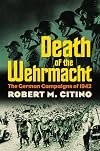
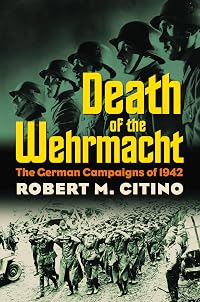
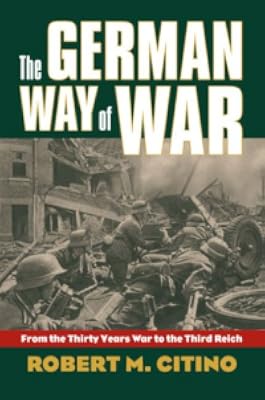
For Hitler and the German military, 1942 was a key turning point of World War II, as an overstretched but still lethal Wehrmacht replaced brilliant victories and huge territorial gains with stalemates and strategic retreats. In this major reevaluation of that crucial year, Robert Citino shows that the German army's emerging woes were rooted as much in its addiction to the "war of movement"-attempts to smash the enemy in "short and lively" campaigns-as they were in Hitler's deeply flawed show more management of the war. From the overwhelming operational victories at Kerch and Kharkov in May to the catastrophic defeats at El Alamein and Stalingrad, Death of the Wehrmacht offers an eye-opening new view of that decisive year. Building upon his widely respected critique in The German Way of War, Citino shows how the campaigns of 1942 fit within the centuries-old patterns of Prussian/German warmaking and ultimately doomed Hitler's expansionist ambitions. He examines every major campaign and battle in the Russian and North African theaters throughout the year to assess how a military geared to quick and decisive victories coped when the tide turned against it. More than the turning point of a war, 1942 marked the death of a very old and traditional pattern of warmaking, with the classic "German way of war" unable to meet the challenges of the twentieth century. show lessTags
Recommendations










Member Reviews
What I said about Citino's book of the German army's war in 1943 and what the conduct of the war said about the German's officer corps' corporate culture applies, if anything, to a greater degree for this book. This is in that the first half of 1942 was largely about a German army that while apparently on the ropes at the end of 1941 picked itself up and got on with the business of generating the operational victories that would be the prerequisites of any possible strategic victory. That the German military after all it had been through and all its limitations still came within a tantalizing margin of delivering victory at Stalingrad, in the Caucasus region and in North Africa is why it fascinates to this day. A particular virtue of show more this book over its successor dealing with the events of 1943 are really excellent end notes that are themselves a fine survey of the state of play of the historiography of the war in Europe at the time of publication. show less
In this interesting book, the author shows the frequency with which Prussian/German armies gained success from the 17th century onwards while being outnumbered, with poor supply and transport and inadequate intelligence regarding their opponents. He then goes on to suggest that the deficit was made up through intensive training, pushing responsibility down the command chain and an extreme aggressive attitude that would result in the enormous WW2 victories of 1939-1941.
Citino's thesis is that the whole situation changed in 1942. As he says, "What happened in the summer and fall campaigns of 1942 was something far more significant. In those brief six months and entire way of war that dated back centuries had come to an end. The German show more traditions of maneuver-based Gewegungskrieg, the notion that "war is an art, a free and creative activity," the belief in the independence of the subordinate commander within his own sphere of competency: each and every one of these bedrock beliefs had taken a pounding in the last six months, and in fact had revealed themselves to be no longer valid."
He describes the overwhelming material superiority of the allied armies in tanks, aircraft, guns, supplies, logistics, intelligence (Ultra) and not least manpower, and the strategic impossibility of the situation for the Germans.
This isn't really anything new, but he does write at some length about the remarkable German successes despite these handicaps, and in my opinion, undermines his whole idea when evaluating the last German offensives in southern Russia. As he says, "For all the ink spilled over its fundamental deficiencies, there was nothing wrong with Blue - its complexity, its size, its maneuver scheme - that a thousand or so extra tanks would not have fixed. But that was precisely the problem."
In other words the Germans could have attained their objectives with a still relatively small (relative to their opponents) increase in equipment and no one would be questioning their maneuver-based Gewegungskrieg? show less
Citino's thesis is that the whole situation changed in 1942. As he says, "What happened in the summer and fall campaigns of 1942 was something far more significant. In those brief six months and entire way of war that dated back centuries had come to an end. The German show more traditions of maneuver-based Gewegungskrieg, the notion that "war is an art, a free and creative activity," the belief in the independence of the subordinate commander within his own sphere of competency: each and every one of these bedrock beliefs had taken a pounding in the last six months, and in fact had revealed themselves to be no longer valid."
He describes the overwhelming material superiority of the allied armies in tanks, aircraft, guns, supplies, logistics, intelligence (Ultra) and not least manpower, and the strategic impossibility of the situation for the Germans.
This isn't really anything new, but he does write at some length about the remarkable German successes despite these handicaps, and in my opinion, undermines his whole idea when evaluating the last German offensives in southern Russia. As he says, "For all the ink spilled over its fundamental deficiencies, there was nothing wrong with Blue - its complexity, its size, its maneuver scheme - that a thousand or so extra tanks would not have fixed. But that was precisely the problem."
In other words the Germans could have attained their objectives with a still relatively small (relative to their opponents) increase in equipment and no one would be questioning their maneuver-based Gewegungskrieg? show less
The reader, Tom Beyer, reads in English, but provides a "fake" accent of the non-English speaking participants. Very irritating. I somewhat irritated that author's seems to have skipped over the early 1942 Soviet offensive in the south. Now I could have missed that in my listening in the book. He also seems to slight the logistical difficulties the Germans placed themselves in as a factor in their defeat.
Good reading. If interested in WW 2 this is an excellent treratment of the long term flaws in the German way of war.
Ratings
Members
- Recently Added By
Author Information

13+ Works 794 Members
Robert M. Citino is senior historian, National World War II Museum and author of Death of the Wehrmacht: The German Campaigns of 1942; The German Way of War: From the Thirty Years' War to the Third Reich; and Blitzkrieg to Desert Storm: The Evolution of Operational Warfare, which won both the Society for Military History's Distinguished Book Award show more and the American Historical Association's Paul Birdsail Prize, all from Kansas. show less
Series

Common Knowledge
- Canonical title
- Death of the Wehrmacht: The German Campaigns of 1942
- Important places
- Africa; North Africa
- Important events
- World War II (1939 | 1945); North African Campaign (1940-06-10 | 1943-05-13)
Classifications
- Genres
- History, Nonfiction, General Nonfiction
- DDC/MDS
- 940.541343 — History & geography History of Europe History of Europe 1918- Military history of World War II Operations and units Military units of axis powers Europe Germany & Central Europe
- LCC
- D757 .C56 — History of Europe, Asia, Africa and Oceania History (General) World War II (1939-1945)
- BISAC
Statistics
- Members
- 168
- Popularity
- 195,345
- Reviews
- 4
- Rating
- (4.09)
- Languages
- English, Italian, Spanish
- Media
- Paper, Audiobook, Ebook
- ISBNs
- 6
- ASINs
- 5