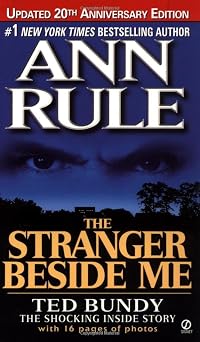
The Stranger Beside Me
by Ann Rule
On This Page
Description
From #1 New York Times bestselling author Ann Rule, "America's best true-crime writer" (Kirkus Reviews), her unforgettable classic account of the horrifying murders in the Pacific Northwest and her shock when she discovered her friend--Ted Bundy--was not only a suspect but also one of the most prolific serial killers in American history. Meeting in 1971 at a Seattle crisis clinic, Ann Rule and Ted Bundy developed a friendship and correspondence that would span the rest of his life. Rule had show more no idea that when they went their separate ways, their paths would cross again under shocking circumstances. The Stranger Beside Me is Rule's compelling firsthand account of not just her relationship with Bundy, but also his life--from his complicated childhood to the media circus of his trials. Astonishing in its intimacy and with Rule's clear-eyed prose, you can't help but share in her growing horror at discovering that her friend was one of the most notorious American serial killers. An unforgettable and haunting work of research, journalism, and personal memories, The Stranger Beside Me is "as dramatic and chilling as a bedroom window shattering at midnight" (The New York Times). show lessTags
Recommendations
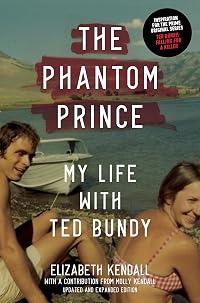
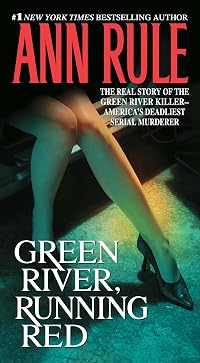
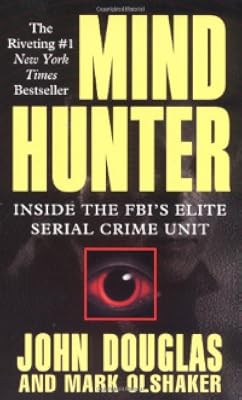
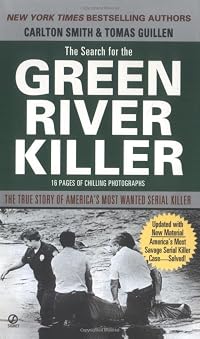
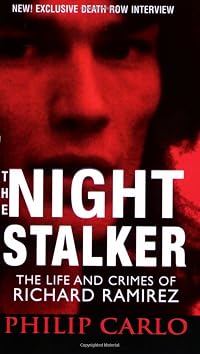
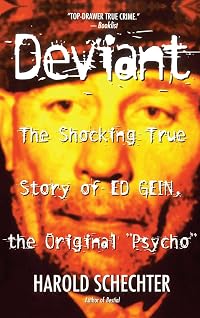


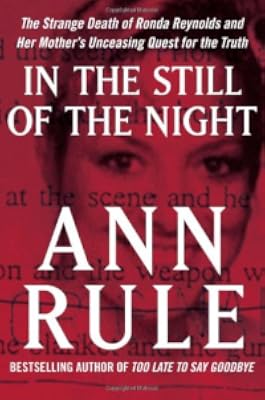
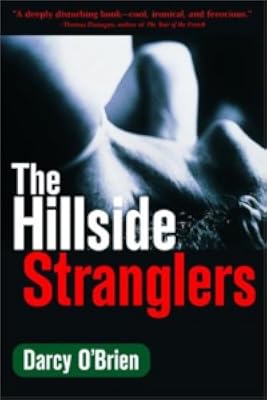
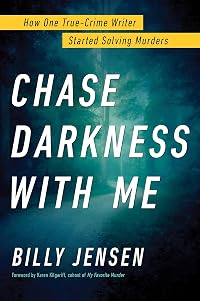
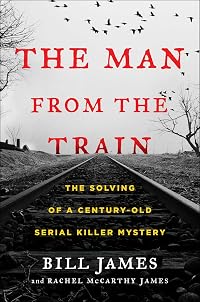
Member Recommendations
Member Reviews
This was Rule's first book and it truly launched her career in true crime, though she had been a true crime magazine writer before. And before that, she was a cop.
Rule had volunteered at a crisis hotline in the early 70's and happened to work many of the same shifts as a young student named Ted Bundy. Like lots of women, Rule enjoyed Bundy's company, though because of their age difference, Rule saw him as an interesting friend, not a potential boyfriend. She didn't recognize that he was a sociopath.
This book covers more than 15 years of both Rule and Bundy's lives, in which Rule gets divorced, goes to Hollywood to write her first screenplay, raises her children and pursues her career as a writer. Bundy became a transient murderer and show more rapist who kidnapped, tortured and killed young women and a twelve year-old child. Law enforcement was often outmatched by Bundy, both because he could appear so normal and blend in, but also because once he was in custody they expected him to behave like a normal person, not to starve himself to fit through a tiny hole in the ceiling, or to jump out a two story window, which he did.
Bundy's multiple trials are included, for which Rule had a press pass. Bundy's ability to antagonize one minute and plead for mercy the next is on full display, and we see a man who prized his own skin above all else.
I've always found it confusing to hear Bundy described as handsome, as he is by many women here, including Rule. I don't get it, he's always looked like a thin-lipped, scrawny nerd to me, not good-looking at all.
I'm also a little on the fence about Rule's friendship with Bundy, which lasted for years and saw them exchange many letters and phone calls even while he was being charged with a litany of horrible crimes. Rule includes many of Bundy's written passages and transcribes many of their phone calls, which makes me lean towards the obvious, that Rule, and especially, Bundy were using each other. Rule wanted to get a career as a book author started and she happened to know a serial killer. Most people, especially women of that time, would have run the other way when a guy they knew was accused of murdering women, but Rule seems to have hung onto Bundy with both hands, claiming she didn't believe in his guilt for years, even in spite of her having worked with many of the cops who were charging Bundy. To me, it defies belief that a former cop who writes up crime cases thought that he could be wrongly charged with so many heinous crimes by multiple states. She wanted the story, and to get it, she had to be Bundy's friend so he'd keep in contact with her. And Bundy, knowing Rule talked to her former co-workers often, used Rule to get inside information about how much the police knew, but he also surely knew she would write about him and he wanted to be famous.
I have the anniversary edition, which has an epilogue, an afterward and a new final chapter, making it a real doorstop. It's a remarkable feat in true crime writing and I see why it's a famous book. show less
Rule had volunteered at a crisis hotline in the early 70's and happened to work many of the same shifts as a young student named Ted Bundy. Like lots of women, Rule enjoyed Bundy's company, though because of their age difference, Rule saw him as an interesting friend, not a potential boyfriend. She didn't recognize that he was a sociopath.
This book covers more than 15 years of both Rule and Bundy's lives, in which Rule gets divorced, goes to Hollywood to write her first screenplay, raises her children and pursues her career as a writer. Bundy became a transient murderer and show more rapist who kidnapped, tortured and killed young women and a twelve year-old child. Law enforcement was often outmatched by Bundy, both because he could appear so normal and blend in, but also because once he was in custody they expected him to behave like a normal person, not to starve himself to fit through a tiny hole in the ceiling, or to jump out a two story window, which he did.
Bundy's multiple trials are included, for which Rule had a press pass. Bundy's ability to antagonize one minute and plead for mercy the next is on full display, and we see a man who prized his own skin above all else.
I've always found it confusing to hear Bundy described as handsome, as he is by many women here, including Rule. I don't get it, he's always looked like a thin-lipped, scrawny nerd to me, not good-looking at all.
I'm also a little on the fence about Rule's friendship with Bundy, which lasted for years and saw them exchange many letters and phone calls even while he was being charged with a litany of horrible crimes. Rule includes many of Bundy's written passages and transcribes many of their phone calls, which makes me lean towards the obvious, that Rule, and especially, Bundy were using each other. Rule wanted to get a career as a book author started and she happened to know a serial killer. Most people, especially women of that time, would have run the other way when a guy they knew was accused of murdering women, but Rule seems to have hung onto Bundy with both hands, claiming she didn't believe in his guilt for years, even in spite of her having worked with many of the cops who were charging Bundy. To me, it defies belief that a former cop who writes up crime cases thought that he could be wrongly charged with so many heinous crimes by multiple states. She wanted the story, and to get it, she had to be Bundy's friend so he'd keep in contact with her. And Bundy, knowing Rule talked to her former co-workers often, used Rule to get inside information about how much the police knew, but he also surely knew she would write about him and he wanted to be famous.
I have the anniversary edition, which has an epilogue, an afterward and a new final chapter, making it a real doorstop. It's a remarkable feat in true crime writing and I see why it's a famous book. show less
Technically this book is likely more of a 4 star read than anything else. It is incredibly engaging, horrifying, and accessibly written. The contents of the book never truly get dull, instead they simply keep increasing in severity and terror until the book finally comes to its incredibly drawn out ending. That isn't to say the ending is bad per se, it is simply long-winded. Unfortunately, it needs to be considering the amount of updates between its first publication and Ted Bundy reaching his inevitable conclusion.
I knew very little about Ted Bundy when I first picked up this book. Now, I feel as if I know a bit too much. Nevertheless, in spite of how much information is packed into these near 700 pages at the end Ted Bundy is as much show more as an enigma as he always has been. He's impossible to pin down, and [a: Ann Rule|9678|Ann Rule|https://images.gr-assets.com/authors/1492230915p2/9678.jpg] characterizes this chameleon like quality of the man rather well. Many criticize this book as being too kind towards Ted, but I feel Rule's view of him is understandable considering the circumstances under which she first met him - and over the course of the book her views naturally evolve. I think pairing this book with another study of Bundy would likely give a better picture of the man, although ultimately it's impossible to truly understand anyone who did what he did. We're probably lucky that knowing him is something we'll never do.
I certainly wouldn't like to know him. show less
I knew very little about Ted Bundy when I first picked up this book. Now, I feel as if I know a bit too much. Nevertheless, in spite of how much information is packed into these near 700 pages at the end Ted Bundy is as much show more as an enigma as he always has been. He's impossible to pin down, and [a: Ann Rule|9678|Ann Rule|https://images.gr-assets.com/authors/1492230915p2/9678.jpg] characterizes this chameleon like quality of the man rather well. Many criticize this book as being too kind towards Ted, but I feel Rule's view of him is understandable considering the circumstances under which she first met him - and over the course of the book her views naturally evolve. I think pairing this book with another study of Bundy would likely give a better picture of the man, although ultimately it's impossible to truly understand anyone who did what he did. We're probably lucky that knowing him is something we'll never do.
I certainly wouldn't like to know him. show less
I’ve read other Ann Rule books but somehow never got around to this, probably her most famous. It wasn’t as riveting as I expected considering the hype/infamy of Bundy and how she knew him.
The first half of the book is slow because it mostly deals with Ann’s background with Bundy and what she knew of his life as it intersected with her own. However, most of the book bogged down with back and forth over whether she believed him. She repeated ad nauseum how she couldn’t believe the man she knew had committed these crimes, but then pivoted to say how she was swayed by the detectives’ beliefs and circumstantial evidence against him. In fact, she didn’t seem to be fully convinced until he finally confessed right before his show more execution -and that was in one of the epilogues written years after publication! It is well publicized that Bundy was extremely charismatic and often swayed people to his side, but I found her hand-wringing less credible (and downright annoying) as the book went on. I expect such denial from his mother, but not a former policewoman, current crime writer who had close relationships with many investigators on the case. It went way beyond trying to be objective.
The second half went by more quickly as Ann finally began piecing together the disappearances and murders with the investigation and Bundy’s known whereabouts. This was the part I found most interesting – how they stopped him. However, the annoyance of the first half gave way to disgust in the second half. Bundy’s crimes were beyond horrific, but I found HER actions increasingly disturbing. She went above and beyond trying to help him, even as her doubts became substantial and the evidence mounted. She kept up a running correspondence, especially while he was incarcerated. She sent him money with nearly every letter: “How many $10 checks had I sent over the years?” After he was arrested in Florida, she became convinced he was ready to confess if only he could be brought back to Washington to a mental hospital – which she endeavored to make happen by calling state authorities and investigators she knew, asking them to intercede. “I tried, literally, to save his life.” In a way, I felt like she was one of the Bundy groupies she made point of pitying. Moreover, she went after Florida with a vengeance: “Florida, the “Buckle of the Death Belt” – was the worst possible state to which he could have run.” This seems overzealous because it wasn’t the only state with the death penalty. Colorado, where he had been on trial for murder, also had the death penalty. However, it had decided to remove that option from consideration in his trial. She goes on to describe that Aspenites had found him to be a “lovable rogue.” Yeah, a lovable rogue that brutally slaughtered dozens of women. I would have expected her to be frustrated with Colorado – the state that let him escape custody TWICE; the second time of which led directly to the murders he committed in Florida. But she was more concerned with how his escape led to him being arrested in a state that fully intended to use the death penalty if it convicted him.
The epilogues (and there are several in this edition) help to mitigate some of my feelings in that second half as she provided the fallout on years of appeals and his confessions before execution. She finally accepted what he did, and I can understand regret and sadness over who he could have been, but it wasn’t enough to redeem this book for me. show less
The first half of the book is slow because it mostly deals with Ann’s background with Bundy and what she knew of his life as it intersected with her own. However, most of the book bogged down with back and forth over whether she believed him. She repeated ad nauseum how she couldn’t believe the man she knew had committed these crimes, but then pivoted to say how she was swayed by the detectives’ beliefs and circumstantial evidence against him. In fact, she didn’t seem to be fully convinced until he finally confessed right before his show more execution -and that was in one of the epilogues written years after publication! It is well publicized that Bundy was extremely charismatic and often swayed people to his side, but I found her hand-wringing less credible (and downright annoying) as the book went on. I expect such denial from his mother, but not a former policewoman, current crime writer who had close relationships with many investigators on the case. It went way beyond trying to be objective.
The second half went by more quickly as Ann finally began piecing together the disappearances and murders with the investigation and Bundy’s known whereabouts. This was the part I found most interesting – how they stopped him. However, the annoyance of the first half gave way to disgust in the second half. Bundy’s crimes were beyond horrific, but I found HER actions increasingly disturbing. She went above and beyond trying to help him, even as her doubts became substantial and the evidence mounted. She kept up a running correspondence, especially while he was incarcerated. She sent him money with nearly every letter: “How many $10 checks had I sent over the years?” After he was arrested in Florida, she became convinced he was ready to confess if only he could be brought back to Washington to a mental hospital – which she endeavored to make happen by calling state authorities and investigators she knew, asking them to intercede. “I tried, literally, to save his life.” In a way, I felt like she was one of the Bundy groupies she made point of pitying. Moreover, she went after Florida with a vengeance: “Florida, the “Buckle of the Death Belt” – was the worst possible state to which he could have run.” This seems overzealous because it wasn’t the only state with the death penalty. Colorado, where he had been on trial for murder, also had the death penalty. However, it had decided to remove that option from consideration in his trial. She goes on to describe that Aspenites had found him to be a “lovable rogue.” Yeah, a lovable rogue that brutally slaughtered dozens of women. I would have expected her to be frustrated with Colorado – the state that let him escape custody TWICE; the second time of which led directly to the murders he committed in Florida. But she was more concerned with how his escape led to him being arrested in a state that fully intended to use the death penalty if it convicted him.
The epilogues (and there are several in this edition) help to mitigate some of my feelings in that second half as she provided the fallout on years of appeals and his confessions before execution. She finally accepted what he did, and I can understand regret and sadness over who he could have been, but it wasn’t enough to redeem this book for me. show less
Could have been a good book, even a great one. However, it’s way too long and this edition is full of typos, some of them hilariously bad (e.g. ‘the public hair of Melissa Smith’, p.256; ‘Officer Don Ford who eatched and waited on the corner…’, p.305; ‘I watched the television screen in San Franscio.’, p.513). It was first published in 1980, so you’d think they’d have had time by now to iron out the problems. Looks like the editor and proof-reader got the afternoon off the day they were scheduled to work on this. Very disappointing. Why it appears on so many ‘Best True Crime Books’ lists beats me.
I read this book in 4 days. It's gripping and horrifying.
My first introduction to Ted Bundy was in a Health class I took sophomore year. We watched the James Dobson interview (our teacher's point: if you look at porn, you will turn into a serial killer. Ah, Catholic school!). It's been years since I've seen that video, but I'm just now reading more about Ted Bundy.
This book (my first true crime reading!) was very well written. Ann Rule has a unique perspective that any writer would kill for... she really knew Ted Bundy, and her relationship with him enabled her to write one of the most interesting books I've ever read.
My first introduction to Ted Bundy was in a Health class I took sophomore year. We watched the James Dobson interview (our teacher's point: if you look at porn, you will turn into a serial killer. Ah, Catholic school!). It's been years since I've seen that video, but I'm just now reading more about Ted Bundy.
This book (my first true crime reading!) was very well written. Ann Rule has a unique perspective that any writer would kill for... she really knew Ted Bundy, and her relationship with him enabled her to write one of the most interesting books I've ever read.
I read horror novels like they're going out of style, I devour twisted psychological suspense stories, and yet I have the strongest reactions to true crime accounts. I guess that's not surprising, since these events actually happened, but The Stranger Beside Me scared the living daylights out of me.
Ann Rule's account of her relationship with Ted Bundy, before and after he was charged with murder, is straightforward but still manages to delve into the emotional aspects of the case, both in terms of her friendship with Bundy and in terms of his many female victims. The writing is not spectacular, but in this case, it really doesn't have to be. The facts speak for themselves. (Some readers don't respond well to this type of writing, but it show more seems to be more of a preference thing than a comment on the writing talent. I personally think this type of straightforward writing is extremely effective.)
The crime scenes are stomach-turning and graphic, which juxtaposes horrifically with Bundy's suave, charismatic demeanor. Simply put, this book is terrifying and still gives me chills when I think about it. Bonus chapters, epilogues, and forewords show just how far Ted Bundy's infamy has spread through American culture...25 years after his execution, we're still talking about him.
Readalikes:
Green River Running Red - Ann Rule. If you liked how this serial killer account unfolded, from the murders to official investigations, to the trial, GRRR is another must-read. This time, the murderer is the Green River Killer, who was finally caught at the end of a 20+ year reign of terror in the Pacific Northwest.
My Life Among the Serial Killers - Helen Morrison. A forensic psychologist interviews several infamous serial killers in the hopes of learning what makes these murderers tick, and how they became serial killers.
The Good Nurse - Charles Graeber. Although this book isn't written from an insider's perspective, it evokes many of the same powerful and visceral reactions as TSBM. The Good Nurse covers the crimes of Charlie Cullen, a male nurse on the East Coast who killed as many as 300 patients in his 16+ years of hospital experience.
Defending Gary - Mark Prothero. An insider's perspective into an infamous serial murder case - in this instance, written by the lead defense attorney for Gary Ridgeway, the Green River Killer.
John Wayne Gacy - Sam L. Amirante. See above. This book, however, covers the trial and crimes of John Wayne Gacy, the Chicago serial killer who dressed like a clown for his victims. show less
Ann Rule's account of her relationship with Ted Bundy, before and after he was charged with murder, is straightforward but still manages to delve into the emotional aspects of the case, both in terms of her friendship with Bundy and in terms of his many female victims. The writing is not spectacular, but in this case, it really doesn't have to be. The facts speak for themselves. (Some readers don't respond well to this type of writing, but it show more seems to be more of a preference thing than a comment on the writing talent. I personally think this type of straightforward writing is extremely effective.)
The crime scenes are stomach-turning and graphic, which juxtaposes horrifically with Bundy's suave, charismatic demeanor. Simply put, this book is terrifying and still gives me chills when I think about it. Bonus chapters, epilogues, and forewords show just how far Ted Bundy's infamy has spread through American culture...25 years after his execution, we're still talking about him.
Readalikes:
Green River Running Red - Ann Rule. If you liked how this serial killer account unfolded, from the murders to official investigations, to the trial, GRRR is another must-read. This time, the murderer is the Green River Killer, who was finally caught at the end of a 20+ year reign of terror in the Pacific Northwest.
My Life Among the Serial Killers - Helen Morrison. A forensic psychologist interviews several infamous serial killers in the hopes of learning what makes these murderers tick, and how they became serial killers.
The Good Nurse - Charles Graeber. Although this book isn't written from an insider's perspective, it evokes many of the same powerful and visceral reactions as TSBM. The Good Nurse covers the crimes of Charlie Cullen, a male nurse on the East Coast who killed as many as 300 patients in his 16+ years of hospital experience.
Defending Gary - Mark Prothero. An insider's perspective into an infamous serial murder case - in this instance, written by the lead defense attorney for Gary Ridgeway, the Green River Killer.
John Wayne Gacy - Sam L. Amirante. See above. This book, however, covers the trial and crimes of John Wayne Gacy, the Chicago serial killer who dressed like a clown for his victims. show less
Ann Rule is one of the best true crime writers around, but the added insights from her personal relationship with Ted Bundy made this a truly exceptional and fascinating read. The fact that Bundy could so easily hide the horrific parts of his personality from so many, including Ms. Rule who clearly was experienced with criminals and disturbed personalities from her work with the police and in crime writing, was astonishing and frightening. It makes one realize that we could all be fooled by such a person, a terrifying thought. Bundy's brutality juxtaposed with his thoughtfulness and kindness in his dealings with friends was chilling. A very rare and unusual glimpse into one of America's most prolific serial killers.
Members
- Recently Added By
Lists

True Crime Books
62 works; 15 members

True Crime-Serial Killers
22 works; 3 members

True Crime
216 works; 16 members

True Crime
156 works; 1 member

True Crime as seen on Televison or Movies
53 works; 1 member

Read the book and saw the movie
1,170 works; 193 members

Female Author
1,235 works; 67 members

Read This Next
120 works; 3 members

Blue Pyramid 1,276 Best Books of All Time
1,248 works; 32 members

Swinging Seventies
255 works; 18 members

to get
244 works; 2 members

Books About Murder
313 works; 7 members

Books Read in 2018
4,360 works; 110 members
Author Information

76+ Works 22,693 Members
Ann Rule was born on October 22, 1931 in Lowell, Michigan. She received a bachelor's degree from the University of Washington in creative writing, with minors in psychology, criminology and penology. She began writing for magazines including True Detective, Master Detective, Inside Detective, Front Page Detective, and Office Detective in 1969. show more During her lifetime, she wrote more than 30 books including The Stranger Beside Me; Green River, Running Red; Practice to Deceive; Ann Rule's Crime Files series, and Lying in Wait. She died on July 26, 2015 at the age of 83. (Bowker Author Biography) show less
Some Editions
Awards and Honors
Awards
Work Relationships
Is contained in
Has the adaptation
Has as a student's study guide
Common Knowledge
- Canonical title
- The Stranger Beside Me
- Alternate titles
- The Stranger Beside Me: Ted Bundy, The Shocking Inside Story; The Stranger Beside Me (Revised and Updated): 20th Anniversary (Revised and Updated)
- Original publication date
- 1980
- People/Characters
- Ted Bundy (Theodore Robert Bundy); Ann Rule; Mary Adams; Lynda Ann Healy; Donna Gail Manson; Susan Elaine Rancourt (show all 25); Brenda Ball; Georgann Hawkins; Janice Ann Ott; Denise Marie Naslund; Carol Valenzuela; Nancy Wilcox; Melissa Anne Smith; Laura Aime; Debra Kent; Carol DaRonch; Nancy Baird; Caryn Campbell; Julie Cunningham; Denise Oliverson; Lisa Levy; Margaret Bowman; Karen Chandler; Cheryl Thomas; Kimberly Diane Leach
- Important places
- Seattle, Washington, USA; Granger, Utah, USA; Murray, Utah, USA; Holladay, Utah, USA; American Fork Canyon, Utah, USA; University of Utah, Salt Lake City, Utah, USA (show all 13); Florida State University, Tallahassee, Florida, USA; Lake Sammamish State Park, Washington, USA; Glenwood Springs, Colorado, USA; Bountiful, Utah, USA; Midvale, Utah, USA; Pocatello, Idaho, USA; Leon County, Florida, USA
- Related movies
- The Stranger Beside Me (2003 | IMDb)
- Epigraph
- And tortures him now more, the more he sees
Of pleasure not for him ordained: then soon
Fierce hat he recollects, and all his thoughts
Of mischief, gratulating, thus excites:
"Thoughts, whither have ye led me? wi... (show all)th what sweet
Compulsion thus transported to forget
What hither bought us? hate, not love, nor hope
Of Paradise for Hell, hope here to taste
Of pleasure, but all pleasure to destroy,
Save what is in destroying; other joy,
To me is lost...."
Paradise Lost: Book IX (Lines 469-79) - Dedication
- This book is dedicated to my parents; Sophie Hansen Stackhouse and the late Chester R. Stackhouse...for their unfailing love and support, and because they always believed...
- First words
- I never expected to be writing about Theodore Robert Bundy once again.
No one glanced at the young man who walked out of the Trailways Bus Station in Tallahassee, Florida at dawn on Sunday, January 8, 1978. - Last words
- (Click to show. Warning: May contain spoilers.)If that is true, it may be the one positive thing about so much tragedy and loss.
(Click to show. Warning: May contain spoilers.)I cannot forget his phone call in October, 1975, the call where he said calmly, "I'm in a little trouble — but it's all going to work out. If anything goes wrong, you'll read about it in the newspapers." - Canonical DDC/MDS
- 364.1523092
- Canonical LCC
- HV6248.B773
Classifications
- Genres
- General Nonfiction, Nonfiction, Biography & Memoir
- DDC/MDS
- 364.1523092 — Society, government, & culture Social problems and social services Crime Criminal offenses Offenses against the person Homicide Murder History, geographic treatment, biography Biography
- LCC
- HV6248 .B773 — Social sciences Social pathology. Social and public welfare. Criminology Social pathology. Social and public welfare. Criminology Criminal classes
- BISAC
Statistics
- Members
- 3,406
- Popularity
- 4,921
- Reviews
- 87
- Rating
- (3.93)
- Languages
- 6 — Dutch, English, French, Italian, Polish, Portuguese (Portugal)
- Media
- Paper, Audiobook, Ebook
- ISBNs
- 42
- ASINs
- 20