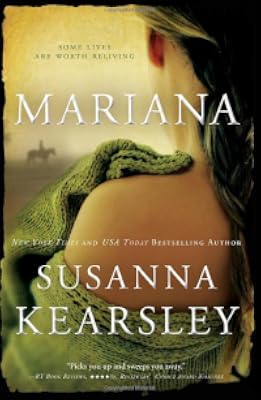
Mariana
by Susanna Kearsley 
On This Page
Description
"I've loved every one of Susanna's books! She has bedrock research and a butterfly's delicate touch with characters—sure recipe for historical fiction that sucks you in and won't let go!"— DIANA GABALDON, #1 New York Times bestselling author of OutlanderThe next book from New York Times and USA Today bestselling author Susanna Kearsley, Mariana is a story of incredible romance traveling in time from modern day England to a haunted Gothic past.
When Julia Beckett moves into a beautiful show more old farmhouse, she soon discovers she's not alone there. She encounters haunting remnants of a beautiful young woman who lived and loved there centuries ago. Julia finds herself transported into 17th-century England, and into the world of Mariana.
Each time Julia travels back, she becomes more enthralled with the past... until she realizes Mariana's life is eclipsing her own. She must lay the past to rest or risk losing the chance for happiness in her own time.
With heartbreaking romance, escapist fantasy, and powerfully drawn characters, Kearsley takes you on a time-traveling journey you'll never forget.
Also by Susanna Kearsley:
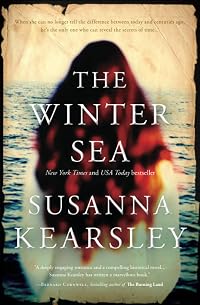
The Winter Sea
The Rose Garden
The Shadowy Horses
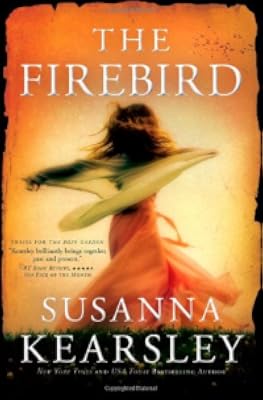
The Firebird
The Splendour Falls
Season of Storms
A Desperate Fortune
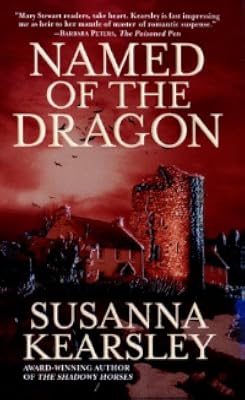
Named of the Dragon
Bellewether
. show less
Tags
Recommendations









Member Reviews
First Line: I first saw the house in the summer of my fifth birthday.
I've discovered over the years that some houses have the power of speech. When I first moved to Phoenix, I walked to work every morning and passed a slightly down-at-heels 1950s ranch house. Nothing about it would draw anyone's attention, but for some reason each time I walked by, I got gooseflesh-- and the feeling that the house was sad. A year later I happened to be watching the evening news and found out that police had shut down a house of prostitution specializing in S&M... in that same sad little ranch house.
At the age of five Julia Beckett had a house speak to her, and twenty-five years later she finds the house once again. Flush with an inheritance from an show more aunt, Julia buys Greywethers, a sixteenth-century farmhouse in Wiltshire. She moves in and finds the villagers very friendly and helpful-- so much so that she finds it difficult to get to work illustrating a book of fairy tales. Bit by bit, Julia learns the rudimentary history of Greywethers and the young woman, Mariana, who lived there three hundred years ago. It seems that Mariana has been waiting for her.
I've read two books recently that I would label romantic suspense. It's a genre that I seldom touch because the romance usually takes precedence over everything else in the story. That's definitely not the case here. Mariana is a fun read. Julia is an engaging character living in a fascinating house. Both time lines-- Julia's modern day time and Mariana's-- grabbed my attention equally. Normally one time line tends to be stronger than the other, but Kearsley avoids that completely, and the plot is not formulaic; it had more than one surprise for me.
If you're in the mood for a fast, entertaining read that has a fascinating old house, a mystery that spans the centuries, and a light touch of romance, Mariana could be just the book for you. show less
I've discovered over the years that some houses have the power of speech. When I first moved to Phoenix, I walked to work every morning and passed a slightly down-at-heels 1950s ranch house. Nothing about it would draw anyone's attention, but for some reason each time I walked by, I got gooseflesh-- and the feeling that the house was sad. A year later I happened to be watching the evening news and found out that police had shut down a house of prostitution specializing in S&M... in that same sad little ranch house.
At the age of five Julia Beckett had a house speak to her, and twenty-five years later she finds the house once again. Flush with an inheritance from an show more aunt, Julia buys Greywethers, a sixteenth-century farmhouse in Wiltshire. She moves in and finds the villagers very friendly and helpful-- so much so that she finds it difficult to get to work illustrating a book of fairy tales. Bit by bit, Julia learns the rudimentary history of Greywethers and the young woman, Mariana, who lived there three hundred years ago. It seems that Mariana has been waiting for her.
I've read two books recently that I would label romantic suspense. It's a genre that I seldom touch because the romance usually takes precedence over everything else in the story. That's definitely not the case here. Mariana is a fun read. Julia is an engaging character living in a fascinating house. Both time lines-- Julia's modern day time and Mariana's-- grabbed my attention equally. Normally one time line tends to be stronger than the other, but Kearsley avoids that completely, and the plot is not formulaic; it had more than one surprise for me.
If you're in the mood for a fast, entertaining read that has a fascinating old house, a mystery that spans the centuries, and a light touch of romance, Mariana could be just the book for you. show less
Susanna Kearsley's characters are always both intriguing and engaging. She often only shares a small group of important characters in each story and develops each one to the point where they seem like real people who could come right off the page. In Mariana, we have Julia/Mariana, Iian, Vivian, Geoff, Tom, and Richard. I was invested in all of them right from the beginning of the story. Their personalities, their compassion and caring for one another, and their relationships. The settings are also always beautiful and make me want to pick up and travel. In this book, Julia buys an old 16th century cottage in England with a rich historical background, which makes a perfect backdrop for the time travel element in the story. One thing show more that consistently attracts me to these books are the stories that accompany the settings. That many of these place really existed fascinates me. Historical fiction has always been one of my favorite genre but Kearsley seems to have the perfect combination of history, romance, and just a touch of the supernatural in the form of time travel. I was completely enthralled.
Not only did I love the present day story with Julia, but the past story where she traveled back in time and became Mariana was lovely. Julia's time slips flowed seamlessly and I was able to easily tell when she arrived in her past life, and when she returned to the present. The comparisons between the two times were absorbing, especially the details concerning the settings of the manor house, dovecote and surrounding area. The romance in both time periods was endearing, as in most of Kearsley's books. Both Julia and Mariana experience love but Mariana's story is more passionate. Unfortunately, it is also more tragic and bittersweet than Julia's present day relationship. The intrigue develops as Julia finds herself traveling more and more to the past and finds herself in danger of losing herself to the person she used to be.
In my opinion, Kearsley's entire style of writing is captivating. Her attention to detail and the haunting yet "fairytale" feel of the story make you want to go back and reread passages over and over, which I did on several occasions and will most likely do again. show less
Not only did I love the present day story with Julia, but the past story where she traveled back in time and became Mariana was lovely. Julia's time slips flowed seamlessly and I was able to easily tell when she arrived in her past life, and when she returned to the present. The comparisons between the two times were absorbing, especially the details concerning the settings of the manor house, dovecote and surrounding area. The romance in both time periods was endearing, as in most of Kearsley's books. Both Julia and Mariana experience love but Mariana's story is more passionate. Unfortunately, it is also more tragic and bittersweet than Julia's present day relationship. The intrigue develops as Julia finds herself traveling more and more to the past and finds herself in danger of losing herself to the person she used to be.
In my opinion, Kearsley's entire style of writing is captivating. Her attention to detail and the haunting yet "fairytale" feel of the story make you want to go back and reread passages over and over, which I did on several occasions and will most likely do again. show less
Julia Beckett fell in love with a house when she was five and on a family vacation. She saw it again at 22 and again at nearly 30. She's grown up, become a successful illustrator, and inherited a packet from a great aunt. She is finally able to buy the house that had been calling to her for years.
Almost as soon as she moves in, she begins seeing a man on a gray horse, hears legends of a Green woman who haunts her house, and finds herself slipping out of the present into the life of a young woman named Mariana who lived in the 1600s. This terrifies her and makes her think she's losing her mind, but her brother who has become a Vicar reassures her and lets her open her mind to the possibility of reincarnation.
As Julia spends more time as show more Mariana she comes to know Richard de Mornay who is the Lord of the Manor. She is also forced to live with her abusive uncle, his beaten wife, and sister-in-law. As an orphan who was forced to flee London because of the plague, she has no other options. Her relationship with Richard has to be kept secret.
Meanwhile, Julia is making friends in the present. Vivien is the local barkeeper. Her next-door neighbor is Geoff de Mornay who is very rich and a descendant of Richard's. She also meets Iain Sumner who is Geoff's best-friend from his Cambridge days and who is currently a farmer and gardener.
Julia also meets Vivien's Aunt Freda who is Geoff's housekeeper and who seems to know a lot about what Julia is going through. Julia becomes almost obsessed with Mariana's life and spends more and more time in the past. None of her research in the present gives her any information about Richard and she knows little more about Mariana than she can find on her tombstone.
I loved this story which was beautifully written and intriguing. I will admit that I was surprised at the ending which didn't go at all the way I thought it would. I'm not really a fan of time travel but Kearsley's books are exceptions. I love the way the present and past are woven together. show less
Almost as soon as she moves in, she begins seeing a man on a gray horse, hears legends of a Green woman who haunts her house, and finds herself slipping out of the present into the life of a young woman named Mariana who lived in the 1600s. This terrifies her and makes her think she's losing her mind, but her brother who has become a Vicar reassures her and lets her open her mind to the possibility of reincarnation.
As Julia spends more time as show more Mariana she comes to know Richard de Mornay who is the Lord of the Manor. She is also forced to live with her abusive uncle, his beaten wife, and sister-in-law. As an orphan who was forced to flee London because of the plague, she has no other options. Her relationship with Richard has to be kept secret.
Meanwhile, Julia is making friends in the present. Vivien is the local barkeeper. Her next-door neighbor is Geoff de Mornay who is very rich and a descendant of Richard's. She also meets Iain Sumner who is Geoff's best-friend from his Cambridge days and who is currently a farmer and gardener.
Julia also meets Vivien's Aunt Freda who is Geoff's housekeeper and who seems to know a lot about what Julia is going through. Julia becomes almost obsessed with Mariana's life and spends more and more time in the past. None of her research in the present gives her any information about Richard and she knows little more about Mariana than she can find on her tombstone.
I loved this story which was beautifully written and intriguing. I will admit that I was surprised at the ending which didn't go at all the way I thought it would. I'm not really a fan of time travel but Kearsley's books are exceptions. I love the way the present and past are woven together. show less
This was very, very good. I was surprised by the level of my reaction to this: I was invested near immediately never wanted to put it down and was sad to finish reading the last page. I don't read a lot of "time slip" historical fiction (read: any before this), but if they're like Mariana that rule might need to change. ASAP. First up on that list: every other such book by this author. I was very impressed with both parts of the narrative and the strength of the voice shown throughout the novel. Though Mariana is a bit lengthy at near 375 pages, this suspenseful and affecting tale never bores. For a detailed, immersive read but not one that is exactly an action-packed historical, that is saying something indeed.
The strength of the book show more largely lies in the eponymous character Mariana - both in her 1660's body/life of Mariana and as more modern Julia Beckett. That's not to say that the rest of the characters aren't interesting and diverse; they are but it is Mariana herself who makes the novel special. Though the two POV's present are both first-person and both largely the same in tone and voice despite the centuries between them, both Julia and Mariana are fully dimensional, rounded characters who provide a rich, full narrative to dive into. She's charming and detailed as a narrator: Exbury, both past and present versions, definitely carried the feel of an old, full-of-history English village. Though there is quite a lot of focus on the romance angle of the novel, I wasn't turned off or frustrated; Mariana's and Richard's courtship is actually quite charming and I found myself rooting for de Mornay and the spirited commoner.
This paragraph might get a bit SPOILERy so be warned and stay away if you don't want to know! Seriously, people. There's a mystery at the heart of the novel, but it's not the most involving or mystifying. Even the secondary subplot of treason lacks the emotional pull of the characters themselves; this is truly a character-driven novel. Even some of the surprises lacked the oomph that could be expected -(Johnnie! D: John?!) because I was so keyed in on the main characters of Mariana/Julia and Richard/?? themselves. I have to side with Julia in that the past has a lot of allure here in this version, and her attraction to Richard it is very understandable. Love, destiny and fate all play a key parts in the meanderig plot, and the characters but it doesn't feel forced or hackneyed. Mariana comes off with a sweet but not saccharine aftertaste. I did think the camouflaging of Richard's soul was well done - only the hints of Shakespeare really made me sure.
Mariana is an engrossing and rewarding, lengthy read - fans of time-slip historicals will love and even new-to-the-subgrenre people will find a lot to enjoy about this alternate 1660's and modern of reincarnated love. Susanna Kearsley is an impressive and detailed storyteller - I look forward to reading more of her books very soon. This is one that went above and beyond any and all expectations I had before starting. show less
The strength of the book show more largely lies in the eponymous character Mariana - both in her 1660's body/life of Mariana and as more modern Julia Beckett. That's not to say that the rest of the characters aren't interesting and diverse; they are but it is Mariana herself who makes the novel special. Though the two POV's present are both first-person and both largely the same in tone and voice despite the centuries between them, both Julia and Mariana are fully dimensional, rounded characters who provide a rich, full narrative to dive into. She's charming and detailed as a narrator: Exbury, both past and present versions, definitely carried the feel of an old, full-of-history English village. Though there is quite a lot of focus on the romance angle of the novel, I wasn't turned off or frustrated; Mariana's and Richard's courtship is actually quite charming and I found myself rooting for de Mornay and the spirited commoner.
This paragraph might get a bit SPOILERy so be warned and stay away if you don't want to know! Seriously, people. There's a mystery at the heart of the novel, but it's not the most involving or mystifying. Even the secondary subplot of treason lacks the emotional pull of the characters themselves; this is truly a character-driven novel. Even some of the surprises lacked the oomph that could be expected -(Johnnie! D: John?!) because I was so keyed in on the main characters of Mariana/Julia and Richard/?? themselves. I have to side with Julia in that the past has a lot of allure here in this version, and her attraction to Richard it is very understandable. Love, destiny and fate all play a key parts in the meanderig plot, and the characters but it doesn't feel forced or hackneyed. Mariana comes off with a sweet but not saccharine aftertaste. I did think the camouflaging of Richard's soul was well done - only the hints of Shakespeare really made me sure.
Mariana is an engrossing and rewarding, lengthy read - fans of time-slip historicals will love and even new-to-the-subgrenre people will find a lot to enjoy about this alternate 1660's and modern of reincarnated love. Susanna Kearsley is an impressive and detailed storyteller - I look forward to reading more of her books very soon. This is one that went above and beyond any and all expectations I had before starting. show less
When Julia Beckett was five years old, she saw a house while traveling with her family and instantly felt drawn to it. Years later, she sees the house again and impulsively decides to buy it. As she settles down in the country village of Exbury, she is fascinated by the history of her house and the surrounding area. She also begins to experience “flashbacks” from the perspective of Mariana Farr, an inhabitant of the house in the 17th century. The more time Julia spends as Mariana, the more she is captivated by the events of the past — especially when the handsome Richard de Mornay, lord of the neighboring manor, shows an interest in Mariana. However, Julia must eventually discover why she shares Mariana’s experiences and what show more the consequences will be for her own life.
I had heard a lot of wonderful things about Susanna Kearsley, but I ended up being a bit underwhelmed by my first Kearsley novel, The Winter Sea. I enjoyed this book more, probably because I had more moderate expectations going in. Julia is a likable character, and I really enjoyed her relationships with the other present-day characters, especially her brother Tom. I was actually much less interested in the historical plot line, which is unusual for me. I felt like Kearsley wanted me to care more about Mariana’s story, but I honestly cared more about Julia’s. I wasn’t totally satisfied with the present-day romance either, but I can’t explain why without spoiling the book. Overall, I found this book a pleasant read, but unfortunately it didn’t grab me the way I wanted it to. show less
I had heard a lot of wonderful things about Susanna Kearsley, but I ended up being a bit underwhelmed by my first Kearsley novel, The Winter Sea. I enjoyed this book more, probably because I had more moderate expectations going in. Julia is a likable character, and I really enjoyed her relationships with the other present-day characters, especially her brother Tom. I was actually much less interested in the historical plot line, which is unusual for me. I felt like Kearsley wanted me to care more about Mariana’s story, but I honestly cared more about Julia’s. I wasn’t totally satisfied with the present-day romance either, but I can’t explain why without spoiling the book. Overall, I found this book a pleasant read, but unfortunately it didn’t grab me the way I wanted it to. show less
I had read all of Kearsley’s later novels – and reread quite a few of those – but I had not read this one.
When Julia, a children’s book illustrator, buys herself a house in a rural English village, she begins experiencing episodes in which she “becomes” Mariana, a young woman who lived in the house in the mid 1660s.
I was surprised, and delighted, by the way the pieces of this story fall into place. However there was a point where I became puzzled by the depth of Julia’s preoccupation with becoming Mariana. Mariana has recently lost her mother, along with their London house and all their personal effects. She is now living in a somewhat unhappy household – her uncle is stern and controlling, his wife is downtrodden and show more his wife’s sister is about to be unwillingly married off. And even when Mariana meets a man she likes, she believes this relationship won’t go anywhere – leaving aside Mariana’s uncle’s opposition to the man, Mariana does not see herself as a realistic marriage prospect for someone from a the upper class.
Julia’s life, by contrast, sounds lovely! She has a creative career and the financial means to buy her dream home1. She’s close to her family, particularly her brother. She quickly begins making friends in the village, and she is at liberty to spend time with her romantic prospect how she pleases.
(Okay, I do realise that that the 90s were a different world as far as housing affordability was concerned. *cries in Millennial* and perhaps more importantly Julia has been left “an obscene amount of money” by a great-aunt she barely knew.)
I spent a bit of time pondering what I thought would work better… if it was Julia, not Mariana, who was recently bereaved, or perhaps if she were brokenhearted after a break-up, would her desire to escape into someone else’s life make more sense?
In the end, it did make sense. And if I was granted a wish and could change one thing about this book, it would actually be to alter the fate of a minor character (which I found unexpectedly distressing) rather than anything in Julia’s life.
This is not my favourite, but there were lots of things I enjoyed about the story.
When Julia, a children’s book illustrator, buys herself a house in a rural English village, she begins experiencing episodes in which she “becomes” Mariana, a young woman who lived in the house in the mid 1660s.
I was surprised, and delighted, by the way the pieces of this story fall into place. However there was a point where I became puzzled by the depth of Julia’s preoccupation with becoming Mariana. Mariana has recently lost her mother, along with their London house and all their personal effects. She is now living in a somewhat unhappy household – her uncle is stern and controlling, his wife is downtrodden and show more his wife’s sister is about to be unwillingly married off. And even when Mariana meets a man she likes, she believes this relationship won’t go anywhere – leaving aside Mariana’s uncle’s opposition to the man, Mariana does not see herself as a realistic marriage prospect for someone from a the upper class.
Julia’s life, by contrast, sounds lovely! She has a creative career and the financial means to buy her dream home1. She’s close to her family, particularly her brother. She quickly begins making friends in the village, and she is at liberty to spend time with her romantic prospect how she pleases.
(Okay, I do realise that that the 90s were a different world as far as housing affordability was concerned. *cries in Millennial* and perhaps more importantly Julia has been left “an obscene amount of money” by a great-aunt she barely knew.)
I spent a bit of time pondering what I thought would work better… if it was Julia, not Mariana, who was recently bereaved, or perhaps if she were brokenhearted after a break-up, would her desire to escape into someone else’s life make more sense?
In the end, it did make sense. And if I was granted a wish and could change one thing about this book, it would actually be to alter the fate of a minor character (which I found unexpectedly distressing) rather than anything in Julia’s life.
This is not my favourite, but there were lots of things I enjoyed about the story.
“It's too easy, you see, to get trapped in the past. The past is very seductive. People always talk about the mists of time, you know, but really it's the present that's in a mist, uncertain. The past is quite clear, and warm, and comforting. That's why people often get stuck there.”show less
I struggled to absorb the thought, unhappy.
“It’s better this way,” she told me gently. “Really it is. Otherwise you might go on reliving that single summer, year after year, when you ought to be getting on with life in the here and now.”
Every time I pick up Susanna's books, I find it hard to put down and I'm eager to finish tasks so I can find out what next is going on. This book is yet another one of those wonderfully addicting stories. It's about the concept of star crossed lovers, reincarnation, mystery, the quirkiness of small town life and how sometimes what you were looking for was right there all along. I nearly jumped up and down in excitement when Julia finally realized that her true love had given her various hints as to his feelings without trying to be so pushy. I love the concept of souls finding each other and eventually being together to live happily. My only complaint is that I was rather sad to see the story end and wanted to go to the nearest show more bookstore to see what love story is next up Susanna's sleeve. I can't wait to read all of her books!! show less
Members
- Recently Added By
Lists

Best Time Travel Novels
165 works; 125 members

Most-anticipated future releases
40 works; 25 members

KayStJ's to-read list
1,616 works; 11 members

Books Read in 2024
4,623 works; 126 members
Author Information

21+ Works 11,409 Members
Susanna Kearsley was born in Ontario, Canada in 1966. She is an award winning author of historical fiction and mystery. She received the Romance Writers of America RITA Award for Best Paranormal Romance for her work, The Firebird, in 2014. Her other title's include: Undertow, Mariana, Season of Storms, Every Secret Thing, The Rose Garden and show more Bellewether. (Bowker Author Biography) show less
Susanna Kearsley is a LibraryThing Author, an author who lists their personal library on LibraryThing.
Awards and Honors
Awards
Notable Lists
Series
Belongs to Publisher Series
Piper (4809)
Work Relationships
Is contained in
Common Knowledge
- Original title
- Mariana
- Original publication date
- 1994
- People/Characters
- Julia Beckett; Tom Beckett; Iain Sumner; Vivien Wells; Ned Walsh; Geoffrey de Mornay (show all 13); Mariana Farr; Rachel; Richard de Mornay; Aunt Caroline; Uncle Jabez; John Hunter; Mrs Hutherson
- Dedication
- For Susan Shepard who led me down the road less travelled, and for my sister Kathryn who loved this book the best.
- First words
- I first saw the house in the summer of my fifth birthday.
- Last words
- (Click to show. Warning: May contain spoilers.)The circle was closed.
Classifications
- Genres
- Fiction and Literature, Romance, Science Fiction, Historical Fiction, Fantasy
- DDC/MDS
- 813.54 — Literature & rhetoric American literature in English American fiction in English 1900-1999 1945-1999
- LCC
- PR9199.3 .K4112 .M3 — Language and Literature English English Literature English literature: Provincial, local, etc.
- BISAC
Statistics
- Members
- 1,069
- Popularity
- 23,962
- Reviews
- 59
- Rating
- (4.01)
- Languages
- 6 — Czech, English, Finnish, German, Greek, Portuguese
- Media
- Paper, Audiobook, Ebook
- ISBNs
- 30
- UPCs
- 1
- ASINs
- 8