On This Page
Description
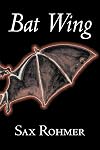
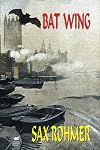
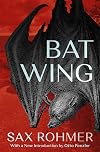
"Bat Wing" is a mystery novel filled with deep, dark secrets and vividly memorable characters. It has an explicit tone of voodoo and the supernatural, all held together in an air of impending disaster. Private detective Paul Harley is hired by Cuban Colonel Menendez to investigate a strange occurrence: someone has left a bat wing nailed to his door. When Harley and his colleague Knox arrive at the Colonel's estate, they are in for an unpleasant surprise.Tags
Recommendations













Member Reviews
I could not finish this book. It's 35 chapters long and I gave up on chapter 16. Somewhere within the rambling passages is a good story, but thus far all I came across are the hopelessly tiresome string of characters who know what's going on but refuse to tell what it is, yet still expect the protagonist to solve their problems. Such characters deserve the worst. It's quite racist, which some will 'excuse' as a product of its time, but I think even back then people should have known better.
That was...interesting. The ending: craaaaazy!
Ratings
Members
- Recently Added By
Author Information

188+ Works 6,146 Members
Sax Rohmer was born in Birmingham, Warwickshire. At the age of 18, he adopted the name Sarsfield, the name of a famous Irish general admired by Rohmer's mother. He married Rose Elizabeth Knox in 1909 and, at his wife's insistence, began using the name Sax Rohmer for his fiction, eventually employing the pseudonym as his actual name. Rohmer was show more basically a self-taught scholar. He started writing as a journalist; his beat was the Limehouse underworld in London. Rohmer had a difficult time breaking into the professional fiction markets, but once he did, he became a household name for exotic adventure both in England and in America. Although his writing brought Rohmer success and money, he was never much of a businessman, and most of his wealth was squandered because of his extravagance and through financial mismanagement. Rohmer eventually moved to New York City. One of Rohmer's great intellectual interests was the occult and supernatural, and these elements frequently appeared as motifs in his fiction. His most famous creation was the evil oriental mastermind, Dr. Fu Manchu, first presented in the novel The Mystery of Fu Manchu in 1913 (later retitled The Insidious Dr. Fu Manchu for its American publication, also in 1913). Most espionage or adventure fiction exploits the social paranoias of its time, and Rohmer himself effectively tapped the Westerner's fear of the stereotyped "yellow peril" threat---the negatively perceived belief that Orientals will conquer the world. The Fu Manchu adventures were patterned, in part, after Arthur Conan Doyle's Sherlock Holmes stories. Rohmer's protagonists in these adventures, Sir Denis Nayland Smith and his companion Dr. Petrie, look very much like Doyle's Holmes and Watson, but, whereas Doyle centered his narratives on the heroes and specifically on the elaborate process of detection, Rohmer focused his attention on the villain and on slam-bang action. Fu Manchu was a master of both Western science and Eastern mysticism, and his efforts at world domination caused no end of problems for Smith and Petrie. In Fu Manchu, Rohmer had created the most famous villain in popular fiction (although Rohmer maintained that Fu Manchu was based on an actual Limehouse criminal). Despite Rohmer's use of outrageous racial stereotyping, many of his novels hold up well today and provide superior examples of how to create narrative pacing and suspense. (Bowker Author Biography) show less
Some Editions
Series

Belongs to Publisher Series
Common Knowledge
- Original publication date
- 1921
- People/Characters
- Paul Harley; Inspector Wessex; Malcolm Knox
- Important places
- Chancery Lane, London, England, UK; West End; Surrey, England, UK; Savoy Hotel, London, England, UK; Strand; Piccadilly Circus, London, England, UK
- First words
- Some of Paul Harley's most interesting cases were brought to his notice in an almost accidental way.
Towards the hour of six on a hot summer's evening, Mr. Paul Harley was seated in his private office in Chancery Lane, reading through a number of letters which Innes, his secretary, had placed before him for signature. - Last words
- (Click to show. Warning: May contain spoilers.)"That dead man is Fire-Tongue. I should like, Mr. Commissioner, to sign the statement."
(Click to show. Warning: May contain spoilers.)Therefore, except for the many grim memories which it had left with me, nothing but personal good fortune resulted from my sojourn at Cray's Folly, beneath the shadow of that Bat-wing which had had no existence outside the cunning imagination of Colonel Juan Menendez. - Disambiguation notice
- Originally serialized in Collier's Magazine, December 25, 1920-March 12, 1921.
Originally serialized in Short Stories Magazine, February-June, 1921.
Classifications
Statistics
- Members
- 119
- Popularity
- 275,375
- Reviews
- 2
- Rating
- (3.42)
- Languages
- Czech, English, Portuguese, Spanish
- Media
- Paper, Ebook
- ISBNs
- 19
- ASINs
- 21