On This Page
Description
England's political and social fabric is rotting as two rivals to the throne, King Stephen and the young Henry Plantagent, tear the country apart in civil war.Tags
Recommendations










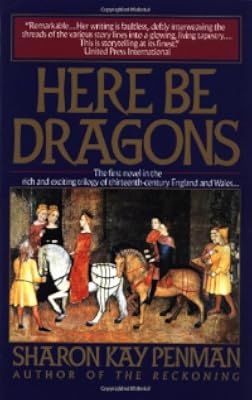
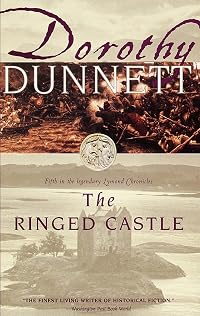
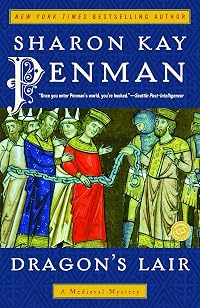

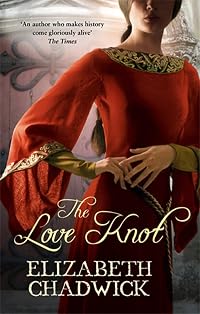





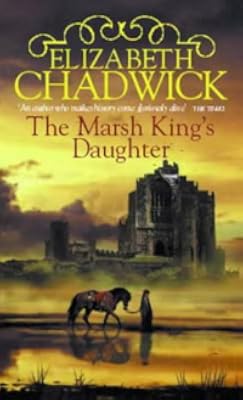
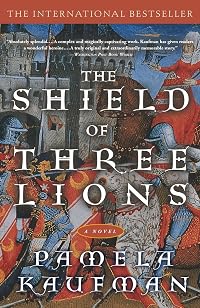
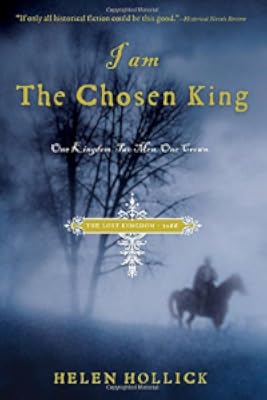


Member Recommendations
themulhern Both books are set during the wars between Stephen and Matilda. "The Earl" is far grimmer and more political, after al it is about an earl, and such did engage in politics and fighting. There is more sex and considerably less romantic ardor of one sort or another in "The Earl" than in "An Excellent Mystery".
Member Reviews
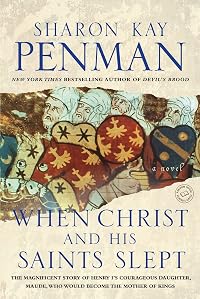
Bit complicated this. I was reading that Eleanor of Aquitaine book, and a friend of mine suggested I read When Christ And His Saints Slept by Sharon Penman, because it's set during the Anarchy. I checked the library, and alas they had no copy. Then I read an interview with Anthony Price, and in it he recommended a book by Cecilia Holland and said it was the best historical novel he'd ever read. Off I went looking for that. Alas, the library had no copy, but it had lots of other Cecelia Holland books, including this one, set... during the Anarchy. I'll have that says I.
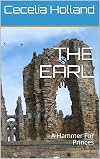
To be specific, it's set during the tail end of the Anarchy. The future Henry II is in working his way around the south of England subduing castles and drawing barons to show more his side. One of them is Fulk, Earl of Stafford, an old supporter of Henry's mother the unpopular Empress Matilda, and now he's busy working for Henry and safeguarding his own interests. Fulk is a highly competent man, with experience and skills in leadership, warfare, organisation and basic political intrigue. As he engages in a forced march, storms a castle, joins a siege, fights in a tourney, subdues unrest in a town he displays again and again his abilities and his shrewdness, though Prince Henry and some of his fellow barons have plans and ideas of their own. What he cannot control, however is his own family. At the heart of everything he does is the hatred between him and his uncle, an outlaw now inveigling himself into Henry's good graces and held in affection by Fulk's son, Rannulf.
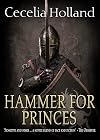
Similar to Wolf Hall, in that it's a portrait of a man of his time in his time, and that man is a prosaic, practical exemplar of his type, Hammer Of Princes is written with wonderfully crafted prose, as deceptively plain as its protagonist, strong and unromantic but with unfussy hints of emotion and an occasional appreciation for beauty when affairs allow. A terrific novel. show less
To be specific, it's set during the tail end of the Anarchy. The future Henry II is in working his way around the south of England subduing castles and drawing barons to show more his side. One of them is Fulk, Earl of Stafford, an old supporter of Henry's mother the unpopular Empress Matilda, and now he's busy working for Henry and safeguarding his own interests. Fulk is a highly competent man, with experience and skills in leadership, warfare, organisation and basic political intrigue. As he engages in a forced march, storms a castle, joins a siege, fights in a tourney, subdues unrest in a town he displays again and again his abilities and his shrewdness, though Prince Henry and some of his fellow barons have plans and ideas of their own. What he cannot control, however is his own family. At the heart of everything he does is the hatred between him and his uncle, an outlaw now inveigling himself into Henry's good graces and held in affection by Fulk's son, Rannulf.
Similar to Wolf Hall, in that it's a portrait of a man of his time in his time, and that man is a prosaic, practical exemplar of his type, Hammer Of Princes is written with wonderfully crafted prose, as deceptively plain as its protagonist, strong and unromantic but with unfussy hints of emotion and an occasional appreciation for beauty when affairs allow. A terrific novel. show less
A historical novel, set at the end of King Stephen’s reign dealing with the settlement between him and Henry Fitzempress.
A bit on the slow side, the story is told through the eyes of Fulk, Earl of Stafford and details his involvement in the political machinations behind the settlement, and the military campaign leading up to it. As befits the period, the story is male-dominated; Fulk’s wife, Margaret, dies early in the story, and the only other major female characters are the Lady of Highfield, and her cousin, Alys of Dol. None take part in the politics or the main plotlines.
It’s an interesting read, fans of Ellis Peters will recognise the setting, and largely historically accurate.
A bit on the slow side, the story is told through the eyes of Fulk, Earl of Stafford and details his involvement in the political machinations behind the settlement, and the military campaign leading up to it. As befits the period, the story is male-dominated; Fulk’s wife, Margaret, dies early in the story, and the only other major female characters are the Lady of Highfield, and her cousin, Alys of Dol. None take part in the politics or the main plotlines.
It’s an interesting read, fans of Ellis Peters will recognise the setting, and largely historically accurate.
I have long been waiting to add this to my collection and then have a nice quiet day to read it. Well, it did not live up to all my expectations, but it hit the mark in several places.
I have read and enjoyed Holland before, but this is her early work and it seems that an editor could have helped with a little development. One is that time and distance are fast and loose, when looking at the map of the places our hero must travel too.
Further is that some of the medieval flavor is developed and then some seems to be forgotten. The Earl leaves his room and finds many asleep in the next, or he shares a bed with his squire and main lieutenant. A bed made of what? And in the keep main hall, isn't that where we will find most of the men bedded show more down.
Issues of Henry's army and gathering in food for them are part of the Earl's mission, and so we have a glimpse of what it takes to feed an army, but there are other problems, and then when the Jewry is atacked, one gets the sense that there are many streets there but how many would there be? Two? In a walled town in the 1100s in England.
Some of what feels wrong is needed for the plot, but perhaps more research would have led to other devices that would have fit the era.
I liked it, and think those who like Norman Knights will like it as well. I am bothered a little by what I feel are inaccuracies, and I may be wrong. But I would recommend this to others. show less
I have read and enjoyed Holland before, but this is her early work and it seems that an editor could have helped with a little development. One is that time and distance are fast and loose, when looking at the map of the places our hero must travel too.
Further is that some of the medieval flavor is developed and then some seems to be forgotten. The Earl leaves his room and finds many asleep in the next, or he shares a bed with his squire and main lieutenant. A bed made of what? And in the keep main hall, isn't that where we will find most of the men bedded show more down.
Issues of Henry's army and gathering in food for them are part of the Earl's mission, and so we have a glimpse of what it takes to feed an army, but there are other problems, and then when the Jewry is atacked, one gets the sense that there are many streets there but how many would there be? Two? In a walled town in the 1100s in England.
Some of what feels wrong is needed for the plot, but perhaps more research would have led to other devices that would have fit the era.
I liked it, and think those who like Norman Knights will like it as well. I am bothered a little by what I feel are inaccuracies, and I may be wrong. But I would recommend this to others. show less
This is the third book by this author I have read, and while Lords of Vaumartin was enjoyable, this, like City of God, I have given up on. The writing is so limp, the characters sketchy, with no sense of creating a Medieval atmosphere, and there is no real indication of a plot. Gave up about a quarter of the way through - life is just too short and there are too many books I want to read.
The first of Holland's books that seriously disappointed me; I recall it as chiefly people riding horses in the rain.
Ratings
Members
- Recently Added By
Author Information

52+ Works 3,329 Members
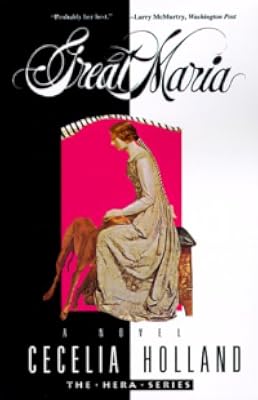
Born in Henderson, Nevada, Cecelia Holland was educated at Pennsylvania State University and Connecticut College, where she received her B.A. degree. She has served as a visiting professor of English at Connecticut College since 1979. Holland's historical novels have received broad critical acclaim. According to one critic, she "proves that there show more can be more to historical thrillers than swordplay and seduction." (Time) Among her novels is City of God (1979), which is set in Rome during the period of the Borgia family. Told from the point of view of Nicolas, a secretary to the Florentine ambassador to Rome, this novel brings to life the period of the Renaissance, including the political intrigue that characterized Rome at the time. Other works include Until the Sun Falls (1969), a story of the ancient Mongols and their empire, The Firedrake (1966), her first published novel, Great Maria (1974), The Bear Flag (1990), and Pacific Street (1991). Holland is very adept at capturing the period she writes about, including the clothing, furnishings, and customs of the time. One critic has noted that Holland "is never guilty of the fatuity which plagues most historical fiction: she never nudges the reader into agreeing that folks way back then were really just like you and me, only they bathed less often." (Bowker Author Biography) show less
Some Editions
Awards and Honors
Notable Lists
Series

Common Knowledge
- Canonical title
- The Earl
- Alternate titles
- Hammer for Princes
- Original publication date
- 1971
- People/Characters
- Stephen, King of England; Henry II, King of England (Duke of Normandy); Fulk, earl of Stafford
- Important places
- England, UK
- Important events
- Nineteen Year Winter (1135 | 1154)
- Epigraph
- "Oh, where are you going?"
said the Knight on the road.
"I go to meet my God,"
Said the Child as he stood. - First words
- Intro:
In 1120, the only legitimate son of King Henry I of England drowned in the wreck of the White Ship. [in the English Channel]
The king married again, but as it became evident that this union would not produce anot... (show all)her heir, Henry's attention turned toward his remaining legitimate child, his daughter Matilda (or Maud), who because of her marriage to the German Emperor Henry V is called The Empress.
[a bit more than called for because it explains the story to follow.]
"Are you awake, my Lord?" - Last words
- (Click to show. Warning: May contain spoilers.)Winter was coming.
- Disambiguation notice
- Published in the UK as A Hammer for Princes.
Classifications
Statistics
- Members
- 110
- Popularity
- 295,115
- Reviews
- 5
- Rating
- (3.17)
- Languages
- English
- Media
- Paper, Ebook
- ISBNs
- 7
- ASINs
- 6