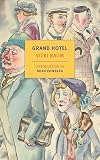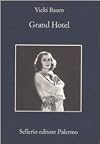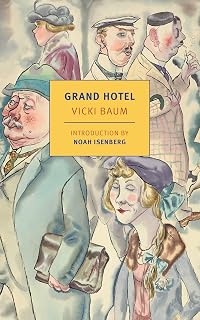
Grand Hotel
by Vicki Baum
On This Page
Description
"A grand hotel in the center of 1920s Berlin serves as a microcosm of the modern world in Vicki Baum's celebrated novel, a Weimar-era bestseller that retains all its verve and luster today. Among the guests of the hotel is Dr. Otternschlag, a World War I veteran whose face has been sliced in half by a shell. Day after day he emerges to read the paper in the lobby, discreetly inquiring at the desk if the letter he's been awaiting for years has arrived. Then there is Grusinskaya, a great show more ballerina now fighting a losing battle not so much against age as against her fear of it, and Gaigern, a sleek professional thief, who may or may not be made for each other. Herr Preysing also checks in, the director of a family firm that isn't as flourishing as it appears, who would never imagine that Kringelein, his underling, a timorous petty clerk he's bullied for years, has also come to Berlin, determined to live at last now that he's received a medical death sentence. All these characters and more, with their secret fears and hopes, come together and come alive in the pages of Baum's delicious and disturbing masterpiece"-- show lessTags
Recommendations












































Member Recommendations



Member Reviews
Grand Hotel takes place in interwar Berlin, following a cast of characters who are staying in, work at, or otherwise pass through the eponymous luxury hotel: a playboy baron who moonlights as a gentleman thief, an ageing and distraught ballerina, a disfigured war veteran doctor, and more. Vicki Baum does a great job at conjuring up the whirl of life in Weimar Berlin and, on the whole, of balancing the froth and the humorous observations with more elegiac moments. There are places where the pacing sags, and towards the last third of the novel some of the plot points got a bit too schmaltzy/pulpy for me. Still, a page-turner right towards the end.
Grand Hotel is set in the post World-War One world of the Weimar era. Berlin of the 1920’s, and here we meet a host of remarkably well drawn characters, who are explored in astute and searching detail.
Through the revolving doors of the Grand Hotel come all kinds; the war damaged, the dying, beautiful ageing ballerina, businessman, thief. The hotel exists to provide the very best of everything for their guests, and yet there is a feeling that like some of its guests, the hotel’s best days are in the past. The porter on the front desk is a count, putting his ancestry behind him to serve the guests of the Grand Hotel.
Doctor Otternshlag, is the first of the hotel residents who we meet, a veteran from the war, half his face destroyed by show more a shell, he sits in the hotel lounge viewing the same scene as the day before, reading the paper, as does every day. He asks the porter if there are any letters for him, a telegram perhaps or a message, there isn’t – there never is, no matter how many times he asks.
Having just received a fatal medical diagnosis Otto Kringelein has come to the Grand Hotel in order to live – if only for a few days, really live for the first time in his life. An unhappily married bookkeeper from Fredersdorf, Kringelein is about to experience all the good things that have so far passed him by, before it’s too late. Intent on spending his savings, and life insurance, after years of very careful living, Otto has wads of cash in his wallet for the first time. When presenting himself at the hotel on his first day, he looks shabby and ill, and is shown eventually to an inferior room. Quiet, unassuming Otto Kringelein going against the habits of a lifetime, demands a better room, and gets it. A room costing fifty marks a day, with a bathroom he can use whenever he likes.
“Kringelein, obstinate now that he has run amok, insisted that he required a superior and a beautiful and expensive room, at the very least a room like Preysing’s. He seemed to think the name of Preysing was a name to conjure with. He had not yet taken off his overcoat. His trembling hands clutched the old crumbling Fredersdorf sandwiches while he blinked his eyes and demanded an expensive room. He was exhausted and ill and ready to cry. For some weeks past he had begun to cry very easily for physical reasons connected with his health. Suddenly, just as he was about to give in, he won the day. He was given Room No. 70, a first floor suite with a sitting room and bath, fifty marks a day. ‘Good,’ he said, ‘with a bathroom? Does that mean that I can have a bath whenever I like?’ Count Rohna without a tremor said that was so. Kringelein moved in for the second time. “
Kringelein’s boss, company director Herr Preysing comes to the hotel for a vital business meeting, desperate to secure a deal for his family firm which is not doing as well as he pretends. Hoping to secure a merger between his firm and another Berlin firm, the deal hinges on a potential contract with a third Manchester firm. Preysing, who has bullied Kringelein for years doesn’t even recognise his employee at first, so full of his own importance, Kringelein so far outside his radar. Doctor Otternshlag takes pity on Kringelein, briefly extending the hand of friendship, even accompanying him to the ballet, before Kringelein is taken up by a more glamourous seeming figure. Gaigern, handsome, athletic, baron and professional thief, whose accomplice – in the guise of his chauffeur is settled into the servants’ quarters. Gaigern is a man who turns heads, presenting himself as an elegant, wealthy and very correct.
“There was a smell of lavender and expensive cigarettes, immediately followed by a man whose appearance was so striking that many heads turned to look at him. He was unusually tall and extremely well dressed, and his step was as elastic as a cat’s or a tennis champion’s. He wore a dark blue trench coat over his dinner jacket. This was scarcely correct perhaps, but it gave an attractively negligent air to his appearance. He patted pageboy No. 24 on his sleek head, stretched out his arm, without looking, over to the porter’s table for a handful of letters which he put straight into his pocket, taking out at the same time a pair of buckskin gloves.”
Grusinskaya is a fragile beauty, a famous ballerina fighting a battle with age. Her performances at the nearby theatre each evening playing to greatly reduced audiences, with no call for an encore. Her best days are behind her – and she knows, she’s is tired, the rigours of her art physically exhaust her. Accompanying her is her maid Suzette, to whom Grusinskaya says ‘Leave me alone’ the line which spoken by Greta Garbo became ‘I want to be alone’ in the film adaptation, and her very valuable pearls. Gaigern and his ‘chauffeur’ have their greedy eyes trained on the idea of those pearls. However, with the plans made, it is inevitable that not everything goes quite to plan. Finding out that Kringelein has money, presents him with a tempting alternative to his original purpose.
Meanwhile Preysing finds his head being turned by a young secretary generally known as Flämmchen or Falm the second (Flam the first being her elder sister). A beautiful young girl whose desire is only to make it into the movies somehow, longing for, glamour and the chance to travel. While Preysing is dissembling in business, lusting after a girl young enough to be his daughter, Kringelein is starting to live. Spending money on clothes, dancing, gambling attending a boxing match, racing through the streets of Berlin in a car, flying in an aeroplane, he learns about exhilaration. Both he and Herr Preysing will find themselves, and their lives considerably altered by the time they leave the hotel.
The lives and various concerns of these characters are woven together brilliantly by Vicki Baum, exploring their hopes, fears, secrets and regrets. There are shades of light and dark in this novel, moments of black comedy, and others of great poignancy. The life, atmosphere of a German hotel in the late 1920’s is brought to life with breath-taking clarity. Grand Hotel is a wonderful; immersive novel, which I am delighted to have discovered. show less
Through the revolving doors of the Grand Hotel come all kinds; the war damaged, the dying, beautiful ageing ballerina, businessman, thief. The hotel exists to provide the very best of everything for their guests, and yet there is a feeling that like some of its guests, the hotel’s best days are in the past. The porter on the front desk is a count, putting his ancestry behind him to serve the guests of the Grand Hotel.
Doctor Otternshlag, is the first of the hotel residents who we meet, a veteran from the war, half his face destroyed by show more a shell, he sits in the hotel lounge viewing the same scene as the day before, reading the paper, as does every day. He asks the porter if there are any letters for him, a telegram perhaps or a message, there isn’t – there never is, no matter how many times he asks.
Having just received a fatal medical diagnosis Otto Kringelein has come to the Grand Hotel in order to live – if only for a few days, really live for the first time in his life. An unhappily married bookkeeper from Fredersdorf, Kringelein is about to experience all the good things that have so far passed him by, before it’s too late. Intent on spending his savings, and life insurance, after years of very careful living, Otto has wads of cash in his wallet for the first time. When presenting himself at the hotel on his first day, he looks shabby and ill, and is shown eventually to an inferior room. Quiet, unassuming Otto Kringelein going against the habits of a lifetime, demands a better room, and gets it. A room costing fifty marks a day, with a bathroom he can use whenever he likes.
“Kringelein, obstinate now that he has run amok, insisted that he required a superior and a beautiful and expensive room, at the very least a room like Preysing’s. He seemed to think the name of Preysing was a name to conjure with. He had not yet taken off his overcoat. His trembling hands clutched the old crumbling Fredersdorf sandwiches while he blinked his eyes and demanded an expensive room. He was exhausted and ill and ready to cry. For some weeks past he had begun to cry very easily for physical reasons connected with his health. Suddenly, just as he was about to give in, he won the day. He was given Room No. 70, a first floor suite with a sitting room and bath, fifty marks a day. ‘Good,’ he said, ‘with a bathroom? Does that mean that I can have a bath whenever I like?’ Count Rohna without a tremor said that was so. Kringelein moved in for the second time. “
Kringelein’s boss, company director Herr Preysing comes to the hotel for a vital business meeting, desperate to secure a deal for his family firm which is not doing as well as he pretends. Hoping to secure a merger between his firm and another Berlin firm, the deal hinges on a potential contract with a third Manchester firm. Preysing, who has bullied Kringelein for years doesn’t even recognise his employee at first, so full of his own importance, Kringelein so far outside his radar. Doctor Otternshlag takes pity on Kringelein, briefly extending the hand of friendship, even accompanying him to the ballet, before Kringelein is taken up by a more glamourous seeming figure. Gaigern, handsome, athletic, baron and professional thief, whose accomplice – in the guise of his chauffeur is settled into the servants’ quarters. Gaigern is a man who turns heads, presenting himself as an elegant, wealthy and very correct.
“There was a smell of lavender and expensive cigarettes, immediately followed by a man whose appearance was so striking that many heads turned to look at him. He was unusually tall and extremely well dressed, and his step was as elastic as a cat’s or a tennis champion’s. He wore a dark blue trench coat over his dinner jacket. This was scarcely correct perhaps, but it gave an attractively negligent air to his appearance. He patted pageboy No. 24 on his sleek head, stretched out his arm, without looking, over to the porter’s table for a handful of letters which he put straight into his pocket, taking out at the same time a pair of buckskin gloves.”
Grusinskaya is a fragile beauty, a famous ballerina fighting a battle with age. Her performances at the nearby theatre each evening playing to greatly reduced audiences, with no call for an encore. Her best days are behind her – and she knows, she’s is tired, the rigours of her art physically exhaust her. Accompanying her is her maid Suzette, to whom Grusinskaya says ‘Leave me alone’ the line which spoken by Greta Garbo became ‘I want to be alone’ in the film adaptation, and her very valuable pearls. Gaigern and his ‘chauffeur’ have their greedy eyes trained on the idea of those pearls. However, with the plans made, it is inevitable that not everything goes quite to plan. Finding out that Kringelein has money, presents him with a tempting alternative to his original purpose.
Meanwhile Preysing finds his head being turned by a young secretary generally known as Flämmchen or Falm the second (Flam the first being her elder sister). A beautiful young girl whose desire is only to make it into the movies somehow, longing for, glamour and the chance to travel. While Preysing is dissembling in business, lusting after a girl young enough to be his daughter, Kringelein is starting to live. Spending money on clothes, dancing, gambling attending a boxing match, racing through the streets of Berlin in a car, flying in an aeroplane, he learns about exhilaration. Both he and Herr Preysing will find themselves, and their lives considerably altered by the time they leave the hotel.
The lives and various concerns of these characters are woven together brilliantly by Vicki Baum, exploring their hopes, fears, secrets and regrets. There are shades of light and dark in this novel, moments of black comedy, and others of great poignancy. The life, atmosphere of a German hotel in the late 1920’s is brought to life with breath-taking clarity. Grand Hotel is a wonderful; immersive novel, which I am delighted to have discovered. show less
Life is not a straight line. You go in through the door and come out a different person, or even dead in the most extreme cases. This happened to all the guests. But in the meantime, you enjoy life. The Baron enjoyed the pleasures of life while Grusinskaya almost lost the enjoyment of dance but a night's love changed that. The epitome must be Kringelein, who had to accelerate the enjoyment of life because of his impending death. But of course, there must be a cautionary tale in the form of Preysing. He succumbed to desire, and that changed his life forever.
https://nwhyte.livejournal.com/2907781.html
Base for the Oscar-winning film, which does not in fact stray very far from the book. Small differences: in the book, Flämmchen doesn’t appear until a quarter of the way through. We get much more insight into Preysing’s and Kringelein’s marriages. The brutal murder is carried out with a heavy ashtray rather than a telephone handset. The action does move outside the hotel now and then, notably to Grusinskaya’s theatre.
Big differences: the ages of several of the main characters. Grusinskaya, played by 27-year-old Greta Garbo on screen, is old enough to have an eight-year-old grandson in the book. The baron, played by 50-year-old John Barrymore, is in his twenties in the book. (As I show more said, their love affair is more unusual in the book than on screen; but great stories often involve unusual happenings.) 26-year-old Joan Crawford plays Flämmchen, who is explicitly nineteen in the book, though a very worldly wise nineteen:
"Flämmchen had no exaggerated opinion of herself. She knew her price. Twenty marks for a photograph in the nude. A hundred and forty marks for a month’s office work. Fifteen pfennig per page for typing with one carbon copy. A little fur coat costing two hundred and forty marks for a week as somebody’s mistress."
The other change that was inevitable for a Hollywood film is to the appearance of Dr Otternschlag, played with mild scarring by Lewis Shine; compare the book’s chilling description:
"His face, it must be said, consisted of one half only, in which the sharp and ascetic profile of a Jesuit was completed by an unusually well-shaped ear beneath the sparse gray hair on his temples. The other half of his face was not there. In place of it was a confused medley of seams and scars, crossing and overlapping, and among them was set a glass eye. “A souvenir from Flanders,” Doctor Otternschlag was accustomed to calling it when talking to himself."
Otternschlag gets more to do in the book, and Flämmchen arrives late as noted above, but otherwise the main characters balance out much as they do on screen.
And it’s a good readable story, the first “hotel novel”; apparently a massive hit during its original serialisation (to the point that readers wrote in to protest the killing off of one character in a reaction reminiscent of Torchwood fans’ reaction to the death of Ianto), very firmly moored in the context of late 1920s Berlin, grappling with modernity, with unforeseen and unspeakable horror yet to come (for those of us who know the city now, it’s a bit chilling to have the still intact Gedächtniskirche as a major landmark). Everyone has their arc, and we like and sympathise with all of them, even Preysing to an extent. It’s not deep and meaningful, but it’s well done and very entertaining; and the film does it justice. My edition has a very good introduction by Noah Isenberg which added to my enjoyment. show less
Base for the Oscar-winning film, which does not in fact stray very far from the book. Small differences: in the book, Flämmchen doesn’t appear until a quarter of the way through. We get much more insight into Preysing’s and Kringelein’s marriages. The brutal murder is carried out with a heavy ashtray rather than a telephone handset. The action does move outside the hotel now and then, notably to Grusinskaya’s theatre.
Big differences: the ages of several of the main characters. Grusinskaya, played by 27-year-old Greta Garbo on screen, is old enough to have an eight-year-old grandson in the book. The baron, played by 50-year-old John Barrymore, is in his twenties in the book. (As I show more said, their love affair is more unusual in the book than on screen; but great stories often involve unusual happenings.) 26-year-old Joan Crawford plays Flämmchen, who is explicitly nineteen in the book, though a very worldly wise nineteen:
"Flämmchen had no exaggerated opinion of herself. She knew her price. Twenty marks for a photograph in the nude. A hundred and forty marks for a month’s office work. Fifteen pfennig per page for typing with one carbon copy. A little fur coat costing two hundred and forty marks for a week as somebody’s mistress."
The other change that was inevitable for a Hollywood film is to the appearance of Dr Otternschlag, played with mild scarring by Lewis Shine; compare the book’s chilling description:
"His face, it must be said, consisted of one half only, in which the sharp and ascetic profile of a Jesuit was completed by an unusually well-shaped ear beneath the sparse gray hair on his temples. The other half of his face was not there. In place of it was a confused medley of seams and scars, crossing and overlapping, and among them was set a glass eye. “A souvenir from Flanders,” Doctor Otternschlag was accustomed to calling it when talking to himself."
Otternschlag gets more to do in the book, and Flämmchen arrives late as noted above, but otherwise the main characters balance out much as they do on screen.
And it’s a good readable story, the first “hotel novel”; apparently a massive hit during its original serialisation (to the point that readers wrote in to protest the killing off of one character in a reaction reminiscent of Torchwood fans’ reaction to the death of Ianto), very firmly moored in the context of late 1920s Berlin, grappling with modernity, with unforeseen and unspeakable horror yet to come (for those of us who know the city now, it’s a bit chilling to have the still intact Gedächtniskirche as a major landmark). Everyone has their arc, and we like and sympathise with all of them, even Preysing to an extent. It’s not deep and meaningful, but it’s well done and very entertaining; and the film does it justice. My edition has a very good introduction by Noah Isenberg which added to my enjoyment. show less
Wow, I did not see this book coming. It was our July book club selection, and while I was perfectly happy to read it I didn't have very high expectations. I figured it would be slice-of-life, heavy on descriptions and short on action, and the start of the book bore this out. However, things take an unexpected turn and the pace really picks up. Then it picks up even more, and keeps on going. I have to dock it half a star because there were still lots of overly-long descriptions, whole pages-worth of descriptions, that I had to skim/skip to keep in the flow. Otherwise a damn fine book.
The moral of the story, that "Life is what you put into it. Two full days may be longer than forty empty years" is very well told with a colorful cast of characters and good writing.
Ich habe schon einige Romane gelesen, die in Hotels spielten und liebe es, wie dort unterschiedliche Menschen (Gäste und Personal) zusammengeführt werden, die häufig wenig mehr gemeinsam haben als die Tatsache, dass sie zu einem bestimmten Zeitpunkt im selben Hotel wohnen. Diesen wahrscheinlich ersten Roman dieses Genres mit seinen schillernden Figuren vor der Kulisse des Berlins in den 20erjahren habe ich mit großem Genuss gelesen.
Ich bin schon sehr gespannt darauf, weitere Bücher dieser Autorin für mich zu entdecken.
Ich bin schon sehr gespannt darauf, weitere Bücher dieser Autorin für mich zu entdecken.
Members
- Recently Added By
Lists

German Literature
518 works; 55 members

Boarding House and Hotel Fiction
73 works; 25 members

Top Five Books of 2018
802 works; 265 members

Books mentioned in The Diary of a Provincial Lady
59 works; 4 members

Books Read in 2020
4,379 works; 124 members

Schwob Nederland
207 works; 2 members

Best Books of 1926-1935
403 works; 10 members

Isle Royale
18 works; 1 member

Publisher's Weekly Bestsellers Part I - 1895-1939
399 works; 8 members

Die besten Werke der deutschsprachigen Erzählliteratur von 1924 bis 2024
100 works; 2 members
Author Information

Some Editions
Awards and Honors
Distinctions
Notable Lists
Series
Belongs to Publisher Series
Work Relationships
Is contained in
Has the adaptation
Is abridged in
Has as a student's study guide
Common Knowledge
- Canonical title
- Grand Hotel
- Original title
- Menschen im Hotel
- Alternate titles*
- Mensen in het hotel
- Original publication date
- 1929
- People/Characters
- Senf; Georgi; Groezinskaja; dr. Otternsclag; baron Gaigern; Rohna (show all 13); Preysing; Otto Kringelein; Pimenov; Witte; Rothenburger; dr. Zinnowitz; Flämmchen
- Important places
- Berlin, Germany
- Related movies
- Grand Hotel (1932 | IMDb); Week-End at the Waldorf (1945 | IMDb); Menschen im Hotel (1959 | IMDb)
- First words
- In the preface to her posthumously published memoirs, It Was All Quite Different, written in 1960, the last year of her life, Viennese-born writer Vicki Baum begins with a reckoning of sorts:
You can live down any ... (show all)number of failures, but you can't live down a great success. For thirty years I've been a walking example of this truism. People are apt to forgive and forget a flop because they care little about things that aren't in the papers or on television, and a book that fails dies silently enough. But a success, moth-easten as it may be, will pop up among old movies, or as a hideous musical or ina new film version, or in a Japanese, a Hebrew, a Hindu translation - and there you are.(Introduction)
The hall porter was a little white about the gills as he came out of the No. 7 phone booth. - Last words
- (Click to show. Warning: May contain spoilers.)Today, however, it can be seen as a badge of honor. (Introduction)
(Click to show. Warning: May contain spoilers.)The revolving door turns and turns and turns. - Blurbers
- Brubach, Holly; Priestley, J. B.
- Original language
- German
*Some information comes from Common Knowledge in other languages. Click "Edit" for more information.
Classifications
- Genres
- General Fiction, Fiction and Literature, Historical Fiction
- DDC/MDS
- 833.912 — Literature & rhetoric German & related literatures German fiction 1900- 1900-1990 1900-1945
- LCC
- PT2603 .A815 .M413 — Language and Literature German, Dutch and Scandinavian literatures German literature Individual authors or works 1860/70-1960
- BISAC
Statistics
- Members
- 745
- Popularity
- 37,712
- Reviews
- 14
- Rating
- (3.87)
- Languages
- 11 — Dutch, English, Estonian, Finnish, French, German, Hungarian, Italian, Polish, Spanish, Swedish
- Media
- Paper, Audiobook, Ebook
- ISBNs
- 40
- ASINs
- 28