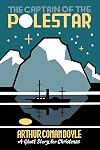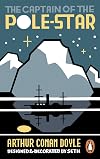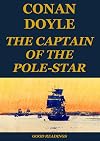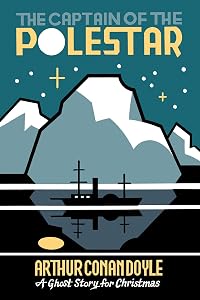
The Captain of the "Polestar" [short story]
by Arthur Conan Doyle 
On This Page
Description
World-renowned cartoonist Seth returns with three new ghost stories for 2023. The Pole-Star's voyage comes to a halt after becoming trapped in the arctic ice, threatening the lives of its crew. Superstition soon takes hold as the frightened men claim to hear ghosts in the darkness, but it's the captain's increasingly strange behaviour that concerns the doctor most.Tags
Recommendations













Member Reviews
As this is a book of short stories, and as my memory is shorter still, I shall review as I go.
The Captain of the Pole-Star: I like a setting in the frozen polar regions - and shades of Frankenstein| by Mary Shelley haunt these environs. The story is told in the form of a journal by a young ship's doctor, concerned for the sanity of the titular captain. The foreshadowing of doom in Captain Craigie's falsely optimistic statement that"We'll all be in the arms of our own true loves before long, lad, won't we?" is very well done. So, too, is the final footnote, written as by the narrator's father, which really adds to the mystery and leaves more questions than answers: What happened to the doctor that it is left to his father to add the show more footnote? What are the "circumstances of peculiar horror" in which the Captain's betrothed died? . An auspicious start to the collection. 4/5
J. Habakuk Jephson's Statement: This is Doyle's fictional account of the mysterious abandonment of the brigantine Mary Celeste. He changed the ship's name to Marie Celeste for his story, which in some quarters was taken as factual and so elements of Doyle's tale, including the vessel's altered name, passed into the public consciousness.
Given that we know how the story ends, the tension is in how Doyle takes us there, and that is via a gradually escalating series of accidents, disappearances and deaths. Doyle is a good enough writer that even when the source of the tragedy seems obvious, the motivation comes as a surprise (at least to me - maybe I'm slow). As good as The Captain of the Pole-Star is, this is better. 4.5/5
The Great Keinplatz Experiment: Doyle's Spiritualist leanings are revealed in this story about an eminent professor of anatomy and psychology who seeks to scientifically prove that there is a soul which is capable of existence outside of the body. That he is successful comes as no surprise, though the results are not what he expects.Having freed his own soul and that of a student from their bodies, the re-incorporations are switched, with the professor's soul in the body of the student, and vice versa. The results are familiar from any number of other stories and films, such as Vice Versa, Freaky Friday; Big; Change Up, etc. .
Doyle doesn't shove the Spiritualist stuff too far down your throat, so that's not a distraction. He also plays it for laughs about half-way through to the end of the story, at which he is moderately successful. An interesting one, but not quite as good as the previous two. 3/5
The Man from Archangel: Gothic, mysterious and tragic, I loved this story. Doyle's descriptions of the windswept beauty of the Caithness coast form a perfect backdrop for the stormy passions that engulf his characters. 5/5
That Little Square Box: A comedy-thriller in which the "hero" is so socially awkward that not eventhe threat of a major terrorist attack, with the certainty of massive loss of life, can overcome his imagined shame and embarrassment should he have misunderstood the situation. Doyle seems to be poking fun at the middle-class anxieties engendered by the rise of international anarchism, political assassinations and propaganda bombings that were troubling the bourgeoisie of the 1880s .
The ending wasn't altogether a surprise and the comic effect not exactly side-splitting, but it wasn't that bad either. A solid 3/5.
John Huxford's Hiatus: Depending on your outlook, you could find this story either the epitome of mawkish Victorian sentimentalism or a heart-warming tale of faithfulness, constancy and love. Being a bit of a softy, I strongly inclined to the latter.
Doyle builds up the mystery ofHuxford's disappearance in masterly fashion, only to ratchet up the emotional level even further during the "reveal" and the final climax. It was as much as I could do to stifle a manly tear. 5/5
Cyprian Overbeck Wells: A Literary Mosaic: An unusual story, being that of an aspiring but unsuccessful writer, Smith, who, having hit a writer's block, has a dream in which he is attended by the literary greats of past and present. Between them, they decide to help Smith and so they weave together a tale to inspire him. What we are then offered is a series of Doyle's pastiches of the writings of such luminaries as Tobias Smollet, Daniel Defoe, Sir Walter Scott, Edward Bulwer Lytton, and others.
The framing story is well done, and the interactions between the phantom writers are good, too, with each criticising the efforts of the last, causing offence and bruised egos. The story they patch together would not, I think, greatly assist poor Smith's literary ambitions and that is the story's downfall. A kind of "covers album" which is never quite as good as the originals. 3/5.
John Barrington Cowles: Doyle is back on cracking form with this one! It starts off as a Victorian melodrama: beautiful femme fatale who has been the ruin of many a poor boy, of whom, God knows, Barrington Coles is set to be one. Being told this by the narrator at the outset gives the story an atmosphere of over-shadowing doom - we know it's not going to end well!
The second half of the story, having set up the tragedy, moves into a supernatural mode, of which I will say nothing but that I feel Doyle's restraint is more effective than a graphic account would have been. 4/5.
The Parson of Jackman's Gulch: This one has the feel of a Western, although it's set in Australia's goldrush, rather than California's. There's a certain inevitability about the dénouement: it's not a surprise, but it is very well done: humour leavened with tragedy and a rough frontier anti-justice. 4/5
The Ring of Thoth: Classic Victorian horror: a clear inspiration for Universal Studio's The Mummy starring Boris Karloff. A creepy night at the museum, a mysterious janitor, a beautiful dead woman and an ancient Egyptian curse. Jinkies, Scoob!! 4.5/5 show less
The Captain of the Pole-Star: I like a setting in the frozen polar regions - and shades of Frankenstein| by Mary Shelley haunt these environs. The story is told in the form of a journal by a young ship's doctor, concerned for the sanity of the titular captain. The foreshadowing of doom in Captain Craigie's falsely optimistic statement that
J. Habakuk Jephson's Statement: This is Doyle's fictional account of the mysterious abandonment of the brigantine Mary Celeste. He changed the ship's name to Marie Celeste for his story, which in some quarters was taken as factual and so elements of Doyle's tale, including the vessel's altered name, passed into the public consciousness.
Given that we know how the story ends, the tension is in how Doyle takes us there, and that is via a gradually escalating series of accidents, disappearances and deaths. Doyle is a good enough writer that even when the source of the tragedy seems obvious, the motivation comes as a surprise (at least to me - maybe I'm slow). As good as The Captain of the Pole-Star is, this is better. 4.5/5
The Great Keinplatz Experiment: Doyle's Spiritualist leanings are revealed in this story about an eminent professor of anatomy and psychology who seeks to scientifically prove that there is a soul which is capable of existence outside of the body. That he is successful comes as no surprise, though the results are not what he expects.
Doyle doesn't shove the Spiritualist stuff too far down your throat, so that's not a distraction. He also plays it for laughs about half-way through to the end of the story, at which he is moderately successful. An interesting one, but not quite as good as the previous two. 3/5
The Man from Archangel: Gothic, mysterious and tragic, I loved this story. Doyle's descriptions of the windswept beauty of the Caithness coast form a perfect backdrop for the stormy passions that engulf his characters. 5/5
That Little Square Box: A comedy-thriller in which the "hero" is so socially awkward that not even
The ending wasn't altogether a surprise and the comic effect not exactly side-splitting, but it wasn't that bad either. A solid 3/5.
John Huxford's Hiatus: Depending on your outlook, you could find this story either the epitome of mawkish Victorian sentimentalism or a heart-warming tale of faithfulness, constancy and love. Being a bit of a softy, I strongly inclined to the latter.
Doyle builds up the mystery of
Cyprian Overbeck Wells: A Literary Mosaic: An unusual story, being that of an aspiring but unsuccessful writer, Smith, who, having hit a writer's block, has a dream in which he is attended by the literary greats of past and present. Between them, they decide to help Smith and so they weave together a tale to inspire him. What we are then offered is a series of Doyle's pastiches of the writings of such luminaries as Tobias Smollet, Daniel Defoe, Sir Walter Scott, Edward Bulwer Lytton, and others.
The framing story is well done, and the interactions between the phantom writers are good, too, with each criticising the efforts of the last, causing offence and bruised egos. The story they patch together would not, I think, greatly assist poor Smith's literary ambitions and that is the story's downfall. A kind of "covers album" which is never quite as good as the originals. 3/5.
John Barrington Cowles: Doyle is back on cracking form with this one! It starts off as a Victorian melodrama: beautiful femme fatale who has been the ruin of many a poor boy, of whom, God knows, Barrington Coles is set to be one. Being told this by the narrator at the outset gives the story an atmosphere of over-shadowing doom - we know it's not going to end well!
The second half of the story, having set up the tragedy, moves into a supernatural mode, of which I will say nothing but that I feel Doyle's restraint is more effective than a graphic account would have been. 4/5.
The Parson of Jackman's Gulch: This one has the feel of a Western, although it's set in Australia's goldrush, rather than California's. There's a certain inevitability about the dénouement: it's not a surprise, but it is very well done: humour leavened with tragedy and a rough frontier anti-justice. 4/5
The Ring of Thoth: Classic Victorian horror: a clear inspiration for Universal Studio's The Mummy starring Boris Karloff. A creepy night at the museum, a mysterious janitor, a beautiful dead woman and an ancient Egyptian curse. Jinkies, Scoob!! 4.5/5 show less
“The telling or reading of ghost stories during long, dark, and cold Christmas nights is a yuletide ritual dating back to at least the eighteenth century…”
Time for me to “revive a spooky, old Christmas tradition”!
This is a physically comforting book to read. It is small, and fits comfortably in the palm of one’s hand. The cover feels good. And the illustrations are lovely in their simplicity. I liked just looking at it and holding it.
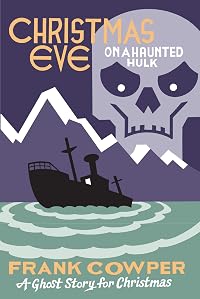
A whaling ship, surrounded by fields of ice, and captained by a madman. And possibly haunted! NOT a good combination! And what exactly did the captain see out there on the ice? Creep and spooky!
And maybe I will make these books into a holiday tradition!
Time for me to “revive a spooky, old Christmas tradition”!
This is a physically comforting book to read. It is small, and fits comfortably in the palm of one’s hand. The cover feels good. And the illustrations are lovely in their simplicity. I liked just looking at it and holding it.
A whaling ship, surrounded by fields of ice, and captained by a madman. And possibly haunted! NOT a good combination! And what exactly did the captain see out there on the ice? Creep and spooky!
And maybe I will make these books into a holiday tradition!
A ghost story set on a whaler in the Arctic Ocean. It's pretty predictable, but I liked watching the rational main character gradually come to believe.
This is the first non Sherlock tale by Doyle I have read {audiobook} I suppose he always makes nice imagery, but honestly you could clearly tell it was written by the same author. Doctor writing a narrative/journal about a captain of a ship.
Its not a bad little tale, it is in a larger book I intend on getting soon and this certainly won't change my mind about buying the book.
If you like Doyle's style and want to get away from Sherlock Holmes then this one is for you
Its not a bad little tale, it is in a larger book I intend on getting soon and this certainly won't change my mind about buying the book.
If you like Doyle's style and want to get away from Sherlock Holmes then this one is for you
Ratings
Members
- Recently Added By
Lists

Best Books About Journeys and Quests
117 works; 30 members

Books Set in the Polar Regions
16 works; 6 members

Lovecraft's 'Supernatural Horror in Literature' Reading List
216 works; 8 members

Ghosts
278 works; 18 members
Author Information

4,035+ Works 170,655 Members
The most famous fictional detective in the world is Arthur Conan Doyle's Sherlock Holmes. However, Doyle was, at best, ambivalent about his immensely successful literary creation and, at worst, resentful that his more "serious" fiction was relatively ignored. Born in Edinburgh, Doyle studied medicine from 1876 to 1881 and received his M.D. in show more 1885. He worked as a military physician in South Africa during the Boer War and was knighted in 1902 for his exceptional service. Doyle was drawn to writing at an early age. Although he attempted to enter private practice in Southsea, Portsmouth, in 1882, he soon turned to writing in his spare time; it eventually became his profession. As a Liberal Unionist, Doyle ran, unsuccessfully, for Parliament in 1903. During his later years, Doyle became an avowed spiritualist. Doyle sold his first story, "The Mystery of the Sasassa Valley," to Chambers' Journal in 1879. When Doyle published the novel, A Study in Scarlet in 1887, Sherlock Holmes was introduced to an avid public. Doyle is reputed to have used one of his medical professors, Dr. Joseph Bell, as a model for Holmes's character. Eventually, Doyle wrote three additional Holmes novels and five collections of Holmes short stories. A brilliant, though somewhat eccentric, detective, Holmes employs scientific methods of observation and deduction to solve the mysteries that he investigates. Although an "amateur" private detective, he is frequently called upon by Scotland Yard for assistance. Holmes's assistant, the faithful Dr. Watson, provides a striking contrast to Holmes's brilliant intellect and, in Doyle's day at least, serves as a character with whom the reader can readily identify. Having tired of Holmes's popularity, Doyle even tried to kill the great detective in "The Final Problem" but was forced by an outraged public to resurrect him in 1903. Although Holmes remained Doyle's most popular literary creation, Doyle wrote prolifically in other genres, including historical adventure, science fiction, and supernatural fiction. Despite Doyle's sometimes careless writing, he was a superb storyteller. His great skill as a popular author lay in his technique of involving readers in his highly entertaining adventures. (Bowker Author Biography) show less
Arthur Conan Doyle has a Legacy Library. Legacy libraries are the personal libraries of famous readers, entered by LibraryThing members from the Legacy Libraries group.
Some Editions
Series
Belongs to Publisher Series
Work Relationships
Is contained in
The Crowborough edition of the works of Sir Arthur Conan Doyle. Vol. XXIII: The parasite; The captain of the "Pole-Star" [and] other tales by Arthur Conan Doyle
The Collected Supernatural and Weird Fiction of Sir Arthur Conan Doyle: 2-Including the Novella 'The Doings of Raffles Haw, ' Two Novelettes and Fourt by Arthur Conan Doyle
Common Knowledge
- Canonical title
- The Captain of the "Polestar" [short story]
- Original title
- The Captain of the "Pole-Star" Being an extract from the singular journal of John McAlister Ray, student of medecine
- Alternate titles*
- The Captain of the "Pole-Star" Being an extract from the singular journal of John McAlister Ray, student of medecine
- People/Characters
- Nicholas Craigie; Mr. Manson; Milne
- Important places*
- Polarmeer
- First words
- September 11th. — Lat. 81° 40' N.; long. 2° E. Still lying — to amid enormous ice fields
- Last words*
- (Click to show. Warning: May contain spoilers.)Mit diesem letzten Glied in einer Kette der Beweise für das Unfaßbare schließe ich das Tagebuch der Fahrt der Polestar.
- Original language*
- Englisch
*Some information comes from Common Knowledge in other languages. Click "Edit" for more information.
Classifications
Statistics
- Members
- 95
- Popularity
- 339,991
- Reviews
- 4
- Rating
- (3.43)
- Languages
- Czech, English, Finnish, German
- Media
- Paper, Audiobook, Ebook
- ISBNs
- 5
- ASINs
- 6