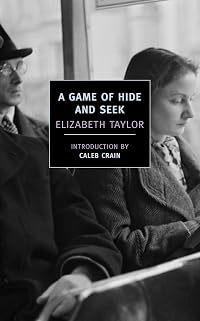
A Game of Hide and Seek
by Elizabeth Taylor
On This Page
Description
"Harriet and Vesey meet when they are teenagers, and their love is as intense and instantaneous as it is innocent. But they are young. All life still lies ahead. Vesey heads off hopefully to pursue a career as an actor. Harriet marries and has a child, becoming a settled member of suburban society. And then Vesey returns, the worse for the wear, and with him the love whose memory they have both sentimentally cherished, and even after so much has happened it cannot be denied. But things are show more not at all as they used to be. Love, it seems, is hardly designed to survive life."--P. [4] of cover. show lessTags
Recommendations























Member Recommendations


shaunie A Game of Hide and Seek is much more similar to Bowen than Taylor's other books, which are usually much more straightforwardly enjoyable. Here, as with Bowen, the writing's very impressive but it's frequently hard going.
30


Member Reviews
Hide and Seek is a novel of passion and star-crossed love. It begins with two teenagers, Harriet and Vesey. Harriet is a timid girl and Vesey, while also shy, is prone to outbursts of malice that may be found in episodes like his excessive teasing of the housekeeper. Vesey dreams of writing great literature and has the mind to make that possible while Harriet's dreams are somewhat less. She is unambitious and both her desire and her mind fail her when necessary to pass the exams for entrance to university. Vesey is dramatic and manipulative, an overcompensation for the haphazard affections of his self-centered mother. In their teens, playing complicated games with the younger cousins Harriet is meant to be babysitting, the two fall in show more love; on Harriet’s end, swooningly and awkwardly. The first part of Hide and Seek is all about the games they play. Harriet's developing passion for Vesey and her own sexual awakening elicit a response from Vesey, but his mood swings and a penchant for the dramatic combined with a manipulative manner that seems like indifference is painful for Harriet. The two are splintered both by their own flaws—Vesey’s insensitivity, Harriet’s inability to openly stake a claim—and by the ungenerous interventions of their elders. Vesey is packed off to university, while Harriet starts a new job in a gown shop and falls into a relationship with Charles Jephcott, “an elderly man of about thirty-five,” out of passivity and loneliness. After Vesey stands her up at a dance—and after her mother dies, and Charles tends her through her grief—Harriet submits to marrying Charles.
The second part of the novel begins sixteen years later. Harriet has a teenage-daughter, Betsy, and is in a pleasant if somewhat passionless marriage when Vesey returns. She has spent the time attempting to make up for not loving her husband through feverish housekeeping: “When she married Charles, she had seemed to wed also a social order. A convert to it, and to provincial life, and keeping house, she had pursued it fanatically and as if she feared censure.” Vesey, meanwhile, is a failing actor, playing Laertes in gaudy productions of Hamlet. When they reconnect, his old cruel arrogance has been dissolved by time and misfortune, and Harriet begins risking her hard-won, if deadening, stability to meet him in sordid railway cafes and on park benches. They both feel, as Vesey puts it to himself, the “desire to unpack his life in her presence, to lay before her treasure after treasure (or, rather, loss, laughter, disappointment).” On the home front Charles finds that, "As his relations with other people improved, his life with Harriet deteriorated." Unfortunately Betsy discovers hints of the affair and her life, which was much more promising than her mother's at the same age, begins to unravel. Any imagined possibilities for Harriet and Vesey as a reunited couple also begin to come apart. The ending is ambiguous but did not disappoint in being so.
What impressed me was the characterization which brought the main players alive but made the supporting roles, like Harriet's mother, Vesey's Uncle Hugo, and Betsy's drama teacher, interesting as well. Taylor's prose reminded me of Anita Brookner or Barbara Pym in its lucid smoothness. The combination of psychological insight and great prose makes this a memorable novel from a British author who should be better known. show less
The second part of the novel begins sixteen years later. Harriet has a teenage-daughter, Betsy, and is in a pleasant if somewhat passionless marriage when Vesey returns. She has spent the time attempting to make up for not loving her husband through feverish housekeeping: “When she married Charles, she had seemed to wed also a social order. A convert to it, and to provincial life, and keeping house, she had pursued it fanatically and as if she feared censure.” Vesey, meanwhile, is a failing actor, playing Laertes in gaudy productions of Hamlet. When they reconnect, his old cruel arrogance has been dissolved by time and misfortune, and Harriet begins risking her hard-won, if deadening, stability to meet him in sordid railway cafes and on park benches. They both feel, as Vesey puts it to himself, the “desire to unpack his life in her presence, to lay before her treasure after treasure (or, rather, loss, laughter, disappointment).” On the home front Charles finds that, "As his relations with other people improved, his life with Harriet deteriorated." Unfortunately Betsy discovers hints of the affair and her life, which was much more promising than her mother's at the same age, begins to unravel. Any imagined possibilities for Harriet and Vesey as a reunited couple also begin to come apart. The ending is ambiguous but did not disappoint in being so.
What impressed me was the characterization which brought the main players alive but made the supporting roles, like Harriet's mother, Vesey's Uncle Hugo, and Betsy's drama teacher, interesting as well. Taylor's prose reminded me of Anita Brookner or Barbara Pym in its lucid smoothness. The combination of psychological insight and great prose makes this a memorable novel from a British author who should be better known. show less
This seems to be one of Taylor's best-known novels. Superficially it's a reworking of the plot of Brief encounter - a happily-married woman finds she's desperately in love with Another Man. Taylor clearly enjoys planting a string of tongue-in-cheek references to the recent film in the text to show us that she's well aware of this overlap - and incidentally diverting any suspicion that there might have been such a situation in her own life (as we now know there was). But if it's Brief encounter, then it's Brief encounter as it would have been if they'd got E.M. Forster to do it instead of Noel Coward. There are all kinds of extra layers of frustration and miscommunication (especially between generations) going on alongside the main show more storyline, there is more ambiguity than you can shake a stick at, and there's a gloriously undefined ending where you have to decide for yourself how it all might have worked out. And of course a whole lot of wonderfully subversive lines, and some absolutely beautiful set-piece scenes. There may be a few bits of the book that feel like pastiche Forster, but then you get something like the scene in the café with the pork chops and you think "only Taylor could have written this". show less
Harriet and Vesey grew up together as playmates and friends. One summer while caring for Vesey's cousins, they realize their affection has blossomed into something more:
'I cannot put down what happened this evening,' she wrote mysteriously. 'Nor is there any need, for I shall remember all my life.' And, although she was so mysterious, she was right. Much in those diaries would puzzle her when she turned their pages in middle age, old age; many allusions would be meaningless; week after week would seem to have been wiped away; but that one entry, so proudly cryptic, would always evoke the evening in the woods, the shadows, the layers of leaves shutting out the sky, the bronze mosses at the of the trees, the floating sound their voices show more had, and that explosive, echoing cry of the cuckoo. (p.21-22)
But Vesey goes off to Oxford and Harriet remains at home. She picks up tidbits of news from his aunt and uncle, but they lose touch and eventually Harriet makes her own way. She finds a job in a gown shop, marries Charles, a respected business man, and they have a daughter, Betsy. Harriet thinks of Vesey often, but for the most part she is a reasonably happy wife and mother.
Until one day, nearly 20 years later, when Harriet and Vesey run into each other at a dance. Dancing with Vesey, Harriet is overcome with memories and emotion. They do not see each other often -- Vesey is in the theatre, and travels around the country -- but they exchange letters and find reasons to meet anytime he is nearby. Charles feels Harriet's distance, but can neither draw her out nor express his own feelings. The strain rubs off on Betsy, too. Even though Harriet sees how differently people respond to her, she desperately wants to believe they're fine. It's just her, responding differently to them.
Taylor's writing is exquisite. The story unfolds very slowly, with the rich observational detail Taylor is known for. And it's emotionally intense as well. In the first part, the reader feels the pain of young love -- we want Harriet and Vesey to accept the love they feel for each other, and live happily ever after. We feel pain in the awkwardness of their parting, and the pain returns when they meet again in middle age. By that time, I had come to appreciate her marriage to Charles. I was caught up in Harriet's dilemma, simultaneously wishing for things that might have been, and wanting to maintain the comfort and security of her family life. The ending is ambiguous, and yet felt completely right.
In her biography, The Other Elizabeth Taylor, Nicola Beauman called this "Elizabeth's most flawless, most nearly perfect novel." I couldn't agree more. show less
'I cannot put down what happened this evening,' she wrote mysteriously. 'Nor is there any need, for I shall remember all my life.' And, although she was so mysterious, she was right. Much in those diaries would puzzle her when she turned their pages in middle age, old age; many allusions would be meaningless; week after week would seem to have been wiped away; but that one entry, so proudly cryptic, would always evoke the evening in the woods, the shadows, the layers of leaves shutting out the sky, the bronze mosses at the of the trees, the floating sound their voices show more had, and that explosive, echoing cry of the cuckoo. (p.21-22)
But Vesey goes off to Oxford and Harriet remains at home. She picks up tidbits of news from his aunt and uncle, but they lose touch and eventually Harriet makes her own way. She finds a job in a gown shop, marries Charles, a respected business man, and they have a daughter, Betsy. Harriet thinks of Vesey often, but for the most part she is a reasonably happy wife and mother.
Until one day, nearly 20 years later, when Harriet and Vesey run into each other at a dance. Dancing with Vesey, Harriet is overcome with memories and emotion. They do not see each other often -- Vesey is in the theatre, and travels around the country -- but they exchange letters and find reasons to meet anytime he is nearby. Charles feels Harriet's distance, but can neither draw her out nor express his own feelings. The strain rubs off on Betsy, too. Even though Harriet sees how differently people respond to her, she desperately wants to believe they're fine. It's just her, responding differently to them.
Taylor's writing is exquisite. The story unfolds very slowly, with the rich observational detail Taylor is known for. And it's emotionally intense as well. In the first part, the reader feels the pain of young love -- we want Harriet and Vesey to accept the love they feel for each other, and live happily ever after. We feel pain in the awkwardness of their parting, and the pain returns when they meet again in middle age. By that time, I had come to appreciate her marriage to Charles. I was caught up in Harriet's dilemma, simultaneously wishing for things that might have been, and wanting to maintain the comfort and security of her family life. The ending is ambiguous, and yet felt completely right.
In her biography, The Other Elizabeth Taylor, Nicola Beauman called this "Elizabeth's most flawless, most nearly perfect novel." I couldn't agree more. show less
A teenage near-romance has the chance of being rekindled twenty years later. Twenty years too late? (This review gives away no more than is in the books's blurb, though the quotes section at the end is a little less subtle.)
It is poignant and painful, occasionally funny, but never sentimental or saccharine. Beautifully written, and it doesn't take the easy options. However, Taylor often introduces new characters or situations as if the reader knows all about them, only filling in the gaps later. Also, there are a few sections that are rather different in tone from the rest of the book, making it feel a little unfinished.
Harriet and Vesey have known each other since childhood, but the book starts between the wars, when they are around 18 show more and spend much of the summer at the house of his aunt, where Harriet is helping with the children. There is plenty of frisson, but Harriet in particular is naive, and the reader is somewhat in the dark as well. As she remembers a tryst, she reinvents it, whereas Vesey dismisses it because "'we are children.' He did not know that at his age most youths believe that they are men."
This summer makes up the first third of the novel, and teenage awkwardness and doubt is painfully authentic, though it's harder to see why Harriet is so attracted to Vesey when he's oafish, self-centred and lacking in empathy. There is also some pop-psychology about them both being only children, Vesey's mother being a poor parent, and Harriet's suffragette mother being disappointed in her daughter's lack of academic success and ambition. It feels a little out of place, though it does deliver some wonderful insights: Vesey's mother "drew attention to him as if he were a beloved marmoset on a chain, somehow enhancing her own originality, decorating her" so he had "no close friends, for he had too much to hide."
They drift apart. Harriet finally shows a smidgen of initiative and gets a job in a shop (a very comical section, but more caricatured than the rest of the book). She then marries a pleasant enough man and has a daughter, Betsy. When Betsy is in her teens, Vesey comes back into Harriet's life. Their feelings are clearer, but their course of action less so. This takes its toll on her marriage, and this is the finest section of the book (see some of the quotes). Time drags on, with increasing tension, longing, and doubt all round.
The tragic passages are balanced by comedy: in the shop, and then with Harriet's incompetent au pair, "the Dutch girl". In the latter case, the humour is based on misunderstanding, exacerbated by the housekeeper using twee British idioms that she doesn't understand. When wondering why she came, Charles suggests "it's a cheap way of learning how to speak American".
Overall, despite its inconsistent style, this is a beautiful book.
Miscellaneous quotes
* Suffragettes wondering, years later, if it was all worth it or whether "time would not despite them have floated down to them casually what they had almost drowned in struggling to reach." Nearly a wonderful sentence, but actually horribly mangled.
* An adult's irritation at young Vesey "was in in reality impatience with another person's youth heightened by nostalgia for his own."
* A bucolic bus journey: "In those days, trees laced together above many a road; buses took perilous journeys, with twigs scratching at either side; cars, meeting them, backed up into gateways. The bus conductor was like the conductor of an orchestra. He guided the conversation, drew out the shy or bored or tired, linked the passengers together... and made a whole thing out of an assortment."
* When lovers walk, "Time's winged chariot was not a thing that they could hear."
* "Departure in the afternoon is depressing to those who are left. The day is so dominated by the one who has gone and, although only half-done, must be got through with that particular shadow lying over it."
* "The days shortened, but only technically. The time it took to live them seemed endless."
* Virginity a mixed blessing: "She was left with only her self-respect, which did not seem to mean as much to her as she had been led to believe."
* "What she had dreaded in suspense and embarrassment, she now fastened to. She embraced him with an erratic but extortionate passion. He was profoundly moved, though shocked, by her desperation... But to her, life seemed all at once simplified."
* "The lady of the Manor who looked as if she had been bred in her own stables."
* "Far from fearing middle age, one took refuge in it." I'm not sure about that!
* Being tormented by a cue for jealousy: "It was as if an unkind hand raked up dead leaves in his heart."
* When tension is highest between Harriet and her husband: " Marriage doesn't solve mysteries... It creates and deepens then. The two of them being shut up physically in this dark space, yet locked away for ever from one another, was oppressive."
* "Looking back on her married life, it seemed a frayed, tangled thing made by two strangers."
* "Beyond their familiarity and nakedness they could now sense their true isolation and were more perfectly strange to one another than people passing in the street."
* "Betsy had not so much grown up as unrolled - as if she were all there at the beginning, but that each birthday unrolled more of her, made more visible, though suggesting more."
* A lady's companion "had nothing to sell but her own company, which most people would have paid to avoid"!
* More teen angst: "Nothing was explicable, even to herself. When she wept, it was from confusion. Her ravelled emotions fatigued her. She was overwrought from uncertainty, more than from any specific cause."
* "Dusk, like a sediment, sifted down through bluish sky." show less
It is poignant and painful, occasionally funny, but never sentimental or saccharine. Beautifully written, and it doesn't take the easy options. However, Taylor often introduces new characters or situations as if the reader knows all about them, only filling in the gaps later. Also, there are a few sections that are rather different in tone from the rest of the book, making it feel a little unfinished.
Harriet and Vesey have known each other since childhood, but the book starts between the wars, when they are around 18 show more and spend much of the summer at the house of his aunt, where Harriet is helping with the children. There is plenty of frisson, but Harriet in particular is naive, and the reader is somewhat in the dark as well. As she remembers a tryst, she reinvents it, whereas Vesey dismisses it because "'we are children.' He did not know that at his age most youths believe that they are men."
This summer makes up the first third of the novel, and teenage awkwardness and doubt is painfully authentic, though it's harder to see why Harriet is so attracted to Vesey when he's oafish, self-centred and lacking in empathy. There is also some pop-psychology about them both being only children, Vesey's mother being a poor parent, and Harriet's suffragette mother being disappointed in her daughter's lack of academic success and ambition. It feels a little out of place, though it does deliver some wonderful insights: Vesey's mother "drew attention to him as if he were a beloved marmoset on a chain, somehow enhancing her own originality, decorating her" so he had "no close friends, for he had too much to hide."
They drift apart. Harriet finally shows a smidgen of initiative and gets a job in a shop (a very comical section, but more caricatured than the rest of the book). She then marries a pleasant enough man and has a daughter, Betsy. When Betsy is in her teens, Vesey comes back into Harriet's life. Their feelings are clearer, but their course of action less so. This takes its toll on her marriage, and this is the finest section of the book (see some of the quotes). Time drags on, with increasing tension, longing, and doubt all round.
The tragic passages are balanced by comedy: in the shop, and then with Harriet's incompetent au pair, "the Dutch girl". In the latter case, the humour is based on misunderstanding, exacerbated by the housekeeper using twee British idioms that she doesn't understand. When wondering why she came, Charles suggests "it's a cheap way of learning how to speak American".
Overall, despite its inconsistent style, this is a beautiful book.
Miscellaneous quotes
* Suffragettes wondering, years later, if it was all worth it or whether "time would not despite them have floated down to them casually what they had almost drowned in struggling to reach." Nearly a wonderful sentence, but actually horribly mangled.
* An adult's irritation at young Vesey "was in in reality impatience with another person's youth heightened by nostalgia for his own."
* A bucolic bus journey: "In those days, trees laced together above many a road; buses took perilous journeys, with twigs scratching at either side; cars, meeting them, backed up into gateways. The bus conductor was like the conductor of an orchestra. He guided the conversation, drew out the shy or bored or tired, linked the passengers together... and made a whole thing out of an assortment."
* When lovers walk, "Time's winged chariot was not a thing that they could hear."
* "Departure in the afternoon is depressing to those who are left. The day is so dominated by the one who has gone and, although only half-done, must be got through with that particular shadow lying over it."
* "The days shortened, but only technically. The time it took to live them seemed endless."
* Virginity a mixed blessing: "She was left with only her self-respect, which did not seem to mean as much to her as she had been led to believe."
* "What she had dreaded in suspense and embarrassment, she now fastened to. She embraced him with an erratic but extortionate passion. He was profoundly moved, though shocked, by her desperation... But to her, life seemed all at once simplified."
* "The lady of the Manor who looked as if she had been bred in her own stables."
* "Far from fearing middle age, one took refuge in it." I'm not sure about that!
* Being tormented by a cue for jealousy: "It was as if an unkind hand raked up dead leaves in his heart."
* When tension is highest between Harriet and her husband: " Marriage doesn't solve mysteries... It creates and deepens then. The two of them being shut up physically in this dark space, yet locked away for ever from one another, was oppressive."
* "Looking back on her married life, it seemed a frayed, tangled thing made by two strangers."
* "Beyond their familiarity and nakedness they could now sense their true isolation and were more perfectly strange to one another than people passing in the street."
* "Betsy had not so much grown up as unrolled - as if she were all there at the beginning, but that each birthday unrolled more of her, made more visible, though suggesting more."
* A lady's companion "had nothing to sell but her own company, which most people would have paid to avoid"!
* More teen angst: "Nothing was explicable, even to herself. When she wept, it was from confusion. Her ravelled emotions fatigued her. She was overwrought from uncertainty, more than from any specific cause."
* "Dusk, like a sediment, sifted down through bluish sky." show less
Taylor is at the top of her game in this novel, the love story of Vesey and Harriet, who have known each other from childhood. Harriet is modest, self-effacing, and diffident. Academically untalented in childhood, Harriet is aware early on of being a disappointment to her careworn, widowed mother, Lilian, who was once a suffragette and dreamed of great things for her child. Vesey is the restless, troubled, and rather unreliable nephew of Caroline, Lilian’s great friend, also a crusader for women’s rights. Vesey is uncomfortable with vulnerability and tenderness, so any demonstration of these towards Harriet is often followed by sarcasm and even cruelty. The love between the two is real enough, but the character of each prevents any show more real relationship from forming.
When Vesey goes off to Oxford, Harriet finds work as a shop girl. Ultimately, she marries a much older man, who provides her with a comfortable, middle-class existence. After almost twenty years without contact, Vesey re-enters Harriet’s life. The dutiful, conscientious, and quite conventional woman now finds herself behaving almost as a character in a drama or a novel. She corresponds with Vesey (destroying his letters after having memorized them) and journeys several times by train to London to meet him. Vesey has made little of himself. He’s a third-rate actor, who travels around the country, living in squalid boarding houses, neglecting himself, never getting ahead. Taylor suggests that a lack of parental love is at the root of his troubles.
I found this a much more fully realized novel than Taylor’s earlier works. There are no pontificators here. The characters and the situations—and, yes, the sad story of a tragically unfulfilled love between two ordinary people, as well—are very well realized.
Rating: 4.5 show less
When Vesey goes off to Oxford, Harriet finds work as a shop girl. Ultimately, she marries a much older man, who provides her with a comfortable, middle-class existence. After almost twenty years without contact, Vesey re-enters Harriet’s life. The dutiful, conscientious, and quite conventional woman now finds herself behaving almost as a character in a drama or a novel. She corresponds with Vesey (destroying his letters after having memorized them) and journeys several times by train to London to meet him. Vesey has made little of himself. He’s a third-rate actor, who travels around the country, living in squalid boarding houses, neglecting himself, never getting ahead. Taylor suggests that a lack of parental love is at the root of his troubles.
I found this a much more fully realized novel than Taylor’s earlier works. There are no pontificators here. The characters and the situations—and, yes, the sad story of a tragically unfulfilled love between two ordinary people, as well—are very well realized.
Rating: 4.5 show less
(30 March 1994)
A re-read, but as it was originally read in 1994, I didn’t remember much, except one character reminded me of someone I knew – and they still did remind me of that person (who I still know, although not so closely!) when I read it this time round. A poignant tale of first, lost love and what happens when you “settle” but then that love comes back to get you. Marvellous cameos from the rather tragic figure of Kitty, and the shop ladies in their little feminine enclave of soup and waxing. There were some excellent mothers, too, as usual in Taylor – I adored Charles’ theatrical mother, all gestures and faces. Most poignant of all was a little meditation of the loss of an old friend in middle age. In fact, looking show more back at the book from a few days’ distance, all kinds of love are included here: for a son; for a mother; lost; rekindled; friendship; colleagues; pashes on teachers. Mature, devastating and mysterious of ending – a marvellous read. show less
A re-read, but as it was originally read in 1994, I didn’t remember much, except one character reminded me of someone I knew – and they still did remind me of that person (who I still know, although not so closely!) when I read it this time round. A poignant tale of first, lost love and what happens when you “settle” but then that love comes back to get you. Marvellous cameos from the rather tragic figure of Kitty, and the shop ladies in their little feminine enclave of soup and waxing. There were some excellent mothers, too, as usual in Taylor – I adored Charles’ theatrical mother, all gestures and faces. Most poignant of all was a little meditation of the loss of an old friend in middle age. In fact, looking show more back at the book from a few days’ distance, all kinds of love are included here: for a son; for a mother; lost; rekindled; friendship; colleagues; pashes on teachers. Mature, devastating and mysterious of ending – a marvellous read. show less
Harriet has known Vesey, the nephew of her mother’s best friend, since childhood, but one summer friendship turns to love. The course of true love does not run smooth – not only due to circumstances (Vesey eventually goes off to university) but due to Vesey’s personality, a mix of affected carelessness and cruelty, and Harriet’s shyness and passivity. Harriet is devastated when he leaves. Eventually, she finds employment as a shopgirl and meets the solid and upstanding Charles, who loves her even though he knows about Vesey. After years of marriage to Charles and a teenage daughter, Betsy, Harriet encounters Vesey again. She is thrown into confusion and uncertainty while Charles clumsily tries to prove he’s the better man, show more Betsy is strongly affected by discovering her mother’s past, and friends and relatives attempt to meddle. Through this, Harriet is only certain of one thing: her unshakeable love of Vesey.
Taylor’s prose is wonderfully sharp and the characters and setting are vividly portrayed. The book is short but even the side characters are sharply delineated. Harriet’s mother, Lilian, Caroline - Vesey’s aunt, Betsy’s teacher and Charles’s mother are only briefly in the book but are strong and interesting characters. The relationship between Harriet and Lilian is also well done, with Lilian’s disappointment and Harriet’s inability to communicate creating a wide gulf between them, as in this quote -
“Harriet’s own diary, which had no lock and key, would have told her mother all she did not want to know…Harriet had not described her love in writing; but Vesey’s most trivial doing or saying, crammed up and down the margins, obliterating headings about Pheasant Shooting and the Phases of the Moon, would have plainly revealed to her mother the pitiful and one-sided truth.”
Vesey is not the most appealing character but in a couple of quick strokes, Taylor shows why he cares for the seemingly dull Harriet. She’s badly hurt by his sarcasms but he usually manages to make it up to her. One imagines that others in his life would not be so tolerant and that his ability to form long-term relationships would be impaired.
The title is initially seen in the charged game of hide and seek that Harriet and Vesey play with his cousins, where the pair hides together though nothing happens except a meaningful silence. Later, of course, it refers to their parting and meeting over the years and the relationship that they carry on after Vesey comes back. But it is also their own retreats and tentative steps during that last summer, and the hidden side of them both – their intense connection – behind the façade of the dully dutiful housewife and the careless, unsuccessful actor.
This is a very good book but I found it hard to concentrate unless I had a good chunk of reading time and was relatively unstressed. When I was in the right mood, though, the book was absolutely captivating. show less
Taylor’s prose is wonderfully sharp and the characters and setting are vividly portrayed. The book is short but even the side characters are sharply delineated. Harriet’s mother, Lilian, Caroline - Vesey’s aunt, Betsy’s teacher and Charles’s mother are only briefly in the book but are strong and interesting characters. The relationship between Harriet and Lilian is also well done, with Lilian’s disappointment and Harriet’s inability to communicate creating a wide gulf between them, as in this quote -
“Harriet’s own diary, which had no lock and key, would have told her mother all she did not want to know…Harriet had not described her love in writing; but Vesey’s most trivial doing or saying, crammed up and down the margins, obliterating headings about Pheasant Shooting and the Phases of the Moon, would have plainly revealed to her mother the pitiful and one-sided truth.”
Vesey is not the most appealing character but in a couple of quick strokes, Taylor shows why he cares for the seemingly dull Harriet. She’s badly hurt by his sarcasms but he usually manages to make it up to her. One imagines that others in his life would not be so tolerant and that his ability to form long-term relationships would be impaired.
The title is initially seen in the charged game of hide and seek that Harriet and Vesey play with his cousins, where the pair hides together though nothing happens except a meaningful silence. Later, of course, it refers to their parting and meeting over the years and the relationship that they carry on after Vesey comes back. But it is also their own retreats and tentative steps during that last summer, and the hidden side of them both – their intense connection – behind the façade of the dully dutiful housewife and the careless, unsuccessful actor.
This is a very good book but I found it hard to concentrate unless I had a good chunk of reading time and was relatively unstressed. When I was in the right mood, though, the book was absolutely captivating. show less
Members
- Recently Added By
Published Reviews
ThingScore 83
A Game of Hide and Seek, with its iterative structure (Harriet and Vesey meeting again and again, and always thwarted), heartbreaking ending, and subtle but unmistakable gender politics, is one of Taylor’s best two or three novels
added by aprille
Taylor's forte as an author is acute observation and the devastating precision of her understated prose. Her brilliance is particularly evident in this, her fifth novel, set in her familiar milieu of middle-class married couples whose unfulfilled lives are crisscrossed with unspoken tension and stifled ardour.
added by aprille
A shaded, subtle recording of lonely lives which find no real contact- or comfort-with each other (Charles, awkward and ill at ease when the memory of Vesey obtrudes; Vesey, whose self-love knows little concern for others; Caroline lost in her youthful illusions) the insights here are finedrawn, the conclusions inescapable. For her audience- which is established if selective.
added by aprille
Lists

1950s
340 works; 22 members

Top Five Books of 2019
387 works; 111 members

Top Five Books of 2016
795 works; 228 members

My Virago Modern Classics wish list
23 works; 3 members

Books Read in 2023
5,638 works; 147 members

Books Read in 2016
4,666 works; 199 members

Books Read in 2019
4,052 works; 108 members

To Read
13 works; 1 member
Talk Discussions
Past Discussions
Elizabeth Taylor Centenary: A Game of Hide and Seek in Virago Modern Classics (August 2012)
Author Information

30+ Works 7,829 Members
Some Editions
Awards and Honors
Distinctions
Notable Lists
Series
Belongs to Publisher Series
Common Knowledge
- Canonical title
- A Game of Hide and Seek
- Original title
- A Game of Hide and Seek
- Original publication date
- 1951
- First words
- Sometimes in the long summer's evenings, which are so marked a part of our youth, Harriet and Vesey played hide-and-seek with the younger children, running across the tufted meadows, their shoes yellow with the pollen of butt... (show all)ercups.
Elizabeth Taylor did not receive very much attention from the public during her lifetime, although she was much appreciated by her peers - notably Elizabeth Bowen and Ivy Compton-Burnett. (Introduction) - Last words
- (Click to show. Warning: May contain spoilers.)I can think of very few love stories that have this quality in a form so pure and so credible. (Introduction)
(Click to show. Warning: May contain spoilers.)She put her bunch of flowers down on a chair and said his name and took him in her arms. - Blurbers
- Hensher, Philip; Waters, Sarah; Fraser, Antonia; Bowen, Elizabeth
- Original language
- English
Classifications
Statistics
- Members
- 660
- Popularity
- 43,703
- Reviews
- 21
- Rating
- (3.95)
- Languages
- 5 — English, Finnish, French, German, Spanish
- Media
- Paper, Ebook
- ISBNs
- 14
- UPCs
- 2
- ASINs
- 10