
Caleb Crain
Author of Necessary Errors
About the Author
Caleb Crain has worked in television, film, and the theater. He lives in Manhattan. (Bowker Author Biography)
Image credit: Photo 2012 by Liza Johnson
Works by Caleb Crain
Crain Caleb 1 copy
Errori necessari 1 copy
Associated Works
The Algerine Captive: or, The Life and Adventures of Doctor Updike (2002) — Introduction, some editions — 109 copies, 1 review
Wieland: or, The Transformation: An American Tale and Other Stories (Modern Library Classics) (2002) — Introduction, some editions — 86 copies, 3 reviews
Daylight in Nightclub Inferno: Czech Fiction from the Post-Kundera Generation (1997) — Translator — 20 copies
Tagged
Common Knowledge
Members
Reviews
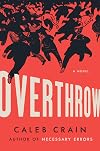
Well, folks, the first Occupy novel is here and it's mostly fine, I guess. The novel begins when Matthew, a thirty-year-old graduate student working on his dissertation, meets Leif, a younger skater dude. Instead of hooking up, Leif takes him to meet a small group of people convinced that they can read people's minds, or at least Leif and Elspeth might be able to. They spend a lot of time over at Zucotti Park trying to recruit other Occupiers to their working group, but so far it's just a show more small group of six.
An encounter with police leads Leif to think he's read the mind of one of the authorities. Testing that leads the group into illegal corners and divides the group.
Each chapter, of widely varying lengths, focuses on one member of the working group. With one exception, they are not people I was interested in knowing, although the characters did not lack depth. Crain is a solid, if verbose writer, although his love of using obscure words when simpler ones would have served the novel better was annoying and pulled me out of the story again and again. Crain's portrayal of Elspeth, the quiet girlfriend, the provider of space and support, who only comes into her own once everyone else is gone and she discovers herself, was the most compelling character and I would have liked more of her and less of the others. This was a lot longer than it should have been, and I say that as someone who enjoys a long, discursive novel, but rambling is not a trait that suits what is, at heart, a thriller.
After all that, though, I wouldn't be entirely against reading another novel by this author. show less
An encounter with police leads Leif to think he's read the mind of one of the authorities. Testing that leads the group into illegal corners and divides the group.
Each chapter, of widely varying lengths, focuses on one member of the working group. With one exception, they are not people I was interested in knowing, although the characters did not lack depth. Crain is a solid, if verbose writer, although his love of using obscure words when simpler ones would have served the novel better was annoying and pulled me out of the story again and again. Crain's portrayal of Elspeth, the quiet girlfriend, the provider of space and support, who only comes into her own once everyone else is gone and she discovers herself, was the most compelling character and I would have liked more of her and less of the others. This was a lot longer than it should have been, and I say that as someone who enjoys a long, discursive novel, but rambling is not a trait that suits what is, at heart, a thriller.
After all that, though, I wouldn't be entirely against reading another novel by this author. show less
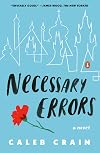
I'm finally finished with this, and enjoyed it. The book covers nearly a year in the life of a young American man living in Prague, and felt like it took nearly that long to read... though not, I should add, in a bad way. The novel meanders and is not heavy on plot, to say the least, but it does a wonderful job of capturing a particular time of life—what it's like to be in your 20s, starting to discover your place in the world and your sense of it, forming allegiances and friendships, show more incorporating a sense of adventure and novelty into the everyday aspects of your life... It's a very sensitive and rather sweet portrayal. Recommended if you feel like reading with a sense of non-urgency, and maybe have a second book on the side to pick up when you don't feel like being quite so becalmed. But quite lovely, in the end, without being too sentimental. A real review on LF to follow, one of these days.(less) show less
A few short passages from Overthrow:
It was one of those late fall days that the warming of the world has rendered so temperate and brilliant. An undeserved mercy.
It’s about admitting that most of the time people are more aware then they’d like to let on of how other people are feeling. That’s all. And that it hurts to be aware, if you can’t talk about it.
…he, too, evidently wanted to hear from Leif that soon there would be a better world, that Leif and his friends would be the show more cadres, that the poor would be fed without humiliation, that governments would invest in the health and well-being of citizens, that henceforth ingenuity would be directed into the creation of art, the discovery of new energy sources, and the preservation of the environment rather than into efforts to confuse consumers into making choices against their best interests.
He told himself that he was brave enough to be in love, if that’s what this was. He wasn’t the sort of person who needed to be in control for its own sake; he wasn’t a prude or a stuffed shirt.
Often, by the time you meet someone, both they and you have already made all the decisions that will determine the encounter between the two of you, and the only freedom that remains to either of you is whether to be pleasant.
It is no secret, for example, that the world is being poisoned and cooked, and that there’s only a generation or two left before chaos.
What she says is that it’s sometimes the followers of a sect who create the leader out of the most suggestible member. show less
It was one of those late fall days that the warming of the world has rendered so temperate and brilliant. An undeserved mercy.
It’s about admitting that most of the time people are more aware then they’d like to let on of how other people are feeling. That’s all. And that it hurts to be aware, if you can’t talk about it.
…he, too, evidently wanted to hear from Leif that soon there would be a better world, that Leif and his friends would be the show more cadres, that the poor would be fed without humiliation, that governments would invest in the health and well-being of citizens, that henceforth ingenuity would be directed into the creation of art, the discovery of new energy sources, and the preservation of the environment rather than into efforts to confuse consumers into making choices against their best interests.
He told himself that he was brave enough to be in love, if that’s what this was. He wasn’t the sort of person who needed to be in control for its own sake; he wasn’t a prude or a stuffed shirt.
Often, by the time you meet someone, both they and you have already made all the decisions that will determine the encounter between the two of you, and the only freedom that remains to either of you is whether to be pleasant.
It is no secret, for example, that the world is being poisoned and cooked, and that there’s only a generation or two left before chaos.
What she says is that it’s sometimes the followers of a sect who create the leader out of the most suggestible member. show less
Like Magic Mountain? If yes, then read this. The background lurker is not TB; it's capitalism. (Don't worry--no one catches it, even though the young expat English teachers are accused of being missionaries for the new order)
The setting, not a mountaintop sanitarium; it's Prague after the Velvet Revolution.
And Miss Chauchat; well there are several passive young men--remember this is the twenty-first century.
And dissipation--not really, just everything is on pause. I wont give away the show more plot because there is none--at least it's not very important.
The book is a pleasant slog through youth and 90's Prague, in case you missed them. show less
The setting, not a mountaintop sanitarium; it's Prague after the Velvet Revolution.
And Miss Chauchat; well there are several passive young men--remember this is the twenty-first century.
And dissipation--not really, just everything is on pause. I wont give away the show more plot because there is none--at least it's not very important.
The book is a pleasant slog through youth and 90's Prague, in case you missed them. show less
Lists
Awards


You May Also Like


Associated Authors
Statistics
- Works
- 7
- Also by
- 12
- Members
- 290
- Popularity
- #80,655
- Rating
- 3.8
- Reviews
- 7
- ISBNs
- 10
