Eustace and Hilda: A Trilogy
by L. P. Hartley
Eustace and Hilda (Collections and Selections — omnibus)
On This Page
Description
The three books gathered together as Eustace and Hilda explore a brother and sister's lifelong relationship. Hilda, the older child, is both self-sacrificing and domineering, as puritanical as she is gorgeous; Eustace is a gentle, dreamy, pleasure-loving boy: the two siblings could hardly be more different, but they are also deeply devoted. And yet as Eustace and Hilda grow up and seek to go their separate ways in a world of power and position, money and love, their relationship is marked by show more increasing pain. L. P. Hartley's much-loved novel, the magnum opus of one of twentieth-century England's best writers, is a complex and spellbinding work: a comedy of upper-class manners; a study in the subtlest nuances of feeling; a poignant reckoning with the ironies of character and fate. Above all, it is about two people who cannot live together or apart, about the ties that bind--and break. show lessTags
Recommendations



















Member Recommendations
Member Reviews
The first of the Eustace and Hilda trilogy, The Shrimp and the Anemone, which references the siblings' attempt at saving a shrimp from being eaten by an anemone to the demise of both - led me to believe that it was going to be a dysfunctional posh British family relationship with a dominating Hilda and a flighty Eustace. Despite a very clear goal, the structure of each of the three books, and the entire trilogy as a whole, was uneven - leaning heavier on the set-up than on the more-interesting actual event/resolution.
My favourite aspect of the trilogy is how realistic it was that the true antagonist of the whole story turns out to be the inevitable clash of everybody's personality. Everybody believes they're actually doing good, and show more that's a bit of villainy that rings true most of all. Hartley's true talent lies in writing character flaws that make eyes roll and mouths blurt out ohmygawdcmon! in frustration on public transport, sustaining it AND maintaining the reader's attention over seven hundred pages with the breadth of vocabulary. As the story progressed, I was rewarded tenfold by the psychological foundation this book is laying for its sequels. Hilda and Eustace's personalities, in particular Eustace's fanciful imagination and hedonistic introspections - Gah, Eustace the moronic dreamer, the weak-willed people-pleaser, the absolute bloody meddler; how unpleasant it is to be confronted by your own flaws in a terrible protagonist - , are true to a childish mind and fully realised, reminding me of Somerset Maugham's astute psychological insights into Phillip's character development in Of Human Bondage.
The omnibus includes a bonus novella, Hilda's Letter (before the second book The Sixth Heaven), which gives a rare look inside Hilda's mind of which there is really too little of. Her motivation for that relationship - to that utter creep who so insistently coveted a girl for over a decade and whom she consistently rebuffed for over a decade - was never made clear. It is very unfortunate that despite the clear-minded and strong-willed woman that Hilda is, this sudden reversal of her heart was clearly just to catalyse Eustace - her Achilles' heel - 's evolution. There was sort of an explanation near the end of how such similar and stubborn personalities would have induced and also suffocated a relationship but I would have really loved more insights into Hilda's mind as well as more growth of her character.
Aside: I really could have done with less of Eustace's Venice adventure. It echoed too much of The Parasites' miniplot of "young man living it up in foreign country on rich older woman's dime". show less
My favourite aspect of the trilogy is how realistic it was that the true antagonist of the whole story turns out to be the inevitable clash of everybody's personality. Everybody believes they're actually doing good, and show more that's a bit of villainy that rings true most of all. Hartley's true talent lies in writing character flaws that make eyes roll and mouths blurt out ohmygawdcmon! in frustration on public transport, sustaining it AND maintaining the reader's attention over seven hundred pages with the breadth of vocabulary. As the story progressed, I was rewarded tenfold by the psychological foundation this book is laying for its sequels. Hilda and Eustace's personalities, in particular Eustace's fanciful imagination and hedonistic introspections - Gah, Eustace the moronic dreamer, the weak-willed people-pleaser, the absolute bloody meddler; how unpleasant it is to be confronted by your own flaws in a terrible protagonist - , are true to a childish mind and fully realised, reminding me of Somerset Maugham's astute psychological insights into Phillip's character development in Of Human Bondage.
The omnibus includes a bonus novella, Hilda's Letter (before the second book The Sixth Heaven), which gives a rare look inside Hilda's mind of which there is really too little of. Her motivation for that relationship - to that utter creep who so insistently coveted a girl for over a decade and whom she consistently rebuffed for over a decade - was never made clear. It is very unfortunate that despite the clear-minded and strong-willed woman that Hilda is, this sudden reversal of her heart was clearly just to catalyse Eustace - her Achilles' heel - 's evolution. There was sort of an explanation near the end of how such similar and stubborn personalities would have induced and also suffocated a relationship but I would have really loved more insights into Hilda's mind as well as more growth of her character.
Aside: I really could have done with less of Eustace's Venice adventure. It echoed too much of The Parasites' miniplot of "young man living it up in foreign country on rich older woman's dime". show less
The trilogy works perfectly as one long book. This is an expertly written work that I think, is a masterpiece of Twentieth Century fiction. There is a sense of sustained excellence in this depiction of childhood and adolesence. Eustace is a charming young fellow, too eager to please. This story charts the sombre and mysterious outcome of two siblings who were too desperately intertwined. The writer has placed all his gifts of narrative, memory, physical description and dialogue into this memorable treasure.
Eustace and Hilda was originally published as three separate novels between 1944 and 1947 but in 1958 was published in one volume titled Eustace and Hilda.
In the first novel, The Shrimp and the Anemone we are introduced to Eustace and Hilda as children playing on the beach. Eustace has a heart condition that prevents him from vigorous activity and causes Hilda, who is four years his senior, to become a rather dominating chaperone. He is persuaded to befriend an elderly neighbour in a wheelchair, and although his timidity proves almost overwhelming, the relationship proves to be rewarding.
When the second novel The Sixth Heaven resumes the story, Eustace is enjoying life as an undergraduate at Oxford and Hilda running a clinic for show more "crippled" children, mostly funded by money Eustace gave to her. They are invited to a weekend visit with the upper-crust Stavely family who awed Eustace, the impressionable child, on the beach of Anchorstone. Hartley conveys the delicate class distinctions that fill the weekend with anxiety. Eustace is willing to see it through if it means a liaison between Hilda and Dick Stavely. Eustace receives a casual invitation from Dick's aunt, Lady Nelly Stavely, to be her guest in Venice. The simple yet subtle story is captivating yet essentially sad.
As the final volume of the trilogy resumes in Eustace and Hilda, Eustace is in Venice where it appears Lady Nelly has manipulated dates so that he will not be able to attend Dick Stavely's birthday party with Hilda. The party doesn't go well for Hilda but Eustace is not completely aware of what has happened until he receives a letter from his old nurse urging him to come home where Hilda has been paralyzed with shock. For Lady Nelly, it couldn't have been timed better as the novelty of hosting Eustace has worn off. He rushes off to his old home where he finds Hilda unable to move or speak. He willingly takes care of her and when the doctor suggests a shock might bring her out of the debility, alarmingly, Eustace forms a plan.
Of the trilogy, this section is the most moving and poignant. A fine end to a beautifully literary book. show less
In the first novel, The Shrimp and the Anemone we are introduced to Eustace and Hilda as children playing on the beach. Eustace has a heart condition that prevents him from vigorous activity and causes Hilda, who is four years his senior, to become a rather dominating chaperone. He is persuaded to befriend an elderly neighbour in a wheelchair, and although his timidity proves almost overwhelming, the relationship proves to be rewarding.
When the second novel The Sixth Heaven resumes the story, Eustace is enjoying life as an undergraduate at Oxford and Hilda running a clinic for show more "crippled" children, mostly funded by money Eustace gave to her. They are invited to a weekend visit with the upper-crust Stavely family who awed Eustace, the impressionable child, on the beach of Anchorstone. Hartley conveys the delicate class distinctions that fill the weekend with anxiety. Eustace is willing to see it through if it means a liaison between Hilda and Dick Stavely. Eustace receives a casual invitation from Dick's aunt, Lady Nelly Stavely, to be her guest in Venice. The simple yet subtle story is captivating yet essentially sad.
As the final volume of the trilogy resumes in Eustace and Hilda, Eustace is in Venice where it appears Lady Nelly has manipulated dates so that he will not be able to attend Dick Stavely's birthday party with Hilda. The party doesn't go well for Hilda but Eustace is not completely aware of what has happened until he receives a letter from his old nurse urging him to come home where Hilda has been paralyzed with shock. For Lady Nelly, it couldn't have been timed better as the novelty of hosting Eustace has worn off. He rushes off to his old home where he finds Hilda unable to move or speak. He willingly takes care of her and when the doctor suggests a shock might bring her out of the debility, alarmingly, Eustace forms a plan.
Of the trilogy, this section is the most moving and poignant. A fine end to a beautifully literary book. show less
Ratings
Members
- Recently Added By
Author Information

47+ Works 4,357 Members
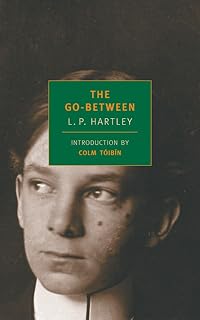
Novelist, short-story writer, and literary critic, L. P. Hartley won the James Tait Black Memorial Prize in 1947 for Eustace and Hilda. Part of a trilogy that offers a penetrating and disturbing psychological study of what Hartley called "sisteritis" in an upper-middle-class family, the three books were described by the London Times as "unique in show more modern writing...diverting and disturbing. Beneath a surface "almost overcivilized' the reviewer found "a hollow of horror."' One of Hartley's special interests is Henry James, with whom he has been compared. In The Tragic Comedians, James Hall devotes a chapter to Hartley, who is respected but not popular in Britain, read by few in America, but praised by discerning critics in both countries: "Along with Green and Powell, Hartley has changed the direction of the comic novel, raising even more seriously than they the question of whether it remains comic at all.... His freshness consists at first in simply changing the patterns of the naturalist novel from social insights to emotional ones; yet in doing so he departs from both the older solid way of conceiving character and the more recent fluid way of conceiving consciousness." David Cecil called The Go-Between (1953) "impressive," and wrote: "Hartley is for me the first of living novelists in certain important respects; beauty of style, lyrical quality of feeling and, above all, the power and originality of his imagination, which wonderfully mingles ironic comedy, whimsical fancy and a mysterious Hawthorne-like poetry." The Novelist's Responsibility is a collection of essays and letters. (Bowker Author Biography) show less
Some Editions
Series

Belongs to Publisher Series
Work Relationships
Common Knowledge
- Canonical title
- Eustace and Hilda: A Trilogy
- People/Characters
- Eustace Cherrington; Hilda Cherrington
- First words
- "Eustace! Eustace!" Hilda's tones were always urgent; it might not be anything very serious.
- Last words
- (Click to show. Warning: May contain spoilers.)But the cold crept onwards and he did not wake.
- Blurbers*
- Cecil, David; Betjeman, John
- Original language*
- English
*Some information comes from Common Knowledge in other languages. Click "Edit" for more information.
Classifications
Statistics
- Members
- 331
- Popularity
- 96,214
- Reviews
- 3
- Rating
- (3.90)
- Languages
- English, Swedish
- Media
- Paper, Ebook
- ISBNs
- 5
- ASINs
- 7