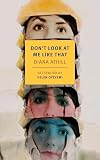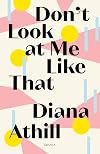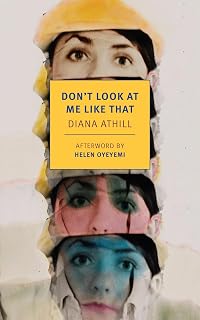
Don't Look at Me Like That
by Diana Athill
On This Page
Description
"In England half a century ago, well-brought-up young women are meant to aspire to the respectable life. Some things are not to be spoken of; some are most certainly not to be done. There are rules, conventions. Meg Bailey obeys them. She progresses from Home Counties school to un-Bohemian art college with few outward signs of passion or frustration. Her personality is submerged in polite routines; even with her best friend, Roxane, what can't be said looms far larger than what can. But show more circumstances change. Meg gets a job and moves to London. Roxane gets married to a man picked out by her mother. And then Meg does something shocking - shocking not only by the standards of her time, but by our own. As sharp and as startling now as when it was written, Don't Look At Me Like That matches Diana Athill's memoirs After a Funeral and Instead of a Letter in its gift for storytelling and its unflinching candour about love and betrayal"-- show lessTags
Recommendations














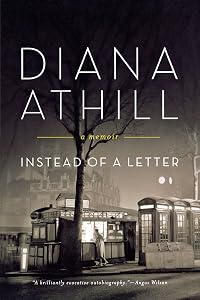








Member Recommendations
Member Reviews
What a horrible little book! Barely a novel at all, more a novella to be read in one sitting, but Meg the narrator was so snotty that I kept having to stop and start just to get through and get rid. Like Valley of the Dolls and The Best of Everything, the attitude of women in the 1950s and 1960s seems pathetic to 21st century readers (well, me, anyway), even when they're pretending to be modern and independent like Meg.
Meg Bailey is an insufferable prude from the Home Counties who bemoans everything in her life, from her 'embarrassing' parents to how men just can't help falling for her beauty. She moves to London, naturally, to become an illustrator, shacking up in the bedroom of a single mum and her other lodgers, and starts an affair show more with the husband of her childhood best friend, Roxanne. Oh yes, Meg moans about Roxanne and her glamorous mother, too. But having an affair with a married man isn't wrong when Meg is the one getting what she wants, of course, and anyone who says otherwise is just bitter. Seriously. And then the obvious happens and Meg finds out she is pregnant just after her lover leaves for America with his wife and kids, and despite not really liking children or being at all maternal, Meg decides to keep her (illegitimate) baby because 'it will love me' - or as one honest character tells her, 'You're one of those women who don't want a child at all, they want a magic mirror'.
'I had learnt that the man was not worth loving and it hadn't stopped me loving him. I knew that other men could love me and I didn't care. I had betrayed Roxanne and she didn't know it. I had shocked and wounded my parents and we no longer admitted it.'
What a hateful, prejudiced, obnoxious, arrogant, stuck-up, self-serving, cock-teasing bitch! I'm glad this was such a short book, and from the library, because I had the strongest urge to throw my copy in the bin. Are we supposed to cheer Meg on for taking control of her life while ruining other people's, or find her slightly hysterical and unpleasant? I'm not entirely sure. Clever writing and astute observations, but if you read for the characters like I do, Meg will make you retch. I remember reading and enjoying Diana Athill's memoirs about the publishing industry, Stet, but hated this fictional outing with a passion. I'm glad she stopped there. show less
Meg Bailey is an insufferable prude from the Home Counties who bemoans everything in her life, from her 'embarrassing' parents to how men just can't help falling for her beauty. She moves to London, naturally, to become an illustrator, shacking up in the bedroom of a single mum and her other lodgers, and starts an affair show more with the husband of her childhood best friend, Roxanne. Oh yes, Meg moans about Roxanne and her glamorous mother, too. But having an affair with a married man isn't wrong when Meg is the one getting what she wants, of course, and anyone who says otherwise is just bitter. Seriously. And then the obvious happens and Meg finds out she is pregnant just after her lover leaves for America with his wife and kids, and despite not really liking children or being at all maternal, Meg decides to keep her (illegitimate) baby because 'it will love me' - or as one honest character tells her, 'You're one of those women who don't want a child at all, they want a magic mirror'.
'I had learnt that the man was not worth loving and it hadn't stopped me loving him. I knew that other men could love me and I didn't care. I had betrayed Roxanne and she didn't know it. I had shocked and wounded my parents and we no longer admitted it.'
What a hateful, prejudiced, obnoxious, arrogant, stuck-up, self-serving, cock-teasing bitch! I'm glad this was such a short book, and from the library, because I had the strongest urge to throw my copy in the bin. Are we supposed to cheer Meg on for taking control of her life while ruining other people's, or find her slightly hysterical and unpleasant? I'm not entirely sure. Clever writing and astute observations, but if you read for the characters like I do, Meg will make you retch. I remember reading and enjoying Diana Athill's memoirs about the publishing industry, Stet, but hated this fictional outing with a passion. I'm glad she stopped there. show less
This extremely introspective novel of a girl's growth into womanhood in 1950's London was rather a bore. The narrator, Meg, examines every situation she's in and every feeling she has about it to an incredible degree. This might be less jarring if told from a third person omniscient narrator, but in first person it becomes almost unbearable in its intense naval-gazing. Also, I find I don't really like her that much. Her story is supposed to be rather shocking and racy for the time and place it was written, but I found it both predictable and rather distasteful. Another character refers to Meg as a "cock-teasing bitch" and although she prefers to ascribe the comment to the speaker's own sadness and bitterness, I can't disagree with her. show more My personal philosophy is to live life having as much fun as possible without hurting anyone. Meg seems to live as miserably as possible, "unintentionally" hurting many people, and always being concerned with how she appears to an unseen outside non-existent observer. Since I as the reader am just such an observer, I'd advise her to stop being such a whiny bitch and grow up. She is the kind of woman who gives the rest of us a crazy, neurotic, hysterical bad name. show less
I was ready to drop this book, a third of the way in, thinking it a dreary memoir of a fastidious girl’s coming of age. The treatment felt both detached and dull, laden with judgemental flavour in all the character descriptions, and elaborate probing of the psychology or motivations of everyone. More fundamentally, If the first person in a narrator narrative is not in some way likeable, its hard to appreciate the account…
But then, on the point of baling out, I suddenly realised that it was all a novel , not a memoir as such; it was made up of made-up situations and people, and that somehow reprieved the prissiness. So I read on. Later still a bit of plot breaks out, and by now one is interested. The protagonist has a bit more show more presence, now she has something to do. And so ultimately, one can appreciate (less wearyingly than during the earlier longueurs) the careful, precise thinking and expression, which is more or less the hallmark of the book, of Athill’s writing. show less
But then, on the point of baling out, I suddenly realised that it was all a novel , not a memoir as such; it was made up of made-up situations and people, and that somehow reprieved the prissiness. So I read on. Later still a bit of plot breaks out, and by now one is interested. The protagonist has a bit more show more presence, now she has something to do. And so ultimately, one can appreciate (less wearyingly than during the earlier longueurs) the careful, precise thinking and expression, which is more or less the hallmark of the book, of Athill’s writing. show less
This is beautifully written, like all Diana Athill's books. The development of Meg's rebellions, from her disregard for school rules through to the ultimate rejection of her society's mores when she decides to keep her child, is well crafted and convincing. The blend of contemporary Meg, commenting on her past actions, and Meg as a youth is skillfully achieved; I never felt that youthful Meg had too much self-awareness, because I was always aware of when the narrative spoke through her older, more reflective voice.
Not a favorite. Good storyteller, well drawn characters, but a bit dark for my taste. I was quite startled at the ending. I was cruising right along seeing a possibility for light at the end of the tunnel, and snap it was over. I guess this is where I let my imagination decide how things work out. I received an advance readers copy of this from the publisher and EdelweissPlus. I ordered a copy from the library thinking something was missing in my edition, but no that's that!
Ratings
Members
- Recently Added By
Author Information

15+ Works 2,495 Members
Diana Athill was born in England on December 21, 1917. She was educated at Oxford University. During World War II, she as a researcher with the BBC. She worked as an editor at Allan Wingate and then at André Deutsch. Athill started writing autobiography in her early 40s. Her memoir, Instead of a Letter, was published in 1962. Her other memoirs show more included After a Funeral; Make Believe; Alive, Alive Oh!; Stet; Yesterday Morning; and A Florence Diary. Somewhere Towards the End won a Costa Book Award and a National Book Critics Circle Award. Her other works included a volume of short stories entitled An Unavoidable Delay and a novel entitled Don't Look at Me Like That. She was awarded the Order of the British Empire in 2009. She died on January 23, 2019 at the age of 101. (Bowker Author Biography) show less
Some Editions
Series
Belongs to Publisher Series
Common Knowledge
- Canonical title
- Don't Look at Me Like That
- Original title
- Don't Look at Me Like That
- Alternate titles
- Do Not Look at Me Like That
- Original publication date
- 1967
- First words
- When I was at school I used to think that everyone disliked me, and it wasn't far from true.
If, for just a moment, we view the story of literature as an epic adventure in which a band of fortune hunters with widely varying sets of skills accepts the challenge of accessing reality and bringing accurate descriptions o... (show all)f it back across a bridge made of words, we might assign Diana Athill the role of the group shape-shifter. (Afterword) - Last words
- (Click to show. Warning: May contain spoilers.)There's something almost enjoyable in having one person in the world I can truly hate.
(Click to show. Warning: May contain spoilers.)And perhaps this was one of the gifts that Athill, with her intimate working knowledge of that which only the novel can offer, had in mind when she made her singular shift into this form. (Afterword) - Blurbers
- Freeman, Laura; Taylor, Catherine; Self, John
- Original language
- English
Classifications
Statistics
- Members
- 158
- Popularity
- 207,383
- Reviews
- 5
- Rating
- (3.65)
- Languages
- English
- Media
- Paper, Ebook
- ISBNs
- 5
- ASINs
- 2