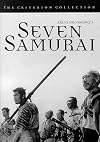
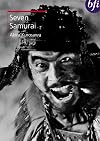
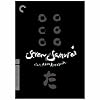
Seven Samurai [1954 film]
by Akira Kurosawa (Director), Shinobu Hashimoto (Screenwriter), Hideo Oguni (Screenwriter)
On This Page
Description
This epic masterpiece is about a group of 16th century samurai who are hired to defend a small Japanese village that finds itself annually raided by an army of bandits who steal the meager crops harvested by the peasants. Tired of relinquishing their food supply but woefully inept in combat skills, the villagers decide to hire a band of samurai to protect them. In addition to the primary conflict between the villagers and the bandits, much of the tale revolves around young Katsushiro's show more coming-of-age, both sexually and emotionally. Kikuchiyo's search for acceptance forms the other major storyline. Indeed, everyone in Seven Samurai is searching: for adventure, for experience, for freedom from their oppressors. show lessTags
Recommendations










Member Reviews
Gee, I know it's a classic and I'm supposed to love it, and I usually do love classics. But it is way too slow and not nearly as exciting as its descendent, The Magnificent Seven.
Samurai defend a village from bandits.
A three-and-a-half hour historical epic, and it doesn't bore me. This should not be possible.
Concept: A
Story: A
Characters: A
Dialog: B
Pacing: B
Cinematography: B
Special effects/design: B
Acting: A
Music: A
Enjoyment: B
GPA: 3.5/4
A three-and-a-half hour historical epic, and it doesn't bore me. This should not be possible.
Concept: A
Story: A
Characters: A
Dialog: B
Pacing: B
Cinematography: B
Special effects/design: B
Acting: A
Music: A
Enjoyment: B
GPA: 3.5/4
Who's a fictional military leader I'd follow into combat? Kambei Shinada (Takashi Shimura) from Kurosawa's 7 Samurai, of course. The old-school, old-gangsta bad-ass middle-aged man 💪
Mar 15, 2024 (Edited)Portuguese (Brazil)
207 minutos
Dec 27, 2012Portuguese (Brazil)
Ratings
Members
- Recently Added By
Published Reviews
ThingScore 100
The Seven Samurai doesn’t seem like a historical or “period” film at all: everything is going on now, right on top of us. Kurosawa can create diversion that doesn’t divert from the subject: when the farmers scan the street for hungry samurai, he presents a little scherzo of elegant figures moving through humbler humanity. The stance, the formalized carriage of the samurai, gives show more substance to the farmers’ desperate faith in them: surely they could dispose of countless ordinary men. The pace and cinematic feeling, the verve, the humor are completely modern.
Kurosawa is perhaps the greatest of all contemporary film craftsmen: his use of the horizon for compositional variety, the seemingly infinite camera angles, the compositions that are alive with action, the almost abstract use of trees, flowers, sky, rain, mud, and moving figures are all active. In The Seven Samurai your eye does not rest — you do not see any of the static, careful arrangements, the crawling, overcomposed salon photography of Hollywood’s big productions. show less
Kurosawa is perhaps the greatest of all contemporary film craftsmen: his use of the horizon for compositional variety, the seemingly infinite camera angles, the compositions that are alive with action, the almost abstract use of trees, flowers, sky, rain, mud, and moving figures are all active. In The Seven Samurai your eye does not rest — you do not see any of the static, careful arrangements, the crawling, overcomposed salon photography of Hollywood’s big productions. show less
added by SnootyBaronet
Lists

Favourites: Celebrating LT at the Movies
29 works; 4 members

100 Films Challenge
100 works; 1 member
Author Information

Kurosawa generally is recognized as the best of the modern Japanese filmmakers. He was the first Japanese director to gain international recognition, partly because his storytelling technique is not culture-bound. Rashomon (1950), a story of rape and terror that is told from several different viewpoints, received first prize at the Venice Film show more Festival in 1951; the film's title has become synonymous with the concept of subjective truth expressed in widely varying versions of the same story. The Seven Samurai (1954), a humanistic tale of samurai risking their lives to defend a poor village, is another Kurosawa classic. Kurosawa has always been attracted to Western literature, and two of his most notable films are based on Shakespeare's plays: Throne of Blood (1957), a retelling of Macbeth, and Ran (1985), a masterly reinterpretation of King Lear. (Bowker Author Biography) show less
Shinobu Hashimoto was born in the Hyogo Prefecture in west central Japan on April 18, 1918. He enlisted in the army in 1938, but contracted tuberculosis during his training and spent the next four years in a veterans' sanitarium. After he was discharged from the sanitarium, he went to work as an accountant for a munitions company and wrote show more screenplays in his spare time. His first film, Rashomon, won the Golden Lion at the 1951 Venice Film Festival and received what was then called the honorary foreign-language film award at the Oscars. He went on to collaborate with director Akira Kurosawa on numerous films including Ikiru, Seven Samurai, I Live in Fear, Throne of Blood, The Hidden Fortress, The Bad Sleep Well, and Dodes'ka-den. Hashimoto started his own production company, Hashimoto Pro, in 1974. His other screenplays include Harakiri, Samurai Rebellion, The Castle of Sand, and Village of Eight Gravestones. His memoir was entitled Compound Cinematics: Akira Kurosawa and I. He received the Jean Renoir Award, presented by the Writers Guild of America for outstanding contributions to international screenwriting. He died on July 19, 2018 at the age of 100. (Bowker Author Biography) show less
All Editions
Some Editions
Awards and Honors
Awards
Series
Belongs to Publisher Series
Work Relationships
Is contained in
Is retold in
Has as a study
Has as a commentary on the text
Common Knowledge
- Canonical title
- Seven Samurai [1954 film]
- Original title
- 七人の侍; Shichinin no Samurai
- Original publication date
- 1954-04-26
- People/Characters
- Kambei Shimada; Gorōbei Katayama; Shichirōji; Kyūzō; Heihachi Hayashida; Katsushirō Okamoto (show all 7); Kikuchiyo
- Important places
- Feudal Japan; Japan
- Important events
- Sengoku period; Muromachi period; 16th century; 1580s; 1586
- Related movies
- Seven Samurai (1954 | IMDb)
- Quotations
- This is the nature of war: By protecting others, you save yourselves. If you only think of yourself, you'll only destroy yourself.
- Original language
- Japanese
Classifications
Statistics
- Members
- 449
- Popularity
- 67,916
- Reviews
- 4
- Rating
- (4.50)
- Languages
- 6 — Dutch, English, Finnish, Italian, Japanese, Spanish
- ISBNs
- 14
- UPCs
- 4
- ASINs
- 30