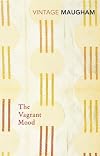
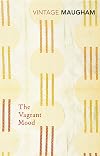
The Vagrant Mood
by W. Somerset Maugham 
On This Page
Description
The Vagrant Mood is a brilliantly varied and colourful collection of essays. From Kant to Raymond Chandler; from the legend of Zurbaran to the art of the detective story; from Burke to Augustus Hare, Somerset Maugham brings his inimitable mastery of the incisive character sketch to the genre of literary criticismTags
Recommendations





















Member Reviews
Like the essays in Points of view (1958), the essays in The vagrant mood were written in W. Somerset Maugham later life, and bear characteristics of being written leisurely, based on reminiscences of an author who is looking back on a long and interesting life.
In the first essay, "Augustus", Maugham describes the life and fate of Augustus Hare, "the last Victorian" who appears as quite a dandy. Maugham had met and befriended Augustus Hare as a young man and was obviously fascinated by this peculiar descendant of pedigree.
In a similar vein, the last essay "Some Novelists I Have Known" describes authors Maugham met in his life time, particularly in his later life. There are some very enjoyable anecdotes about Henry James, H.G. Wells and show more Arnold Bennett.
The second essay in the collection describes Maugham's appreciation and the life of the Spanish painter Francisco de Zurbarán. The next three essays are about letters, "The Decline and Fall of the Detective Story", "After Reading Burke" and "Reflections on a Certain Book".
The vagrant mood seems particularly interesting for readers with an interest in the late Victorian and Edwardian period, the epoch W. Somerset Maugham himself was active, as it contains his observations and reflections of the literary and cultural scene at that time. show less
In the first essay, "Augustus", Maugham describes the life and fate of Augustus Hare, "the last Victorian" who appears as quite a dandy. Maugham had met and befriended Augustus Hare as a young man and was obviously fascinated by this peculiar descendant of pedigree.
In a similar vein, the last essay "Some Novelists I Have Known" describes authors Maugham met in his life time, particularly in his later life. There are some very enjoyable anecdotes about Henry James, H.G. Wells and show more Arnold Bennett.
The second essay in the collection describes Maugham's appreciation and the life of the Spanish painter Francisco de Zurbarán. The next three essays are about letters, "The Decline and Fall of the Detective Story", "After Reading Burke" and "Reflections on a Certain Book".
The vagrant mood seems particularly interesting for readers with an interest in the late Victorian and Edwardian period, the epoch W. Somerset Maugham himself was active, as it contains his observations and reflections of the literary and cultural scene at that time. show less
Ratings
Members
- Recently Added By
Lists

1950s
340 works; 22 members

The Non-Fiction Works of W. Somerset Maugham
19 works; 1 member
Author Information

701+ Works 46,638 Members
Writer William Somerset Maugham was born in Paris on January 25, 1874. He attended St. Thomas's Medical School in London. A prolific writer, Maugham produced novels, short stories, plays, and an autobiographical novel, "Of Human Bondage." Although he remains popular for his novels and short stories, when he was alive his plays, now dated, were show more also popular, and in 1908 four of his plays ran simultaneously. Maugham died in Nice, France, on December 16, 1965. (Bowker Author Biography) show less
W. Somerset Maugham has a Legacy Library. Legacy libraries are the personal libraries of famous readers, entered by LibraryThing members from the Legacy Libraries group.
Common Knowledge
- Canonical title
- The Vagrant Mood
- Original title
- The Vagrant Mood
- Original publication date
- 1952
- People/Characters
- Augustus Hare; Francisco de Zurbaran; H. G. Wells; Henry James; Arnold Bennett; Edmund Burke (show all 10); Immanuel Kant (1724-1804); Raymond Chandler; Dashiell Hammett; E. C. Bentley
Classifications
Statistics
- Members
- 108
- Popularity
- 300,621
- Reviews
- 1
- Rating
- (4.25)
- Languages
- English, French, Italian
- Media
- Paper, Ebook
- ISBNs
- 9
- ASINs
- 10