On This Page
Description
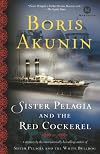
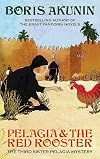
The ship carrying the devout to Jerusalem has run into rough waters. Onboard is Manuila, controversial leader of the “Foundlings,” a sect that worships him as the Messiah. But soon the polarizing leader is no longer a passenger or a prophet but a corpse, beaten to death by someone almost supernaturally strong. But not everything is as it seems, and someone else sailing has become enmeshed in the mystery: the seemingly slow but actually astute sleuth Sister Pelagia. Her investigation of show more the crime will take her deep into the most dangerous areas of the Middle East and Russia, running from one-eyed criminals and after such unlikely animals as a red cockerel that may be more than a red herring. To her shock, she will emerge with not just the culprit in a murder case but a clue to the earth’s greatest secret. Sister Pelagia and the Red Cockerel features its beloved heroine’s most exciting and explosive inquiry yet, one that just might shake the foundations of her faith. show lessTags
Recommendations















































Member Reviews
PELAGIA & THE RED ROOSTER is the third book (and I believe the last) in this series by Russian author Grigory Chkhartishvili aka Boris Akunin. Readers may be more aware of the six Erast Fandorin novels, which I understand have sold over 18 million copies in Russia alone.
This is the first of the Pelagia novels I've read, having had the pleasure of a few of the Fandorin novels before, and I was reminded again of the absolute feeling of 19th and, in this case, 20th Century Russian sensibility that this author brings to his books.
Having said that, I'm not sure that I'd recommend a new reader to the Pelagia series start at this point, not the least because I found this book more than a little odd. It took quite a while to get the character show more of Sister Pelagia figured out, especially, as I had no idea what it was that bought the young Polina Andreevna to a convent in rural Zavolzhsk by the Volga, to take up the habit and turn to teaching at the local school. I suspect this lack of background made Pelagia seem a most unlikely sort of a nun to have come from this place, in this timeframe. Pelagia has a very unexpected attitude to authority within the church, and a quite upfront relationship with the Bishops and with her fellow-travellers. To say nothing of a level of freedom which didn't quite make sense at points.
On a ship returning from St Petersburg, Pelagia comes across members of a controversial Jewish sect. After the murder of a man, initially believed to be the sect's charismatic leader in the cabin next door to Pelagia, she travels even further afield; seeking the dead man's true identity and the whereabouts of the real founder of the sect - Manuila; as well as, ultimately, a murderer.
As Sister Pelagia conducts this investigation she is hindered by a lurking man with a removable eye, but aided by a small Red Rooster and the public prosecutor Matvei Bentsionovich Berdichevsky. Matvei a Jew who has converted to Russian Orthodoxy, finds himself pursuing leads within government circles, surrounded by political machinations, intrigues, and anti-Semitic hostility. He also finds himself very preoccupied by his attraction to Sister Pelagia. Meanwhile she is forced to flee to the Holy Land, encountering Palestinian guides, Zionist groups and an American millionaire supporting the re-establishment of Soddom.
Needless to say, this is a very complicated, convoluted and heavily populated plot to get a handle on whilst you are also trying to work out what the central character's personal story is. It could also be very easy to think that you are heading into expected territory what with a single, female, unlikely central investigator. Pelagia, however, is not a Russian Miss Marple character. Very quickly it becomes obvious that PELAGIA & THE RED ROOSTER is not just an intricate tale of religious differences, tensions and obsessions, it is also a tale of a society that is undergoing massive upheaval. Whist appreciating the glimpse into the societal aspects, I never did lose the feeling throughout the book that things were a bit odd. Whether or not it was the elaborate, very Russian stylings, balanced against a nun who didn't seem to be behaving as expected; whether or not it was the religious machinations which were laid on very very thick, or simply the sense that everybody hated everyone who wasn't from their own group, I couldn't shake the feeling that I just didn't quite know what was going on. I think I would have preferred a lot more of the red rooster, and a lot less of the religious machinations. Perhaps if you're a fan of intricate historical perspectives, with a higher tolerance for or interest in religious perspectives - you might like to try the Sister Pelagia series.
The earlier books are Pelagia and the Black Monk and Pelagia and the White Bulldog. show less
This is the first of the Pelagia novels I've read, having had the pleasure of a few of the Fandorin novels before, and I was reminded again of the absolute feeling of 19th and, in this case, 20th Century Russian sensibility that this author brings to his books.
Having said that, I'm not sure that I'd recommend a new reader to the Pelagia series start at this point, not the least because I found this book more than a little odd. It took quite a while to get the character show more of Sister Pelagia figured out, especially, as I had no idea what it was that bought the young Polina Andreevna to a convent in rural Zavolzhsk by the Volga, to take up the habit and turn to teaching at the local school. I suspect this lack of background made Pelagia seem a most unlikely sort of a nun to have come from this place, in this timeframe. Pelagia has a very unexpected attitude to authority within the church, and a quite upfront relationship with the Bishops and with her fellow-travellers. To say nothing of a level of freedom which didn't quite make sense at points.
On a ship returning from St Petersburg, Pelagia comes across members of a controversial Jewish sect. After the murder of a man, initially believed to be the sect's charismatic leader in the cabin next door to Pelagia, she travels even further afield; seeking the dead man's true identity and the whereabouts of the real founder of the sect - Manuila; as well as, ultimately, a murderer.
As Sister Pelagia conducts this investigation she is hindered by a lurking man with a removable eye, but aided by a small Red Rooster and the public prosecutor Matvei Bentsionovich Berdichevsky. Matvei a Jew who has converted to Russian Orthodoxy, finds himself pursuing leads within government circles, surrounded by political machinations, intrigues, and anti-Semitic hostility. He also finds himself very preoccupied by his attraction to Sister Pelagia. Meanwhile she is forced to flee to the Holy Land, encountering Palestinian guides, Zionist groups and an American millionaire supporting the re-establishment of Soddom.
Needless to say, this is a very complicated, convoluted and heavily populated plot to get a handle on whilst you are also trying to work out what the central character's personal story is. It could also be very easy to think that you are heading into expected territory what with a single, female, unlikely central investigator. Pelagia, however, is not a Russian Miss Marple character. Very quickly it becomes obvious that PELAGIA & THE RED ROOSTER is not just an intricate tale of religious differences, tensions and obsessions, it is also a tale of a society that is undergoing massive upheaval. Whist appreciating the glimpse into the societal aspects, I never did lose the feeling throughout the book that things were a bit odd. Whether or not it was the elaborate, very Russian stylings, balanced against a nun who didn't seem to be behaving as expected; whether or not it was the religious machinations which were laid on very very thick, or simply the sense that everybody hated everyone who wasn't from their own group, I couldn't shake the feeling that I just didn't quite know what was going on. I think I would have preferred a lot more of the red rooster, and a lot less of the religious machinations. Perhaps if you're a fan of intricate historical perspectives, with a higher tolerance for or interest in religious perspectives - you might like to try the Sister Pelagia series.
The earlier books are Pelagia and the Black Monk and Pelagia and the White Bulldog. show less
If I could have rated this book at six stars, I would have done so, and even then have wondered whether I was holding back for fear of seeming too enthusiastic.
I really enjoy Akunin's books in general, but this one had me spellbound. There's so much that I could say about the book, but I'd hate to spoil the treats in store for anyone.
The ending! The dénoument! What a way to end a series! I'd never have dared a plot like this, but... Akunin's done it, and I'm unutterably grateful that he has.
I really enjoy Akunin's books in general, but this one had me spellbound. There's so much that I could say about the book, but I'd hate to spoil the treats in store for anyone.
The ending! The dénoument! What a way to end a series! I'd never have dared a plot like this, but... Akunin's done it, and I'm unutterably grateful that he has.
n the third Sister Pelagia novel, Boris Akunin sends the strong-willed detective-nun from her post at the Zavolzhsk Diocesan School for Girls all the way to the Holy Land. She is both pursuing and pursued with odds stacked heavily against her. All is well, more or less, in the end - whether with the help of God or not is up to the reader to decide.
The book includes quite a lot of religious debate. Judaism and Christianity with variants of each come under consideration. Is the prophet Manuila the Second Coming of Christ or the first coming of the Jewish savior? Or is he insane? Or is he duping everyone? Who are the forces resisting him?
At the same time that Pelagia is in Palestine, the local prosecutor Berdichevsky is off on his own show more far-flung investigation into religious extremists. His investigation leads him to some very unexpected names and places.
I found the multiple plot lines overly complicated and difficult to follow. At times one struggled to recall what Pelagia or Berdichevsky were up to. The ending suggests that the Red Cockerel may be Sister Pelagia's last adventure. I enjoyed the first two books in the series, but after this trip around the labyrinth, I will not miss the sister. Fear not fans of Boris Akunin; he has written 12 Erast Fandorin crime novels and has started a series (yet to be published in the US) featuring Erast's grandson! show less
The book includes quite a lot of religious debate. Judaism and Christianity with variants of each come under consideration. Is the prophet Manuila the Second Coming of Christ or the first coming of the Jewish savior? Or is he insane? Or is he duping everyone? Who are the forces resisting him?
At the same time that Pelagia is in Palestine, the local prosecutor Berdichevsky is off on his own show more far-flung investigation into religious extremists. His investigation leads him to some very unexpected names and places.
I found the multiple plot lines overly complicated and difficult to follow. At times one struggled to recall what Pelagia or Berdichevsky were up to. The ending suggests that the Red Cockerel may be Sister Pelagia's last adventure. I enjoyed the first two books in the series, but after this trip around the labyrinth, I will not miss the sister. Fear not fans of Boris Akunin; he has written 12 Erast Fandorin crime novels and has started a series (yet to be published in the US) featuring Erast's grandson! show less
To me, it's a classic: mystery and history and religious history combined in one...
Sister Pelagia has all of Palestine to wander in -- how's that pertinent?
En allant acheter mes tomes manquants de Alatriste, je suis tombé sur le dernier volume des aventures de Pélagie, la moniale inspectrice de Boris Akounine. Je n’ai pas résisté, je l’ai acheté, je l’ai emporté et j’ai bien fait.
“Pélagie et le coq rouge” suit “Pélagie et le bouledogue blanc” et “Pélagie et le moine noir”. J’avais lu les premiers avec un immense bonheur, comme tous les livres d’Akounine. Je ne peux que vous conseiller les aventures d’Eraste Fandorine, mais ne commencez pas à lire ça si vous avez des choses à faire. La première page lue vous ne pourrez plus vous arrêter et vous serez happé par le talent de ce russe. Akounine est un écrivain cultivé, très cultivé, avec une show more écriture russe, très russe. J’adore, je suis un fan intégral. Alors ma critique risque de ne pas être très objective.
Pélagie est une moniale orthodoxe particulière, arrivée à la vocation dans des conditions peu claires mais qu’on imagine dramatique. C’est un héros féminin, subtile, complexe, avec un talent pour se mettre dans des situations impossibles dont elle se tire toujours avec plus ou moins de bonheur. Si le premier tome de la série est assez classique dans son intrigue et rappelle des grandes pages tolstoiennes par le milieu où il se déroule. Le deuxième tome, commence à flirter avec le fantastique, les explications rationnels permettent de retomber dans le monde normal. Il y a des pages qui rappelle Gogol et des analyses psychologiques proches de Dostoiveski et toujours des clins d’oeil à d’autres genres littéraires. L’humour est une des armes préférés d’Akounine pour vous harponnez à ses romans, et ça mmarche. Ce troisième tome est plus complexe dans sa construction, il est choral. Akounine maîtrise son récit et utilise les événements développés dans les autres ouvrages pour alimenter le texte. C’est très fort. C’est comme si les deux premiers romans étaient une préparation à celui ci. Le propos est passionnant. C’est un exploration des religions et de leur cohabitation dans la Russie tsariste. Bien évidement, c’est une critique acerbe de la situation actuelle et des luttes soit disant inter religieuses. Le texte vous fera parcourir l’outre volga, vous irez à st petersbourg et surtout vous traînerez vos guêtres en palestine. Le chemin de Pélagie en Palestine est émouvant, de Jérusalem à la mer morte et retour, parcourant ce pays en quête du christ, sur cette terre sainte qui la déçoit tant. Sodome et gomorrhe se reconstruisent, le sionisme naît, et un miracle se produit. C’est très beau, c’est fantastique. Le roman est sombre, très sombre mais il éclate en une révélation et en une critique très dure de notre temps. Le propos d’Akounine sous son air débonnaire et miraculeux est d’une acuité rare. C’est une attaque en règle des églises. Il est très voltairien dans son propos. Un conte distrayant et qui vous fera réfléchir.
Je ne vous en dirai pas plus.
Lisez les trois à la suite, ce ne sera que du bonheur, il existe tous en poche. Mais je vous ai prévenu, préparez vous à ne rien faire d’autres. Je l’ai lu durant le retour en france, je n’ai pas vu le voyage passer. Akounine est vraiment très, très fort. show less
“Pélagie et le coq rouge” suit “Pélagie et le bouledogue blanc” et “Pélagie et le moine noir”. J’avais lu les premiers avec un immense bonheur, comme tous les livres d’Akounine. Je ne peux que vous conseiller les aventures d’Eraste Fandorine, mais ne commencez pas à lire ça si vous avez des choses à faire. La première page lue vous ne pourrez plus vous arrêter et vous serez happé par le talent de ce russe. Akounine est un écrivain cultivé, très cultivé, avec une show more écriture russe, très russe. J’adore, je suis un fan intégral. Alors ma critique risque de ne pas être très objective.
Pélagie est une moniale orthodoxe particulière, arrivée à la vocation dans des conditions peu claires mais qu’on imagine dramatique. C’est un héros féminin, subtile, complexe, avec un talent pour se mettre dans des situations impossibles dont elle se tire toujours avec plus ou moins de bonheur. Si le premier tome de la série est assez classique dans son intrigue et rappelle des grandes pages tolstoiennes par le milieu où il se déroule. Le deuxième tome, commence à flirter avec le fantastique, les explications rationnels permettent de retomber dans le monde normal. Il y a des pages qui rappelle Gogol et des analyses psychologiques proches de Dostoiveski et toujours des clins d’oeil à d’autres genres littéraires. L’humour est une des armes préférés d’Akounine pour vous harponnez à ses romans, et ça mmarche. Ce troisième tome est plus complexe dans sa construction, il est choral. Akounine maîtrise son récit et utilise les événements développés dans les autres ouvrages pour alimenter le texte. C’est très fort. C’est comme si les deux premiers romans étaient une préparation à celui ci. Le propos est passionnant. C’est un exploration des religions et de leur cohabitation dans la Russie tsariste. Bien évidement, c’est une critique acerbe de la situation actuelle et des luttes soit disant inter religieuses. Le texte vous fera parcourir l’outre volga, vous irez à st petersbourg et surtout vous traînerez vos guêtres en palestine. Le chemin de Pélagie en Palestine est émouvant, de Jérusalem à la mer morte et retour, parcourant ce pays en quête du christ, sur cette terre sainte qui la déçoit tant. Sodome et gomorrhe se reconstruisent, le sionisme naît, et un miracle se produit. C’est très beau, c’est fantastique. Le roman est sombre, très sombre mais il éclate en une révélation et en une critique très dure de notre temps. Le propos d’Akounine sous son air débonnaire et miraculeux est d’une acuité rare. C’est une attaque en règle des églises. Il est très voltairien dans son propos. Un conte distrayant et qui vous fera réfléchir.
Je ne vous en dirai pas plus.
Lisez les trois à la suite, ce ne sera que du bonheur, il existe tous en poche. Mais je vous ai prévenu, préparez vous à ne rien faire d’autres. Je l’ai lu durant le retour en france, je n’ai pas vu le voyage passer. Akounine est vraiment très, très fort. show less
Dec 17, 2010French
1
Dernier épisode de la trilogie de la soeur Pélagie, une enquête un peu plus complexe et confuse que les deux premières. Peut-être un peu tiré en longueur et moins captivant que les autres mais rattrapé pour moi par le dénouement surprenant. Le caractère d'Emmanuel que l'on découvre finallement fort tard dans l'histoire aurait peut-être mérité un peu plus de temps parce qu'il est intéressant et laisse l'impression qu'il avait plus de choses à dire.
Aug 28, 2009French
Members
- Recently Added By
Published Reviews
ThingScore 100
Mr. Akunin adeptly weaves philosophical musings and suspense. Good and evil, hunter and hunted switch places in a blink. As the nun travels from the eastern provinces to the Holy Land in the hope of preventing another murder, ... she ends up testing not only her detective skills but also her faith.
added by y2pk
Author Information

135+ Works 10,708 Members
Some Editions
Series

Belongs to Publisher Series
Goldmann (45501)
Work Relationships
Is contained in
Common Knowledge
- Canonical title
- Sister Pelagia and the Red Cockerel
- Original title
- Пелагия и красный петух
- Alternate titles
- Pelagia and the Red Rooster
- Original publication date
- 2003
- People/Characters
- Sister Pelagia
- Important places
- Palestine; St. Petersburg, Russia
- Epigraph
- The true realist, if he is a non-believer, will always discover within himself the strength and ability not to believe even in a miracle …
F.M. Dostoyevsky, The Brothers Karamazov - First words
- Muffin rolled on board the steamer Sturgeon as roundly and gently as the little loaf he was named after.
- Last words
- (Click to show. Warning: May contain spoilers.)But nonetheless, I shall go into the cave tonight, and I shall have a red rooster under my arm.
- Original language
- Russian
Classifications
- Genres
- Fiction and Literature, Mystery, Historical Fiction
- DDC/MDS
- 891.735 — Literature & rhetoric Literatures of other languages East Indo-European and Celtic literatures Russian and East Slavic languages Russian fiction 1991–
- LCC
- PG3478 .K78 .P4613 — Language and Literature Slavic languages and literatures. Baltic languages. Albanian language Slavic. Baltic. Albanian Russian literature Individual authors and works 1961-2000
- BISAC
Statistics
- Members
- 239
- Popularity
- 136,577
- Reviews
- 7
- Rating
- (3.59)
- Languages
- 8 — Dutch, English, Estonian, French, German, Italian, Polish, Russian
- Media
- Paper, Ebook
- ISBNs
- 16
- ASINs
- 1