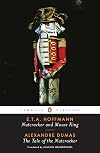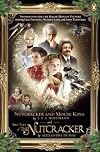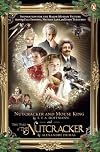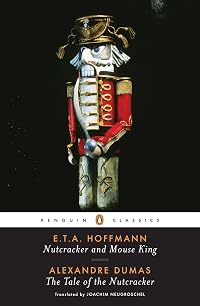
Nutcracker and Mouse King / The Tale of the Nutcracker
by E. T. A. Hoffmann, Alexandre Dumas
On This Page
Description
The original stories behind everyone's favorite Christmas ballet It wasn't until the 1950s that seeing The Nutcracker at Christmastime became an American tradition. But the story itself is much older and its original intent more complex. This eye-opening new volume presents two of the tale's earliest versions, both in new translations: E.T.A. Hoffmann's Nutcracker and Mouse King (1816), in which a young girl is whisked away to the Land of Toys to help her animated nutcracker defeat the Mouse show more King, and Alexandre Dumas's 1845 adaptation, The Tale of the Nutcracker, based on Hoffmann's popular work. Irresistible tales of magic, mystery, and childhood adventure, these timeless delights and fresh interpretations about the importance of imagination will captivate readers of all ages. For more than seventy years, Penguin has been the leading publisher of classic literature in the English-speaking world. With more than 1,700 titles, Penguin Classics represents a global bookshelf of the best works throughout history and across genres and disciplines. Readers trust the series to provide authoritative texts enhanced by introductions and notes by distinguished scholars and contemporary authors, as well as up-to-date translations by award-winning translators. show lessTags
Recommendations






Member Reviews
Nutcracker and Mouse King:
I've seen the Nutcracker ballet several times, but this was my first experience with the novella that originates the tale. Iiii think I'll stick with the ballet. What a load of tedious nonsense. And the translation so often fell with a clang, especially in the dialogue. According to some supplementary matter (by Jack Zipes) I have, the story is "all about igniting the imagination of Marie* so that she can act and realize her inner dreams and desires in opposition to a conventional and prescriptive upbringing." I can see that, I suppose, but boy did I mostly just feel like I was crawling through molasses for not much payoff. This is one of the very rare instances when I wish I had read introductory matter before show more reading the text.
*Clara in many US versions of the ballet
The Tale of the Nutcracker:
Dumas's retelling (or at times just a translation? he does change some things, but other bits are clearly just rewordings of the original--apparently the circumstances under which Dumas produced his version are lost) of Hoffmann's tale. I enjoyed this version much more, primarily because it read better. I was much more drawn into the tale, and nothing hit my ear with a clang (as in the Hoffmann). To what degree this is a function of the respective translations into English, I could not say. show less
I've seen the Nutcracker ballet several times, but this was my first experience with the novella that originates the tale. Iiii think I'll stick with the ballet. What a load of tedious nonsense. And the translation so often fell with a clang, especially in the dialogue. According to some supplementary matter (by Jack Zipes) I have, the story is "all about igniting the imagination of Marie* so that she can act and realize her inner dreams and desires in opposition to a conventional and prescriptive upbringing." I can see that, I suppose, but boy did I mostly just feel like I was crawling through molasses for not much payoff. This is one of the very rare instances when I wish I had read introductory matter before show more reading the text.
*Clara in many US versions of the ballet
The Tale of the Nutcracker:
Dumas's retelling (or at times just a translation? he does change some things, but other bits are clearly just rewordings of the original--apparently the circumstances under which Dumas produced his version are lost) of Hoffmann's tale. I enjoyed this version much more, primarily because it read better. I was much more drawn into the tale, and nothing hit my ear with a clang (as in the Hoffmann). To what degree this is a function of the respective translations into English, I could not say. show less
Penguin was able to turn the short classic Nutcracker and Mouse King (1816) into a standalone volume by adding a scholarly Introduction, and a later re-telling The Tale of the Nutcracker by Dumas (of Three Musketeers fame) which composes half the book. Most importantly the translations are new, although that doesn't always mean better, but it seems OK to me.
The most important insight from the Introduction is that Hoffmann wrote the story as a critique of the middle-class in Germany in the early 19th century - serious, ridged, strict and conformist (not only German, the same could be said for 19th century Victorian culture). Children are stifled and kept in emotional check, expected to act like mini adults. For Hoffmann, freedom from show more this condition can be obtained by means of the imagination. In the story, time and again we see reality and fantasy merge as the children escape from the ridged confines imposed by their parents and strict social convention by way of make believe. Once the perspective of Hoffmann's critique is seen, the story takes on a new dimension, certain passages make more sense and the story seems less "weird" or dark. It is more than just a fairy-tale about toys that come to life, but a serious work of art about people.
As for the Alexandre Dumas' version in the second half of the book, I found it to be inferior to Hoffmann; I didn't want alter my memory with the retelling, so I quit it early on. I may return another time as I understand it was influential in the ballet adaptation.
--Review by Stephen Balbach, via CoolReading (c) 2008 cc-by-nd show less
The most important insight from the Introduction is that Hoffmann wrote the story as a critique of the middle-class in Germany in the early 19th century - serious, ridged, strict and conformist (not only German, the same could be said for 19th century Victorian culture). Children are stifled and kept in emotional check, expected to act like mini adults. For Hoffmann, freedom from show more this condition can be obtained by means of the imagination. In the story, time and again we see reality and fantasy merge as the children escape from the ridged confines imposed by their parents and strict social convention by way of make believe. Once the perspective of Hoffmann's critique is seen, the story takes on a new dimension, certain passages make more sense and the story seems less "weird" or dark. It is more than just a fairy-tale about toys that come to life, but a serious work of art about people.
As for the Alexandre Dumas' version in the second half of the book, I found it to be inferior to Hoffmann; I didn't want alter my memory with the retelling, so I quit it early on. I may return another time as I understand it was influential in the ballet adaptation.
--Review by Stephen Balbach, via CoolReading (c) 2008 cc-by-nd show less
While Hoffmann's piece is prone to a strange disjointed jerkiness to the prose, Dumas's, though better flowing, removes all the darker and pedagogical-related undertones in favour of an overly-long, overly-syrupy interpretation.
Verdict: Read the first, skip the second.
Verdict: Read the first, skip the second.
It's always fascinating to find the true story behind a tradition. I've always wondered where the nutcrackers story came from and why the ballet was always so popular. I never in my mind thought that it originated from a fairy tale, nor that one of my favorite authors, Dumas, had written his own take on it not too many years later after
E.T.A. Hoffman wrote the original and overall I thought it was not too hard to follow, but in the end I was happy to know the story but wasn't overly impressed to see how this had inspired a tradition.
Once I started the second story it was easier to grasp since I just read the first part, but the writing lent itself to follow far more easily and I was able to really understand the entire storyline and show more characters throughout. The only thing was that in the end I still felt this was an interesting good story but nothing spectacular.
Considering the times when this book cameout there wasn't so much like it for fairy tales for kids and grown ups and I can see how this became popular over the years. From now on anytime I see a nutcracker during Christmas whether it being on a bookshelf or a storefront, I will smile and remember the skirmishes between the nutcracker and the mouse king and always think twice when my kids tell me with such authority their belief in a dream they had had.
Overall a very strong 3.5 rating but for the fact it has inspired such a tradition I have given it a 4 star rating. show less
E.T.A. Hoffman wrote the original and overall I thought it was not too hard to follow, but in the end I was happy to know the story but wasn't overly impressed to see how this had inspired a tradition.
Once I started the second story it was easier to grasp since I just read the first part, but the writing lent itself to follow far more easily and I was able to really understand the entire storyline and show more characters throughout. The only thing was that in the end I still felt this was an interesting good story but nothing spectacular.
Considering the times when this book cameout there wasn't so much like it for fairy tales for kids and grown ups and I can see how this became popular over the years. From now on anytime I see a nutcracker during Christmas whether it being on a bookshelf or a storefront, I will smile and remember the skirmishes between the nutcracker and the mouse king and always think twice when my kids tell me with such authority their belief in a dream they had had.
Overall a very strong 3.5 rating but for the fact it has inspired such a tradition I have given it a 4 star rating. show less
I know that The Nutcracker is a 'Christmas classic' but I was not entirely sold on it. Maybe I was introduced to it too old, without a knowledge of the ballet or the story itself. I did, however, prefer Dumas' retelling over Hoffman's original as I felt it flowed better and was easier to grasp - however this could be the fault of the translator.
2.5 stars.
2.5 stars.
It's always fascinating to find the true story behind a tradition. I've always wondered where the nutcrackers story came from and why the ballet was always so popular. I never in my mind thought that it originated from a fairy tale, nor that one of my favorite authors, [a:Alexandre Dumas|4785|Alexandre Dumas|http://d.gr-assets.com/authors/1279049943p2/4785.jpg], had written his own take on it not too many years later after
[a:E.T.A. Hoffmann|54429|E.T.A. Hoffmann|http://d.gr-assets.com/authors/1190292376p2/54429.jpg] wrote the original and overall I thought it was not too hard to follow, but in the end I was happy to know the story but wasn't overly impressed to see how this had inspired a tradition.
Once I started the second story it show more was easier to grasp since I just read the first part, but the writing lent itself to follow far more easily and I was able to really understand the entire storyline and characters throughout. The only thing was that in the end I still felt this was an interesting good story but nothing spectacular.
Considering the times when this book cameout there wasn't so much like it for fairy tales for kids and grown ups and I can see how this became popular over the years. From now on anytime I see a nutcracker during Christmas whether it being on a bookshelf or a storefront, I will smile and remember the skirmishes between the nutcracker and the mouse king and always think twice when my kids tell me with such authority their belief in a dream they had had.
Overall a very strong 3.5 rating but for the fact it has inspired such a tradition I have given it a 4 star rating. show less
[a:E.T.A. Hoffmann|54429|E.T.A. Hoffmann|http://d.gr-assets.com/authors/1190292376p2/54429.jpg] wrote the original and overall I thought it was not too hard to follow, but in the end I was happy to know the story but wasn't overly impressed to see how this had inspired a tradition.
Once I started the second story it show more was easier to grasp since I just read the first part, but the writing lent itself to follow far more easily and I was able to really understand the entire storyline and characters throughout. The only thing was that in the end I still felt this was an interesting good story but nothing spectacular.
Considering the times when this book cameout there wasn't so much like it for fairy tales for kids and grown ups and I can see how this became popular over the years. From now on anytime I see a nutcracker during Christmas whether it being on a bookshelf or a storefront, I will smile and remember the skirmishes between the nutcracker and the mouse king and always think twice when my kids tell me with such authority their belief in a dream they had had.
Overall a very strong 3.5 rating but for the fact it has inspired such a tradition I have given it a 4 star rating. show less
An entertaining and cute story about a girl and her Nutcracker. More extensive than the ballet based on this story.
Members
- Recently Added By
Lists

Books with Noble Titles
179 works; 11 members
Author Information

708+ Works 13,106 Members
German writer, composer, and painter ErnstTheodor Amadeus Hoffman was born in Konigsberg, Prussia in 1776. After beginning a career in the law, Hoffman turned to music, working as a conductor, music director, and critic, and later composing a ballet, an opera, and other works. He established himself as a writer with the four-volume story show more collection Phatasiestucke in Callier Manier (Fantasy Stories in the Manner of Callot), which was published in 1814-1815. Even though he published several novels and story collections, including Nachtstucke (Hoffman's Strange Stories, 1817) and Die Serapionsbruder (The Serapion Brethren, 1819-1821), Hoffman continued to support himself as a legal official in Berlin. This struggle between artistry and bureaucracy is played out in many of his works. Hoffman died of progressive paralysis in 1822. (Bowker Author Biography) show less

1,609+ Works 98,567 Members
Some Editions
Work Relationships
Common Knowledge
- Canonical title
- Nutcracker and Mouse King / The Tale of the Nutcracker
- People/Characters
- Nutcracker Prince
- Important events
- Christmas
Classifications
- Genres
- Fiction and Literature, Fantasy
- DDC/MDS
- 833.6 — Literature & rhetoric German & related literatures German fiction 1750-1832 : 18th century, classical period, romantic period
- LCC
- PT2361 .E5 .N87 — Language and Literature German, Dutch and Scandinavian literatures German literature Individual authors or works 1700-ca. 1860/70
- BISAC
Statistics
- Members
- 228
- Popularity
- 142,799
- Reviews
- 8
- Rating
- (3.43)
- Languages
- English
- Media
- Paper, Ebook
- ISBNs
- 7
- ASINs
- 4