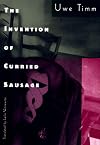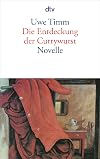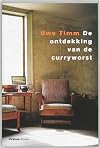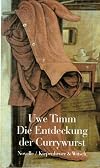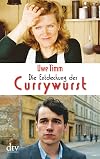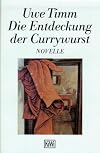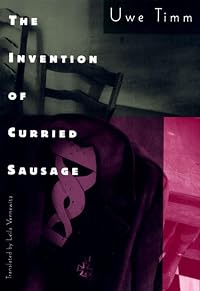
The Invention of Curried Sausage
by Uwe Timm
On This Page
Description
"A bestseller in Germany, The Invention of Curried Sausage was tagged a "novella," in the original sense of the word, "a little piece of news." This is what author/narrator Uwe Timm uncovers about a popular German sidewalk food, curried sausage." "Timm is convinced it originated not in Berlin in the fifties as generally supposed, but much earlier in his native Hamburg. He tracks down Lena Brucker, now living in a retirement home there. And, yes, curried sausage was her invention but it's a show more long story, one that Timm cajoles from her during a number of tea-time visits. It all started in April, 1945, just before the war's end when she met, seduced, and held captive a young deserter. The war was over, the lover escaped, and Lena Brucker, with remarkable ingenuity, went into business. That's where the sausage comes in!"--BOOK JACKET.Title Summary field provided by Blackwell North America, Inc. All Rights Reserved show lessTags
Recommendations





















Member Recommendations

meggyweg While one is for adults and the other for teens, both books center around a Russian soldier hiding in Germany during World War II.
Member Reviews
As every German schoolboy (or girl) knows, currywurst was invented by Herta Heuwer in Berlin in 1949. There is a plaque commemorating the event in the Charlottenburg neighborhood of Berlin. Yet, Uwe Timm is having none of it. He wants you to believe that it was invented in his native Hamburg (naturally), and not only that, by a woman who lived in his apartment building. Can we forget that Hamburgers look at Berliners with disdain, and that Berliners think Hamburgers are snobs? Hamburg is the sophisticated city, whereas Berlin is a blue-collar town of louts, they say. Basically, Timm has no evidence that Lena Brucker invented the currywurst, and that he, yes, Timm himself was eating the spicy concoction years before the official show more invention. For some reason, this is very important to him.
The book itself is a fairy tale, preposterous and full of heartwarming coincidences. I counted at least three ridiculously sentimental absurdities at the end of the book. I'm not sure what gets to me more, the sheer bravado of writing this over-the-top sickly sweet crap, or that of hijacking Heuwer's very real contribution to German street eats. show less
The book itself is a fairy tale, preposterous and full of heartwarming coincidences. I counted at least three ridiculously sentimental absurdities at the end of the book. I'm not sure what gets to me more, the sheer bravado of writing this over-the-top sickly sweet crap, or that of hijacking Heuwer's very real contribution to German street eats. show less
Funnily enough, The Invention of Curried Sausage is about the invention of curried sausage, much to the amusement of my friends who saw the title of the book I was reading. A man, Uwe Timm, searches for the history of the invention of curried sausage, a popular German fast food (basically, sliced sausages fried up with ketchup and curry spices), by revisiting an old acquaintance, Mrs Brücker. Mrs Brücker used to cook curried sausages for him at a street stall in Hamburg, and as part of discovering the history of this dish, Timm also finds about her life towards the end of World War 2.
It was a charmingly quirky read, although at times slightly bittersweet, which is only understandable given when and where it was set. There were some show more nice nods to the artificiality of books: when Timm keeps on trying to second guess when Mrs Brücker did actually invent curried sausage, she replies "things are only that simple in novels". Mrs Brücker proves to be a great storyteller, and like many of my favourite storytellers, is rather creative with the truth, from the very start of the book.
My favourite bit of this book is an extended description of a barter process, whereby the post-war economy of Hamburg putters along quite nicely, with unwanted goods being swapped for wanted goods and skills, and cigarettes are the basis of it all. show less
It was a charmingly quirky read, although at times slightly bittersweet, which is only understandable given when and where it was set. There were some show more nice nods to the artificiality of books: when Timm keeps on trying to second guess when Mrs Brücker did actually invent curried sausage, she replies "things are only that simple in novels". Mrs Brücker proves to be a great storyteller, and like many of my favourite storytellers, is rather creative with the truth, from the very start of the book.
My favourite bit of this book is an extended description of a barter process, whereby the post-war economy of Hamburg putters along quite nicely, with unwanted goods being swapped for wanted goods and skills, and cigarettes are the basis of it all. show less
Timm has penned sweet little novel that ostensibly sets out to prove that German fastfood staple curried sausage was not invented in postwar Berlin, but in 1945 Hamburg -- that's what the title and the early pages promise. What the book really is about is the collapse of the Third Reich, the end of the war as seen from within Germany, and the takeover by the Allied forces. And those two things go better together than you would expect.
The narrator, who was born during the war and who grew up in the years after the war, is convinced that the commonly known history of the curried sausage is wrong: as long as he can remember, Mrs Brückner has been serving them from a little booth outside his house. His visits to her in the retirement home show more lead to long sessions of reminiscing in which she tells him about her life just before the capitulation of the Third Reich and the following months. The invention of the dish involves the coming together of local foods and foreign foods, as well as betrayal, abandonment, stolen love, the black market, all at the onset of a rebuilt city.
I was not expecting the cutesy cover story and the actual novel to fit together that seamlessly, or indeed, so poetically. But they did. A lovely surprise! show less
The narrator, who was born during the war and who grew up in the years after the war, is convinced that the commonly known history of the curried sausage is wrong: as long as he can remember, Mrs Brückner has been serving them from a little booth outside his house. His visits to her in the retirement home show more lead to long sessions of reminiscing in which she tells him about her life just before the capitulation of the Third Reich and the following months. The invention of the dish involves the coming together of local foods and foreign foods, as well as betrayal, abandonment, stolen love, the black market, all at the onset of a rebuilt city.
I was not expecting the cutesy cover story and the actual novel to fit together that seamlessly, or indeed, so poetically. But they did. A lovely surprise! show less
Currywurst is one of those weird results of the post-war era: the most teutonic of foods, the sausage, fried up in Indian curry (or rather a European version of it). As Timm puts it, it's the sort of food that could only be a hit in a country where grey must occasionally be offset by splats of red. It started turning up in hot dog stands in the 50s and became a staple of German fast food. Trying to pinpoint exactly when and by whom it was invented is like trying to decide who invented the hamburger or the kebab; it's always been there.
Except Timm (or rather his narrator) remembers eating it in Hamburg in the years directly after the war, as a kid picking through bombed-out houses and abandoned defense posts, and claims to know exactly show more who invented it. And so one day in the 1990s, he looks up the woman who used to run the local hot dog stand back then and asks her how she came to invent the recipe. She's old, pushing 90, and blind, but remembers him. You want to know how I invented curried sausage? It's a long story. It started in 1945, when I was 40, hadn't seen my husband since he joined the army 6 years earlier, and ran into this young sailor during an air raid who really didn't want to be crushed under a tank the next day...
The Invention Of Curried Sausage takes place during the last days of the war and the weeks after, as the British army crosses the river and the citizens of Hamburg are ordered by to fight to the last drop to turn around a war that's obviously already been lost, while Hitler blows his brains out in his bunker in Berlin. But that's not the focus. It's the story of one woman and one (much younger) man who cling to each other as everything falls apart around them - a love story that isn't one, since they're far too different, pushed together by circumstances that won't last, and lying their asses off to stave off the inevitable end. It's a simple story, but told so subtly and with so many little details that it captures so much more; the paranoia of living in a fascist dictatorship, the desperation of defeat, the realisation that you've been on the wrong side, the role of women in a society built on the idea of strength... all that, sure. But also the very nature of human interaction, trust, distrust, hope, despair, hunger. It's not pretty, it pretty much can't be under those circumstances. It's the sort of novel - short, greasy, and yet perfectly spiced - that belongs under a grey rainy sky in the shadow of quickly built concrete houses, with a plate of warm sausage in curry sauce. show less
Except Timm (or rather his narrator) remembers eating it in Hamburg in the years directly after the war, as a kid picking through bombed-out houses and abandoned defense posts, and claims to know exactly show more who invented it. And so one day in the 1990s, he looks up the woman who used to run the local hot dog stand back then and asks her how she came to invent the recipe. She's old, pushing 90, and blind, but remembers him. You want to know how I invented curried sausage? It's a long story. It started in 1945, when I was 40, hadn't seen my husband since he joined the army 6 years earlier, and ran into this young sailor during an air raid who really didn't want to be crushed under a tank the next day...
The Invention Of Curried Sausage takes place during the last days of the war and the weeks after, as the British army crosses the river and the citizens of Hamburg are ordered by to fight to the last drop to turn around a war that's obviously already been lost, while Hitler blows his brains out in his bunker in Berlin. But that's not the focus. It's the story of one woman and one (much younger) man who cling to each other as everything falls apart around them - a love story that isn't one, since they're far too different, pushed together by circumstances that won't last, and lying their asses off to stave off the inevitable end. It's a simple story, but told so subtly and with so many little details that it captures so much more; the paranoia of living in a fascist dictatorship, the desperation of defeat, the realisation that you've been on the wrong side, the role of women in a society built on the idea of strength... all that, sure. But also the very nature of human interaction, trust, distrust, hope, despair, hunger. It's not pretty, it pretty much can't be under those circumstances. It's the sort of novel - short, greasy, and yet perfectly spiced - that belongs under a grey rainy sky in the shadow of quickly built concrete houses, with a plate of warm sausage in curry sauce. show less
The narrator of the story is convinced the German street food, curried sausage, was invented in Hamburg by a Mrs. Lena Brucker, earlier than the 1950s Berlin where it was supposedly created. He remembers her and the food from when he visited his aunt in Hamburg. He travels to Hamburg and begins investigating only to discover that Lena is alive and living in a retirement home there. He visits and asks for the story which she doles out over three weeks of visits. She agrees to reveal the accident that inspired the creation but only after relating a complicated story of the War, a German deserter she holds captive, and how it ties into members of the narrator's own family. I loved this story. Lena was a wonderful character. It was fun to show more see the way she strung out the story to keep the narrator returning. show less
I have to admit that I bought this novella almost entirely on the strength of its title(*). As a vegetarian, I'm not a great fan of Currywurst, but it is one of Germany's more improbable contributions to civilisation, and I was intrigued to see what Timm could do with it.
In his quest to prove that the Currywurst was invented in Hamburg rather than Berlin, the narrator tracks down his aunt's neighbour Frau Brücker, retired proprietor of a Hamburg snack bar, now living in an old people's home, who promises to tell him the story. Over a series of meetings, she tells him about her brief affair with Petty Officer Hermann Bremer during the last weeks of the war. The further she gets with the story, the further off the sausage seems...
In show more the process, Timm explores the reactions of ordinary people to the extreme situations of 1945. Frau Brücker, canteen manager and presumed war widow, finds herself plunged into an elaborate web of deception to keep hold of the sailor who has fallen into her lap, gets involved in complex black market operations, and lays the foundations of a new business career. Rewriting history as it suits her, shamelessly exploiting her contacts in the old Nazi administration and the new British occupation force, she presumably stands for the Wirtschaftswunder itself. Bremer, on the other hand, deserts from his unit and goes along with her deception happily enough as long as it suits him, then returns to his family as though nothing had happened, displaying all the signs of the famous collective post-war amnesia. The sausage itself, of course, becomes a symbol of the post-war recovery -- German sausage in a sauce made from British curry powder. Timm manages to work a few more layers of symbolism in at this point too, but I won't spoil it...
Worth reading, definitely, not least to get a younger, less bitter perspective on the war than in the novels of Graß, Böll and co., and I think the central narrative stands up well by itself, but the irony doesn't quite work for me. Possibly the sausage motif would have benefited from a lighter, more absurd treatment. Or maybe the title built up expectations that are incompatible with German literature.
----
(*)I read the book in German: the English translation doesn't do the title justice. Entdeckung means both "invention" and "discovery" -- I think that ambiguity is important, and it doesn't come over in English. And "curried sausage" doesn't have any of the cross-cultural implications of Currywurst -- the publishers should have stuck to the German word. show less
In his quest to prove that the Currywurst was invented in Hamburg rather than Berlin, the narrator tracks down his aunt's neighbour Frau Brücker, retired proprietor of a Hamburg snack bar, now living in an old people's home, who promises to tell him the story. Over a series of meetings, she tells him about her brief affair with Petty Officer Hermann Bremer during the last weeks of the war. The further she gets with the story, the further off the sausage seems...
In show more the process, Timm explores the reactions of ordinary people to the extreme situations of 1945. Frau Brücker, canteen manager and presumed war widow, finds herself plunged into an elaborate web of deception to keep hold of the sailor who has fallen into her lap, gets involved in complex black market operations, and lays the foundations of a new business career. Rewriting history as it suits her, shamelessly exploiting her contacts in the old Nazi administration and the new British occupation force, she presumably stands for the Wirtschaftswunder itself. Bremer, on the other hand, deserts from his unit and goes along with her deception happily enough as long as it suits him, then returns to his family as though nothing had happened, displaying all the signs of the famous collective post-war amnesia. The sausage itself, of course, becomes a symbol of the post-war recovery -- German sausage in a sauce made from British curry powder. Timm manages to work a few more layers of symbolism in at this point too, but I won't spoil it...
Worth reading, definitely, not least to get a younger, less bitter perspective on the war than in the novels of Graß, Böll and co., and I think the central narrative stands up well by itself, but the irony doesn't quite work for me. Possibly the sausage motif would have benefited from a lighter, more absurd treatment. Or maybe the title built up expectations that are incompatible with German literature.
----
(*)I read the book in German: the English translation doesn't do the title justice. Entdeckung means both "invention" and "discovery" -- I think that ambiguity is important, and it doesn't come over in English. And "curried sausage" doesn't have any of the cross-cultural implications of Currywurst -- the publishers should have stuck to the German word. show less
The story within the story (double narrator device) is set in Hamburg, Germany at the end of WWII. The protagonist, a young man who used to eat curried sausage at Mrs. Brücker’s stand sets out to find out how she came to invent curried sausage. Mrs. Brücker begins a long story which really is the story of her life at the end of WWII. A young naval officer, Bremer, is assigned to go to the front line to stop British tanks instead of returning to his map room in Oslo. He spends the night with Lena. He then decides to go AWOL because he has heard how he might die on the front line as the British are entering Hamburg. He believes he cannot leave her apartment and Mrs. Brücker does not tell him that the war is over. She keeps him 27 show more days. By telling her long story she has in essence taken captive another young man who has had to stay away more days than he anticipated to hear how Lena invented the sausage.
At first, I did not like Lena because of her dishonesty and unfairness with Bremer’s life. She is a strong woman who managed to survive the war, maintain her own opinions and she was able to use her capitalist ingenuity to become a woman who was able to take care of herself, her children and her grandchild. There is much to admire about Lena. Lena loves to make “much of little”. (pg 34). This reminds me of my German heritage. I did not like Bremer who chose to go AWOL and who did not acknowledge is wife and child.
I also liked Lena’s statement about old age, on page 146. “You know, the only unfair thing is old age…..” and “That’s the strange thing, for a long time getting old is something that happens only to other people. And then one day, somewhere around forty, you find it’s happening to yourself; you notice…” And yes, you do get to find out how Curried Sausage was invented.
Themes include ‘not telling important things”. This touches on her relationship with Bremer, her relationship with her husband who doesn’t tell her things and she doesn’t ask and even her own and the German people who choose not to wonder about the Jewish people who are disappearing. Another theme might be the power of food. Bremer gains weight in captivity while the Germans are losing weight and the Jewish people are skeletons. In the end we see Lena an old lady relishing her sweets. The curry is supposed to have antidepressant effects. Bremer loses his taste.
Apparently this would be a good companion read with The Tin Drum by Gunter Grass. I’ve read some other reviews and in the most part the translation was good though there might have been a better choice than “chitlins”. Uwe Timm is a successful German writer. He has won the Jakob-Wassermann prize. Uwe Timm’s older brother died at the end of WWII. The author was an author in residence in 1997 to the Washington University in St. Louis. show less
At first, I did not like Lena because of her dishonesty and unfairness with Bremer’s life. She is a strong woman who managed to survive the war, maintain her own opinions and she was able to use her capitalist ingenuity to become a woman who was able to take care of herself, her children and her grandchild. There is much to admire about Lena. Lena loves to make “much of little”. (pg 34). This reminds me of my German heritage. I did not like Bremer who chose to go AWOL and who did not acknowledge is wife and child.
I also liked Lena’s statement about old age, on page 146. “You know, the only unfair thing is old age…..” and “That’s the strange thing, for a long time getting old is something that happens only to other people. And then one day, somewhere around forty, you find it’s happening to yourself; you notice…” And yes, you do get to find out how Curried Sausage was invented.
Themes include ‘not telling important things”. This touches on her relationship with Bremer, her relationship with her husband who doesn’t tell her things and she doesn’t ask and even her own and the German people who choose not to wonder about the Jewish people who are disappearing. Another theme might be the power of food. Bremer gains weight in captivity while the Germans are losing weight and the Jewish people are skeletons. In the end we see Lena an old lady relishing her sweets. The curry is supposed to have antidepressant effects. Bremer loses his taste.
Apparently this would be a good companion read with The Tin Drum by Gunter Grass. I’ve read some other reviews and in the most part the translation was good though there might have been a better choice than “chitlins”. Uwe Timm is a successful German writer. He has won the Jakob-Wassermann prize. Uwe Timm’s older brother died at the end of WWII. The author was an author in residence in 1997 to the Washington University in St. Louis. show less
Members
- Recently Added By
Published Reviews
ThingScore 100
Den rakt berättade långnovellen bär Timms typiska signum: den omsorgsfulla respekten för karaktärerna, det sociala engagemanget och den milda humorn
added by andejons
Därför är den här boken en mycket lämplig aptitretare för den som förutom currywurst också vill smaka på den spännande tyska litteraturen.
added by andejons
Lists

1001 Books You Must Read Before You Die
1,448 works; 1,135 members

German Literature
518 works; 56 members

Books Set in Germany
74 works; 12 members

Women in War
148 works; 30 members

1,001 BYMRBYD Concensus
723 works; 27 members
Author Information

32 Works 2,214 Members
Some Editions
Awards and Honors
Series
Belongs to Publisher Series
Work Relationships
Has the adaptation
Common Knowledge
- Canonical title
- The Invention of Curried Sausage
- Original title
- Die Entdeckung der Currywurst
- Original publication date
- 1993-??-??
- People/Characters
- Lena Brücker; Hermann Bremer
- Important places
- Hamburg, Germany
- Important events
- World War II
- Dedication
- Für
Hans Timm
(1899–1958)
for Hans Timm (1899–1958) - First words
- Vor gut zwölf Jahren habe ich zum letzten Mal eine Currywurst an der Bude von Frau Brücker gegessen.
It's been a good twelve years since I ate my last curried sausage at Mrs. Brücker's stand. - Last words
- (Click to show. Warning: May contain spoilers.)Fünf Wörter sind aber noch ganz gut zu lesen: Kapriole, Ingwer, Rose, Kalypso, Eichkatz und etwas eingerissen - auch wenn es mir niemand glauben wird - Novelle.
(Click to show. Warning: May contain spoilers.)But there are still five complete words: capriole, ginger, rose, calypso, squirrel, and, slightly torn—even though nobody will believe me—novella. - Original language
- German
Classifications
- Genres
- Fiction and Literature, General Fiction, Historical Fiction
- DDC/MDS
- 813 — Literature & rhetoric American literature in English American fiction in English
- LCC
- PT2682 .I39 .E5813 — Language and Literature German, Dutch and Scandinavian literatures German literature Individual authors or works 1961-2000
- BISAC
Statistics
- Members
- 686
- Popularity
- 41,869
- Reviews
- 29
- Rating
- (3.66)
- Languages
- 14 — Bulgarian, Chinese, traditional, Dutch, English, French, German, Greek, Hebrew, Italian, Japanese, Portuguese, Russian, Spanish, Swedish
- Media
- Paper, Audiobook, Ebook
- ISBNs
- 37
- ASINs
- 3