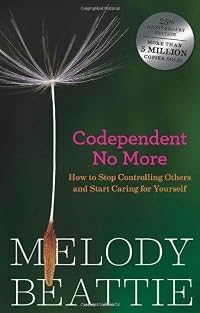
Codependent No More: How to Stop Controlling Others and Start Caring for Yourself
by Melody Beattie
On This Page
Description
"Melody Beattie's compassionate and insightful look into codependency--the concept of losing oneself in the name of helping another--has guided millions of readers toward the understanding that they are powerless to change anyone but themselves and that caring for the self is where healing begins. Is someone else's problem your problem? If, like so many others, you've lost sight of your own life in the drama of tending to a loved one's self-destructive behavior, you may be codependent--and show more you may find yourself in this book. With personal reflections, exercises, and instructive stories drawn from Beattie's own life and the lives of those she's counseled, Codependent No More helps you break old patterns and maintain healthy boundaries and offers a clear and achievable path to healing, hope, freedom, and happiness. This revised edition includes an all-new chapter on trauma and anxiety--subjects Beattie has long felt necessary to address within the context of codependency--making it even more relevant today than it was when it first entered the national conversation over 35 years ago."-- show lessTags
Recommendations




Member Reviews
When this book was given to me, I wasn't sure if I qualified for the type of codependence the author initially described. But as I got into the book, I learned that codependence is not one thing, but an umbrella term for several types of habits that have been picked up through life for whatever reason. No one person has all of these habits, and these habits may look different based on the relationship under inspection. Given that understanding, I saw plenty of my relationship habits on display.
This book is not going to cure you, because codependence is not a disease, and it's certainly not something permanent. What it can do, however, is give you a clearer outline of where there could be relationship problems in your life and ways to show more see them more accurately. It can give you the insight to see what isn't working for you anymore, because so many of us are in denial about what that is.
The primary reason this is not a five-star read is that the author's perspective on therapy is fairly limited. In fact, they believe that therapy pales in comparison to a twelve-step group. I'm not saying that twelve-step groups do not work for several people, but it is my opinion that therapy can address a much broader range of issues for a larger number of people.
I come away from the book with some shared language I can use with my therapist for relationship habits and patterns I have exhibited. More importantly, I come away with a renewed sense of my own value as an individual, and the courage to prioritize my needs, so that I am capable of helping others when I can and stepping away when I am looking for a problem to solve. show less
This book is not going to cure you, because codependence is not a disease, and it's certainly not something permanent. What it can do, however, is give you a clearer outline of where there could be relationship problems in your life and ways to show more see them more accurately. It can give you the insight to see what isn't working for you anymore, because so many of us are in denial about what that is.
The primary reason this is not a five-star read is that the author's perspective on therapy is fairly limited. In fact, they believe that therapy pales in comparison to a twelve-step group. I'm not saying that twelve-step groups do not work for several people, but it is my opinion that therapy can address a much broader range of issues for a larger number of people.
I come away from the book with some shared language I can use with my therapist for relationship habits and patterns I have exhibited. More importantly, I come away with a renewed sense of my own value as an individual, and the courage to prioritize my needs, so that I am capable of helping others when I can and stepping away when I am looking for a problem to solve. show less
While I was back in the UK for a few months earlier this year, I took to hanging around the psychology sections of bookshops. I know some of you do that too and so I know that I share with you that strange feeling of self-consciousness that goes with this practice. It takes some courage to stand in public and flick through a copy of “Why My Life is a Mess and How to Sort it Out by the Weekend” and other such titles. Still, I’m getting old enough not to care a fig what others think of me, so I threw my social status to the wind and spent many hours waving my “I Need Help!” flag in Waterstones. One of the books that struck me was this one and I’d like to tell you about it.
Codependency is difficult to define. It’s basically show more what happens when someone abuses themselves, and then, because you love them, you try to help them and, in doing so, get abuse from them which, far from driving you away, spurs you to love them ever more selflessly. But as you continue to pour out love on the dysfunctional object of your affection, they can no more love you than stay sober, or stop beating you, or [fill in your own condition here]. As a result, you start to shrivel and decay. Your life implodes in a mess of need. You are codependent. They need you to survive and you have begun to need them to stay in a mess so you can love them and somehow justify your existence. Beattie defines it well as
a way of getting needs met that doesn’t get needs met
You might have to read that a couple of times to take in the full subtlety of its genius.
As I read through Beattie’s book, I was struck by two things. Firstly, how common codependency is. I saw not only myself but many of my peers, parents (I have a few) and it became a bit hard NOT to see codependency somewhere in everyone at times. But then a second thought struck me: codependency varies in its intensity. It can destroy your entire self. But for the most part, it seems, it simply makes life more complicated and sad than it need be… and it doesn’t need help in that department often, does it.
Beattie does an excellent job of describing how codependents come to be. Childhood is the fertile ground and often an alcohol-dependent parent sows the seeds into this. I had just such a parent. She describes typical characteristics of codependent people with long lists that, I have to admit, you can probably find a little of anyone in they’re so exhaustive.
But where this book shines is in the practical and encouraging way that she starts to help us out of our situation. She helps us detach, find ourselves, fans the flames of self-love in a healthy way and learn to love in a way which not only helps ourselves but the person we’re trying to help.
Having said this, the book did go on a bit. I think it could be about ¼ shorter than it is and still pack a punch. It starts to get a bit samey at the end, a bit pep-rally and that doesn’t really work with us Brits. Anyway, it was very helpful for me in getting a better perspective on my role in the relationships I’m part of. show less
Codependency is difficult to define. It’s basically show more what happens when someone abuses themselves, and then, because you love them, you try to help them and, in doing so, get abuse from them which, far from driving you away, spurs you to love them ever more selflessly. But as you continue to pour out love on the dysfunctional object of your affection, they can no more love you than stay sober, or stop beating you, or [fill in your own condition here]. As a result, you start to shrivel and decay. Your life implodes in a mess of need. You are codependent. They need you to survive and you have begun to need them to stay in a mess so you can love them and somehow justify your existence. Beattie defines it well as
a way of getting needs met that doesn’t get needs met
You might have to read that a couple of times to take in the full subtlety of its genius.
As I read through Beattie’s book, I was struck by two things. Firstly, how common codependency is. I saw not only myself but many of my peers, parents (I have a few) and it became a bit hard NOT to see codependency somewhere in everyone at times. But then a second thought struck me: codependency varies in its intensity. It can destroy your entire self. But for the most part, it seems, it simply makes life more complicated and sad than it need be… and it doesn’t need help in that department often, does it.
Beattie does an excellent job of describing how codependents come to be. Childhood is the fertile ground and often an alcohol-dependent parent sows the seeds into this. I had just such a parent. She describes typical characteristics of codependent people with long lists that, I have to admit, you can probably find a little of anyone in they’re so exhaustive.
But where this book shines is in the practical and encouraging way that she starts to help us out of our situation. She helps us detach, find ourselves, fans the flames of self-love in a healthy way and learn to love in a way which not only helps ourselves but the person we’re trying to help.
Having said this, the book did go on a bit. I think it could be about ¼ shorter than it is and still pack a punch. It starts to get a bit samey at the end, a bit pep-rally and that doesn’t really work with us Brits. Anyway, it was very helpful for me in getting a better perspective on my role in the relationships I’m part of. show less
I have attended groups for codependents for several years, and this book always came highly recommended. I think that due to my experience in the groups, I knew a lot of what was already stated in the book. I found it really broad, and skimmed pages halfway through, looking for new information. I'm still a codependent and there's room for improvement, but--the exercises she lists are not part of my life. It's no one person, right now. She sings the praises of twelve-step groups, which are a narrow slice of what can be done to battle addiction and codependency. This was Codependents 101, and I'm past that. She tries to joke, and the jokes come off as mean-spirited due to the tone of the rest of the book and the seriousness of its content show more (or what it tries to achieve, anyway). If readers don't believe in the divinity of Jesus or the existence, feel free to skip several chapters and paragraphs. One of the author's answers to codependency is literally to pray it away, especially to Jesus or a male, Christianized figure because she does and therefore it should fix everyone's life. I am an observant Jew who doesn't believe that, and was annoyed at her preaching. She tried and failed to hide her utter lack of respect for atheists or agnostics. A book where an author tries to fix every codependent ever in a narrow way is not a place to show disdain for people who don't believe what the author does, yet here readers are.
So, this is a beginner's guide for devout Christians. I am not that, so I didn't get much out of the book. The checklist at the beginning was long but informative, and the stories did help to contextualize. That's why I gave the book three stars. I intend to read at least a dozen other books on codependency, and am hoping for other viewpoints. show less
So, this is a beginner's guide for devout Christians. I am not that, so I didn't get much out of the book. The checklist at the beginning was long but informative, and the stories did help to contextualize. That's why I gave the book three stars. I intend to read at least a dozen other books on codependency, and am hoping for other viewpoints. show less
I read this book for a woman's group in order to participate fully in the discussion. It slants heavily toward alcoholism, Alcoholics Anonymous, and Christianity, which served as a distraction for me since none of these are a part of my life. That being said, I definitely benefitted from reading this book. While I'm relieved to know I am not a full-blown codependent who becomes intertwined with dysfunctional people, I definitely saw myself in many of the "positive" codependent characteristics...giving too much, sacrificing myself for others, etc...in the name of love. I realize now that when this goes so far, it's not "positive"...and, it was time for some boundaries. I started installing them today.
Good start for people pleasers and those with anxious attachment, resentment, and burnout in relationships. Some of the content is a bit dated considering when it was written, but it has some great quotes and sentiments that can be helpful for clients. It is very direct in its style, so it's best for clients who are "ready" for that in the sense that they will be open to being on the receiving end of the personal responsibility that Melody Beattie asks you to take for your role in your own suffering. Codependency doesn't fit into the attachment framework, so for complex trauma survivors I would suggest picking and choosing specific quotes and ideas instead of suggesting the entire book for them to read. -Morgan
Solid content in straightforward writing. This is not about prose, it's about understanding oneself and life. Only sad that I didn't find it years ago when it came out. But then again, we're only ready when we're ready.
On my nightstand permanently.
On my nightstand permanently.
I can see why this book was recommended to me many years ago, and it's even more wonderful to find that it's not really all that useful to me anymore.
Most of the ideas in here I have read elsewhere. Much like the 12-step programs, it focuses on identifying the problem and behaviors in yourself so you can then work on them which (from experience) I know can be life-changing. There were less concrete skills given, it was more of a guided self-exploration. Not quite what I was hoping for, but I can see how this book could be amazing to someone who needs it.
Most of the ideas in here I have read elsewhere. Much like the 12-step programs, it focuses on identifying the problem and behaviors in yourself so you can then work on them which (from experience) I know can be life-changing. There were less concrete skills given, it was more of a guided self-exploration. Not quite what I was hoping for, but I can see how this book could be amazing to someone who needs it.
Members
- Recently Added By
Lists

Best Self Help Books
87 works; 18 members

Books on My Journey
18 works; 1 member

The Joe Rogan Experience Library
254 works; 3 members

Spiritual Growth/Philosophy/Self-Help
15 works; 1 member

Healing resources for women
588 works; 1 member
Author Information

54 Works 7,031 Members
Melody Beattie is the author of numerous best-selling books, including "Playing It by Heart," "Stop Being Mean to Yourself," "Codependent No More," "Beyond Codependency," "The Language of Letting Go," "Codependents' Guide to the Twelve Steps," & "The Lessons of Love." Beattie's writing draws on the wisdom of Twelve Step healing, Christianity, & show more Eastern religions. Her loyal readers continue to find her books accessible, practical, & filled with universal truths. She lives in Malibu, California. (Bowker Author Biography) show less
Some Editions
Awards and Honors
Common Knowledge
- Original title
- Codependent No More: How to Stop Controlling Others and Start Caring for Yourself
- Alternate titles
- Co-dependent No More
- Epigraph
- It is not easy to find happiness in ourselves, and it is not possible to find it elsewhere. --Agnes Repplier, The Treasure Chest
- Dedication
- For helping make this book possible, I think: God, my mother, David, my children, Scott Egleston, Sharon George, Joanne Marcuson, and all the codependent people who have learned from me and allowed me to learn from them.
<... (show all)br>This book is dedicated to me. - Quotations
- Me emme pysty muuttamaan ihmisiä. Kaikki yritykset kontrolloida heitä on kuvitelma, harhakuvitelma. Ihmiset joko vastustavat yrityksiämme tai kaksinkertaistavat ponnistuksensa osoittaakseen, ettemme voi hallita heitä. He ... (show all)voivat mukautua vaatimuksiimme väliaikaisesti, mutta heti kun käännämme selkämme, he palaavat luonnolliseen olotilaansa. Sitä paitsi ihmiset rankaisevat meitä siitä, että pakotamme heidät tekemään jotain vasten tahtoaan, tai olemaan jotain, mitä he eivät halua olla. Vahvinkaan kontrolli ei aiheuta pysyvää tai toivomaamme muutosta toisessa henkilössä. Voimme joskus tehdä jotain, mikä lisää mahdollisuutta, että henkilö haluaa muuttua, mutta sitäkään emme voi taata emmekä hallita.
*** Ja tämä on totuus. Valitettavasti. Sitä on joskus vaikea hyväksyä, varsinkin jos rakastamasi henkilö vahingoittaa itseään ja sinua. Mutta näin se on. Ainoa henkilö, jota voit muuttaa nyt tai koskaan, olet sinä itse. Ainoa henkilö, jota sinun asiasi on kontrolloida, olet sinä itse. Irroittaudu. Luovuta.
(...)
*** Jokaiselle meistä tulee aika, jolloin täytyy päästää irti. Tiedät, milloin se aika on tullut. Kun olet tehnyt kaiken voitavasi, on aika irrottautua. Käsitellä omia tunteitasi. Käsitellä omia tunteitasi kontrollin menettämisestä. Ruveta hallitsemaan itseäsi ja vastuullasi olevia asioita. Antaa muille vapaus olla oma itsensä. Näin tehdessäsi vapautat itsesi.
~The sun was shining and it was a beautiful day when I met him. Then everything went crazy. – Georgianne, married to an alcoholic~ - Canonical DDC/MDS
- 616.86
- Canonical LCC
- RC569.5.C63
Classifications
- Genres
- Nonfiction, General Nonfiction
- DDC/MDS
- 616.86 — Applied science & technology Medicine & health Diseases, Allergies, Skin Conditions Nervous Disorders: Autism, Anorexia, OCD Drug Abuse: Alcohol, Narcotics, Steroids
- LCC
- RC569.5 .C63 — Medicine Internal medicine Internal medicine Neurosciences. Biological psychiatry. Neuropsychiatry Psychiatry Psychopathology Personality disorders. Behavior problems
- BISAC
Statistics
- Members
- 3,149
- Popularity
- 5,557
- Reviews
- 35
- Rating
- (3.82)
- Languages
- 9 — Danish, English, Finnish, French, German, Polish, Spanish, Swedish, Portuguese (Portugal)
- Media
- Paper, Audiobook, Ebook
- ISBNs
- 71
- UPCs
- 1
- ASINs
- 24