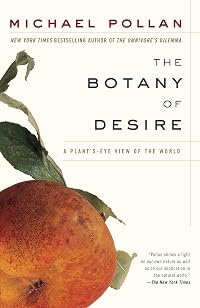
The Botany of Desire: A Plant's-Eye View of the World
by Michael Pollan
On This Page
Description
In 1637, one Dutchman paid as much for a single tulip bulb as the going price of a town house in Amsterdam. Three and a half centuries later, Amsterdam is once again the mecca for people who care passionately about one particular plant ? thought this time the obsessions revolves around the intoxicating effects of marijuana rather than the visual beauty of the tulip. How could flowers, of all things, become such objects of desire that they can drive men to financial ruin?In The Botany of show more Desire, Michael Pollan argues that the answer lies at the heart of the intimately reciprocal relationship between people and plants. In telling the stories of four familiar plant species that are deeply woven into the fabric of our lives, Pollan illustrates how they evolved to satisfy humankinds?s most basic yearnings ? and by doing so made themselves indispensable. For, just as we?ve benefited from these plants, the plants, in the grand co-evolutionary scheme that Pollan evokes so brilliantly, have done well by us. The sweetness of apples, for example, induced the early Americans to spread the species, giving the tree a whole new continent in which to blossom. So who is really domesticating whom?Weaving fascinating anecdotes and accessible science into gorgeous prose, Pollan takes us on an absorbing journey that will change the way we think about our place in nature. show lessTags
Recommendations

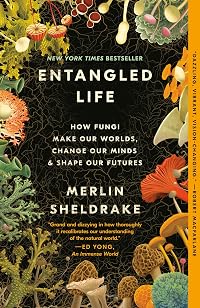
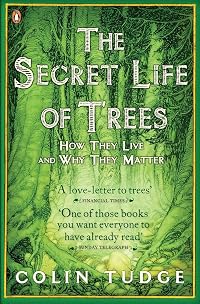
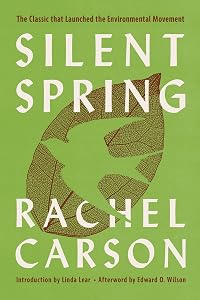
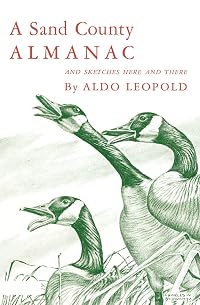


Member Recommendations
lorax Both books are case studies of human breeding and selection of four domestic species; while the focus of the two is different there's enough overlap to create common interest, and both books choose apples as one of the species of interest.
62
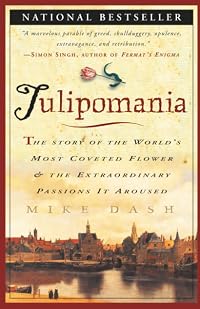
Tulipomania : The Story of the World's Most Coveted Flower & the Extraordinary Passions It Aroused by Mike Dash
lorax The Dutch "tulip mania" touched on in this book is explored in more detail in Tulipomania.
53
Member Reviews
For me, this is Pollan's best work. Approaching global environmental and world history in general from the perspective of the plant was an excellent way to include the agency of non-human historical actors. Pollan's dynamic, conversational writing style means this story will not be stuffy or boring.
In this very slim volume he explores four plants and their associated attributes that make them so attractive to humans. Tulips and beauty are explored particularly well in the Ottoman context. Potatoes are all about control. The chapter on apples and sweetness changed my life. The chapter of marijuana is, not surprisingly, about intoxication. Each of these four things humans have sought after our entire existence, though the definition of show more each certainly changes within our own cultural context. Pollan's voice and ideas really shine in this work.
I have read it a number of times and recommended it for years to colleagues and students with good reception. The PBS documentary of the same title he made a few years ago is a nice follow up to the book but be warned, it doesn't follow many of the best examples here in print. show less
In this very slim volume he explores four plants and their associated attributes that make them so attractive to humans. Tulips and beauty are explored particularly well in the Ottoman context. Potatoes are all about control. The chapter on apples and sweetness changed my life. The chapter of marijuana is, not surprisingly, about intoxication. Each of these four things humans have sought after our entire existence, though the definition of show more each certainly changes within our own cultural context. Pollan's voice and ideas really shine in this work.
I have read it a number of times and recommended it for years to colleagues and students with good reception. The PBS documentary of the same title he made a few years ago is a nice follow up to the book but be warned, it doesn't follow many of the best examples here in print. show less
I'm not an agronomist, a scientist, or even a gardener, but I found "The Botany of Desire" pretty fascinating. This one is incredibly dense: we hear about the history, genes, varieties, social consequences, survival strategies, and the potential future of four well-known plants. In many ways, it's positively eye opening. Pollan emphasizes both how much these plants have changed over the centuries' we've spent with them and how much they've changed us. As the subtitle promises, he even goes out of his way to explain why a certain plant -- or insect, or bacteria -- might benefit from changes in often unexpected ways. "The Botany of Desire" leaves the reader with the impression that nature's logic doesn't necessarily resemble our own. Nor, show more it argues, does our view of these plants necessarily resemble our ancestors': there's a lot of historical weirdness to be found here. I particularly enjoyed hearing about the role of hard cider in frontier America, a man who made it his life's work to preserve old, out-of-fashion apple varieties, and the madness that famously affected Dutch tulip collectors in the 1600s. For contrast, we hear about factory-like potato farms and the intensely futuristic way that marijuana is grown today. Our great-grandfathers might not recognize how we now grow and consume these plants. Pollan seems to want to communicate that what the average person considers "natural" is really anything but. That's an important perspective to have.
The other thing that makes "The Botany of Desire" such a good read the obvious passion that Pollan has for his subject. More than just an understanding of plants, the author might actually be said to have real empathy for them. His descriptions of his garden are nothing short of rapturous. He comes off as a man who's most at peace when he's got his hands in the dirt. Of course, I expect that not everyone will enjoy this aspect of the book. Pollan's an excellent writer, but he doesn't write much like the average scientist, and I couldn't help thinking that some of his tastes and priorities were a bit bougie. He even lives in Connecticut, for Pete's sake! Readers who want a more technical, straightforward look at plant development might want to look elsewhere. But I'm sort of a beginner here, so I really enjoyed this one. Maybe you will, too. show less
The other thing that makes "The Botany of Desire" such a good read the obvious passion that Pollan has for his subject. More than just an understanding of plants, the author might actually be said to have real empathy for them. His descriptions of his garden are nothing short of rapturous. He comes off as a man who's most at peace when he's got his hands in the dirt. Of course, I expect that not everyone will enjoy this aspect of the book. Pollan's an excellent writer, but he doesn't write much like the average scientist, and I couldn't help thinking that some of his tastes and priorities were a bit bougie. He even lives in Connecticut, for Pete's sake! Readers who want a more technical, straightforward look at plant development might want to look elsewhere. But I'm sort of a beginner here, so I really enjoyed this one. Maybe you will, too. show less
Very interesting book about the interrelationship between people and plants, specifically how various human desires have meshed with -- or messed with -- the desire of plants to procreate. The author examines our desire for sweetness by looking at apple growing, including some information of Johnny Appleseed that surprised me. He then looks at our desire for beauty by studying tulips, especially the tulipomania that gripped Holland (and other parts of the world) centuries ago. He then turns to our desire for intoxication by looking at the largely illegal growing of cannabis. Finally, he examines the human desire for control by studying the cultivation of potatoes, raising issues such as biodiversity and GMOs.
Through it all, the writing show more is accessible, at times funny and often profound in its messages. I really enjoyed it. show less
Through it all, the writing show more is accessible, at times funny and often profound in its messages. I really enjoyed it. show less
I picked up The Botany of Desire at the library following txkimmers's recommendation. This is an incredibly cool set of four essays on plants and people: apples, tulips, marijuana, and potatoes.
Pollan does a great job turning around our usual view of "domesticated" plants. We usually see ourselves manipulating plants to serve our needs, making the plant just another tool. As he points out, plants aren't just hapless bystanders here. They have their own agenda, to reproduce!, and every plant that finds a way to get humans to help it along is using us, too.
There's some great stories here. I had no idea Johnny Appleseed was such a character, and so totally different from the image that our grade-school books promote. The exploration of show more Monsanto's genetically engineered potato -- how they make them, how they're grown, why they're attractive to the US market -- was both creepy and cool. Do I really want to be eating these? And how will I even know? show less
Pollan does a great job turning around our usual view of "domesticated" plants. We usually see ourselves manipulating plants to serve our needs, making the plant just another tool. As he points out, plants aren't just hapless bystanders here. They have their own agenda, to reproduce!, and every plant that finds a way to get humans to help it along is using us, too.
There's some great stories here. I had no idea Johnny Appleseed was such a character, and so totally different from the image that our grade-school books promote. The exploration of show more Monsanto's genetically engineered potato -- how they make them, how they're grown, why they're attractive to the US market -- was both creepy and cool. Do I really want to be eating these? And how will I even know? show less
michael pollan is the man i want my son to follow. he has singlehandedly for me turned science back into the direction of biology and away from math and technology. if that sounds oxymoronic it is perhaps because we so easily associated math and technology directly with hardware and the entire skew the cold war has had on american science. when i grew up, thinking about science and brains meant thinking about rockets, space, nuclear engergy, electrical, civil and mechanical engineering. the holy grail of understanding stood at the level of maxwells equations and the high priests of all were the theoretical physicists. other scientific minds like watson, crick and darwin were lesser lights whose duty was to inspire elementary-level show more battle against religious fundamentalists. but there was no way that studying plants could rival studying steel. pollan introduces the possibility for 4H to become more popular than the computer club, the botany of desire is the manifesto.
over the past ten years, computer geeks like me have only stopped to turn our heads toward the natural world for the occasional publication. jared diamond's guns germs and steel has been about as far as most of us have been willing to follow that path. but 'the botany of desire' has ignited a curiousity about the natural world i haven't felt since the first time i followed jacques and his sons out on the calypso. talking with dolphins and chimps has only generated a vocabulary of a few hundred words with a few dozen researchers at most, but pollan illumniates a dialog between plants and humans that goes back dozens of generations in hundreds of ways around the world. distilling it down to tulips, apples, cannibis and potatoes, pollans smoothly scientific and philosophical narrative has generated a kernel of interest that could easily go in dozens of directions. each has gotten me eager to get my hands dirty.
as i look back, i find it is pollan who has singly nabbed me in this regard. i can still recall the fascination i had with his april 1997 article in harper's magazine 'opium made easy'. as well, his recent new york time's magazine article 'this steer's life' grabbed me out of complacency. for me, he has become the james glick of the natural world. yet everything he speaks of is so much more personal. it's easy to speculate about what cellular technology might do, and so much of our admiration of scientific discovery has much to do with futurism. pollan, however uses scientific discipline to investigate what already is, which forces us to apply our minds to problems and opportunities that already exist rather than to the accelleration of anticipation on what might be if only. yes, bluetooth wireless might allow me to do x y and z in tomorrows world, but there are potatoes and apples in the market today which represent an extraordinarily complex mix (or lack thereof) of genetic science. that i can exercise intellectual judgement over this matter today excites me much more that the possibility that i might be a smart consumer tomorrow. even better, that i might become a gardener today and that there is a fight over 'open source' seeds today is far more appealing than parallel matters in software. i am what i think but even more what i eat. pollan give me so many new ways to think about what i eat.
the botany of desire is delightfully entangled in human emotions as the title suggests. there is more than science here to contemplate. there is an entire cognitive history to contemplate. in this regard, pollan becomes a medium after borges as he introduces the reader into the contingent memesphere of plants whose influence changes human destiny - a hidden world suddenly made visible. how is any boy observing a flower bound to act in the flower's interest like a bee? the flower makes us feel. the flower makes us think. the flower makes us pick it. suddenly i understand the conflict i have when my daughter picks the random dandelion to blow its seeds. it's a weed i say, but who can resist it? and in the end i let her blow. i pluck daisys and check the fidelity of my love, i cannot resist looking for the lucky clover. we have coevolved to do so and our present is the the result of the irresistable attractions of humans and plants.
there is much more than an engrossing read here. for me, a world has been offered and i eagerly anticipate engagement. by the way, the bibliography points to multiple dimensions of new knowledge. do not miss this book. it is crucial. show less
over the past ten years, computer geeks like me have only stopped to turn our heads toward the natural world for the occasional publication. jared diamond's guns germs and steel has been about as far as most of us have been willing to follow that path. but 'the botany of desire' has ignited a curiousity about the natural world i haven't felt since the first time i followed jacques and his sons out on the calypso. talking with dolphins and chimps has only generated a vocabulary of a few hundred words with a few dozen researchers at most, but pollan illumniates a dialog between plants and humans that goes back dozens of generations in hundreds of ways around the world. distilling it down to tulips, apples, cannibis and potatoes, pollans smoothly scientific and philosophical narrative has generated a kernel of interest that could easily go in dozens of directions. each has gotten me eager to get my hands dirty.
as i look back, i find it is pollan who has singly nabbed me in this regard. i can still recall the fascination i had with his april 1997 article in harper's magazine 'opium made easy'. as well, his recent new york time's magazine article 'this steer's life' grabbed me out of complacency. for me, he has become the james glick of the natural world. yet everything he speaks of is so much more personal. it's easy to speculate about what cellular technology might do, and so much of our admiration of scientific discovery has much to do with futurism. pollan, however uses scientific discipline to investigate what already is, which forces us to apply our minds to problems and opportunities that already exist rather than to the accelleration of anticipation on what might be if only. yes, bluetooth wireless might allow me to do x y and z in tomorrows world, but there are potatoes and apples in the market today which represent an extraordinarily complex mix (or lack thereof) of genetic science. that i can exercise intellectual judgement over this matter today excites me much more that the possibility that i might be a smart consumer tomorrow. even better, that i might become a gardener today and that there is a fight over 'open source' seeds today is far more appealing than parallel matters in software. i am what i think but even more what i eat. pollan give me so many new ways to think about what i eat.
the botany of desire is delightfully entangled in human emotions as the title suggests. there is more than science here to contemplate. there is an entire cognitive history to contemplate. in this regard, pollan becomes a medium after borges as he introduces the reader into the contingent memesphere of plants whose influence changes human destiny - a hidden world suddenly made visible. how is any boy observing a flower bound to act in the flower's interest like a bee? the flower makes us feel. the flower makes us think. the flower makes us pick it. suddenly i understand the conflict i have when my daughter picks the random dandelion to blow its seeds. it's a weed i say, but who can resist it? and in the end i let her blow. i pluck daisys and check the fidelity of my love, i cannot resist looking for the lucky clover. we have coevolved to do so and our present is the the result of the irresistable attractions of humans and plants.
there is much more than an engrossing read here. for me, a world has been offered and i eagerly anticipate engagement. by the way, the bibliography points to multiple dimensions of new knowledge. do not miss this book. it is crucial. show less
Every schoolchild learns about the mutually beneficial dance of honeybees and flowers: The bee collects nectar and pollen to make honey and, in the process, spreads the flowers’ genes far and wide. In The Botany of Desire, Michael Pollan ingeniously demonstrates how people and domesticated plants have formed a similarly reciprocal relationship. He masterfully links four fundamental human desires—sweetness, beauty, intoxication, and control—with the plants that satisfy them: the apple, the tulip, marijuana, and the potato. In telling the stories of four familiar species, Pollan illustrates how the plants have evolved to satisfy humankind’s most basic yearnings. And just as we’ve benefited from these plants, we have also done show more well by them. So who is really domesticating whom? show less
It may sound like science fiction, but let me assure you... it's not.
Indeed, Pollan writes very well about the history and effects of four plants that have a huge impact on our lives... even if we may never have had two of them. His tone and his command of the various histories managed to make his writing both personal and wildly interesting.
I'm speaking of Apples, Tulips, Cannabis, and Potatoes, however.
I'll assume that everyone has had apples and potatoes, but I can also assume that everyone is at least AWARE of cannabis. As for tulips, they once caused rather fascinating Dionysian meltdown among the Dutch. Toppled a kingdom. That's pretty heavy. :)
The real history of Johnny Appleseed might very well have been about apple alcohol. show more Cider. But once upon a time, and thanks to the wildly diverse possibilities within the apple seed, the whole nation had thousands of different kinds of apples. People selected and bred the best and all of a sudden this nearly unique source of sweetness (sugar being either rare or distasteful thanks to the slave trade) made apples more than a huge market. Sweetness was the key, but when other foods replaced the apple's kingship of sweetness, by that time, the amazing variety had been reduced to a mere handful.
It was our desire for the apples that caused this domestication, but beyond that, the apple trees themselves found themselves in a paradise of genetic dispersion, so helped it along. Selective breeding programs have been a real thing for a long time.
Tulips, for their beauty and a sometimes erratic explosion of color (thanks to a virus that made it weaker) became a craze of economic speculation, driving the prices up until it bankrupted a kingdom.
Cannabis, also a victim or a happy co-author of selective breeding, has undergone massive changes as well. Maybe it was the prohibition against it that made it so coveted, but this is almost as crazy as the Tulip economic bubble.
Potatoes, the last chapter, is all about control. Monsanto. If you like to be freaked out and get the skinny on that debate (as of 2001, when this was published) I can promise you that it will do the job nicely. The kinds of things that are done today with pesticides, GMOs, and the forced termination of genes in order to force farmers to come back, repeatedly, to Monsanto, is a tragedy of epic proportions. And then there's the comparison of this mono-gene-culture to the one that starved a million people in the Potato Famine in Ireland, driving away half the population because they could no longer feed themselves.
Can something like that happen to us?
It's the big question. We're doing it to ourselves. Our need for perfect french fries may undo us all. show less
Indeed, Pollan writes very well about the history and effects of four plants that have a huge impact on our lives... even if we may never have had two of them. His tone and his command of the various histories managed to make his writing both personal and wildly interesting.
I'm speaking of Apples, Tulips, Cannabis, and Potatoes, however.
I'll assume that everyone has had apples and potatoes, but I can also assume that everyone is at least AWARE of cannabis. As for tulips, they once caused rather fascinating Dionysian meltdown among the Dutch. Toppled a kingdom. That's pretty heavy. :)
The real history of Johnny Appleseed might very well have been about apple alcohol. show more Cider. But once upon a time, and thanks to the wildly diverse possibilities within the apple seed, the whole nation had thousands of different kinds of apples. People selected and bred the best and all of a sudden this nearly unique source of sweetness (sugar being either rare or distasteful thanks to the slave trade) made apples more than a huge market. Sweetness was the key, but when other foods replaced the apple's kingship of sweetness, by that time, the amazing variety had been reduced to a mere handful.
It was our desire for the apples that caused this domestication, but beyond that, the apple trees themselves found themselves in a paradise of genetic dispersion, so helped it along. Selective breeding programs have been a real thing for a long time.
Tulips, for their beauty and a sometimes erratic explosion of color (thanks to a virus that made it weaker) became a craze of economic speculation, driving the prices up until it bankrupted a kingdom.
Cannabis, also a victim or a happy co-author of selective breeding, has undergone massive changes as well. Maybe it was the prohibition against it that made it so coveted, but this is almost as crazy as the Tulip economic bubble.
Potatoes, the last chapter, is all about control. Monsanto. If you like to be freaked out and get the skinny on that debate (as of 2001, when this was published) I can promise you that it will do the job nicely. The kinds of things that are done today with pesticides, GMOs, and the forced termination of genes in order to force farmers to come back, repeatedly, to Monsanto, is a tragedy of epic proportions. And then there's the comparison of this mono-gene-culture to the one that starved a million people in the Potato Famine in Ireland, driving away half the population because they could no longer feed themselves.
Can something like that happen to us?
It's the big question. We're doing it to ourselves. Our need for perfect french fries may undo us all. show less
Members
- Recently Added By
Published Reviews
ThingScore 75
In other words, human desire shapes the plants that then shape human desire. In displaying for us, in his graceful and literate way, the intricacies of the mechanisms involved, Mr. Pollan shines a light on our own nature as well as on our implication in the natural world.
added by jlelliott
It's an absorbing subject, and Pollan, like his hero, brings a clutch of quirky talents to the task of exploring it. He has a wide-ranging intellect, an eager grasp of evolutionary biology and a subversive streak that helps him root out some wonderfully counterintuitive points. His prose both shimmers and snaps, and he has a knack for finding perfect quotes in the oddest places (George Eliot show more is somehow made to speak for the sense-attenuating value of a good high). Best of all, Pollan really loves plants. show less
added by jlelliott
Lists

Recommended Nature Writing
346 works; 180 members

Best "Foodie" Books
114 works; 40 members

Non-Fiction Worth Reading
1,015 works; 254 members

Nature Writing
33 works; 3 members

Read These Too
458 works; 9 members

Penguin Random House
458 works; 4 members

Books Read in 2004
200 works; 7 members

Connecticut Book Awards 2002-2011 and 2017+
71 works; 1 member

Books Read in 2021
5,361 works; 114 members

Books Read in 2011
684 works; 20 members

Literary Works Read in College
316 works; 15 members

Books You Read For University
184 works; 3 members
Books That Changed Our Perspective
423 works; 168 members
Author Information

32+ Works 42,698 Members
Michael Pollan is a contributing writer for "The New York Times Magazine" as well as a contributing editor at "Harper's" magazine. He is the author of two prize-winning books: "Second Nature: A Gardener's Education" and "A Place of My Own: The Education of an Amateur Builder." Pollan lives in Connecticut with his wife and son. (Publisher Provided) show more Michael Pollan was born in 1955 and raised on Long Island, NY. He received his B.A. in English from Bennington College in 1977 and his Masters, also in English, from Columbia University, in 1981. He is the author of Cooked: A Natural History of Transformation, as well as 5 New York Times bestselling books: Food Rules: An Eater's Manual, In Defense of Food: An Eater's Manifesto, The Omnivore's Dilemma: A Natural History of Four Meals. The Botany of Desire: A Plant's-Eye View of the World and Ho wto Change Your Mind: What the New Science of Psychedelics Teaches Us about Consciousness, Dying, Addiction, Depression, and Transcendence. (Bowker Author Biography) show less
Some Editions
Awards and Honors
Awards
Distinctions
Series
Belongs to Publisher Series
Work Relationships
Has the adaptation
Has as a reference guide/companion
Common Knowledge
- Canonical title*
- Halun kasvioppi : maailma kasvin näkökulmasta
- Original title
- The Botany of Desire: A Plant's-Eye View of the World
- Original publication date
- 2001
- People/Characters
- Johnny Appleseed (John Chapman)
- Important events
- Great Famine (1845 | 1852)
- Related movies
- The Botany of Desire (2009 | IMDb)
- Dedication
- For my parents, who never doubted (or if they did, never let it show); and my grandfather, with gratitude
- First words
- The seeds of this book were first planted in my garden--while I was planting seeds, as a matter of fact.
- Last words
- (Click to show. Warning: May contain spoilers.)Chapman's craft, his example, invites us to imagine a very different kind of story about Man and Nature, one that shrinks the distance between the two, so that we might again begin to see them for what they are and in spite of everything will always be, which is in this boat together.
*Some information comes from Common Knowledge in other languages. Click "Edit" for more information.
Classifications
Statistics
- Members
- 5,821
- Popularity
- 2,234
- Reviews
- 163
- Rating
- (4.03)
- Languages
- 7 — Dutch, English, Finnish, German, Italian, Spanish, Turkish
- Media
- Paper, Audiobook, Ebook
- ISBNs
- 29
- UPCs
- 2
- ASINs
- 16