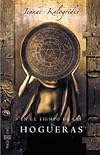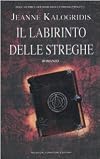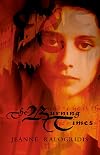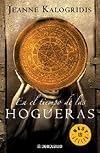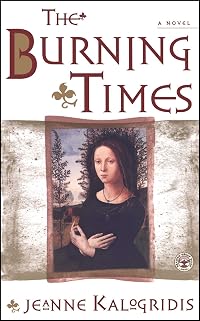
The Burning Times
by Jeanne Kalogridis
On This Page
Description
A sweeping historical epic and powerful romantic drama set in medieval France: a time of the Great Plague, of witchcraft, and the Inquisition.Tags
Recommendations






Member Reviews
Not bad. Well written historical novel set in France in the mid-1300's during the plague and Inquisition. This is a world where magic exists through pagan practitioners who worship the Goddess.
I took a History of Witchcraft class in college. The entire White Goddess theory was debunked. Yes, there were pagans in medieval times, but they did not all have the same practices. Italian paganism is different than French paganism, etc. Also in France one could not be charged or convicted of witchcraft unless it could be shown that the witch directly killed someone or committed some other criminal act. France was probably the best place for pagans to be because of this.
The paganism described in the book is modern neo-paganism. I was show more disappointed. Had the book been set in some other world and not ours, I could have accepted it, but setting this is our world--it just pulled me out of the story. The book also ended in a way leading me to think there is to be a sequel. That makes this book a very long prologue.
Wiccans might enjoy this book because the practices will be very familiar to them.
I'm not inclined to seek out other books by this author. show less
I took a History of Witchcraft class in college. The entire White Goddess theory was debunked. Yes, there were pagans in medieval times, but they did not all have the same practices. Italian paganism is different than French paganism, etc. Also in France one could not be charged or convicted of witchcraft unless it could be shown that the witch directly killed someone or committed some other criminal act. France was probably the best place for pagans to be because of this.
The paganism described in the book is modern neo-paganism. I was show more disappointed. Had the book been set in some other world and not ours, I could have accepted it, but setting this is our world--it just pulled me out of the story. The book also ended in a way leading me to think there is to be a sequel. That makes this book a very long prologue.
Wiccans might enjoy this book because the practices will be very familiar to them.
I'm not inclined to seek out other books by this author. show less
Jeanne Kalogridis writes historical fiction that I love. She mixes a little fact with a little fiction and adds a tiny bit of the paranormal. The magical element never feels odd in her stories either and most times when I come across it, I go right along with it. She blends everything so well.
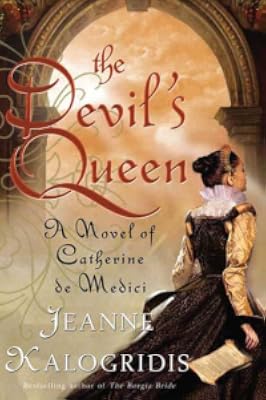
I’ve read several of her books including: The Scarlett Contessa, The Devil's Queen: A Novel of Catherine de Medici and Covenant with the Vampire. My library does not have a huge back list for her, but I plan to seek out a few of others if I can.
In The Burning Times, we meet Sybille, a poor midwife with pagan ways who is forced into hiding and assumes the name and appearance of Sister Marie Francoise so she can take refuge among the Franciscan show more sisterhood. She does this to escape the Inquisitors who wish to burn all heretics and those they deem witches. She is eventually caught by the Inquisitors, and during the course of her imprisonment and interview with a young monk, her story unfolds and the powers she holds, she sees the future and can heal the sick, become clear. It’s obvious to the other Inquisitors that she’s clearly a witch and should be burned but the young Monk Michael wants to hear her story not thoroughly convinced that she is what they all say.
The story is told through this interview and even if you think you know how it will end, the way in which the story is told keeps you interested. Sybille won’t be rushed, knowing this will be her last chance to tell her story and that of her people. There are others in the world with her powers and abilities and she wants the church to know that killing her will not end what they consider to be a scourge of heresy.
There’s an interesting mythology to this book that is more than just witchcraft. The pagan ideals of worship and belief in something higher added an interesting new level that ran against the stalwart beliefs of the church. The historical elements --- the Black Plague, the Hundred Years’ War, and the war between England and France --- provided a nice background for the story to play out.
I love going back to read earlier works of an author I like. While the writing quality of this particular book doesn’t compare to the book released this year, The Scarlett Contessa which I thought had a much better flow and felt much more cohesive, I like to go back and see how a writer evolved. Don’t get me wrong, this is still a good book, but I can see how Kalogridis’s writing has changed over the years and I know that she will be an author whose work I continue to enjoy in the coming years. show less
I’ve read several of her books including: The Scarlett Contessa, The Devil's Queen: A Novel of Catherine de Medici and Covenant with the Vampire. My library does not have a huge back list for her, but I plan to seek out a few of others if I can.
In The Burning Times, we meet Sybille, a poor midwife with pagan ways who is forced into hiding and assumes the name and appearance of Sister Marie Francoise so she can take refuge among the Franciscan show more sisterhood. She does this to escape the Inquisitors who wish to burn all heretics and those they deem witches. She is eventually caught by the Inquisitors, and during the course of her imprisonment and interview with a young monk, her story unfolds and the powers she holds, she sees the future and can heal the sick, become clear. It’s obvious to the other Inquisitors that she’s clearly a witch and should be burned but the young Monk Michael wants to hear her story not thoroughly convinced that she is what they all say.
The story is told through this interview and even if you think you know how it will end, the way in which the story is told keeps you interested. Sybille won’t be rushed, knowing this will be her last chance to tell her story and that of her people. There are others in the world with her powers and abilities and she wants the church to know that killing her will not end what they consider to be a scourge of heresy.
There’s an interesting mythology to this book that is more than just witchcraft. The pagan ideals of worship and belief in something higher added an interesting new level that ran against the stalwart beliefs of the church. The historical elements --- the Black Plague, the Hundred Years’ War, and the war between England and France --- provided a nice background for the story to play out.
I love going back to read earlier works of an author I like. While the writing quality of this particular book doesn’t compare to the book released this year, The Scarlett Contessa which I thought had a much better flow and felt much more cohesive, I like to go back and see how a writer evolved. Don’t get me wrong, this is still a good book, but I can see how Kalogridis’s writing has changed over the years and I know that she will be an author whose work I continue to enjoy in the coming years. show less
This is historical-fantasy-fiction, maybe sort of. I liked it - there was a pretty interesting confession-as-narrative format that had some point of view changes but held together well. The Michel is Luc! revelation was totally predictable (I don't think it was supposed to be a surprise) and kind of rushed, though - suddenly he's Luc! No more character development for you! Overall a good read, though.
I'm all for books that present an alternative view of history, religion, etc. But I swear, if I read the words "my beloved" in a sentence together again, I might scream. I feel like this book and others that present the view of religion that is Goddess worship, women seem to be less powerful and more whiny. I thought this was about empowering women.
While I didn't think this was a good as the previous books I have read by this author I still found it fairly gripping.
I really wanted to know if Michel would help the Abbess and if she would escape being burnt at the stake.
I really wanted to know if Michel would help the Abbess and if she would escape being burnt at the stake.
While it verges occasionally into being too "New Age-y" in terms of its depiction of paganism, this is nonetheless an entertaining read. It's a very unique sort of historical romance -- recommended for those looking for something a little different.
A young woman in medieval France, blessed by the Goddess, persecuted by the Church. She only has a few days to tell her story before she is slated to be put to death. Twists and turns abound through the story, featuring visits of the Goddess, healing miracles, Knights Templar, and much intrigue. While some of the elements of the story are definitely products of the time it was written and might make some turn their noses now, the story is strong and engrossing to keep your attention rapt.
Members
- Recently Added By
Lists

Books featuring monks and/or nuns
166 works; 33 members

Historical Fiction Lovers
88 works; 4 members

Authors from the United States
245 works; 3 members
Author Information

51+ Works 14,691 Members
J. M. Dillard lives in the sleepy community of Ojai, California, with her husband and dogs.
Series
Belongs to Publisher Series
Common Knowledge
- Canonical title
- The Burning Times
- Original title
- The burning times
- Original publication date
- 2001-04-10
- People/Characters
- Marie Sybille Francoise de Cavasculle; Michel; Father Charles; Ana Magdalena de Cavasculle; Mother Geraldine Francoise; Luc de la Rose
- Important places
- Toulouse, Haute-Garonne, Occitanie, France; Carcassonne, Aude, Occitanie, France; Avignon, Bouches-du-Rhône, Provence-Alpes-Côte d'Azur, France; France
- Important events
- Hundred Years' War; plagues (Bubonic Plague)
- Epigraph
- 'Tis the heretic that makes the fire
Not she which burns in't.
-The Winter's Tale
There is no fear in love; but perfect love castesth out fear. -1 John 4:18 - Dedication
- For my Beloved
- First words
- It is a hard, deafening rain.
- Last words*
- (Click to show. Warning: May contain spoilers.)Doch es gibt noch so viel zu tun ...
- Original language
- English
- Disambiguation notice
- Jeanne Kalogridis also known as J. M. Dillard
*Some information comes from Common Knowledge in other languages. Click "Edit" for more information.
Classifications
- Genres
- Fiction and Literature, General Fiction, Historical Fiction, Fantasy
- DDC/MDS
- 813.54 — Literature & rhetoric American literature in English American fiction in English 1900-1999 1945-1999
- LCC
- PS3561 .A41675 .B87 — Language and Literature American literature American literature Individual authors 1961-
- BISAC
Statistics
- Members
- 464
- Popularity
- 65,729
- Reviews
- 14
- Rating
- (3.43)
- Languages
- 6 — English, French, German, Italian, Portuguese, Spanish
- Media
- Paper, Ebook
- ISBNs
- 23
- ASINs
- 4