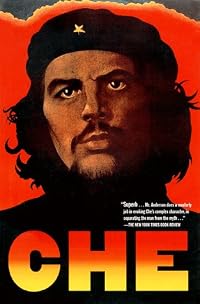
Che Guevara: A Revolutionary Life
by Jon Lee Anderson
On This Page
Description
This acclaimed national bestseller is the definitive work on Che Guevara, the dashing rebel whose epic dream was to end poverty and injustice in Latin America and the developing world through armed revolution. Anderson traces Che's extraordinary life from his comfortable Argentine upbringing to the battlefields of the Cuban revolution, from the halls of power in Castro's government to his failed campaign in the Congo and his assassination in the Bolivian jungle. With unprecedented access to show more personal archives, government documents, and rare interviews, Anderson reveals many details of Che's life that have long been cloaked in secrecy and intrigue. Meticulously researched and full of exclusive information, Che Guevara illuminates as never before this mythic figure who embodied the high-water mark of revolutionary Communism as a force in history.. show less
Tags
Recommendations
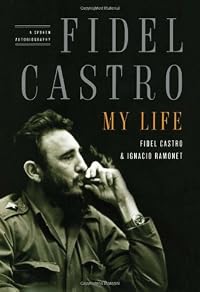
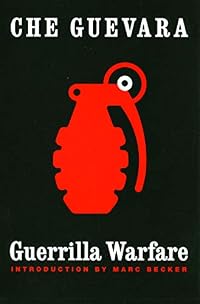

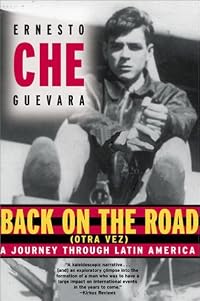
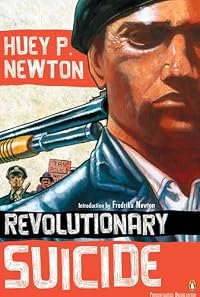
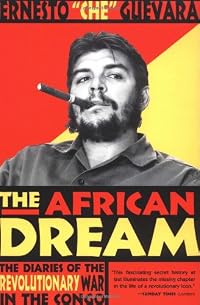
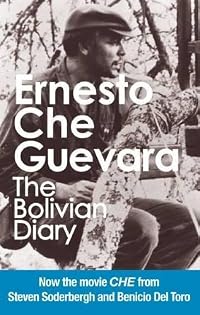

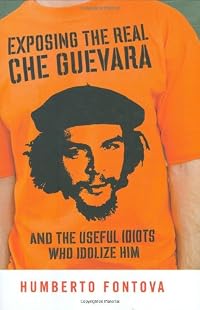
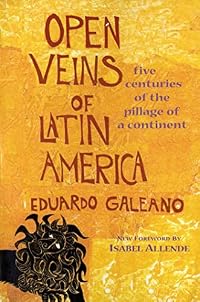
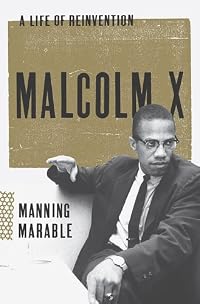
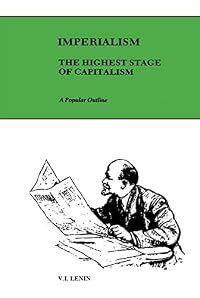
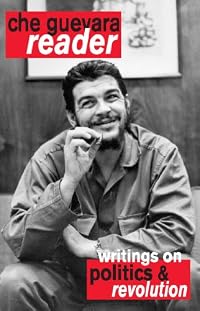

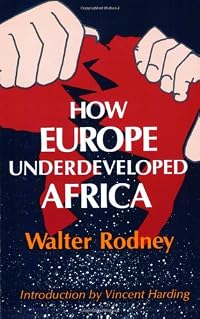

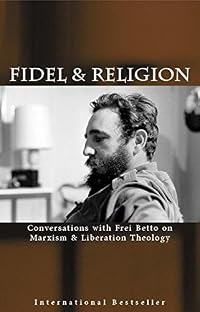

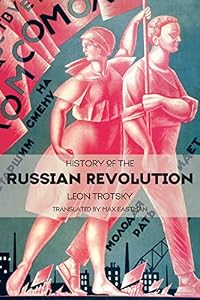
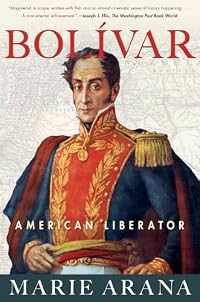


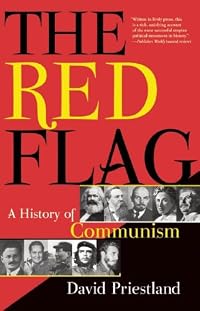
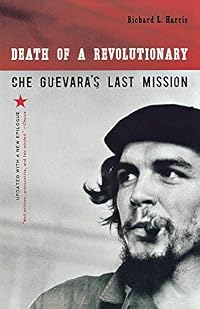
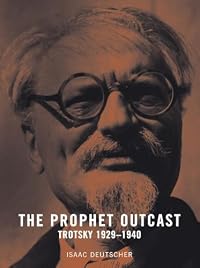
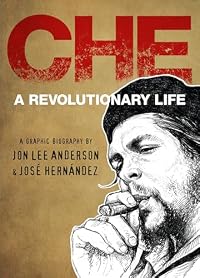


Member Recommendations

Member Reviews
Ernesto "Che" Guevara's legacy was to become more symbol than man, his image made a statement. This biography sheds all of these trappings to examine the man himself, as Jon Lee Anderson tells a comprehensive story from birth to death without any gaps. Che was firstborn of four children to an upper-class Argentine family, though it sometimes struggled at managing money. A bad case of asthma began in childhood that plagued him his entire life. He was proudly defiant of social conventions, a voracious reader with early leftist sympathies, but he never chose a firm side as a youth: no protests, no serious organizational affiliations. Never a noteworthy student in terms of grades but very intelligent, at first he pursued engineering and show more then switched to medicine. A flare for adventure and risky behaviours landed him in a few close calls which could have made this a very short biography.
Two questions predominated that I wanted answers to. The first was, why did he choose a revolutionary life? Satisfying a thirst for travel, Che came to know the lives of lower classes not just across Argentina but throughout Latin America, cementing his socialist beliefs which eventually turned to devoted Marxism. From there it was a short step to sympathizing with Guatamala's fallen socialist regime and Cuban revolutionary aims. My second question was, why did he abandon his comfortable position in Cuba to take up causes elsewhere? Che never viewed his role at Fidel's side as an end in itself but only the first step of his own journey: a worldwide overthrow of the capitalist yoke. He was devoted to this single extreme cause with unwavering fierceness. Cuba was merely the beginning of something grander, the "freeing" of all Latin America and beyond.
The sheer amount of research and wonderfully objective writing make this biography a model to follow. There is consistent balance between personal and public views into his life, including brief backgrounds of other key players and the drawing of interesting connections. The speed of time's passage adjusted depending on how much of interest there was to share, and notification was helpfully provided when someone entered Che's life who would be of greater significance later. I only missed more insight into how the Cuban revolution was victorious against superior numbers, and a more precise study of evolution in the relationship between Che and Fidel after Fidel was in power.
Che Guevara's image is sometimes sanitized as a generic symbol for defying the status quo. His rough Marxist-agenda edges are smoothed away, his call for hatred as a tool to win bloody war against capitalist imperialism conveniently disregarded, his vow forgotten that he would have fired the Cuban missiles had they been in his power. But his story - the real story of the man, not the symbol - is a human story. A reminder that greatness begins with adopting a corresponding risk tolerance; that close-minded devotion to a cause requires sacrifice, including blinding oneself to the world's complexities beyond any simplified black-and-white view. Ultimately it demonstrates the hollowness of violence as means to an end. His image to this day is hoisted by movements embracing armed uprising as their solution, a determination to lash out and destroy as a means to create. So far as that goes, it has earned its place. show less
Two questions predominated that I wanted answers to. The first was, why did he choose a revolutionary life? Satisfying a thirst for travel, Che came to know the lives of lower classes not just across Argentina but throughout Latin America, cementing his socialist beliefs which eventually turned to devoted Marxism. From there it was a short step to sympathizing with Guatamala's fallen socialist regime and Cuban revolutionary aims. My second question was, why did he abandon his comfortable position in Cuba to take up causes elsewhere? Che never viewed his role at Fidel's side as an end in itself but only the first step of his own journey: a worldwide overthrow of the capitalist yoke. He was devoted to this single extreme cause with unwavering fierceness. Cuba was merely the beginning of something grander, the "freeing" of all Latin America and beyond.
The sheer amount of research and wonderfully objective writing make this biography a model to follow. There is consistent balance between personal and public views into his life, including brief backgrounds of other key players and the drawing of interesting connections. The speed of time's passage adjusted depending on how much of interest there was to share, and notification was helpfully provided when someone entered Che's life who would be of greater significance later. I only missed more insight into how the Cuban revolution was victorious against superior numbers, and a more precise study of evolution in the relationship between Che and Fidel after Fidel was in power.
Che Guevara's image is sometimes sanitized as a generic symbol for defying the status quo. His rough Marxist-agenda edges are smoothed away, his call for hatred as a tool to win bloody war against capitalist imperialism conveniently disregarded, his vow forgotten that he would have fired the Cuban missiles had they been in his power. But his story - the real story of the man, not the symbol - is a human story. A reminder that greatness begins with adopting a corresponding risk tolerance; that close-minded devotion to a cause requires sacrifice, including blinding oneself to the world's complexities beyond any simplified black-and-white view. Ultimately it demonstrates the hollowness of violence as means to an end. His image to this day is hoisted by movements embracing armed uprising as their solution, a determination to lash out and destroy as a means to create. So far as that goes, it has earned its place. show less
Jon Lee Anderson's book 'Che Guevara: A Revolutionary Life' was pretty amazing. I can't imagine the hours and the legwork that he put into researching this book. He tracked down Che's private journals and public writings, including some papers that had never been released to the public. He did first hand interviews of people who loved Che and worked by his side, as well as those who hated him and wanted him dead. Through his thorough research Anderson was able to put together a very good outline of the life of Che. I was able to follow Che on his journeys through South America, Cuba, Africa, and then back to South America again. Anderson described not only the adventures that Che embarked upon, but also how his thoughts evolved so that show more we are able to better understand the man that he was.
Anderson states that Che suffered from two major weaknesses; 'hubris and naivete.' Che was so certain that what he was doing was for the good of the peasants. He thought that the only way to help them was to begin revolutions such as Marx had described in his writings. He was certain that Socialism was the answer to their problems. However, Che could be a very mean and spiteful person to anyone who did not understand or agree with his choices or decisions. I often felt that he treated people like dirt. Che's other weakness, Anderson points out was naivete. Those people that Che did trust, he trusted too completely, and they often let him down.
I know many people see Che as a hero, but after reading Anderson's detailed biography, that is not how I view him. I do believe he was an extremely intelligent, well read man, who was selfless in his ideals of helping the peasants, and I find that to be amirable. However, I do not agree with his methods. His goal was to start a World War so that Socialism could be planted thoughout the world. I do not view war and the killing of thousands of humans as the solution. show less
Anderson states that Che suffered from two major weaknesses; 'hubris and naivete.' Che was so certain that what he was doing was for the good of the peasants. He thought that the only way to help them was to begin revolutions such as Marx had described in his writings. He was certain that Socialism was the answer to their problems. However, Che could be a very mean and spiteful person to anyone who did not understand or agree with his choices or decisions. I often felt that he treated people like dirt. Che's other weakness, Anderson points out was naivete. Those people that Che did trust, he trusted too completely, and they often let him down.
I know many people see Che as a hero, but after reading Anderson's detailed biography, that is not how I view him. I do believe he was an extremely intelligent, well read man, who was selfless in his ideals of helping the peasants, and I find that to be amirable. However, I do not agree with his methods. His goal was to start a World War so that Socialism could be planted thoughout the world. I do not view war and the killing of thousands of humans as the solution. show less
Prepare to be enthralled! To describe Che as a complex personality is much more than a cliché. You will be touched by his tenderness while being horrified at his cruelty. You will be enamoured by his sense of humour while being dismayed by his arrogance. You will be relieved that his dreams were not realized while you wonder what the world would be like if his brilliance had been directed to more peaceful means. You will be in awe of his intellect and entranced by his charisma but, most of all, you will be glad that Jon Lee Anderson did the work to bring all of this alive without mythologizing the subject. You will come away from reading this book with a deeper understanding of this historic figure and the milieu in which he lived, show more worked, fought and died. And, you will mourn his passing. show less
Over the years as Che Guevara was commodified, he became the most familiar figure and yet a misunderstood and unkown personality. He became a brand that was used to sell everything from t-shirts and mugs to canned beer. In all this commodification, Che’s life and what he stood for got lost. Who was this extraordinary man who gave up his privilege and everything he cherished and dedicated his life to an idea and died for it? This is a great biography that gives him a historical context and brings him to life.
Che is one of the most important and charismatic figures of the human struggle against injustice and oppression. This biography is meticulously detailed and comprehensive. John lee Anderson takes us from the social conditions of show more his childhood, his family whose independent spirit will be a great influence on him, his medical studies, to his famous motorcycle journeys and his later journeys across the Americas that awakened his political and social consciousness as he became a dedicated Marxist. The Cuban revolution after which he became the principal architect of its economic direction, and his return to Guerrilla warfare after he decided that the Cuban revolution was on the right path that eventually led to his death in Bolivia. The death that would give him such an enduring romantic legacy. The final section of this book has many poignant moments.
Che was selfless, strong-willed, honest, a lover of learning who constantly read books, and was totally dedicated to the cause of struggle against imperialism. While Fidel and Che shared the same goals and ideals, Fidel was a wily politician who presented a different face to the public from his private self and Che was honest to a fault who always spoke his mind. The author brings out both the passionate romantic and the cold rationale side of him.
As a guerilla he was a man embroiled in a violent struggle and was no saint. He was a great tactician and a charismatic leader who attracted undying loyalty from many. He led an ascetic life and expected everyone to live upto his standards. He was a strict disciplinarian. He was also very idealistic and utopian which shows in the unbridled faith and optimism that he showed even when people around him were failing him.
As an administrator he was the driving force behind Cuba’s land reforms and its successful health and literacy programs. As a Marxist, he wanted to diversify and industrialise the Cuban economy. In this he was critical of the soviet model and was more of a Maoist.
He was a dedicated internationalist and he held that socialism could only be successful with the creation of the "New Man". He believed that a change in consciousness should be simultaneous with the new material foundations. I think his idea of the "New socialist man" is his most important contribution to Marxist theory. He argued that capitalism produces incomplete alienated individuals that only a true socialist society enables a man to become a complete individual.
An excellent and inspirational biography of a truly selfless revolutionary. He dedicated his life to what he believed in and he ultimately died for it. show less
Che is one of the most important and charismatic figures of the human struggle against injustice and oppression. This biography is meticulously detailed and comprehensive. John lee Anderson takes us from the social conditions of show more his childhood, his family whose independent spirit will be a great influence on him, his medical studies, to his famous motorcycle journeys and his later journeys across the Americas that awakened his political and social consciousness as he became a dedicated Marxist. The Cuban revolution after which he became the principal architect of its economic direction, and his return to Guerrilla warfare after he decided that the Cuban revolution was on the right path that eventually led to his death in Bolivia. The death that would give him such an enduring romantic legacy. The final section of this book has many poignant moments.
Che was selfless, strong-willed, honest, a lover of learning who constantly read books, and was totally dedicated to the cause of struggle against imperialism. While Fidel and Che shared the same goals and ideals, Fidel was a wily politician who presented a different face to the public from his private self and Che was honest to a fault who always spoke his mind. The author brings out both the passionate romantic and the cold rationale side of him.
As a guerilla he was a man embroiled in a violent struggle and was no saint. He was a great tactician and a charismatic leader who attracted undying loyalty from many. He led an ascetic life and expected everyone to live upto his standards. He was a strict disciplinarian. He was also very idealistic and utopian which shows in the unbridled faith and optimism that he showed even when people around him were failing him.
As an administrator he was the driving force behind Cuba’s land reforms and its successful health and literacy programs. As a Marxist, he wanted to diversify and industrialise the Cuban economy. In this he was critical of the soviet model and was more of a Maoist.
He was a dedicated internationalist and he held that socialism could only be successful with the creation of the "New Man". He believed that a change in consciousness should be simultaneous with the new material foundations. I think his idea of the "New socialist man" is his most important contribution to Marxist theory. He argued that capitalism produces incomplete alienated individuals that only a true socialist society enables a man to become a complete individual.
An excellent and inspirational biography of a truly selfless revolutionary. He dedicated his life to what he believed in and he ultimately died for it. show less
Jon Lee Anderson's biography of Che Guevara is exhaustively researched, which was a benefit to me, since I had never before studied Che's life in detail, nor had I read about the Bay of Pigs or the Cuban Missile Crisis from anything but an American perspective. I found it to be an illuminating, albeit sometimes exhausting, read.
This biography combines several approaches to history in one. In the first section, Anderson provides vivid details of Che's early life, his love of literature and learning, his studies to be a medical doctor, and his travels through Latin America, which eventually helped to lead him to his political awakening as a Marxist. This first section works particularly well as a work of intellectual history, especially show more with the addition of many quotations from Che's journals, correspondence, and other writings. I felt that I gained a good perspective on Che as an individual here, including his personal battles with very serious asthma, which continued to plague him throughout his life.
The second section of the biography focuses on the Cuban Revolution, with copious details of the Che's leadership in the guerrilla warfare that eventually led to the fall of the Batista regime and the rise of Castro's Cuban republic. This section focuses especially on military history, and on the political tactics that Castro and Che utilized to gain strength in the Cuban countryside as well as internationally. (Anderson's discussion of Castro's tactics to make the world press believe he had a much larger force at his command than he actually did was especially fascinating.) In this section, Anderson shows Che's growth as a leader, as well as his close relationship with Castro. Anderson doesn't flinch from sharing details of Che's responsibility for executions of comrades and of enemies in the field, the darker side of the Cuban Revolution.
The third section, which is the longest in the biography, focuses on several areas: Che's work for the Cuban government to develop Cuba's industrial infrastructure and move its economy from capitalism to socialism; Che's role in the complex international intrigue and negotiations of the time, maneuvering against the US while also playing the USSR and China off each other; and Che's final role as column leader and field commander of two failed insurrections, one in the Congo and one in Bolivia, which eventually cost him his life. There's a wealth of detail to assimilate in this section - names of foreign agents and Cubans fighting by Che's side, complex sequences of diplomatic maneuvers and moves by espionage agents, and lengthy documentation of every military decision taken in the field in the Congo and Bolivia, as well as analysis of all the reasons why those missions failed.
In spite of this flood of names, facts, dates, and places, Anderson doesn't lose sight of his main themes in the biography. I emerged with an understanding of Che's unwavering and strict commitment to Marxism. He gave his life for his belief in the necessity of an international uprising against imperial and capitalist powers. In spite of some differences in opinion between Che and Castro on the best model for the Communist Revolution to follow in Cuba (Che preferred the Maoist model - he was concerned about how close Soviet Communism was to capitalism, and he believed there were many more parallels between the peasants of Cuba and those of China), Anderson presents Che as a dedicated, selfless, and loyal comrade and friend for Castro. He also lived an ascetic life, constantly on guard against receiving any benefits that the average Cuban citizen did not receive. In addition to providing these laudatory aspects of Che's personality, Anderson makes very clear Che's imperfections - his zealous commitment to his political cause meant that his family, including his children, had very little contact with him. When he left Cuba for the Congo, he did not expect to return. He could be overly strict and distanced at home, in the office, or in the field. Taken as a whole, Anderson's portrait of Che provides the reader with an understanding of the importance of his role in Latin American and world politics, both before and after his death, as well as with a richer understanding of this complex man. show less
This biography combines several approaches to history in one. In the first section, Anderson provides vivid details of Che's early life, his love of literature and learning, his studies to be a medical doctor, and his travels through Latin America, which eventually helped to lead him to his political awakening as a Marxist. This first section works particularly well as a work of intellectual history, especially show more with the addition of many quotations from Che's journals, correspondence, and other writings. I felt that I gained a good perspective on Che as an individual here, including his personal battles with very serious asthma, which continued to plague him throughout his life.
The second section of the biography focuses on the Cuban Revolution, with copious details of the Che's leadership in the guerrilla warfare that eventually led to the fall of the Batista regime and the rise of Castro's Cuban republic. This section focuses especially on military history, and on the political tactics that Castro and Che utilized to gain strength in the Cuban countryside as well as internationally. (Anderson's discussion of Castro's tactics to make the world press believe he had a much larger force at his command than he actually did was especially fascinating.) In this section, Anderson shows Che's growth as a leader, as well as his close relationship with Castro. Anderson doesn't flinch from sharing details of Che's responsibility for executions of comrades and of enemies in the field, the darker side of the Cuban Revolution.
The third section, which is the longest in the biography, focuses on several areas: Che's work for the Cuban government to develop Cuba's industrial infrastructure and move its economy from capitalism to socialism; Che's role in the complex international intrigue and negotiations of the time, maneuvering against the US while also playing the USSR and China off each other; and Che's final role as column leader and field commander of two failed insurrections, one in the Congo and one in Bolivia, which eventually cost him his life. There's a wealth of detail to assimilate in this section - names of foreign agents and Cubans fighting by Che's side, complex sequences of diplomatic maneuvers and moves by espionage agents, and lengthy documentation of every military decision taken in the field in the Congo and Bolivia, as well as analysis of all the reasons why those missions failed.
In spite of this flood of names, facts, dates, and places, Anderson doesn't lose sight of his main themes in the biography. I emerged with an understanding of Che's unwavering and strict commitment to Marxism. He gave his life for his belief in the necessity of an international uprising against imperial and capitalist powers. In spite of some differences in opinion between Che and Castro on the best model for the Communist Revolution to follow in Cuba (Che preferred the Maoist model - he was concerned about how close Soviet Communism was to capitalism, and he believed there were many more parallels between the peasants of Cuba and those of China), Anderson presents Che as a dedicated, selfless, and loyal comrade and friend for Castro. He also lived an ascetic life, constantly on guard against receiving any benefits that the average Cuban citizen did not receive. In addition to providing these laudatory aspects of Che's personality, Anderson makes very clear Che's imperfections - his zealous commitment to his political cause meant that his family, including his children, had very little contact with him. When he left Cuba for the Congo, he did not expect to return. He could be overly strict and distanced at home, in the office, or in the field. Taken as a whole, Anderson's portrait of Che provides the reader with an understanding of the importance of his role in Latin American and world politics, both before and after his death, as well as with a richer understanding of this complex man. show less
The only thing that kept me from giving this book 5 stars was its length. Anderson, who had unprecedented access to Che's diaries, as well as the diaries and interviews of his friends and his family, writes a ridiculously detailed bio of the modern world's most visible, least understood character. Anderson follows Che through his childhood, med school, many trips through the americas and continues to document his revolutionary time in Cuba, the Congo and back into South America. He creates a human Che who was so didicated to his utopian goals, no matter how horrible his means to attain them.
Anderson shows Che was neither the perfect rebel for the poor proles, nor the horrible monster that the west created.
Anderson shows Che was neither the perfect rebel for the poor proles, nor the horrible monster that the west created.
This is quite an extensive biography of Che Guevara. On my kindle, it amounts to over 17000 sentences, rivaling the thickest works of George RR Martin. Of course, one doesn't have to read all the notes and footnotes (which the above count includes), but then one would be missing out on interesting tidbits, such as the story of how the iconic image of Che now adoring T-shirts and other crap came to be.
The sheer amount of work that must have gone into writing this biography is mind boggling. Though it encompasses the entirety of Che's life (thankfully it doesn't dwell too much on his early childhood), this is not just the story of Che, it is at the very least a fairly comprehensive history of the Cuban revolution and a look into show more geopolitical situation of the world (and especially Latin America) in the middle of the twentieth century.
The author was given unprecedented access to unpublished documents about Che's life by Che's widow, Aleida March, so a few things previously unknown about El Commandante come to light. The author tries to thread a fine line between presenting Che's life in a fair, impartial manner and being too impersonal and dry for reader's taste, a task at which he sometimes fails on the latter part. For example, Che's death is presented in a very matter-of-fact way, basically "then he was taken out and shot". On the plus side, this updated edition contains information on the 1990s search for his remains and their transfer to Cuba where they now rest in the mausoleum in Santa Clara.
In the end, what rises before the reader's eyes, is an image of a courageous man who was willing to live and die by and for his principles and who expected others to the same. A man, who was a strict disciplinarian, but to no one more than himself. A revolutionary who found himself more at ease fighting a guerilla war in the jungles of Latin America and Africa than behind a desk. A man who put everything on the line to bring about what he thought a better future for the peoples of Latin America and who was in the end murdered in the attempt. Definitely a rare if not a unique breed of a political and military leader in the history of mankind. show less
The sheer amount of work that must have gone into writing this biography is mind boggling. Though it encompasses the entirety of Che's life (thankfully it doesn't dwell too much on his early childhood), this is not just the story of Che, it is at the very least a fairly comprehensive history of the Cuban revolution and a look into show more geopolitical situation of the world (and especially Latin America) in the middle of the twentieth century.
The author was given unprecedented access to unpublished documents about Che's life by Che's widow, Aleida March, so a few things previously unknown about El Commandante come to light. The author tries to thread a fine line between presenting Che's life in a fair, impartial manner and being too impersonal and dry for reader's taste, a task at which he sometimes fails on the latter part. For example, Che's death is presented in a very matter-of-fact way, basically "then he was taken out and shot". On the plus side, this updated edition contains information on the 1990s search for his remains and their transfer to Cuba where they now rest in the mausoleum in Santa Clara.
In the end, what rises before the reader's eyes, is an image of a courageous man who was willing to live and die by and for his principles and who expected others to the same. A man, who was a strict disciplinarian, but to no one more than himself. A revolutionary who found himself more at ease fighting a guerilla war in the jungles of Latin America and Africa than behind a desk. A man who put everything on the line to bring about what he thought a better future for the peoples of Latin America and who was in the end murdered in the attempt. Definitely a rare if not a unique breed of a political and military leader in the history of mankind. show less
Members
- Recently Added By
Lists

Best Biographies, Autobiographies and Memoirs
464 works; 156 members

501 Must-Read Books
508 works; 72 members

The Joe Rogan Experience Library
254 works; 3 members

r/History Recommended Reading List
603 works; 12 members

Hakim's Marxist Book List
46 works; 3 members

autobiographies, biographies & memoirs
56 works; 1 member

Books Cited in Digging Up the Dead by Michael Kammen
183 works; 1 member

Cuba
6 works; 1 member
Author Information

Jon Lee Anderson (born January 15, 1957) is a biographer, author, international investigative reporter, and staff writer for The New Yorker, reporting from war zone locales such as Afghanistan, Iraq, Uganda, Israel, El Salvador, Ireland, Lebanon, Iran, and throughout the Middle East. Anderson has also written for The New York Times, Harper's, show more Life, and The Nation. Anderson is renowned for his numerous profiles of political leaders, including Hugo Chavez, Fidel Castro, and Augusto Pinochet. Anderson is also the author of the best-selling and definitive 800 + page biography of the iconic Marxist revolutionary Che Guevara. Entitled Che Guevara: A Revolutionary Life, it was first published in 1997. While researching the book in Bolivia, he discovered the hidden location of Guevara's burial from where his skeletal remains were exhumed in 1997 and returned to Cuba. (Bowker Author Biography) show less
Some Editions
Awards and Honors
Work Relationships
Has the adaptation
Common Knowledge
- Canonical title
- Che Guevara: A Revolutionary Life
- Original title
- Che Guevara : A Revolutionary Life
- Original publication date
- 1998
- People/Characters
- Ernesto ''Che'' Guevara; Fidel Castro; Raul Castro
- Important places
- Argentina; Guatemala; Cuba; Congo; Bolivia
- Important events
- Cuban Revolution (1959); Execution of Che Guevara
- Dedication
- for Erica; and in memory of my mother, Barbara Joy Anderson, 1928-1994
- First words
- The revelation slipped out almost casually over a long morning's conversation over coffee in November 1995.
The horoscope was confounding. - Quotations
- "I don't even know in which land I will leave my bones."
Searching, crossing solutions off the list of possibilities as he went - reformism, democracy, elections - he had found Marx, then Guatemala, then Cuba, and in that baptism of fire, his discoveries of "empirical medicine" had... (show all) led to "scientific truth." That truth, and the cure to man's ills, was Marxism-Leninism, and guerrilla warfare was the means to achieve it .... In essence, Che was arguing that his formula for attaining socialism through armed struggle amounted to a scientific discovery, and through this discovery would come an end to injustice and the creation of a new form of man. - Original language
- English
Classifications
- Genres
- Biography & Memoir, General Nonfiction, History, Nonfiction
- DDC/MDS
- 980.033092 — History & geography History of South America History of South America History of South America 1830-1999 1918-1949
- LCC
- F2849.22 .G85 .A68 — Local History of the United States, Canada and Latin America Latin America. Spanish America South America Argentina
- BISAC
Statistics
- Members
- 1,945
- Popularity
- 10,859
- Reviews
- 22
- Rating
- (4.05)
- Languages
- 11 — Danish, English, Finnish, French, German, Italian, Polish, Portuguese, Spanish, Swedish, Turkish
- Media
- Paper, Audiobook, Ebook
- ISBNs
- 50
- UPCs
- 1
- ASINs
- 10