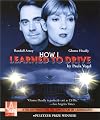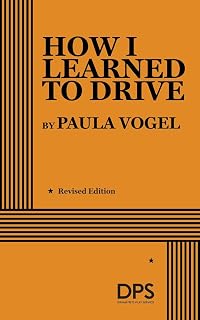
How I Learned to Drive
by Paula Vogel
On This Page
Description
Newly published as a stand-alone edition, Vogel's widely celebrated masterpiece How I Learned to Drive was the winner of the 1998 Pulitzer Prize for Drama, the Obie and Drama Desk Awards for Outstanding Play, and other honors. Known for its dark subject matter, the play examines the effects of child abuse on identity and the discovery of strength through trauma.Tags
Recommendations












Member Reviews
A woman identified only by her childhood nickname Li'l Bit talks about sexual trauma from her past that continues to haunt her.
This was a powerful read about how a young girl tries to deals with incestuous overtures by her uncle, many made when he was purportedly teaching her how to drive. Although there's clearly one person who is fully responsible for her sexual assault, this play shows how a whole society contributes to this terrible tragedy with off-color jokes about the human body, jealous wives who blame the victim, a refusal to talk to teenagers about safe sex, using sexuality to sell products, etc. etc.
Although the subject material is difficult, I would be interested in seeing this play live some day if possible as Vogel's stage show more directions seem incredibly creative even when I wasn't able to fully conceptualize them. For instance, she calls for various street signs to show up at different times, for a trio of "Greek chorus" actors to pop in as assorted characters throughout the play, and so on.
Not for the faint of heart, but this is overall an important work. show less
This was a powerful read about how a young girl tries to deals with incestuous overtures by her uncle, many made when he was purportedly teaching her how to drive. Although there's clearly one person who is fully responsible for her sexual assault, this play shows how a whole society contributes to this terrible tragedy with off-color jokes about the human body, jealous wives who blame the victim, a refusal to talk to teenagers about safe sex, using sexuality to sell products, etc. etc.
Although the subject material is difficult, I would be interested in seeing this play live some day if possible as Vogel's stage show more directions seem incredibly creative even when I wasn't able to fully conceptualize them. For instance, she calls for various street signs to show up at different times, for a trio of "Greek chorus" actors to pop in as assorted characters throughout the play, and so on.
Not for the faint of heart, but this is overall an important work. show less
Holy crap this is crazy good. It feels like a modern renedition of A View From The Bridge but it is told with the victim at the forefront of the story. A really powerful piece with some real cheeky lines and jokes. Definitely needs to be done over and over again. I love contemporary plays, even though this takes place in the 60s it feels like it could take place today, which is scary but moving
This is one of my favorite plays of all time. It's a perfect combination of humor and pathos. Using a driver's manual as a way to navigate life, Vogel creates a witty, smart extended metaphor that embodies Gardner's "vivid and unending dream" that we strive to find in good fiction. Read this for the unforgettable characters, the masterful dialogue, and the magic. One of the best.
This is one of those plays where everyone is dying to know - is it autobiographical? Because whenever a play is written about sexual abuse of a child, people definitely poke around hoping to find the author in the story. I don't know if it's autobiographical; I do know that it's a powerful and unforgettable play, where the driving lessons are actually a metaphor for the coming of age process. The author bends time and place, and throws linear structure out the window, and it works. The format lends a surreal nature to an all too real story, and makes it perhaps more bearable. A well written play, perhaps a bit underwritten which isn't always a bad thing.
I was pretty sure when I started this one that I would dislike it, but surprisingly enough, I found myself really enjoying this piece despite the incredibly difficult subject matter involving pedophilia. Vogel wrote it in such a way that it truly speaks to people, even if you cannot directly relate.
This play has been my favorite contemporary play since I first read it about four years ago. It tells the story of Lil' Bit and her relationship with her uncle Uncle Peck which begins when she is very young and continues until she is in college. Though she is clearly a victim of molestation, the story is much deeper than that of a victim and her perpetrator. Vogel lets to audience into Lil' Bit's dysfunctional family in which her grandfather is over-sexed and her grandmother is at the beckon call of his sexual urges. In addition, Lil' Bit's mother gives her advice on sex and men that is misguided due to her own failing as a wife. The only family member that Lil' Bit can turn to is her uncle who loves her as more than a niece. The two show more begin a relationship before Lil' Bit even reached puberty. Though Lil' Bit knows that the relationship is wrong, Uncle Peck is her only advocate and support.
The play is told through various scenes that are not chronological. Vogel chose to do this in order to question the audience about at what point does their relationship become inappropriate. She wanted the audience to view a scene and think "is this wrong" and then escalate to a more graphic scene in order to raise the question "now is it wrong". With each scene, Vogel is asking the audience when does the relationship cross the line. While there is not a great deal of action, it is one of the most thought-provoking plays. I cannot give it enough praise!!
www.iamliteraryaddicted.blogspot.com show less
The play is told through various scenes that are not chronological. Vogel chose to do this in order to question the audience about at what point does their relationship become inappropriate. She wanted the audience to view a scene and think "is this wrong" and then escalate to a more graphic scene in order to raise the question "now is it wrong". With each scene, Vogel is asking the audience when does the relationship cross the line. While there is not a great deal of action, it is one of the most thought-provoking plays. I cannot give it enough praise!!
www.iamliteraryaddicted.blogspot.com show less
On the page, it didn't do that much for me. I hope to see it performed someday, though.
Members
- Recently Added By
Lists

Plays I Like
230 works; 31 members
My Play Collection
769 works; 3 members

My Favorite Plays
25 works; 1 member
Author Information

15+ Works 1,261 Members
Some Editions
Awards and Honors
Awards
Notable Lists
Work Relationships
Is contained in
Has as a student's study guide
Classifications
Statistics
- Members
- 450
- Popularity
- 68,348
- Reviews
- 10
- Rating
- (3.71)
- Languages
- English
- Media
- Paper, Audiobook, Ebook
- ISBNs
- 8
- ASINs
- 3