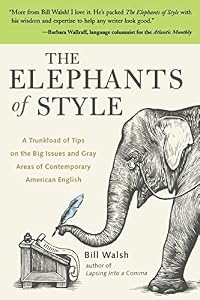
The Elephants of Style : A Trunkload of Tips on the Big Issues and Gray Areas of Contemporary American English
by Bill Walsh 
On This Page
Description
Provides an overview of the fundamental rules of the English language, including tips for mastering some of the more confusing spelling, punctuation, grammar, capitalization, and conjugation rules.Tags
Recommendations




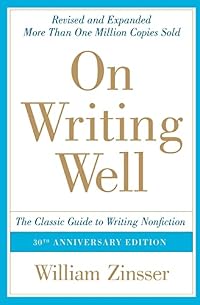
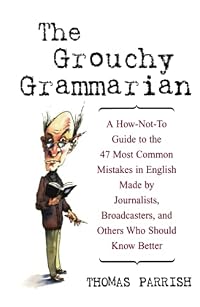
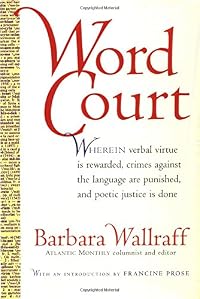
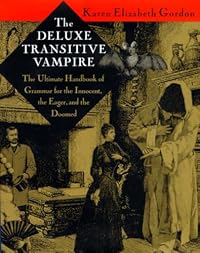








Member Reviews
Elephants of Style’ is a well-regarded guide to English usage and style, written by Bill Walsh, a respected copy editor. The book is known for its witty, insightful, and practical approach to the nuances of grammar, punctuation, and word choice. Walsh addresses common pitfalls and “style elephants”—those big, persistent issues that writers and editors frequently encounter. The book is structured as a collection of essays and entries, each tackling a specific language topic, rule, or misconception. Walsh’s tone is conversational and often humorous, making the book accessible to both language professionals and general readers.
Walsh’s writing is marked by clarity, wit, and a deep understanding of language. He avoids show more prescriptivism for its own sake, instead advocating for consistency, logic, and reader comprehension. The book’s structure—short, focused essays—makes it easy to dip into for quick reference or to read straight through for a broader perspective on style.
‘Elephants of Style’ stands out among style guides for its blend of authority and approachability. It’s particularly valued by journalists, editors, and anyone who cares about clear, effective communication. The book encourages readers to think critically about language rather than blindly follow rules, fostering a more thoughtful approach to writing.
Again, you must remember that there is so much material in the book that its real value lies in being an excellent reference book for style. You will not remember everything he has written. show less
Walsh’s writing is marked by clarity, wit, and a deep understanding of language. He avoids show more prescriptivism for its own sake, instead advocating for consistency, logic, and reader comprehension. The book’s structure—short, focused essays—makes it easy to dip into for quick reference or to read straight through for a broader perspective on style.
‘Elephants of Style’ stands out among style guides for its blend of authority and approachability. It’s particularly valued by journalists, editors, and anyone who cares about clear, effective communication. The book encourages readers to think critically about language rather than blindly follow rules, fostering a more thoughtful approach to writing.
Again, you must remember that there is so much material in the book that its real value lies in being an excellent reference book for style. You will not remember everything he has written. show less
copy editor 的執著
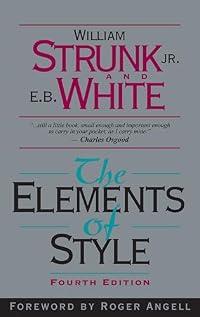
書名模仿經典參考書The Elements of Style。這兒的style是指拼字、文法、語意、排版,以及字詞和標點符號使用上的須知。
作者是華盛頓郵報的總審稿(copy chief),在書中提供多家媒體與報社對style的要求,還有自己的想法。他對美式英文寫作的演進採取溫和但保守的態度,對於目前一些美語的變化有些不滿,常出現相當"snarky"的評論,非常有趣,但恐怕不是人人都能接受的幽默。至於他的建議,既然連各家媒體的stylebooks都未能統一標準,他的見解是否該視為真理?那就見仁見智了。
書名模仿經典參考書The Elements of Style。這兒的style是指拼字、文法、語意、排版,以及字詞和標點符號使用上的須知。
作者是華盛頓郵報的總審稿(copy chief),在書中提供多家媒體與報社對style的要求,還有自己的想法。他對美式英文寫作的演進採取溫和但保守的態度,對於目前一些美語的變化有些不滿,常出現相當"snarky"的評論,非常有趣,但恐怕不是人人都能接受的幽默。至於他的建議,既然連各家媒體的stylebooks都未能統一標準,他的見解是否該視為真理?那就見仁見智了。
For complete review, visit: http://bit.ly/LYlYyS
As a stickler for correctness and very old school when it comes to dangling participles and split infinitives, not to mention the whole issue of constantly morphing comma usage, I find myself wandering through mine fields of doubt when writing in a contemporary voice. American English is not what it was fifty or even thirty years ago when I was diagramming sentences in sophomore English. We've loosened up. We've accommodated change. Whether that is a good thing or a bad thing is a matter for debate, but it is so, and so we adapt or become obsolete.
Mr. Walsh does a terrific job of guiding writers around the pitfalls and ambiguities which have resulted in American English getting hip. And, show more he does it with authority: Here's Goodread's author bio:
Bill Walsh was born in Pennsylvania coal country but grew up in Madison Heights, Mich., and Mesa, Ariz. He is a 1984 journalism graduate of the University of Arizona and has worked as a reporter and editor at the Phoenix Gazette and an editor at the Washington Times and the Washington Post. He is now the chief copy editor for national news at the Post.
Language is my living. I forge words and thought into meaningful communication. Whether someone else's words or my own, I manipulate them in image, print and page, hopefully creating a coherent whole. And that coherence depends a great deal in understanding my audience. Whether I'm editing a manuscript or a master's thesis, transcribing medical documentation or personal history interviews, constructing business prospectuses, blogging, or writing historical fiction in my Regency voice, the form and style I use must connect with the reader, rather than throw up roadblocks because we're not really speaking the same language.
Changing voices strikes dread in my heart at times (I'm much better at clinical than casual) and I accept the degeneration of change in language usage kicking and screaming. However, Mr. Walsh is of my generation, far better educated, and is editor of one of the most respected journals in the country. So, whenever I argue with myself about who vs. whom or the proper placement of commas this week, I find refer to his opinion.
Then, I go and do what I want anyway. show less
As a stickler for correctness and very old school when it comes to dangling participles and split infinitives, not to mention the whole issue of constantly morphing comma usage, I find myself wandering through mine fields of doubt when writing in a contemporary voice. American English is not what it was fifty or even thirty years ago when I was diagramming sentences in sophomore English. We've loosened up. We've accommodated change. Whether that is a good thing or a bad thing is a matter for debate, but it is so, and so we adapt or become obsolete.
Mr. Walsh does a terrific job of guiding writers around the pitfalls and ambiguities which have resulted in American English getting hip. And, show more he does it with authority: Here's Goodread's author bio:
Bill Walsh was born in Pennsylvania coal country but grew up in Madison Heights, Mich., and Mesa, Ariz. He is a 1984 journalism graduate of the University of Arizona and has worked as a reporter and editor at the Phoenix Gazette and an editor at the Washington Times and the Washington Post. He is now the chief copy editor for national news at the Post.
Language is my living. I forge words and thought into meaningful communication. Whether someone else's words or my own, I manipulate them in image, print and page, hopefully creating a coherent whole. And that coherence depends a great deal in understanding my audience. Whether I'm editing a manuscript or a master's thesis, transcribing medical documentation or personal history interviews, constructing business prospectuses, blogging, or writing historical fiction in my Regency voice, the form and style I use must connect with the reader, rather than throw up roadblocks because we're not really speaking the same language.
Changing voices strikes dread in my heart at times (I'm much better at clinical than casual) and I accept the degeneration of change in language usage kicking and screaming. However, Mr. Walsh is of my generation, far better educated, and is editor of one of the most respected journals in the country. So, whenever I argue with myself about who vs. whom or the proper placement of commas this week, I find refer to his opinion.
Then, I go and do what I want anyway. show less
Now somewhat dated, still has some good advice presented with wit. If you're only a critical reader, not a writer or editor, don't bother. The Flair! Elan! Panache! chapter was especially fun.
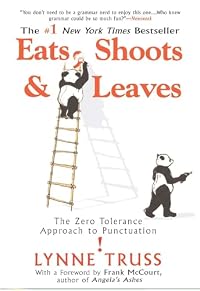
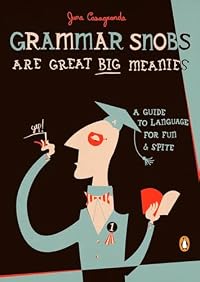
Ack-my library catalog gave the subject heading for this books as English Language---Usage---Humor. I read it after reading "Grammar snobs are great big meanies." Only one of those books belongs in that subject heading, and it's not this one. Yes, this one is a great usage guide, especially for newspaper writers, especially older ones. But it's not funny. I'm bummed. Sure, it's more entertaining than reading the Chicago Manual of Style (but then, what isn't?), but it's not as funny as "Eats, Shoots and Leaves" or "Grammar Snobs..."
Ratings
Members
- Recently Added By
Author Information

3 Works 1,110 Members
Bill Walsh is the copy chief for national news at the Washington Post and the creator of the popular Web site The Slot: A Spot for Copy Editors (www.theslot.com). He lives in Washington, DC
Bill Walsh is a LibraryThing Author, an author who lists their personal library on LibraryThing.
Classifications
- Genres
- Reference, Nonfiction, General Nonfiction
- DDC/MDS
- 428.00973 — Language English & Old English languages Standard English usage (Prescriptive linguistics) standard subdivisions and translation standard subdivisions History, geographic treatment, biography
- LCC
- PE2827 .W35 — Language and Literature English language English Dialects. Provincialisms, etc.
- BISAC
Statistics
- Members
- 352
- Popularity
- 89,306
- Reviews
- 5
- Rating
- (3.82)
- Languages
- English
- Media
- Paper, Ebook
- ISBNs
- 2
- UPCs
- 1
- ASINs
- 1