On This Page
Description
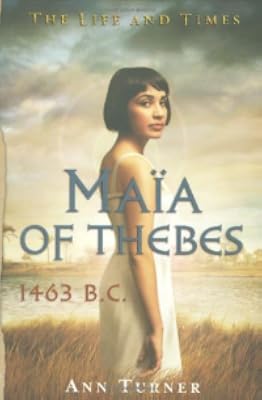
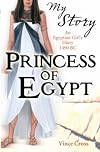
A young Egyptian girl, whose brother secretly taught her to read and write, accuses her uncle of stealing grain from the temple and must run away from Thebes to survive.Tags
Recommendations






Member Recommendations
Member Reviews
What a difference 52 years can make! Mara, Daughter of the Nile by Eloise Jarvis McGraw, is an old favorite of mine, but its pre-Women's Liberation Movement depiction of Hatshepsut is hardly sympathetic. Here the female Pharaoh is shown in a more positive light.
Maia, like Mara, can read and write. Unlike Mara, she's not a slave. She's merely treated as a servant by her maternal uncle, a priest of Amun, and his wife. Her solace is her brother, Seti. Seti, who is going to school to become a scribe, is Maia's teacher. Luckily, she's quick to learn.
Maia accidentally discovers a crime being committed by a priest. Her public revelation of that crime wins her the friendship of a woman who lost one of her daughters, Nesty, and the enmity of the show more priests of Amun.
Paneb, one of those priests, wants to hide the crime. Paneb has the gall to tell Maia that she's a ...'traitor, bringer of dishonor to the sacred temples and their glorious priests'. The fool doesn't realize that he is the true traitor and that attempting to hide the crime one of the priests committed brings much greater dishonor to the temples and priesthood.
Maia displays courage despite her fears, more courage than I have. She needs every bit of bravery she can summon because Paneb is a vindictive enemy.
The historical note about Hatshepsut and ancient Egypt was interesting, although I doubt that the slaves would have agreed with Ms. Turner's opinion about what kind of place Egypt was to have lived in. show less
Maia, like Mara, can read and write. Unlike Mara, she's not a slave. She's merely treated as a servant by her maternal uncle, a priest of Amun, and his wife. Her solace is her brother, Seti. Seti, who is going to school to become a scribe, is Maia's teacher. Luckily, she's quick to learn.
Maia accidentally discovers a crime being committed by a priest. Her public revelation of that crime wins her the friendship of a woman who lost one of her daughters, Nesty, and the enmity of the show more priests of Amun.
Paneb, one of those priests, wants to hide the crime. Paneb has the gall to tell Maia that she's a ...'traitor, bringer of dishonor to the sacred temples and their glorious priests'. The fool doesn't realize that he is the true traitor and that attempting to hide the crime one of the priests committed brings much greater dishonor to the temples and priesthood.
Maia displays courage despite her fears, more courage than I have. She needs every bit of bravery she can summon because Paneb is a vindictive enemy.
The historical note about Hatshepsut and ancient Egypt was interesting, although I doubt that the slaves would have agreed with Ms. Turner's opinion about what kind of place Egypt was to have lived in. show less
Ratings
Members
- Recently Added By
Author Information
30+ Works 5,997 Members
Some Editions
Series

Common Knowledge
- Original publication date
- 2005-04
- People/Characters
- Maia (orphan); Seti (Maia's brother); Nebet (Maia's aunt, wife of Hay); Hay (a priest of Amun, brother of Maia's mother); Ipi (Nebet & Hay's servant girl); Mistress Hunro (neighbor & weaver) (show all 18); Nefert (wife of Mekhu, an army officer, Meret's mom); Meret (a girl about Maia's age); Pashed (Nefert's male servant); Hatshepsut (female Pharoah); Paned (a priest of Amun); Hapuseneb (Hatshepsut's male counselor); Chety (Nefert's female servants); Miw (Meret's cat); Merisu (another male servant of Nefert); Khonsu (a soldier in Hatshepsut's army); Petara (Sennefer's servant); Sennefer (jailer)
- Important places
- Thebes, Egypt
- First words
- 'Teach me.'
- Last words
- (Click to show. Warning: May contain spoilers.)She would have to go to her friends and her mother's favorite goddess -- Hathor -- for that: for dancing, music, and beauty to take away the prison smell and to heal her wounds.
Classifications
- Genres
- Kids, Fiction and Literature, Tween, Children's Books
- DDC/MDS
- 481 — Language Classical Greek and related Hellenic languages Writing systems, phonology, phonetics of classical Greek
- LCC
- PZ7 .T8535 .M — Language and Literature Fiction and juvenile belles lettres Fiction and juvenile belles lettres Juvenile belles lettres
- BISAC
Statistics
- Members
- 102
- Popularity
- 316,738
- Reviews
- 1
- Rating
- (3.00)
- Languages
- English
- Media
- Paper
- ISBNs
- 1
- ASINs
- 1