On This Page
Description
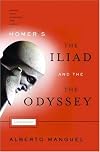
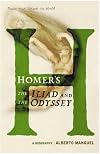
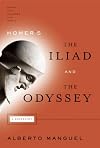
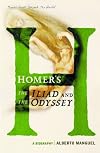
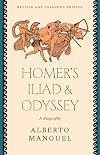
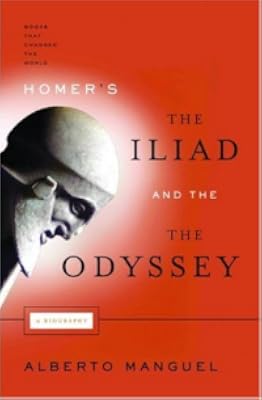
No one knows if there was a man named Homer, but there is little doubt that the epic poems assembled under his name form the cornerstone of Western literature. The Iliad and the Odyssey-with their incomparable tales of the Trojan War, Achilles, Ulysses and Penelope, the Cyclops, the beautiful Helen of Troy, and the petulant gods-are familiar to most people because they are so pervasive. They have fed our imaginations for over two and a half millennia, inspiring everyone from Plato to Virgil, show more Pope to Joyce, Dante to Wolfgang Petersen. In this graceful and sweeping addition to the Books that Changed the World series, Alberto Manguel traces the lineage of these epic poems. He considers their original purpose, either as allegory or record of history; surveys the challenges the pagan poems presented to the early Christian world; and traces their spread after the Reformation. Following Homer through the greatest literature ever created, Manguel's book above all delights in the poems themselves, the "primordial spring without which there would have been no culture.". show lessTags
Recommendations







Member Recommendations
Member Reviews
A nice, compact cultural history of different ways of reading the founding epics of Greek culture, from the ancient Greeks themselves right through to Margaret Atwood and Derek Walcott. As erudite and wide-ranging as you would expect from Manguel, but lively and accessible at the same time. Some predictable stuff — Keats and Chapman's Homer — but also plenty of less obvious insights, like the odd ways stories taken from Homer came into the north European folktale repertoire via Arabic literature. Or the Counter-Reformation prejudice against Greek culture that left Homer largely unread in Catholic Europe in the 17th, 18th and 19th centuries, to the extent that Miguel de Unamuno could be appointed professor of Greek in Salamanca in show more 1891 despite having no knowledge of that language. (Manguel points out that Racine made Greek socially acceptable again in France.)
Inevitably, in such a short book, there isn't space to explore everything — Henry Fielding only gets a brief mention, for instance, and Christa Wolf is missed out altogether. But, true to his origins, Manguel does give us a short discussion of the Argentinian epic Martin Fierro, whilst the closing chapter is mostly taken up by a discussion of a story by his own mentor, Borges.
This probably isn't a book that will make you read Homer if you never saw the need to before, but it is helpful in giving a bit of perspective on the sort of role the Iliad and Odyssey have played in Western culture over the past three millennia. And it's a great pleasure to read for its own sake. show less
Inevitably, in such a short book, there isn't space to explore everything — Henry Fielding only gets a brief mention, for instance, and Christa Wolf is missed out altogether. But, true to his origins, Manguel does give us a short discussion of the Argentinian epic Martin Fierro, whilst the closing chapter is mostly taken up by a discussion of a story by his own mentor, Borges.
This probably isn't a book that will make you read Homer if you never saw the need to before, but it is helpful in giving a bit of perspective on the sort of role the Iliad and Odyssey have played in Western culture over the past three millennia. And it's a great pleasure to read for its own sake. show less
You might not believe it, but I'd never heard of Alberto Manguel. The Argentinian (born 1948) is, however, a prolific writer and a household name in the world of books and literature. His publication list includes dozens of books. A gap in my culture, indeed. And I must confess: I'm quite impressed by the erudition he displays in this book on Homer. In a sense, you could call it an intellectual history of the Western world. Because that's its focus: the afterlife of the Iliad and the Odyssey. That disappointed me a bit, because I had expected a substantive analysis and reflection on the work of the Greek poet (or whoever was behind those epics). What Manguel offers here is how Homer's oeuvre has endured, been placed on a pedestal, taken show more down again, largely forgotten, rediscovered, and extolled, always interpreted according to one's own background, values, and sensitivities, and then manipulated, distorted, and so on. Absolutely fascinating, of course. However, Manguel rushes through it all, almost encyclopedically, with an accumulation of information that can sometimes drown the reader. Every now and then, an illuminating glimpse into the original work itself resonates, but unfortunately—for me—not enough. show less
As a potential guide for the inexperienced reader, Homer’s The Iliad and The Odyssey: A Biography by Alberto Manguel seems on the surface to be an excellent and not too intimidating choice. It is part of a series called “Books that Changed the World” (Adam Smith’s The Wealth of Nations and Darwin’s On the Origin of Species are also in the series) and it is clear that its purview is one of broad brush strokes, of introductions, rather than comprehensive, in-depth study.
And really, to write a book on why the Iliad and the Odyssey have “changed the world” the editors could hardly have made a better choice for an author than Alberto Manguel. Famous for his many books about books, including A History of Reading, The Library at show more Night, and Into the Looking Glass, Manguel is the kind of guy who can’t write two sentences without it becoming indisputably clear that he has read far, far more books than you ever will, but he somehow manages not to make you feel inadequate about it. His books are a literature enthusiast’s exercise in self-indulgence. He just loves to talk story. In fact, I bet he was offered the job because someone asked him “how western literature had been influenced by Homer” during some dinner function and he was able to rattle on for twenty minutes without once consulting his iPhone for a Google reference.
Because that is what Homer’s The Iliad and The Odyssey: A Biography is—not a biography of the birth or creation of either the Iliad or the Odyssey, but an account of the many ripples the books have caused once they were dropped into the pond of literature. Since, as Manguel quotes from Raymond Queneau, “Every great work of literature is either the Iliad or the Odyssey,” the book touches very briefly on many subjects and many shores. From St. Jerome’s conflicted adoration of Cicero and Virgil to the translation centers of the early Arab Caliphs. From the philosophical quarrels of French courtiers to the rarified arguments of German poets. Homer as history. Homer as symbolism of the unconscious. Homer as possibly being a woman (a very short section, that).
It is a bird's eye view of the cultural impact of the epics, and one that I found both tantalizing and torturous. The author seems to constantly drift away from his subjects just at the point where I would start to get interested: following his thread from Odysseus and the Cyclops to Jack and the Beanstalk, for example, which is a connection I would never have thought to make on my own. Or relating the debate between the “Anciens” (who thought classical literature should be imitated) and the “Modernes” (who didn’t) in seventeenth-century France which reached absolutely absurd levels of animosity among intellectuals and artists. Is there anything funnier than a set of furious philosophers arguing about the best way to split a hair? But no sooner does he introduce a new topic than Manguel slips away to talk about something else. I had a ridiculous impulse to grab the author by the shoulders and make him walk a straight line instead of wandering all over the place like the little boy in the cartoon. As a result, I have a long list of references that touch on the Iliad or the Odyssey and which I would very much like to know more about, if only I can find a writer who can stay on topic. One of the blurbs on the back of the book says “Alberto Manguel is to reading what Casanova was to sex.” I find myself hoping that Casanova was a little more focused and in the moment, so to speak, and resisting the urge to make jokes about finishing quickly. Read full review show less
And really, to write a book on why the Iliad and the Odyssey have “changed the world” the editors could hardly have made a better choice for an author than Alberto Manguel. Famous for his many books about books, including A History of Reading, The Library at show more Night, and Into the Looking Glass, Manguel is the kind of guy who can’t write two sentences without it becoming indisputably clear that he has read far, far more books than you ever will, but he somehow manages not to make you feel inadequate about it. His books are a literature enthusiast’s exercise in self-indulgence. He just loves to talk story. In fact, I bet he was offered the job because someone asked him “how western literature had been influenced by Homer” during some dinner function and he was able to rattle on for twenty minutes without once consulting his iPhone for a Google reference.
Because that is what Homer’s The Iliad and The Odyssey: A Biography is—not a biography of the birth or creation of either the Iliad or the Odyssey, but an account of the many ripples the books have caused once they were dropped into the pond of literature. Since, as Manguel quotes from Raymond Queneau, “Every great work of literature is either the Iliad or the Odyssey,” the book touches very briefly on many subjects and many shores. From St. Jerome’s conflicted adoration of Cicero and Virgil to the translation centers of the early Arab Caliphs. From the philosophical quarrels of French courtiers to the rarified arguments of German poets. Homer as history. Homer as symbolism of the unconscious. Homer as possibly being a woman (a very short section, that).
It is a bird's eye view of the cultural impact of the epics, and one that I found both tantalizing and torturous. The author seems to constantly drift away from his subjects just at the point where I would start to get interested: following his thread from Odysseus and the Cyclops to Jack and the Beanstalk, for example, which is a connection I would never have thought to make on my own. Or relating the debate between the “Anciens” (who thought classical literature should be imitated) and the “Modernes” (who didn’t) in seventeenth-century France which reached absolutely absurd levels of animosity among intellectuals and artists. Is there anything funnier than a set of furious philosophers arguing about the best way to split a hair? But no sooner does he introduce a new topic than Manguel slips away to talk about something else. I had a ridiculous impulse to grab the author by the shoulders and make him walk a straight line instead of wandering all over the place like the little boy in the cartoon. As a result, I have a long list of references that touch on the Iliad or the Odyssey and which I would very much like to know more about, if only I can find a writer who can stay on topic. One of the blurbs on the back of the book says “Alberto Manguel is to reading what Casanova was to sex.” I find myself hoping that Casanova was a little more focused and in the moment, so to speak, and resisting the urge to make jokes about finishing quickly. Read full review show less
After the strange, gasping fascination with which I read the Iliad recently, I felt like I had to know more. Like I didn't want to forget the shape of it and the Odyssey, like I needed to understand the way the archetypes from misty, almost pre-historic Greece influence our metaphorical view of ourselves through the ages.
And, viola! Manguel's treatment and investigation in this "biography" (as it were--of the poems, not the poet) is a work of adoration, sensuous and nested with complexity. It's really a book that's a bit beyond me. The more I try to be well-read, the more I realize I am not, and here again I am reminded. Manguel bounces Homer off of Pope, Milton, Dante, Joyce, Tennyson.
What I see this book as is as a gate--a viewport show more to the things I can learn about and read next; a guide to the interconnectedness of epics throughout time.
Sometimes Manguel's chapters wax into pure philosophy, at which I glaze over sometimes--my own weakness. But what a wonderful context-builder! show less
And, viola! Manguel's treatment and investigation in this "biography" (as it were--of the poems, not the poet) is a work of adoration, sensuous and nested with complexity. It's really a book that's a bit beyond me. The more I try to be well-read, the more I realize I am not, and here again I am reminded. Manguel bounces Homer off of Pope, Milton, Dante, Joyce, Tennyson.
What I see this book as is as a gate--a viewport show more to the things I can learn about and read next; a guide to the interconnectedness of epics throughout time.
Sometimes Manguel's chapters wax into pure philosophy, at which I glaze over sometimes--my own weakness. But what a wonderful context-builder! show less
The "Iliad" and the "Odyssey" are considered to be among the most influential works of literature ever written, second only to the "Bible" in the scope and depth of their influence. Thus, a book that focuses on Homer's historic works was an obvious choice for the "Books that Changed the World" series. The goal of this work is to explore how the Homeric works have influenced writers over the past 2800 years. The adjective "Homeric" is useful, as it acknowledges that there most likely was no single author of either of these two works, which instead are the only written versions we have of orally- transmitted epic poems that predate the invention of Greek writing.
Alberto Manguel, the author of this work, is erudite and eloquent, with an show more encyclopedic grasp of great literature. Then what's not to like? Frankly, while the author's knowledge of western literature is impressive, I found this work a bit frustrating to read; it wanders from topic to topic, inserting a few lines of poetry here, discussing a tangential point there, and ultimately leaving the reader (or this one at least) with very little that was tangible and even less that was memorable. If 10 competent historians of science were asked to describe the ways that Darwin's "Origin of Species" changed scientific history, their responses would likely be very similar, since the facts are indisputable and easy to state clearly. Why must an essay on the influence of Homer's works be any less clear? -- unless (as I suspect) clarity and focus were sacrificed for the sake of rhetorical flourishes and philosophical musings. Overall, while this book mentions various cases in which later writers have drawn on Homeric themes, whether and how they changed human history warrants a more concrete and less esoteric account. show less
Alberto Manguel, the author of this work, is erudite and eloquent, with an show more encyclopedic grasp of great literature. Then what's not to like? Frankly, while the author's knowledge of western literature is impressive, I found this work a bit frustrating to read; it wanders from topic to topic, inserting a few lines of poetry here, discussing a tangential point there, and ultimately leaving the reader (or this one at least) with very little that was tangible and even less that was memorable. If 10 competent historians of science were asked to describe the ways that Darwin's "Origin of Species" changed scientific history, their responses would likely be very similar, since the facts are indisputable and easy to state clearly. Why must an essay on the influence of Homer's works be any less clear? -- unless (as I suspect) clarity and focus were sacrificed for the sake of rhetorical flourishes and philosophical musings. Overall, while this book mentions various cases in which later writers have drawn on Homeric themes, whether and how they changed human history warrants a more concrete and less esoteric account. show less
I enjoy the content of the book very much and find it great fun. The narrator, though, comes close to destroying the book from my point of view. He reads as though he were reading the nightly news on television. Book, 5 stars, Narrator, 2 stars. (this review is about the audiobook)
I have been rereading the Odyssey and last year reread the Iliad. As background reading I found this collection of essays and commentary to be a valuable compendium of literary information. Alberto Manguel's commentary is best read with the original works by Homer. However, the commentary goes beyond the typical analysis of the text and includes references to and about the Odyssey and The Iliad that I found helpful. The influence of Homer's poetry on Virgil, Dante and religions from Christianity to Islam is valuable. Since this book is brief it can be used as a starting point for further investigation into any number of avenues in pursuit of understanding the importance of Homer for us today. Alberto Manguel is an excellent guide.
Members
- Recently Added By
Author Information

127+ Works 16,353 Members
Alberto Manguel is a Canadian writer, translator, editor, and critic. Born in Buenos Aires, he has since resided in Israel, Argentina, Europe, the South Pacific, and Canada.
Some Editions
Series

Work Relationships
Is a commentary on the text of
Common Knowledge
- Canonical title
- Homer's the Iliad and the Odyssey: A Biography
- Original title
- Homer's the Iliad and the Odyssey: A Biography
- Alternate titles*
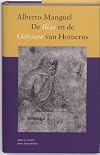
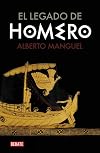
- De Ilias en Odyssee van Homerus : een biografie
- Original publication date
- 2007
- People/Characters
- Homer
- Original language*
- Engels
*Some information comes from Common Knowledge in other languages. Click "Edit" for more information.
Classifications
- Genres
- Literature Studies and Criticism, Nonfiction, Fiction and Literature
- DDC/MDS
- 883.01 — Literature & rhetoric Classical & modern Greek literatures Classical Greek epic poetry and fiction Pseudo-Callisthenes
- LCC
- PA4037 — Language and Literature Greek language and literature. Latin language and literature Greek literature Individual authors Homer
- BISAC
Statistics
- Members
- 414
- Popularity
- 74,856
- Reviews
- 12
- Rating
- (3.61)
- Languages
- 10 — Dutch, English, French, German, Italian, Lithuanian, Polish, Portuguese, Spanish, Turkish
- Media
- Paper, Audiobook, Ebook
- ISBNs
- 25
- ASINs
- 5