On This Page
Description
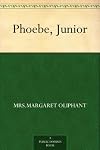
Fans of Jane Austen's work will enjoy this witty masterpiece from Scottish writer Margaret Oliphant. Using a classic "fish out of water" theme, Phoebe, Junior is an insightful and sometimes subversive look at class distinctions in the Victorian era. Hailing from a nouveau riche family, young Phoebe's life is turned upside down when she is sent to spend some time with her working-class grandparents in a distant town. Along the way, Phoebe discovers a new way of looking at the world—and show more stumbles into true love.. show less
Tags
Recommendations













Member Reviews
Phoebe, Junior is the granddaughter of the Tozers, pillars of Carlingford’s dissenting congregation, Salem Chapel. Phoebe is the daughter of Phoebe Tozer and Henry Beecham, a dissenting minister who has risen about as far as a dissenting minister can go. Phoebe, Junior is well-educated, well-traveled, and used to London life. An extended stay in Carlingford to care for her ailing grandmother is a shock to her sensibilities, but she rises to the occasion.
Phoebe had made the acquaintance of Ursula May in London. Ursula is a poor relation of the Dorset family, who are also related to the Copperheads. Ursula’s father is the rector of St. Roque in Carlingford. Ursula and Phoebe overcome the class barrier to form a friendship. Their show more social circle includes Ursula’s clergyman brother, Reginald, Salem Chapel’s interim minster, Mr. Northcote, and Clarence Copperhead, whose father is an influential member of Henry Beecham’s congregation in London.
The novel explores social, economic, and religious differences. The elders in the novel set great store by these differences in status. However, the young people discover that their peers on the other side of the divide aren’t quite the ogres they’ve been warned against all their lives, and they form “unsuitable” attachments before they quite realize what’s happening. The novel could easily have been a romantic comedy if not for the financial pressures that weigh heavily enough on Mr. May for him to succumb to temptation. show less
Phoebe had made the acquaintance of Ursula May in London. Ursula is a poor relation of the Dorset family, who are also related to the Copperheads. Ursula’s father is the rector of St. Roque in Carlingford. Ursula and Phoebe overcome the class barrier to form a friendship. Their show more social circle includes Ursula’s clergyman brother, Reginald, Salem Chapel’s interim minster, Mr. Northcote, and Clarence Copperhead, whose father is an influential member of Henry Beecham’s congregation in London.
The novel explores social, economic, and religious differences. The elders in the novel set great store by these differences in status. However, the young people discover that their peers on the other side of the divide aren’t quite the ogres they’ve been warned against all their lives, and they form “unsuitable” attachments before they quite realize what’s happening. The novel could easily have been a romantic comedy if not for the financial pressures that weigh heavily enough on Mr. May for him to succumb to temptation. show less
This is set some years after the earlier instalments. The heroine, Phoebe Junior, is the daughter of Phoebe Tozer who tried to flirt with the new minister in 'Salem Chapel'. Phoebe Junior is sent to Carlingford to care for her grandmother, even though she has previously seen little of her grandparents due to class differences. There is a lot about class here: Clarence, who is the heir to untold wealth, but is not a gentleman; Mr May, who is always in debt and does some morally dubious things, but is always a gentleman; the fact that chapel-goers are inevitably inferior to 'church folk' and so on, although the narrative does show some of these distinctions being questioned and overcome.
Phoebe is only one of the heroines, as chunks of the show more narrative feature Ursula May, and the thread which follows Mr May's money problems is the most interesting. I was disappointed in the characterization of Mr Tozer, who is far less kind and well-meaning here than in earlier instalments- he was positively unlikeable in this novel. The author seemed to be at pains to make him and his wife as 'inferior' as possible to make Phoebe stand out from them more. Phoebe was an interesting character and her decisions were not the ones I thought she would make. show less
Phoebe is only one of the heroines, as chunks of the show more narrative feature Ursula May, and the thread which follows Mr May's money problems is the most interesting. I was disappointed in the characterization of Mr Tozer, who is far less kind and well-meaning here than in earlier instalments- he was positively unlikeable in this novel. The author seemed to be at pains to make him and his wife as 'inferior' as possible to make Phoebe stand out from them more. Phoebe was an interesting character and her decisions were not the ones I thought she would make. show less
While Phoebe Beecham’s roots are in the town of Carlingford, she had not spent much time there before arriving to care for her ailing grandmother. Phoebe’s parents are of a higher social standing than her grandparents, who are shopkeepers. But duty calls, and Phoebe gladly rises to the occasion. In Carlingford she meets Ursula May, who had once admired Phoebe from a distance, at a ball. The two become friends despite differences in both class and religious practice. Ursula’s father, a clergyman, tends to live beyond his means and accepts an offer to tutor Clarence Copperhead, son of a wealthy, arrogant London businessman. Both Clarence and Ursula’s elder brother Reginald set their sights on Phoebe. At the same time, Ursula is show more being courted by a young man for the first time, and her father has run into serious money trouble.
Margaret Oliphant keeps all three storylines in motion and they eventually converge in fairly standard Victorian fashion. Like the rest of Oliphant’s Chronicles of Carlingford, this book is filled with small-town church politics and romance, with a dose of wit and satire. The beginning showed promise but lost momentum when a fairly basic story was extended to a full-length novel. Although not quite as good as some of the earlier books in the series, Phoebe Junior is still a pleasant read. show less
Margaret Oliphant keeps all three storylines in motion and they eventually converge in fairly standard Victorian fashion. Like the rest of Oliphant’s Chronicles of Carlingford, this book is filled with small-town church politics and romance, with a dose of wit and satire. The beginning showed promise but lost momentum when a fairly basic story was extended to a full-length novel. Although not quite as good as some of the earlier books in the series, Phoebe Junior is still a pleasant read. show less
I did not enjoy this as much as [b: Miss Marjoribanks|514761|Miss Marjoribanks (Chronicles of Carlingford, #5)|Mrs. Oliphant|https://images.gr-assets.com/books/1387733208s/514761.jpg|502725] and felt that some of the social commentary and Anglican/Dissenter rhetoric went over my head; as often happens, too, it took me about a quarter of the book to begin to really feel the characters and various plotlines. However, I just love Oliphant's way with words, her eye for character, and her humor, and this is a pretty satisfying end to the series. I actually found Mr. May's dilemmas and moral downfall to be the most interesting storyline and wanted that to be dug into more.
I'm sure I'll read all of these again! What next--Trollope? And which show more non-Carlingford Oliphant should be next in my queue...? show less
I'm sure I'll read all of these again! What next--Trollope? And which show more non-Carlingford Oliphant should be next in my queue...? show less
I'm having trouble deciding how I feel about this book. When it started out and was full of ridiculous characters meeting one another and conversing, it was witty in an almost Austenian way. I found myself chuckling at the absurdities of the characters. But then it digressed into the long-winded tale of the comings and goings of a group of young people, divided by class and religion, with a dramatic forgery subplot thrown in, and the book just lost its humorous appeal for me. I have trouble understanding how Oliphant managed to write over 400 pages about these people. Well, it was an interesting experience to read, but easily forgettable in my opinion.
bookshelves: winter-20132014, victorian, published-1876, under-50-ratings, women, lit-richer, britain-england, play-dramatisation, series, filthy-lucre, families, classic
Read from January 02 to 03, 2014
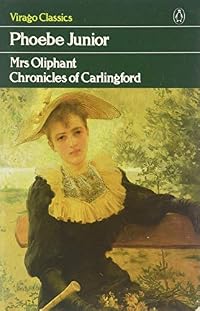
Phoebe Junior by Margaret Oliphant. Description: Margaret Oliphant was one of the most prolific and popular writers of her day. Her domestic novels are steeped in the broad social, political, and religious worlds of the Victorian era, and her Chronicles of Carlingford series stands as an insightful portrait of English life. Phoebe Junior, the last of this series, examines Victorian class dynamics by following the social mobility of one family and the effects of this mobility on the daughter, Phoebe.
R4x drama
BBC Blurb: 4 Extra Debut. In show more 1875, Carlingford jealousies and rivalries arise as Mrs Oliphant returns to focus on Phoebe Beecham's family. With Elizabeth Spriggs.
2. A New Gentleman: A shock awaits Phoebe Beecham when she arrives in Carlingford to visit her sick grandmother. Stars Charlotte Attenborough.
3. An Unmitigated Cub: Despite opposing religions, Reginald is attracted to Phoebe, but Mr Northcote's arrival sparks friction. Stars Timothy West.
4. A Guilty Bit of Paper: Mr May is swept towards the conclusion of his deceitful action. For others, there's upset and surprise. Stars Elizabeth Spriggs.
Have a problem with the modern spin that states Oliphant is the female Trollope when T's oeuvre, for me, a snoozefest. Love the hattips to Mrs Beeton's Book of Household Management, however, overall, this is not a patch on 'Hester'. show less
Read from January 02 to 03, 2014
Phoebe Junior by Margaret Oliphant. Description: Margaret Oliphant was one of the most prolific and popular writers of her day. Her domestic novels are steeped in the broad social, political, and religious worlds of the Victorian era, and her Chronicles of Carlingford series stands as an insightful portrait of English life. Phoebe Junior, the last of this series, examines Victorian class dynamics by following the social mobility of one family and the effects of this mobility on the daughter, Phoebe.
R4x drama
BBC Blurb: 4 Extra Debut. In show more 1875, Carlingford jealousies and rivalries arise as Mrs Oliphant returns to focus on Phoebe Beecham's family. With Elizabeth Spriggs.
2. A New Gentleman: A shock awaits Phoebe Beecham when she arrives in Carlingford to visit her sick grandmother. Stars Charlotte Attenborough.
3. An Unmitigated Cub: Despite opposing religions, Reginald is attracted to Phoebe, but Mr Northcote's arrival sparks friction. Stars Timothy West.
4. A Guilty Bit of Paper: Mr May is swept towards the conclusion of his deceitful action. For others, there's upset and surprise. Stars Elizabeth Spriggs.
Have a problem with the modern spin that states Oliphant is the female Trollope when T's oeuvre, for me, a snoozefest. Love the hattips to Mrs Beeton's Book of Household Management, however, overall, this is not a patch on 'Hester'. show less
Ratings
Members
- Recently Added By
Lists

Favourite 19th century fiction
257 works; 62 members

Favourite Virago Modern Classics
183 works; 38 members
Talk Discussions
Past Discussions
Margaret Oliphant's Chronicles of Carlingford 6: Phoebe, Junior in Virago Modern Classics (June 2023)
Author Information

244+ Works 3,141 Members
Margaret Oliphant Wilson Oliphant (née Margaret Oliphant Wilson) (4 April 1828 - 25 June 1897), was a Scottish novelist and historical writer who married her cousin, Frank Wilson Oliphant. Oliphant's first novel was published in 1849, Passages in the Life of Mrs. Margaret Maitland. The book dealt with the Scottish Free Church movement. Oliphant, show more during an often difficult life, wrote more than 120 works, including novels, books of travel and description, histories, and volumes of literary criticism. Among the best known of her works of fiction are: Adam Graeme (1852), The Marriage of Elinor (1892), The Ways of Life (1897). She died at Wimbledon, London, on 25 June 1897. (Bowker Author Biography) show less
Series

Belongs to Publisher Series
Virago Modern Classics (310)
Common Knowledge
- Canonical title
- Phoebe, Junior
- Original title
- Phoebe, Junior
- Original publication date
- 1876
- Important places
- Carlingford
- First words
- Miss Phoebe Tozer, the only daughter of the chief deacon and leading member of the Dissenting connection in Carlingford, married, shortly after his appointment to the charge of Salem Chapel, in that town, the Reverend Mr. Bee... (show all)cham, one of the most rising young men in the denomination.
From the time when she was left a widow at the age of thirty-one Mrs Oliphant never, she said, had five pounds which she didn't earn herself by writing. (Introduction) - Last words
- (Click to show. Warning: May contain spoilers.)However he is young, and things may mend.
(Click to show. Warning: May contain spoilers.)So Mrs Oliphant tales her leave of Carlingford. (Introduction)
Classifications
Statistics
- Members
- 176
- Popularity
- 185,384
- Reviews
- 6
- Rating
- (3.68)
- Languages
- English, Russian
- Media
- Paper, Ebook
- ISBNs
- 20
- ASINs
- 4