The Bible in Spain
by George Borrow
On This Page
Description
George Borrow (1803-1881) was a British author, adventurer, and agent of the Bible Society whose journeys in the mid-nineteenth century took him to both Russia and Spain. His experiences are reflected in books including The Zincali (1841) and his best-known publication, The Bible in Spain (1843). Described by Borrow as 'the journey, adventures, and imprisonment of an Englishman in an attempt to circulate the scriptures in the peninsula', it is mostly a compilation of his voluminous show more correspondence with the Bible Society. In this first volume, Borrow describes his arrival at Lisbon, his impressions of cities including Madrid and Cordoba and his interactions with the local population, including Gypsies, whose culture he found particularly fascinating. The book, at once an exotic travelogue and a document revealing the religious tensions of the period, was enthusiastically received by early Victorian readers. show lessTags
Recommendations
























Member Recommendations

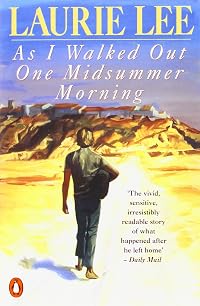
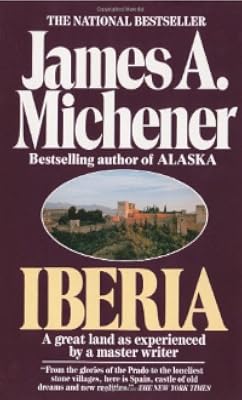
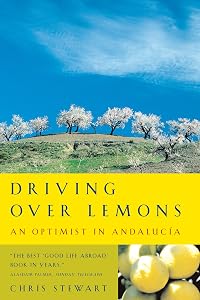
thorold A rabid Evangelical and a crazed Catholic, both British, pottering about Spain on horseback in the 1830s and the 1960s, respectively.
Member Reviews
Borrow is always entertaining to read: he was one of the great English eccentrics of the early 19th century, and his writings are a wonderfully inconsistent mixture of the genuine pleasure he takes in the world around him, the rather immodest fun he has showing off his own remarkable talents, and his gloriously prejudiced views on religion, politics and the superiority of the English.
In this book he's travelling around Spain and Portugal on behalf of the British and Foreign Bible Society, trying to give poor benighted Roman Catholics the opportunity to read the Bible in their own language. This gives him the excuse to travel around part of Portugal and most of Spain. Spain is in the middle of the Carlist uprising of 1835-39, so things show more are in rather a mess and travel is often dangerous and uncomfortable. Nonetheless, Borrow finds a lot to interest him in scenery, architecture, the local history, industries and food, and above all the great variety of people and horses he meets. As a linguist, he's fascinated by the many languages and dialects he comes across (even though he does have a tendency to criticise people for not speaking their own languages as well as they might); as a student of Gypsy culture he delights in the opportunity to make contact with Spanish Gypsies.
From time to time, particularly in the later parts of the book, he remembers that he's here to work, and has a go at selling some Spanish New Testaments. He goes to some trouble to persuade the reader that the ordinary Spanish, and even some clergymen, are happy to get the chance to read the Scriptures. Obviously, we can't tell from the book alone how much of this is propaganda and how much is true, but we can imagine that in the middle of a civil war and an economic depression, people might be glad to get cheap books of any description. The Catholic church does, however, make trouble with the Spanish authorities, so he and his colleagues are arrested a few times (but unfortunately, never kept in jail for long enough to make really good publicity).
Eventually, the government effectively makes it impossible for him to carry on selling Bibles in Spain, so he moves on to Gibraltar and Tangier to dispose of his remaining stock before coming home, so we get nice descriptions of those places as well, as a bonus before the book comes to a rather abrupt end in a Tangerine courtyard. show less
In this book he's travelling around Spain and Portugal on behalf of the British and Foreign Bible Society, trying to give poor benighted Roman Catholics the opportunity to read the Bible in their own language. This gives him the excuse to travel around part of Portugal and most of Spain. Spain is in the middle of the Carlist uprising of 1835-39, so things show more are in rather a mess and travel is often dangerous and uncomfortable. Nonetheless, Borrow finds a lot to interest him in scenery, architecture, the local history, industries and food, and above all the great variety of people and horses he meets. As a linguist, he's fascinated by the many languages and dialects he comes across (even though he does have a tendency to criticise people for not speaking their own languages as well as they might); as a student of Gypsy culture he delights in the opportunity to make contact with Spanish Gypsies.
From time to time, particularly in the later parts of the book, he remembers that he's here to work, and has a go at selling some Spanish New Testaments. He goes to some trouble to persuade the reader that the ordinary Spanish, and even some clergymen, are happy to get the chance to read the Scriptures. Obviously, we can't tell from the book alone how much of this is propaganda and how much is true, but we can imagine that in the middle of a civil war and an economic depression, people might be glad to get cheap books of any description. The Catholic church does, however, make trouble with the Spanish authorities, so he and his colleagues are arrested a few times (but unfortunately, never kept in jail for long enough to make really good publicity).
Eventually, the government effectively makes it impossible for him to carry on selling Bibles in Spain, so he moves on to Gibraltar and Tangier to dispose of his remaining stock before coming home, so we get nice descriptions of those places as well, as a bonus before the book comes to a rather abrupt end in a Tangerine courtyard. show less
Borrow travels all over Spain in the early 19th century with the aim of selling and setting up the printing of bibles to give the Spanish the holy word without any Catholic inter mediation. He viewed his book as something of a guidebook noting to bring some food if you stop at an inn. They'll cook it for you but they won't give you any. Also make sure that you are armed as you will certainly be shot at and if the number of flies round your horses becomes impossible then put bags over their heads.
Entre 1836 y 1840 (los años de la primera guerra carlista, la desamortización y la primera regencia), GEORGE BORROW viajó por cuenta de la Sociedad Bíblica británica con el objeto de difundir el Nuevo Testamento en una edición sin comentarios y accesible para todos. La vocación apostólica de «Don Jorgito el inglés» (por ese nombre era conocido en Madrid) le permitió recorrer media España y ser protagonista o testigo de múltiples incidentes encuentros con bandidos, arrestos y detenciones, conspiraciones de gitanos (ocupados de los misteriosos «asuntos de Egipto»), amenazas de muerte* cuyo recuerdo vertió, a su vuelta a Inglaterra, en LA BIBLIA EN ESPAÑA, libro que alcanzó de inmediato gran éxito y difusión.Manuel show more Azaña, traductor y prologuista en 1921 de la edición española, señala el novelesco interés de muchas aventuras, que parecen propias de un libro picaresco, pero por encima de todo destaca su carácter de obra de arte, de creación, que lo sitúa entre los mejores libros de su género. show less
Jun 23, 2022Spanish
Alianza Editorial, 1970. Comprado en Feria del libro abril 2016
Apr 16, 2016Spanish
Tomo I y III, falta tomo II
May 2, 2026Spanish
Ratings
Members
- Recently Added By
Lists

Best of Travel Narratives
142 works; 28 members

Best Travel Narrative
32 works; 20 members

Adventure Travel & Exploration In Europe
18 works; 3 members

Recommend the 20 best books you've read in the last five years
2,168 works; 607 members

CCE 1000 Good Books List
1,033 works; 12 members

Trinity College Booklist (1951): Class Five, Travel and Geography
52 works; 2 members
Author Information

61+ Works 1,422 Members
Borrow was employed by the (Protestant) Bible Society to distribute bibles in Catholic Spain in 1835. He encountered much opposition and was on one occasion imprisoned for three weeks. The famous account of his experience has little to do with the Bible and much to do with the people, land, and perils of his journey. Borrow is as racy in his show more descriptions of places as of people. Lavengro (1851) and its sequel, The Romany Rye (1857), are like novels in their interest and excitement. They are stories of gypsies, rich in gypsy lore, superstitions, and customs. Borrow spent many years in close association with Spanish gypsies and translated the Gospel of St. Luke into their language. His linguistic abilities were remarkable; he gives much space to word derivations, particularly in Lavengro. His books abound in pugnacious passages; his attacks on Sir Walter Scott (see Vol. 1), on prizefighters, and on "papists" are indicative of some of his sharp prejudices. He wrote marvelously, however, and those who admire him are devotees for life. (Bowker Author Biography) show less
Awards and Honors
Notable Lists
Series
Belongs to Publisher Series
Work Relationships
Common Knowledge
- Original publication date
- 1843
- Important places
- Portugal; Lisbon, Portugal; Sintra, Portugal; Spain; Madrid, Spain; Seville, Andalusia, Spain (show all 9); Córdoba, Andalusia, Spain; Gibraltar; Tangier, Tanger-Tetouan-Al Hoceima, Morocco
- Important events
- First Carlist Uprising, Spain (1835-1839)
- Original language
- English
- Disambiguation notice
- George Henry Borrow is the author.
Classifications
- Genres
- Travel, Nonfiction, Religion & Spirituality, Biography & Memoir
- DDC/MDS
- 914.6 — History & geography Geography & travel Geography of and travel in Europe Spain, Andorra, Gibraltar, Portugal
- LCC
- DP41 .B7 — History of Europe, Asia, Africa and Oceania Spain – Portugal History of Spain Description and travel
- BISAC
Statistics
- Members
- 295
- Popularity
- 109,386
- Reviews
- 5
- Rating
- (4.13)
- Languages
- English, Spanish
- Media
- Paper, Ebook
- ISBNs
- 42
- ASINs
- 33